Healthy Sheet-Pan Dinner Ideas
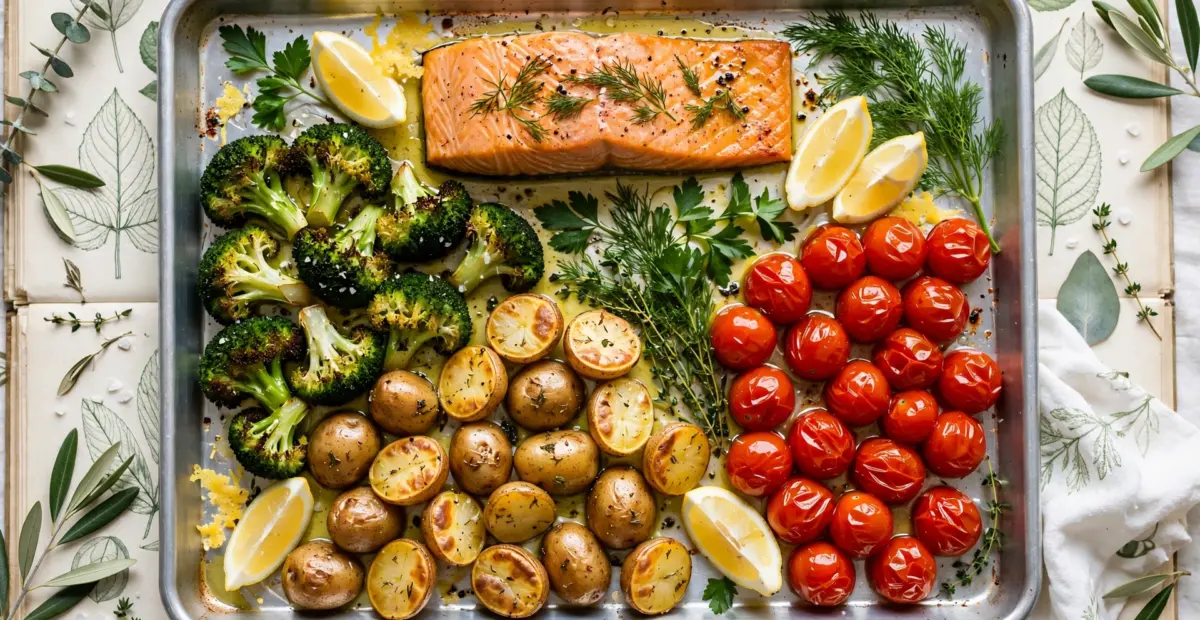
Some nights, the hardest part of dinner isn’t cooking — it’s deciding what to cook, then facing the pile of pots afterward. Sheet-pan dinners solve both problems at once. Everything goes onto one pan, into one hot oven, and twenty-five minutes later dinner is on the table with a single tray to wash. Done well, a sheet pan is also one of the easiest ways to build a balanced meal: a protein, a pile of vegetables, and a starchy side, all roasting side by side.
This guide walks through the formula, six dinner ideas that actually work on a single pan, and the timing and food-safety details that keep them tasting good instead of soggy or overdone.
Why sheet-pan dinners work so well
A sheet pan is a wide, flat surface with hot air moving all around it. That means food roasts instead of steaming, vegetables get crisp edges, and flavors mingle in the pan juices without extra steps. Compared with a stir-fry or a multi-pot meal, the hands-on time is tiny: chop, toss with oil and seasoning, spread out, and let the oven do the work.
The other advantage is portion control without thinking about it. When the whole meal shares one pan, it’s natural to fill about half of it with vegetables — which is exactly where most of us need the help. The World Health Organization recommends at least 400 grams of fruit and vegetables a day, roughly five portions, and a vegetable-heavy sheet pan can cover two or three of those in a single meal. Adults also need at least 25 grams of fiber a day, and vegetables, beans, and whole grains on the pan all contribute.
The formula: one pan, four jobs
Every good sheet-pan dinner follows the same structure. Think of the pan as a plate divided into jobs:
- Protein (about a quarter of the pan): chicken thighs or breasts, salmon fillets, shrimp, tofu, chickpeas, or turkey meatballs. Roasted chicken breast provides about 31 grams of protein per 100 grams, and wild Atlantic salmon about 25 grams per 100 grams, according to USDA FoodData Central — so a palm-sized portion goes a long way.
- Vegetables (about half the pan): broccoli, green beans, bell peppers, zucchini, carrots, Brussels sprouts, cauliflower, red onion. Two or three kinds give color and different textures.
- A starchy side (about a quarter): baby potatoes, sweet potato cubes, or butternut squash. These take the longest, so cut them small.
- Fat and flavor: a tablespoon or two of olive oil, plus garlic, lemon, herbs, or a spice blend. Keep salt light — WHO advises less than 5 grams of salt a day — and let herbs, citrus, and spices carry the flavor.
That layout is the classic plate method in pan form: half vegetables, a quarter protein, a quarter starchy food. The plate method has been a staple of nutrition education for years, and it still works — just remember the USDA’s MyPlate graphic itself was retired in January 2026, so treat the plate idea as a timeless way to portion a meal, not as the current USDA guide.
Read also: How to Build a Balanced Dinner
Six sheet-pan dinner ideas
Each of these serves four and roasts at 425°F (220°C) unless noted. Use a large rimmed baking sheet, line it with parchment for easy cleanup, and give everything space — crowded vegetables steam instead of roasting.
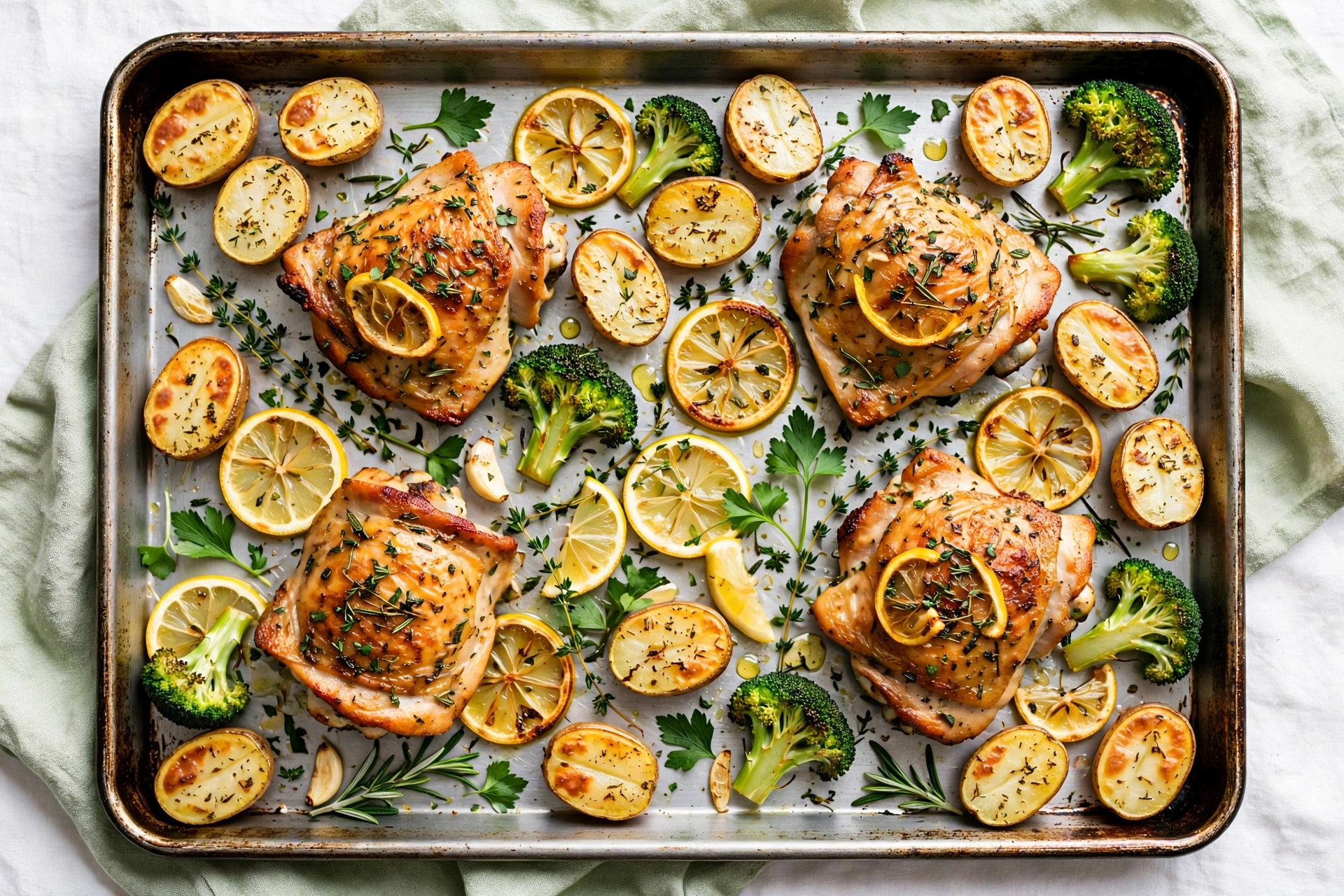
1. Lemon-herb chicken with broccoli and baby potatoes
The weeknight standard. Toss chicken thighs or breasts, halved baby potatoes, and broccoli florets with olive oil, lemon zest, garlic, and dried oregano. Potatoes go in first for 10 minutes; then add the chicken and broccoli for another 20 to 25 minutes. Chicken is done when a food thermometer reads 165°F (74°C) in the thickest part — the safe minimum for all poultry, per USDA guidance.
2. Salmon, asparagus, and cherry tomatoes
The fast one: 15 minutes, start to finish. Place salmon fillets on one side of the pan and asparagus spears and halved cherry tomatoes on the other, all brushed with olive oil and a squeeze of lemon. Fish is done at 145°F (63°C), or when the flesh turns opaque and flakes easily with a fork. Salmon brings omega-3 fats to the table along with its protein, which is a good reason to put fish on the pan at least once a week.
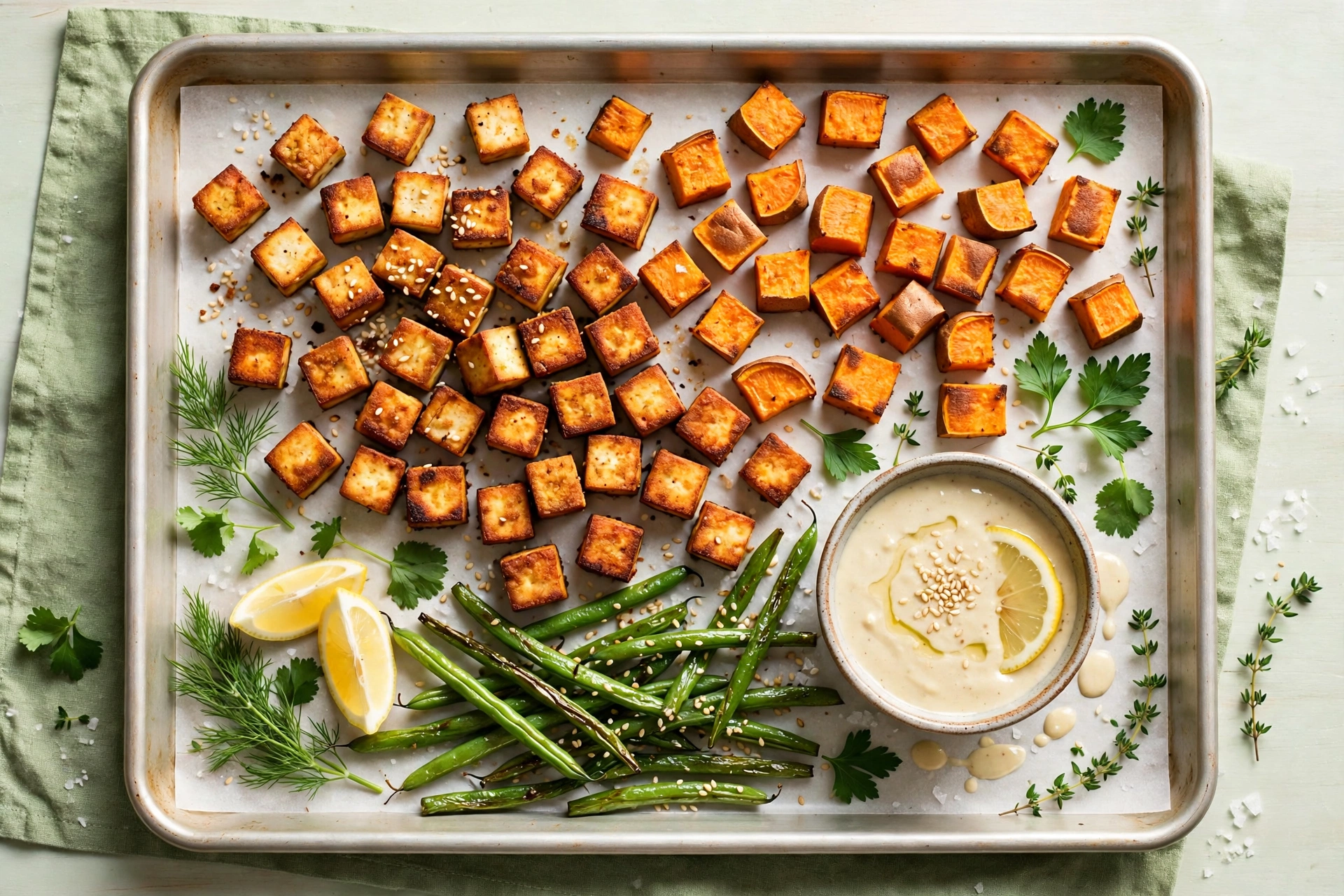
3. Crispy tofu, sweet potato, and green beans
Press extra-firm tofu, cut it into cubes, and toss with a little soy sauce, sesame oil, and cornstarch — the starch is what gets the edges crisp. Roast sweet potato cubes for 10 minutes first, then add the tofu and green beans for 20 minutes more. Finish with a drizzle of tahini thinned with lemon juice. A cup of cooked lentils on the side adds about 18 grams of protein and 15.6 grams of fiber if you want the meal even heartier.
4. Shrimp, zucchini, and bell peppers
Shrimp cooks in minutes, so it goes on last. Roast sliced zucchini, bell peppers, and red onion for 15 minutes, then add shrimp tossed in olive oil, garlic, and smoked paprika for the final 6 to 8 minutes. Pull the pan when the shrimp turn pink and opaque. Serve over brown rice or with warm whole-wheat flatbread.
Read also: Easy One-Pan Healthy Meals
5. Roasted chickpeas, cauliflower, and carrots
The plant-based workhorse. Toss drained chickpeas, cauliflower florets, and carrot coins with olive oil, cumin, and paprika, and roast 25 to 30 minutes until the chickpeas are crisp and the cauliflower edges are browned. Spoon over yogurt or tahini sauce and top with fresh herbs. It’s cheap, it keeps well, and the fiber from the chickpeas and vegetables makes it genuinely filling.
6. Turkey meatballs, peppers, and onions
Roll ground turkey with breadcrumbs, an egg, garlic, and Italian seasoning, and roast the meatballs alongside sliced peppers and onions for about 25 minutes. Ground poultry also needs to reach 165°F (74°C) all the way through. Serve in whole-wheat rolls, over pasta, or straight off the pan with a green salad.
Timing tricks: not everything cooks at the same speed
The most common sheet-pan mistake is putting everything in at once. Dense foods need a head start; delicate ones need to arrive late. A practical rule of thumb at 425°F (220°C):
- Start first (25–30 minutes): potatoes, sweet potatoes, carrots, winter squash, whole chicken pieces.
- Middle of the cook (15–20 minutes): broccoli, cauliflower, Brussels sprouts, green beans, salmon, tofu, meatballs.
- Last 5–8 minutes: shrimp, asparagus, cherry tomatoes, zucchini, leafy greens like kale.
Cut pieces to a similar size within each group, and keep a single layer with breathing room. If the pan looks crowded, use two pans — it’s still less washing than a three-pot dinner.
Food safety on the sheet pan
One-pan cooking is convenient, but the safety rules don’t change. A food thermometer is the only reliable way to know meat is done — color alone can mislead. The USDA’s safe minimum internal temperatures are 165°F (74°C) for all poultry, 145°F (63°C) for fish and for whole cuts of beef, pork, lamb, and veal (with a three-minute rest), and 160°F (71°C) for ground meats. Leftovers should be reheated to 165°F.
Cool and store leftovers promptly: refrigerate within two hours of cooking, and eat refrigerated leftovers within three to four days. Sheet-pan dinners reheat beautifully in a hot oven for 10 minutes, which keeps the vegetables from going soft the way a microwave can.
Read also: How to Prep Produce for the Week
Make it a habit, not a project
Sheet-pan dinners stick when the friction is low. A few habits help:
- Prep on Sunday: wash and chop two or three vegetables and store them in containers, so weeknight assembly takes five minutes.
- Keep a shortlist: pick three combinations your household actually likes and rotate them. Novelty is the enemy of a weeknight routine.
- Season after roasting, too: a squeeze of lemon or a spoonful of fresh herbs at the end wakes up flavors that the oven muted.
- Use the leftovers: cold roasted vegetables and sliced chicken become tomorrow’s grain bowl or wrap filling with almost no extra work.
Frequently asked questions
What temperature is best for sheet-pan dinners?
425°F (220°C) works for most combinations: hot enough to brown vegetables and crisp edges, gentle enough that nothing burns before the protein is done. For fish and other quick-cooking proteins, 400°F (200°C) gives you a little more margin.
How do I keep vegetables from getting soggy?
Spread them in a single layer with space between pieces, use enough oil to coat but not pool, and don’t cover the pan. If the pan is crowded, the vegetables steam in their own moisture — split them across two pans instead.
Can I cook chicken and vegetables on the same pan?
Yes — that’s the whole point. Just make sure the chicken reaches 165°F (74°C) in the thickest part, measured with a food thermometer, and give raw chicken its own space on the pan so its juices don’t pool under the vegetables. Wash your hands and any utensils that touched raw chicken before handling the finished food.
Are sheet-pan dinners healthy?
They can be, and the format helps: the pan naturally holds a lot of vegetables, and you control the oil, salt, and seasoning. The healthiest versions center on vegetables, a lean protein or legumes, and a whole starchy food — and keep added salt light and sauces simple.
Sources
- World Health Organization — Healthy Diet fact sheet (at least 400 g of fruit and vegetables a day; salt under 5 g a day; free sugars below 10% of energy; fiber at least 25 g a day)
- USDA Food Safety and Inspection Service — Safe Minimum Internal Temperature Chart (poultry 165°F, fish 145°F, ground meats 160°F, whole cuts 145°F with a three-minute rest)
- USDA FoodData Central (roasted chicken breast about 31 g protein per 100 g; wild Atlantic salmon about 25 g protein per 100 g; cooked lentils about 17.9 g protein and 15.6 g fiber per cup)
Disclaimer: This article is for general information only and is not medical advice. If you have a medical condition or specific dietary needs, talk to your clinician or a registered dietitian before changing how you eat.