No-Cook Healthy Lunch Ideas
Some days, lunch has to happen without a stove, an oven, or even a microwave. Maybe you are working through your lunch break, packing a bag before a commute, or simply out of cooking energy by noon. That does not mean lunch has to be a vending-machine snack or a sad handful of crackers. A no-cook lunch can still be balanced, filling, and genuinely good to eat — it just needs a little assembly instead of heat.
The trick is to stop thinking of lunch as a recipe and start thinking of it as a combination. Pick one protein, one or two vegetables or fruits, one whole grain or starchy food, and a source of healthy fat. Put them together in a bowl, a wrap, or a bento-style box, and you have a meal that holds up in a bag and tastes good at room temperature or straight from the fridge.
Start With a Simple Formula
When you are tired or short on time, decisions are the enemy. A formula removes them. Here is one that works for almost any no-cook lunch:
- Protein: canned tuna or chickpeas, hard-boiled eggs, tofu, cheese, yogurt, or sliced deli meat you trust.
- Produce: cherry tomatoes, cucumber slices, shredded carrots, baby spinach, grapes, or an apple.
- A grain or starchy base: whole-grain bread, a wrap, cooked-and-cooled rice or quinoa from an earlier meal, or whole-grain crackers.
- Healthy fat and flavour: olive oil, hummus, avocado, nuts, seeds, or a simple vinaigrette.
You do not need all four groups in perfect proportions every day. Aim for most of them, most of the time, and lunch will take care of itself. The World Health Organization recommends at least 400 grams — about five portions — of fruits and vegetables a day for adults, along with at least 25 grams of naturally occurring dietary fibre from foods. A lunch that includes two portions of produce and a fibre-rich base like beans or whole grains gets you a long way toward both.
Read also: How to Build a Balanced Plate
Five No-Cook Lunches That Actually Fill You Up
These are assembly jobs, not recipes. Adjust the amounts to your appetite, and swap ingredients for whatever you already have.
1. Chickpea and Feta Salad Box
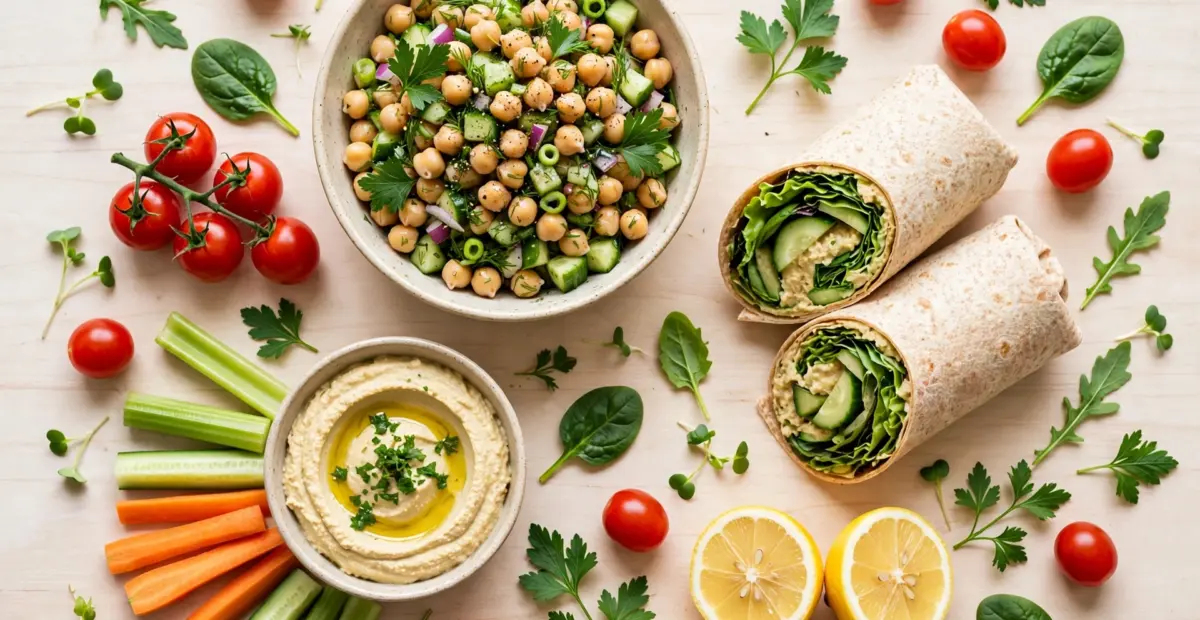
Toss a can of drained chickpeas with cherry tomatoes, cucumber, red onion, a handful of spinach, crumbled feta, olive oil, and lemon juice. Chickpeas bring protein and fibre; feta and olive oil bring flavour and staying power. Pack it with a slice of whole-grain bread or a few whole-grain crackers. It tastes even better the next day, once the flavours have had time to mingle.
2. Tuna and White Bean Wrap
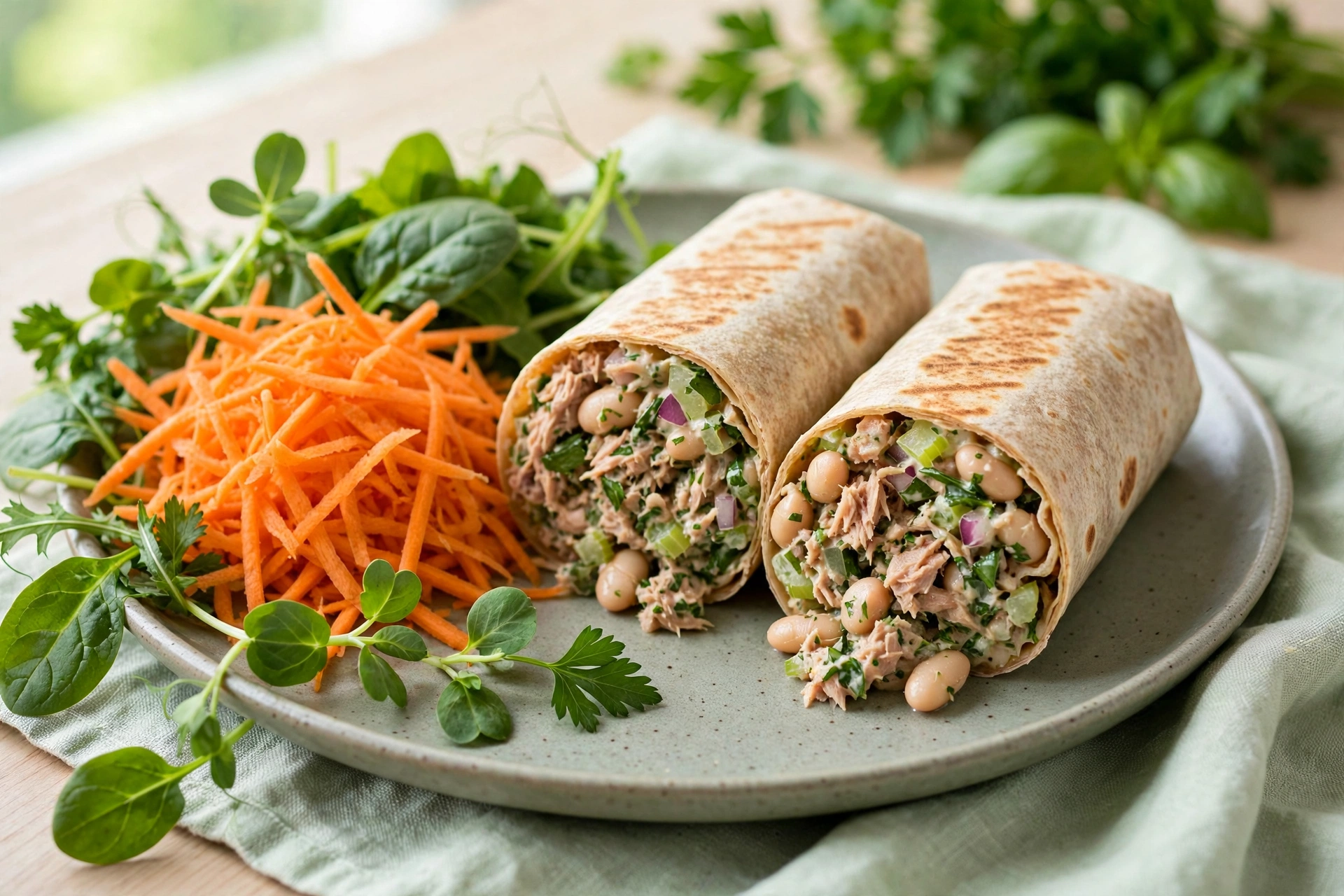
Mash canned tuna with canned white beans, a squeeze of lemon, and a spoonful of yogurt or mayonnaise. Spread it in a wrap with shredded carrots and lettuce. Beans stretch the tuna further, add fibre, and make the filling less dry — a useful trick when you are packing lunch hours ahead.
3. Peanut Butter, Banana, and Yogurt Bowl
This one is for days when you want lunch in two minutes. Spoon Greek yogurt into a bowl, add a sliced banana, a dollop of peanut butter, and a sprinkle of oats or seeds. It is sweet, salty, and filling, and it travels well in a lidded container. Choose a peanut butter whose ingredient list is mostly peanuts, and skip the ones loaded with added sugar.
4. Hummus and Veggie Bento
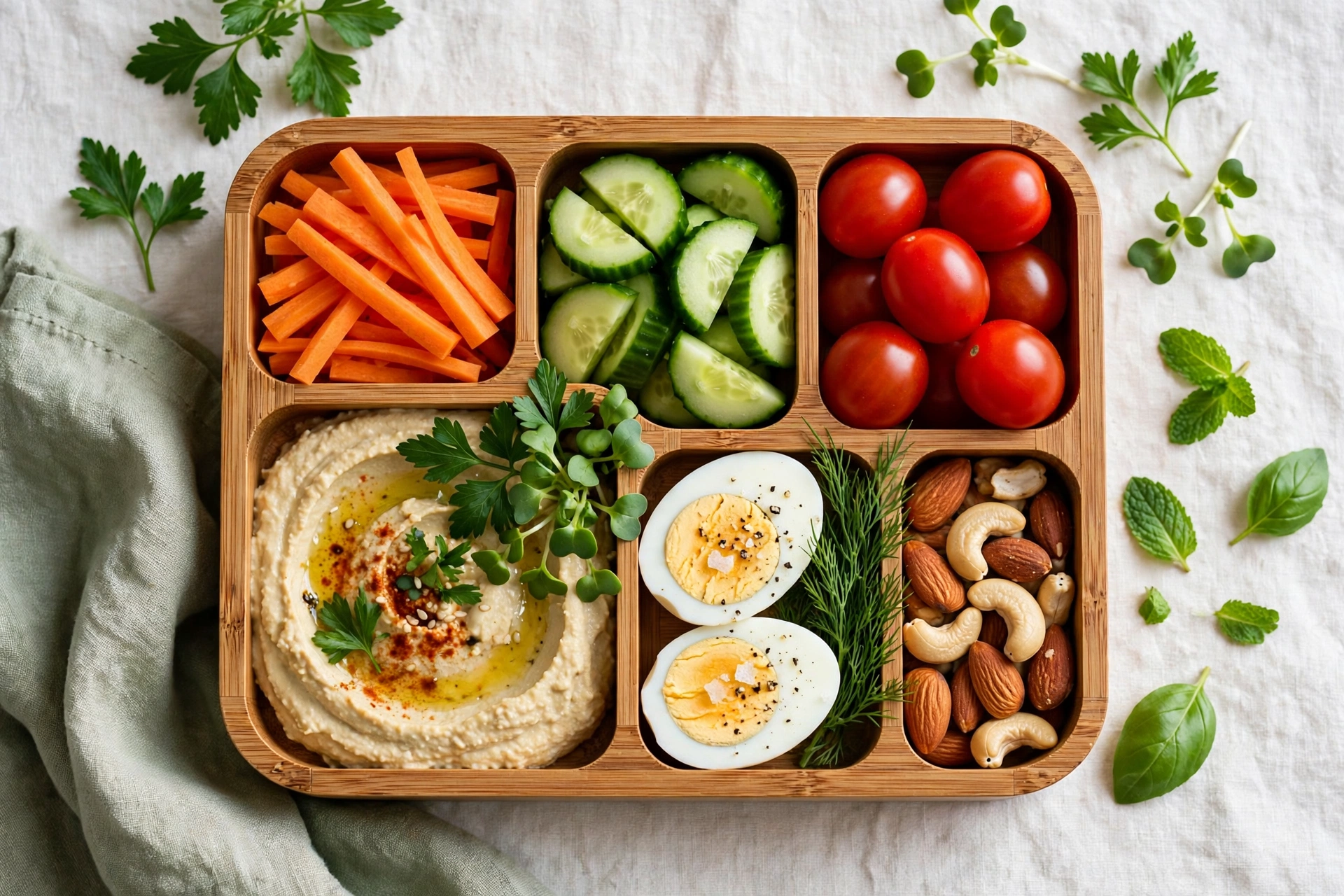
Fill one section of a container with hummus, then surround it with carrot sticks, cucumber, bell pepper strips, cherry tomatoes, a hard-boiled egg, and a small handful of nuts. This is the lunch for people who like to graze. It also works well for kids’ lunchboxes, since everything can be picked up by hand.
5. Smoked Salmon and Cream Cheese on Rye
Spread cream cheese on whole-grain rye bread or crispbread, layer on smoked salmon, cucumber slices, and dill or capers if you have them. Add an apple or a handful of grapes on the side. It feels a little special, takes about three minutes, and needs no cooking at all.
Read also: Healthy Lunch Meal Prep Ideas
Make It in Five Minutes: A Pantry-First Approach
The fastest no-cook lunches come from a pantry that is already stocked. Keep a small rotation of shelf-stable and fridge staples on hand, and you will rarely be stuck:
- Pantry: canned chickpeas, beans, and tuna; whole-grain wraps and crackers; peanut butter; olive oil; vinegar; nuts and seeds.
- Fridge: eggs, yogurt, cheese, hummus, tortillas, and a rotating cast of fresh produce.
- Freezer: frozen berries for yogurt bowls, and bread you can thaw slice by slice.
Hard-boiled eggs deserve a special mention. Cook a batch once, and you have instant protein for days. The same goes for grains: rice or quinoa cooked on Sunday can become the base of a cold grain salad on Tuesday, tossed with beans, vegetables, and a vinaigrette.
Keeping No-Cook Lunches Safe
No cooking does not mean no food safety. Cold lunches still need care, especially when they travel. Perishable foods — yogurt, cheese, deli meat, smoked fish, and salads with eggs or tuna — should be kept cold, ideally in an insulated bag with an ice pack, and not left sitting at room temperature for hours.
The U.S. Department of Agriculture’s Food Safety and Inspection Service advises that most cooked leftovers can be kept in the refrigerator for 3 to 4 days, and that perishable food should not sit at room temperature for more than 2 hours. The same caution applies to the components of a no-cook lunch: if you assembled it the night before, keep it refrigerated until you leave, and eat it within a few hours of taking it out. When in doubt, throw it out — a replacement lunch costs far less than a day feeling unwell.
Read also: How to Add More Vegetables to Your Meals
Small Upgrades That Make a Big Difference
A no-cook lunch can drift toward beige: bread, cheese, crackers, repeat. Colour is your easiest quality check. If your lunchbox has two or three colours from produce, it probably has a decent mix of nutrients. A handful of spinach in a wrap, a sliced tomato on a sandwich, or berries with yogurt all count.
Texture matters too. Crunch from nuts, seeds, or raw vegetables makes a cold lunch more satisfying than soft food alone. And do not skip the dressing or sauce — a squeeze of lemon, a drizzle of olive oil, or a spoonful of mustard can turn plain ingredients into something you actually look forward to eating.
Finally, watch the salt and added sugar hiding in convenience foods. Deli meats, flavoured yogurts, and bottled dressings can carry more sodium and sugar than you expect. Reading the label for a few seconds, and choosing the plainer version when you can, is a small habit with a real payoff over weeks and months.
Frequently Asked Questions
Are no-cook lunches as nutritious as cooked ones?
They can be. Cooking changes some nutrients, but a lunch built from vegetables, fruits, whole grains, legumes, and a protein source covers the same nutritional ground whether or not it was heated. What matters most is the mix of foods, not the temperature they are served at.
How long can a packed no-cook lunch sit out?
Perishable items should not sit at room temperature for more than 2 hours, according to USDA food safety guidance. Use an insulated bag with an ice pack, and keep the lunch refrigerated until you head out.
What if I get bored of salads and wraps?
Change the flavour profile, not the whole formula. The same chickpeas taste different with a Mediterranean dressing one day and a curry-spiced yogurt sauce the next. Bento boxes, grain bowls, and open sandwiches also break the routine without adding cooking.
Can no-cook lunches work for a whole week?
Yes, with rotation. Alternate your protein source, swap the grain, and change at least one vegetable each day. A week of chickpeas every day will bore anyone — a week that moves from chickpeas to tuna to eggs to tofu will not.
Disclaimer: This article is for general information only and is not a substitute for personalised medical or dietary advice. If you have a health condition, food allergy, or specific dietary needs, talk to a qualified health professional or registered dietitian.
Sources