Healthy Dinner Meal Prep Ideas
Dinner is the meal most likely to fall apart. You get home tired, the fridge looks unpromising, and suddenly takeout feels like the only reasonable option. It is not a willpower problem. It is a planning problem — and a small amount of Sunday prep can change the whole week.
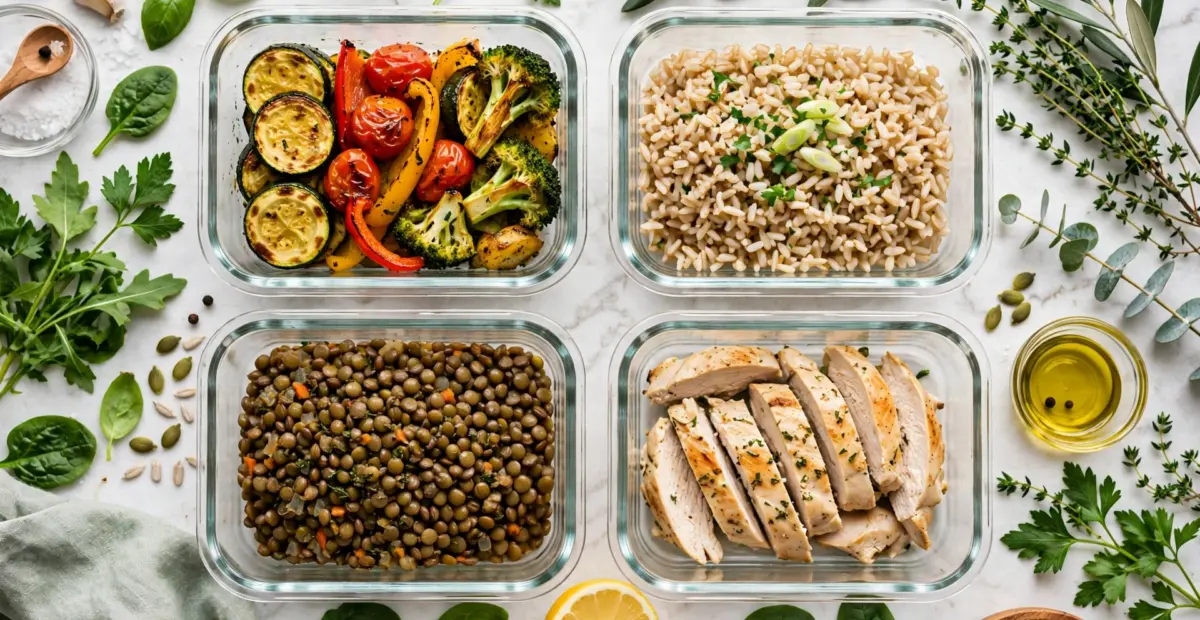
Healthy dinner meal prep is not about eating the same container five nights in a row. It is about cooking a few versatile parts once, then mixing them into different dinners all week. A tray of roasted vegetables, a pot of grains, and one or two proteins give you the building blocks for tacos on Tuesday, a grain bowl on Wednesday, and soup on Thursday, without starting from scratch each night.
This guide walks through a simple system: one short prep session, ten dinner ideas that actually reheat well, and the food-safety rules that keep your leftovers safe to eat.
Why dinner prep works (and why it often fails)
Most dinner decisions happen at the worst possible moment — when you are hungry, tired, and short on time. Prepping ahead moves the decision to a calmer moment. When the main parts are already cooked, dinner becomes assembly, not a project.
Where people go wrong is over-ambition. Cooking five complete meals on Sunday sounds efficient, but by Thursday the food tastes tired, the fridge is crowded, and nobody wants another serving. A better target is parts, not finished meals: cook two proteins, one grain, and two vegetables, and let the sauces and toppings do the variety work.
Think of it this way: a good dinner plate still follows the same simple shape — roughly half vegetables and fruit, a quarter whole grains or starchy vegetables, and a quarter protein, with a drizzle of healthy fat. If your prep covers those three groups, almost any combination you assemble will be reasonably balanced.
Read also: How to Build a Balanced Dinner
The 60-minute Sunday dinner prep session
You do not need a whole afternoon. One focused hour is enough, and the oven does most of the work. Start the grain, then roast while you chop.
Here is a session that covers the week:
- One grain: a large pot of brown rice or quinoa, cooled and stored in a sealed container. Cooked grains keep well and reheat in minutes.
- One roasted vegetable tray: sweet potatoes, carrots, broccoli, and red onion tossed in olive oil. Roast at high heat until the edges crisp.
- One raw vegetable stash: washed greens, sliced cucumbers, shredded carrots, and chopped peppers, stored dry in separate containers so salads stay crisp.
- Two proteins: for example, a tray of chicken thighs and a pot of lentils or black beans. One animal protein and one plant protein keeps the week varied and the grocery bill lower.
- One sauce: a lemon-tahini dressing, a simple salsa verde, or a peanut-lime sauce. Sauce is the fastest way to make the same ingredients taste like a different dinner.
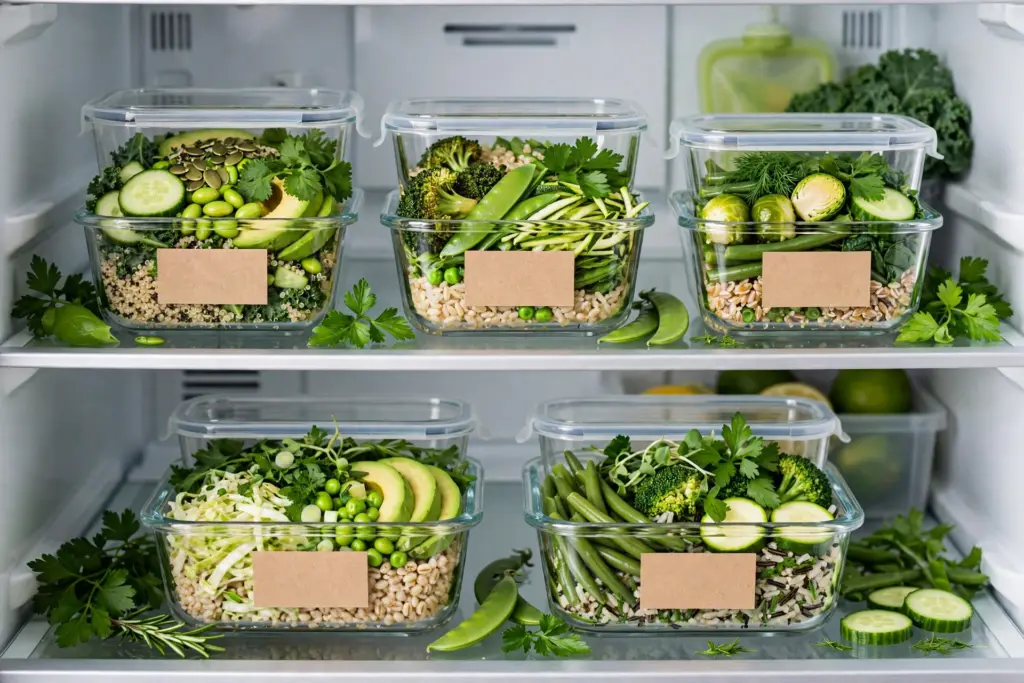
While things cook, wash the containers you will need, label them with masking tape and the day you cooked them, and clear one shelf for the week’s dinners. That small bit of tidiness matters: if you cannot see what you have, you will not use it.
10 healthy dinner meal prep ideas
Each idea below starts from the Sunday building blocks, so none of them needs a full cooking session on a weeknight. Pick three or four for the week and rotate the rest in later.
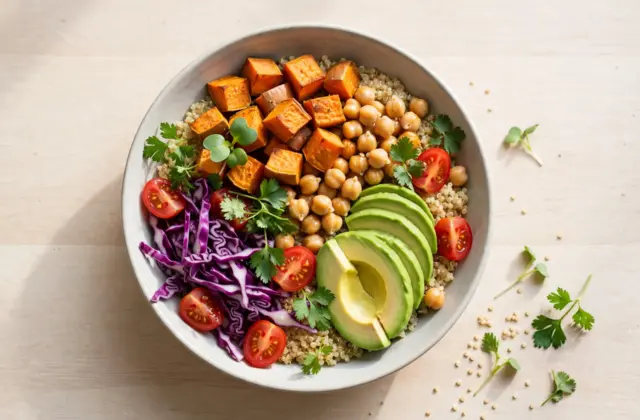
1. Burrito bowls. Brown rice, black beans, roasted sweet potato, corn, and salsa, topped with avocado or a spoonful of Greek yogurt. Add shredded cabbage for crunch.
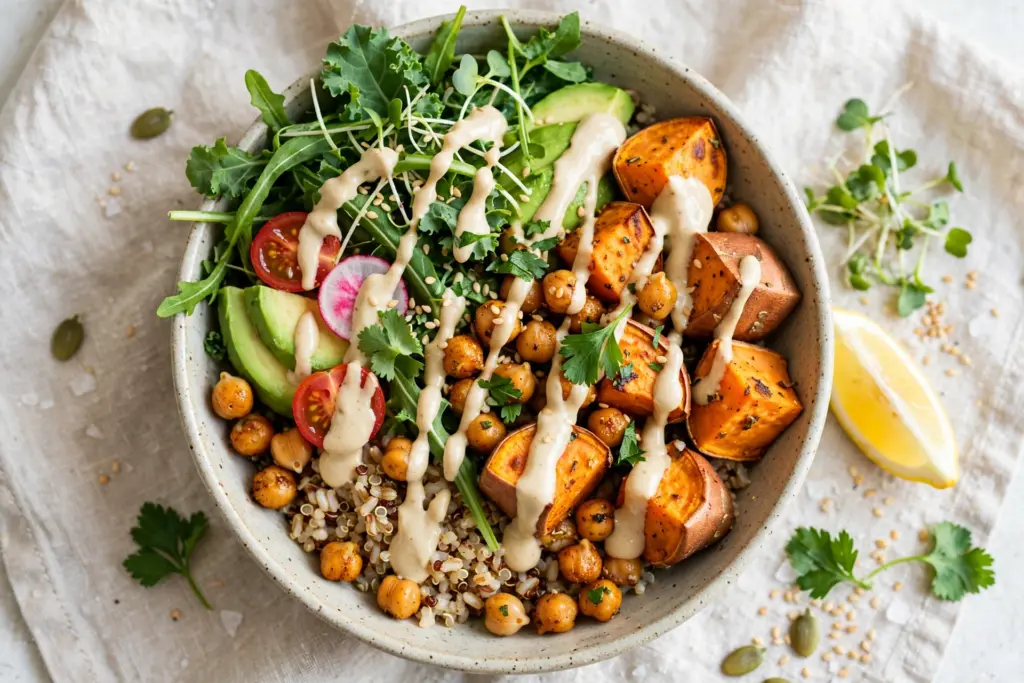
2. Chicken and roasted vegetable plates. Sliced chicken thighs, roasted broccoli and carrots, and quinoa, with lemon-tahini sauce. This is the simplest template in the list, and the one most people come back to.
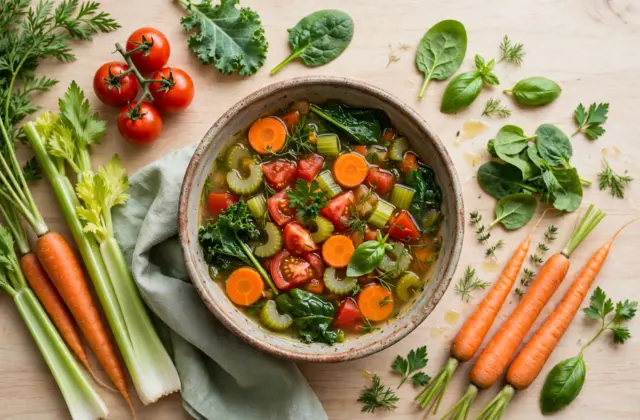
3. Lentil and vegetable soup. Simmer pre-cooked lentils with canned tomatoes, carrots, celery, and broth. Soup actually improves after a day in the fridge, and it freezes beautifully.
4. Tofu stir-fry. Pre-pressed tofu, frozen stir-fry vegetables, and a soy-ginger-garlic sauce over rice. Frozen vegetables are a genuine time-saver here — they are frozen at peak freshness and need no chopping.
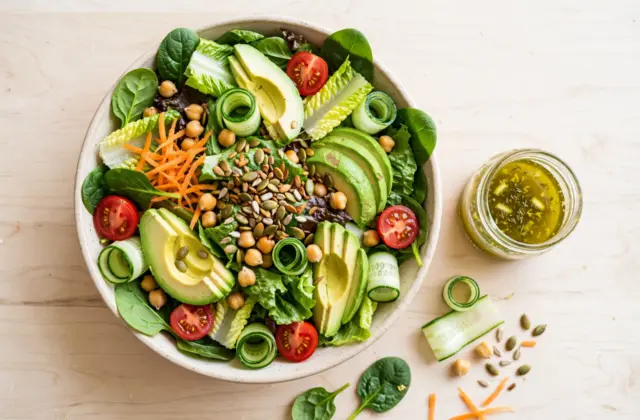
5. Mediterranean chickpea bowls. Chickpeas, roasted vegetables, cucumber, tomatoes, olives, and feta, with a lemon-olive oil dressing. No reheating needed if you prefer it at room temperature.
6. Salmon and green beans. Bake salmon fillets fresh (fish reheats less gracefully than chicken or beans, so cook it the night you eat it) and serve with prepped green beans and rice. The sides are already done, so the whole dinner takes about 15 minutes.
7. Turkey taco filling. Cook a large batch of seasoned ground turkey with onions and peppers on Sunday, then use it for tacos one night and stuffed sweet potatoes another. Two dinners, one cooking session.
8. Veggie fried rice. Day-old rice fries up better than fresh rice, which makes this the perfect Monday dinner. Add eggs, frozen peas and carrots, and scallions.
9. Pasta with white beans and greens. Whole-grain pasta, canned white beans, garlic, olive oil, and a big handful of spinach or kale that wilts in the heat of the pan. Dinner in about 20 minutes, with pantry ingredients doing the heavy lifting.
10. Sheet-pan sausage and vegetables. Chicken sausage, potatoes, peppers, and onions roasted together. Slice the leftovers the next day and tuck them into a wrap with hummus for a completely different second dinner.
Read also: Healthy Dinner Plates: How to Build Them
How to keep prepped dinners tasting good all week
The difference between meal prep people love and meal prep people abandon is usually texture, not flavor. A few habits protect it:
- Store parts separately. Keep grains, proteins, vegetables, and sauces in different containers. Mixed bowls go soggy; separate parts stay fresh and let you vary combinations.
- Keep dressings on the side. A salad dressed on Sunday is wilted by Tuesday. The same salad with dressing added at serving time is still crisp.
- Freeze half of anything big. If you cook a large pot of soup or chili, freeze half in single portions right away. Future-you will be grateful on the week you do not prep at all.
- Reheat with a splash of water or broth. Rice and pasta dry out in the fridge. A tablespoon of water before microwaving, with the container loosely covered, brings them back.
- Plan one fresh-cook night. Not every dinner needs to come from the fridge. One night of cooking something fresh — like the salmon above — breaks up the week and keeps prep from feeling like a chore.
What about nutrition? A quick reality check
Meal prep makes balanced eating easier, but it does not automatically make it healthy. A week of prepped dinners built on refined grains, salty sauces, and very little produce is still a week of refined grains, salty sauces, and very little produce. The prep system works best when vegetables do real work in every dinner.
The World Health Organization recommends at least 400 grams of fruit and vegetables a day — roughly five portions — along with keeping free sugars below 10% of daily energy (ideally below 5%) and salt below 5 grams a day. That 400-gram target is easier to hit at dinner than at any other meal, because dinner is where a full plate of vegetables fits naturally: a side salad plus roasted vegetables easily covers two or three portions on its own.
Two practical checks help. First, look at the plate: is about half of it vegetables or fruit? Second, check the sauce and seasoning: sauces are where salt and sugar quietly accumulate, so a homemade dressing you control usually beats a bottled one loaded with both. Neither check requires counting or tracking — just a glance before you eat.
Read also: Weekly Meal Planning for Balanced Meals
Food safety: the rules that matter for dinner prep
Prepped food is only convenient if it is safe, and the rules here are simple enough to memorize. The U.S. Department of Agriculture’s Food Safety and Inspection Service advises refrigerating perishable food within 2 hours of cooking — within 1 hour if the temperature is above 90°F — and keeping the refrigerator at or below 40°F.
Most cooked leftovers keep for 3 to 4 days in the refrigerator, or 3 to 4 months in the freezer for best quality. When you reheat, leftovers should reach 165°F throughout, measured with a food thermometer, and sauces, soups, and gravies should be brought to a rolling boil. Reheat only the portion you plan to eat, and when in doubt, throw it out — you cannot see, smell, or taste most bacteria that cause foodborne illness.
In practice, this means: cook on Sunday, eat those leftovers by Wednesday or Thursday, and freeze anything meant for Friday. Label containers with the cooking date so you are never guessing, and cool food quickly by spreading it in shallow containers rather than leaving a deep, steaming pot on the counter.
A sample week, using one prep session
Here is how the Sunday session above plays out across a week, so you can see the system rather than just the list:
- Sunday: Prep session, then chicken and roasted vegetable plates for dinner.
- Monday: Veggie fried rice with the leftover rice and an egg.
- Tuesday: Burrito bowls with black beans and roasted sweet potato.
- Wednesday: Lentil and vegetable soup (made fresh in 25 minutes from prepped lentils, or reheated from a frozen batch).
- Thursday: Mediterranean chickpea bowls, mostly assembled, not cooked.
- Friday: Salmon cooked fresh, with prepped green beans and rice — or a freezer meal if the week ran long.
Notice what did not happen: nobody cooked a full dinner from scratch on Monday, Tuesday, or Thursday. That is the whole point. Prep does not remove cooking from your week; it moves it to the one hour when you have time, and leaves weeknights for assembling, eating, and getting on with your evening.
Frequently asked questions
How long do prepped dinners last in the fridge?
Most cooked dinners keep 3 to 4 days refrigerated at or below 40°F, according to USDA guidance. Plan to eat Sunday’s prep by Wednesday or Thursday, and freeze anything you will not reach in that window.
Can I meal prep dinners for the whole week at once?
You can, but parts keep better than finished meals. Cook components on Sunday, freeze half of large batches, and leave at least one night for a fresh-cooked dinner so the week does not feel monotonous.
What dinners reheat best?
Soups, stews, curries, grain bowls, roasted vegetables, beans, and lentils all reheat well. Leafy salads, fried foods, and most fish are better assembled or cooked fresh.
Do I need special containers?
No. Any sealed, shallow containers work, ideally glass for reheating. The habit that matters most is labeling each container with the date you cooked it.
Sources
- World Health Organization — Healthy diet
- USDA Food Safety and Inspection Service — Leftovers and Food Safety
Disclaimer: This article is for general nutrition information only and is not medical advice. If you have a health condition, food allergy, or specific dietary needs, talk with a qualified health professional before changing how you eat.