Healthy Lunch Meal Prep Ideas
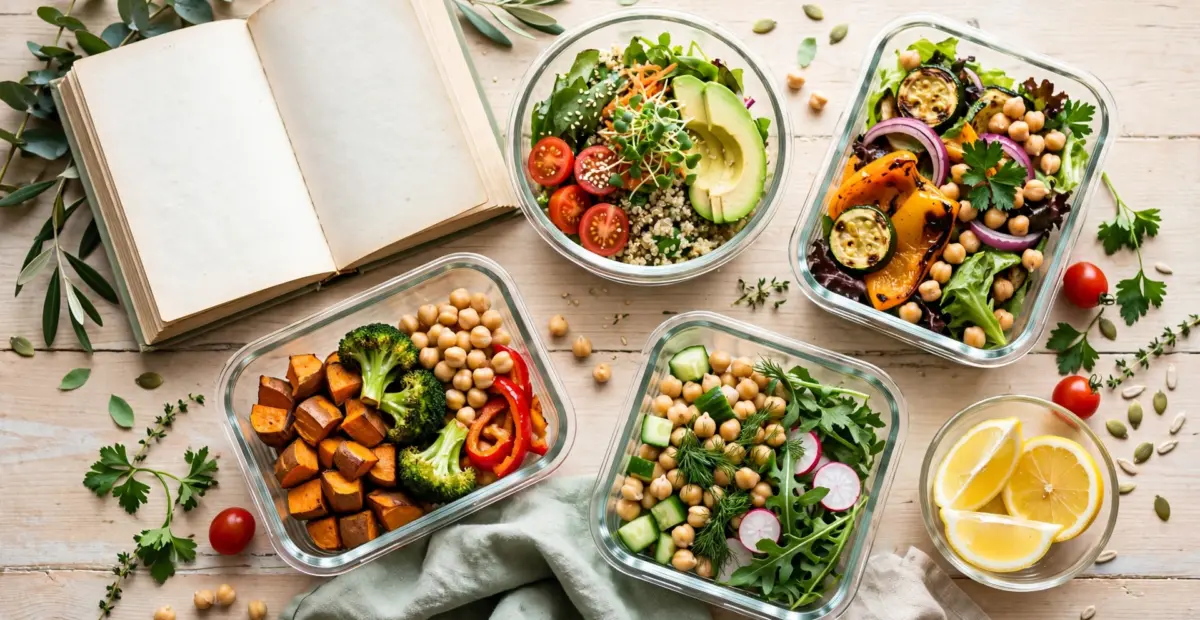
Lunch is the meal most likely to fall apart. Breakfast has a routine, dinner gets at least some planning, but lunch lands right in the middle of work, errands, and everything else — which is why so many of us end up with a vending-machine snack at 3 p.m. and a vague plan to “eat better tomorrow.” A little lunch prep changes that equation completely. Spend under an hour once a week, and you can walk into every weekday with a lunch that is already decided, already balanced, and already waiting in the fridge.
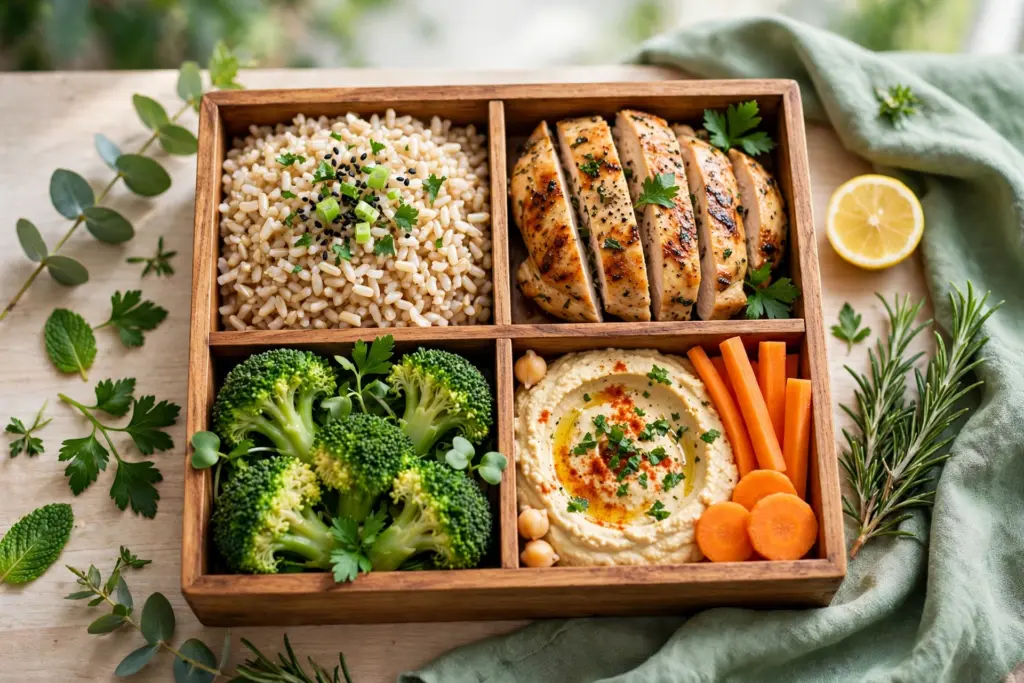
This is not about eating the same sad container five days in a row. The trick is to prep components, not finished meals: a grain, a protein, a few vegetables, and a sauce or two. Then you mix and match all week, so Monday’s grain bowl does not taste like Thursday’s wrap, even though both came from the same Sunday session.
What makes a lunch worth prepping?
A good packed lunch does three jobs at once. It keeps you full until dinner, it covers more than one food group, and it still tastes good after a few days in the fridge. That last part matters more than people admit — a lunch you dread opening is a lunch you will skip in favor of takeout.
A simple formula helps. Start with a base — brown rice, quinoa, whole-wheat pasta, or a sturdy green. Add a protein — chicken, tofu, eggs, beans, or canned tuna. Add vegetables, ideally two kinds and two colors. Then add something that makes it interesting: a dressing, a handful of nuts, pickled onions, or a spoonful of hummus. If you can tick those four boxes, you are most of the way there.
The World Health Organization recommends at least 400 grams of fruit and vegetables a day for people over age 10, along with at least 25 grams of naturally occurring dietary fiber. Lunch is a perfect place to make progress on both, because a grain bowl or a big salad can quietly hold two or three portions of vegetables before you even think about dinner.
10 healthy lunch meal prep ideas
Here are ten ideas built around the same handful of prepped components, so one cooking session feeds all of them.
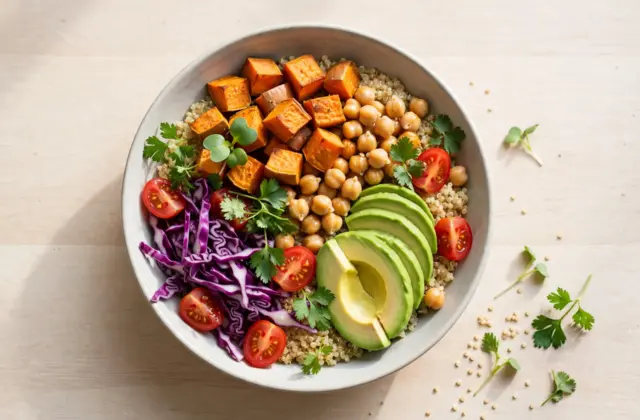
1. Mediterranean chickpea bowl. Quinoa, chickpeas, cucumber, cherry tomatoes, red onion, olives, and feta with lemon-olive oil dressing. It holds up beautifully for days and tastes better once the flavors have had a night to mingle.
2. Chicken and roasted vegetable grain bowl. Roasted sweet potato, broccoli, and carrots over brown rice with sliced chicken and a tahini drizzle. Keep the dressing separate until lunchtime so nothing goes soggy.
3. Tofu stir-fry box. Baked tofu, stir-fried peppers and green beans, and rice noodles with a light soy-ginger sauce. Tofu soaks up flavor overnight, which is exactly what you want from a leftover.
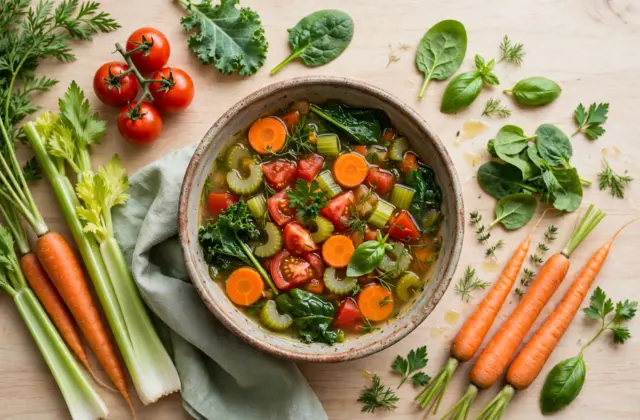
4. Lentil soup, packed in jars. A pot of lentil and vegetable soup on Sunday becomes three or four lunches. Lentils are filling, cheap, and rich in fiber — one cooked cup gives you roughly 15 grams of fiber along with about 18 grams of protein.
5. Burrito bowls. Rice, black beans, corn, peppers, salsa, and a little cheese or Greek yogurt. Pack the salsa separately if you are eating it after day two, and add avocado fresh on the day.
6. Hummus and veggie wraps. A whole-wheat wrap spread thickly with hummus, filled with shredded carrot, cucumber, spinach, and sliced egg or falafel. Wrap tightly in foil or parchment and it travels well.
7. Salmon and green-bean salad. Canned or leftover salmon flaked over green beans, potatoes, and a mustard vinaigrette. Canned fish is one of the most underrated prep shortcuts: no cooking, long shelf life, and a solid source of protein.
8. Pasta salad that is actually a meal. Whole-wheat pasta, white beans, roasted zucchini, sun-dried tomatoes, and basil pesto. Pasta salad gets a bad reputation because it is often just pasta and dressing; beans and vegetables turn it into lunch.
9. Bento-style snack lunch. Hard-boiled eggs, cheese cubes or cottage cheese, whole-grain crackers, cherry tomatoes, cucumber sticks, and fruit. Some days you do not want a “meal” — you want a grazing plate, and that counts.
10. Fried-rice lunchbox. Day-old brown rice stir-fried with eggs, frozen mixed vegetables, and edamame. It reheats well, uses up odds and ends, and takes about ten minutes if the rice is already cooked.
Read also: Healthy Meal Prep Ideas for Work Lunches
The 45-minute Sunday system
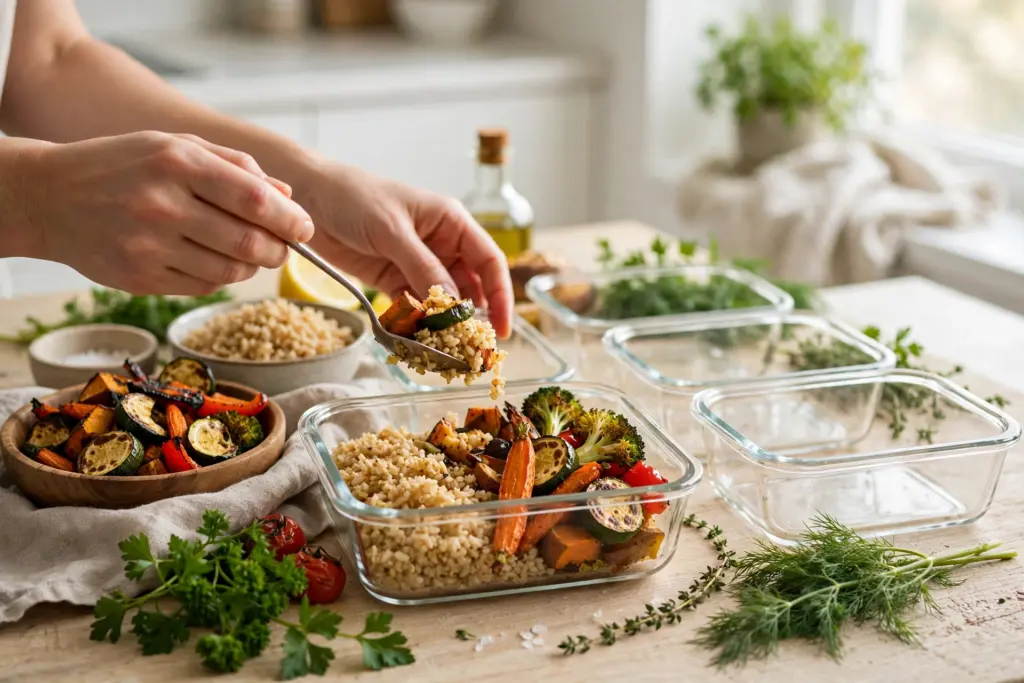
You do not need a whole afternoon. One focused session is enough, and it helps to cook in a sensible order: start the grain first, since it cooks hands-free, then roast vegetables while the grain simmers, then cook your protein while everything is in the oven.
A workable Sunday list looks like this: one pot of grains (quinoa or brown rice), one tray of roasted vegetables, one protein (a tray of chicken thighs, a block of baked tofu, or a pot of lentils), one sauce (tahini-lemon or a simple vinaigrette), and a few washed, cut raw vegetables for crunch. That is it. From those five things you can build at least four different lunches, and you will barely repeat yourself.
Pack lunches in single-serving containers as soon as the food cools, rather than storing one giant tub you have to portion out each morning. Morning-you will be grateful, and you will actually grab the container on your way out instead of telling yourself you will sort it out later.
Read also: Weekly Meal Planning for Balanced Meals
Keeping prepped lunches safe — and tasty
Food safety is the part of meal prep nobody wants to think about, but it is what makes the whole system work. The U.S. Department of Agriculture’s Food Safety and Inspection Service advises refrigerating leftovers within 2 hours of cooking (within 1 hour if the temperature is above 90°F), keeping the refrigerator at 40°F or below, and eating refrigerated leftovers within 3 to 4 days. Reheat leftovers to 165°F, and bring soups, sauces, and gravies to a rolling boil. Frozen leftovers keep their best quality for about 3 to 4 months.
In practice, that means a Sunday cook-up covers Monday through Wednesday or Thursday comfortably. For Thursday and Friday, either freeze a couple of portions on Sunday and move them to the fridge the night before, or plan two no-cook lunches (wraps, bento boxes, canned-fish salads) for the end of the week. Label containers with the day you cooked them — masking tape and a pen beat guessing every time.
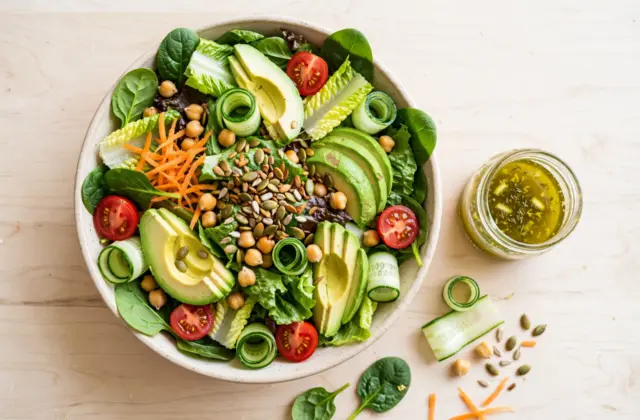
Taste survives prep better when you store components separately where it matters: dressings in small jars, crunchy toppings in their own bag, avocado and fresh herbs added on the day. A squeeze of lemon, a handful of fresh herbs, or a different sauce can make Wednesday’s leftovers feel like a different lunch from Monday’s.
Read also: How to Prep Produce for the Week
What if you hate leftovers?
Not everyone likes eating food that has been in the fridge for three days, and that is fine. Meal prep still works — you just prep ingredients instead of finished meals. Cook plain grains, roast plain vegetables, and keep proteins unseasoned, then season each lunch differently: Mediterranean one day, Mexican-inspired the next, Asian-inspired after that. Same components, three different lunches, no déjà vu.
Another option is the half-prep week: prep lunches for Monday to Wednesday only, then reassess on Wednesday evening. A shorter horizon keeps food fresher and the routine less rigid, and it is a good starting point if a full week of prep feels like too much commitment.
A sample week from one prep session
Monday: Mediterranean chickpea bowl. Tuesday: chicken and roasted vegetable grain bowl with tahini. Wednesday: lentil soup with whole-grain bread. Thursday: hummus and veggie wrap (no-cook, assembled in five minutes). Friday: bento-style snack lunch with eggs, cheese, crackers, and fruit. Five lunches, one cooking session, and nothing that required a decision at noon.
The goal is not perfection. Some weeks you will prep four lunches and buy one, and that still beats five days of improvising under time pressure. Start with just two or three prepped lunches next week and build from there — the habit sticks when it stays easy.
Frequently asked questions
How long do meal-prepped lunches last in the fridge?
Most cooked lunches keep for 3 to 4 days in a refrigerator at 40°F or below, according to USDA guidance. Plan Sunday prep for Monday through Wednesday or Thursday, and freeze portions meant for later in the week.
Do I need special containers?
No. Any clean, airtight container works, but glass containers with separate compartments help keep wet and dry foods apart, and single-serving sizes make grab-and-go mornings much easier.
Can I meal prep salads without them going soggy?
Yes — layer dressing at the bottom of the jar or container, then sturdy vegetables, then grains and protein, with leafy greens on top. Toss just before eating and the greens stay crisp.
What is the cheapest way to start lunch meal prep?
Build lunches around beans, lentils, eggs, canned fish, frozen vegetables, and grains you already buy. These are filling, keep well, and cost far less per lunch than most takeout options.
This article is for general information only and is not medical advice. If you have a health condition or specific dietary needs, talk with a qualified health professional before changing your eating pattern.
Sources
- World Health Organization — Healthy diet fact sheet (at least 400 g of fruit and vegetables per day for people over 10; at least 25 g of naturally occurring dietary fiber per day)
- USDA Food Safety and Inspection Service — Leftovers and Food Safety (refrigerate within 2 hours; fridge at 40°F or below; leftovers 3 to 4 days; reheat to 165°F)
- FoodSafety.gov — Cold Food Storage Charts (refrigerator and freezer storage times by food type)