Fresh, Frozen, or Canned Produce: How to Compare
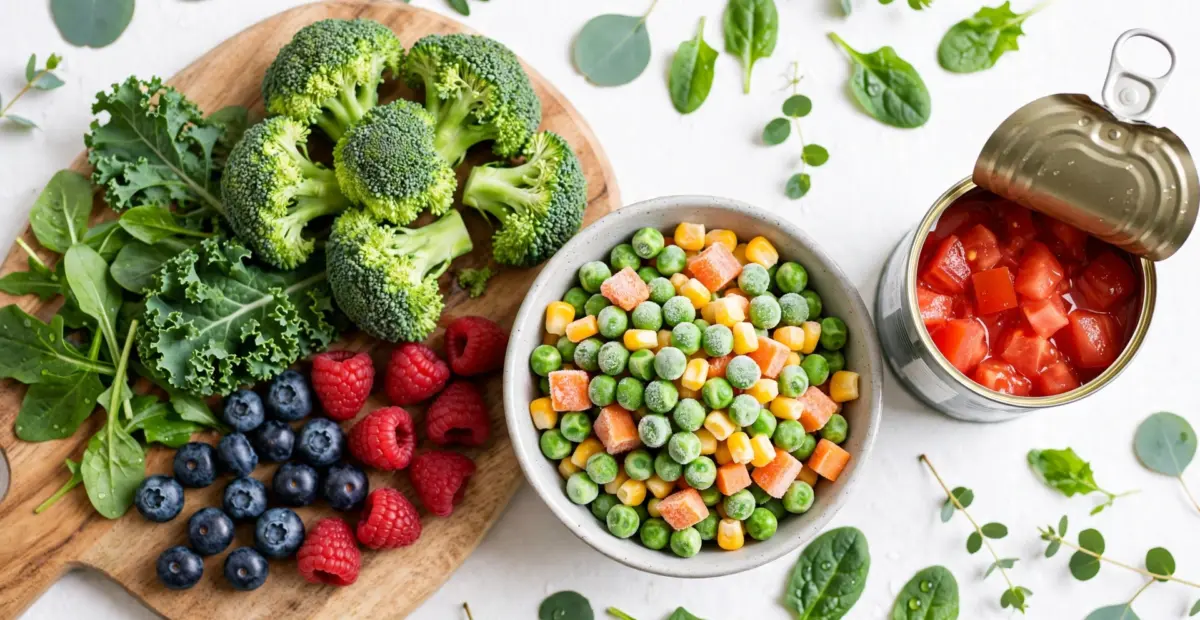
Walk down any grocery aisle and you face the same quiet question: fresh, frozen, or canned? Fresh looks best, frozen feels like a compromise, and canned carries a reputation it may not deserve. The honest answer is less dramatic than the marketing suggests. All three can count toward a healthy diet. What matters most is not the form on the label, but what was added to it — salt, sugar, or nothing at all — and how you use it once it gets home.
The World Health Organization puts it plainly: fresh fruit and vegetables are great choices, but frozen and canned are also good, provided they do not have added sugars or excess sodium. That single condition does most of the work in this comparison. A bag of plain frozen broccoli and a can of no-salt-added green beans are, nutritionally, much closer to fresh than most shoppers assume. A can of peaches in heavy syrup is a different food altogether, even though the fruit inside started out the same.
Why fresh is not automatically the winner
Fresh produce earns its reputation for good reasons. It usually tastes brighter, keeps its crunch, and works beautifully raw — in salads, snack plates, and sandwiches. Nothing beats a tomato sliced straight from the vine in summer, or berries eaten the day you buy them.
But fresh has a weakness: time. Vitamins, especially vitamin C and folate, decline during storage, and a head of broccoli that sits in the fridge for five days is not the same food it was at the store. A two-year study comparing fresh, fresh-stored, and frozen produce found that in most comparisons there was no significant difference in vitamin content — and when differences did appear, frozen outperformed five-day refrigerated produce more often than the other way around. The researchers concluded that the common belief that fresh food has significantly greater nutritional value than its frozen counterpart was not supported by their results.
That does not mean fresh is bad. It means fresh is best when it is actually fresh — bought recently, stored well, and eaten soon. If your fresh spinach regularly turns to soup in the crisper drawer before you cook it, frozen spinach you actually eat wins every time. The healthiest produce is the produce that makes it onto your plate.
Read also: How to Prep Produce for the Week
Frozen: picked ripe, locked in place
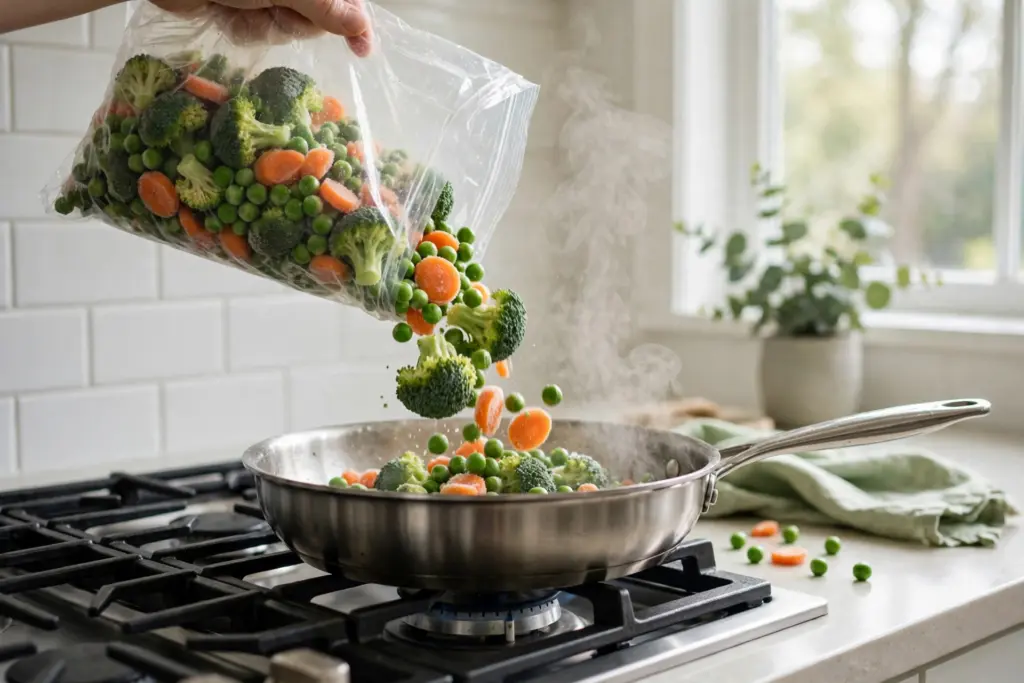
Frozen vegetables and fruit are usually harvested at peak ripeness, blanched briefly, and frozen quickly. Blanching — a short dip in hot water — stops enzymes that would otherwise keep degrading the food during storage. It does cost some water-soluble vitamins, which is why frozen is not a perfect copy of fresh. But freezing then holds the rest steady for months, while fresh produce keeps losing ground day by day in the fridge.
An earlier study of eight fruits and vegetables found much the same pattern: vitamin C showed no significant difference between fresh and frozen for five of the eight foods, and was higher in the frozen samples for three. Fat-soluble vitamins held up well too. The takeaway is not that frozen beats fresh across the board — it does not — but that plain frozen produce is a genuinely nutritious option, not a second-class one.
Frozen also solves practical problems. It does not spoil in three days. You can use half a bag and put the rest back. Out-of-season berries, peas, mango, and mixed vegetables become affordable and available all year. For busy weeks, that reliability is worth a lot: a freezer stocked with plain vegetables turns a plain bowl of rice or pasta into a balanced meal in ten minutes.
The rule for the freezer aisle is simple: read the ingredient list, and stop at one ingredient. Plain frozen broccoli should list broccoli. Skip bags with added salt, butter sauce, cheese sauce, or sweetened glazes — those extras are where an otherwise excellent choice starts sliding. If you want sauce, you can add your own olive oil, garlic, or lemon at home and control the amount.
Read also: How to Navigate the Frozen Food Aisle
Canned: the pantry workhorse, with two catches
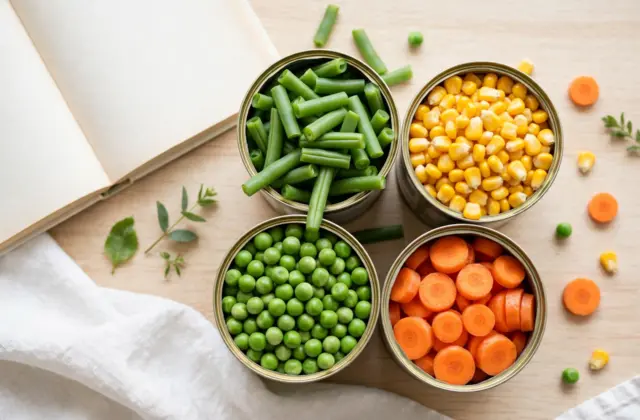
Canned produce is cooked during canning, then sealed so it keeps for months or years without refrigeration. That heat softens texture and trims some heat-sensitive vitamins, but fiber and many minerals hold up well, and some nutrients actually become easier for your body to use. Lycopene in tomatoes is the classic example: heat and processing break down cell walls, so lycopene from tomato paste and purée is more bioavailable than lycopene from raw tomatoes. A can of tomatoes for soup or sauce is not a nutritional consolation prize — for that job, it is often the smarter pick.
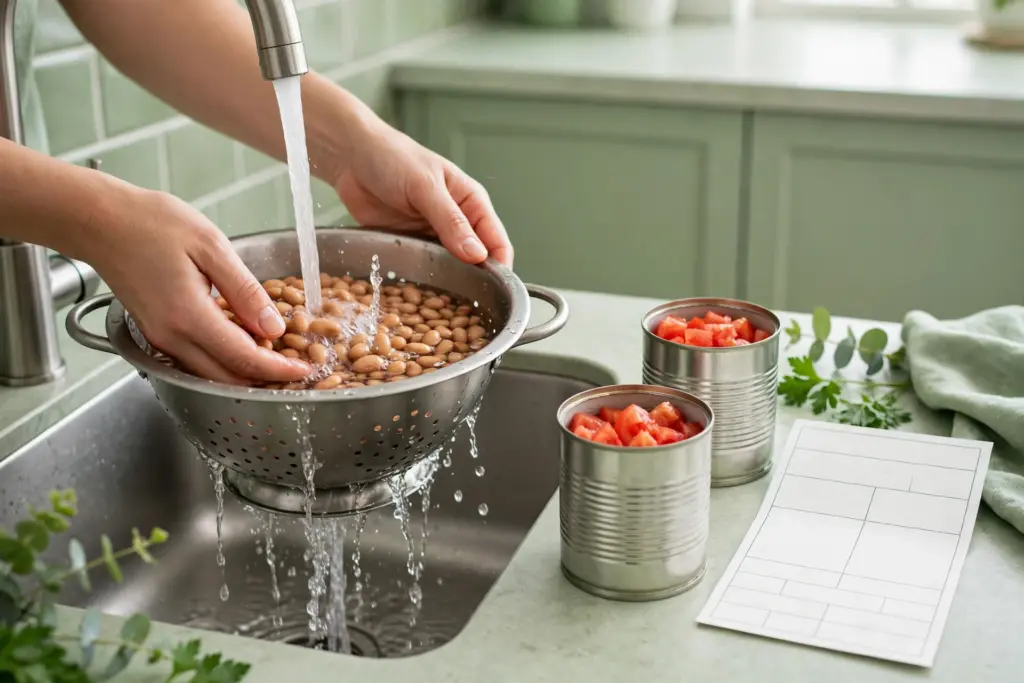
Canned produce has two catches, and both are printed on the label. The first is sodium. Vegetables canned in brine can carry several hundred milligrams of sodium per serving, which adds up fast against the FDA’s Daily Value of 2,300 mg. Two fixes help. First, choose “no salt added” or “low sodium” versions — low sodium means 140 mg or less per serving. Second, drain and rinse: USDA research on canned corn, green beans, and peas found that draining and rinsing cut sodium by roughly 9 to 23 percent, depending on the vegetable. For canned beans the effect is larger, with draining alone cutting sodium by about 36 percent and draining plus rinsing by about 41 percent. A quick rinse will not fix a very salty can completely, but it moves it in the right direction, and it costs you thirty seconds.
The second catch is sugar, and it applies mainly to canned fruit. Fruit packed in heavy syrup can carry 10 grams or more of added sugar per half-cup serving — a meaningful chunk of the FDA’s 50-gram daily reference for added sugars. The fix is just as simple: choose fruit packed in water or 100% juice, with no added sugar on the label. If you only have fruit in light syrup, drain it and give it a quick rinse; you will not remove all the absorbed sugar, but you will remove some of the syrup clinging to the surface. And do not drink the syrup — that is where most of the added sugar lives.
Read also: How to Choose Canned Foods Wisely
How to compare them side by side
It helps to stop asking “which form is healthiest?” and start asking “which version of this food is healthiest?” A useful comparison looks like this:
Fresh wins on taste and texture, and on vitamin C when eaten soon after purchase. It loses on waste and price when it spoils before you use it, and on convenience in the off-season.
Frozen wins on consistency and shelf life. Plain frozen produce keeps its nutrients well, costs less per serving out of season, and produces almost no waste. It loses a little texture — frozen berries go soft when thawed, and frozen vegetables need proper cooking to avoid sogginess.
Canned wins on pantry life and price, and canned tomatoes and beans are genuinely excellent staples. It loses when salt or syrup is added, and some canned vegetables will never match fresh for crunch.
None of this is a ranking you must obey. It is a toolkit. Fresh salad greens for a lunch salad, frozen stir-fry vegetables for a Wednesday dinner, canned tomatoes for a weekend sauce — that mix is not a compromise. It is how most balanced eaters actually cook, and it keeps the WHO’s target of at least 400 grams of fruit and vegetables a day within reach on weeks when life gets in the way.
The 20-second label check
Whatever form you pick, the same quick check works. First, look at the ingredient list: shorter is better, and for frozen or canned produce, the list should ideally be just the vegetable or fruit itself. Second, check sodium: the FDA’s guide is that 5% of the Daily Value or less is low and 20% or more is high, so a canned vegetable at 20% DV for sodium deserves a rinse or a lower-sodium swap. Third, check added sugars on canned fruit: aim for 0 grams. If the front of the can says “in heavy syrup” or “in syrup,” put it back unless you have a specific recipe that needs it.
Two more habits round out the picture. Store fresh produce properly — cold, dry where appropriate, and used within a few days — so you are not comparing peak frozen against tired fresh. And keep a small backup stock: a few cans of no-salt-added tomatoes and beans, plus a bag or two of plain frozen vegetables, means a missed shopping trip does not turn into a produce-free week.
A practical way to shop
If you want a simple rule for your next shop, try this. Buy fresh for what you will eat in the next three or four days, especially salads, snacking fruit, and anything where crunch matters. Buy frozen for the rest of the week: stir-fry mixes, berries for smoothies and oatmeal, peas, corn, and broccoli you can cook straight from the bag. Buy canned for the pantry: tomatoes, beans, and fruit in water or juice for sauces, soups, and baking. Then let the label, not the form, be the tiebreaker. A plain frozen vegetable beats a salty canned one; a no-salt-added canned bean beats fresh produce that rots uneaten.
The produce aisle rewards flexibility more than loyalty. Fresh, frozen, and canned each have a job, and the best diet is usually the one that uses all three well — with salt and sugar kept in check and the ingredient list kept short.
Frequently asked questions
Does frozen produce lose all its nutrients?
No. Blanching causes some loss of water-soluble vitamins, but freezing then preserves most of what remains. Studies comparing fresh, fresh-stored, and frozen produce have generally found vitamin contents comparable, with frozen sometimes outperforming produce refrigerated for five days.
Is canned fruit as healthy as fresh fruit?
It can be close, if you pick the right can. Fruit packed in water or 100% juice with no added sugar keeps its fiber and much of its nutrition. Fruit in heavy syrup is a different story, because the added sugar changes the food significantly.
Should I always rinse canned vegetables?
It is a good habit, especially for regular or salted cans. Draining and rinsing canned vegetables cut sodium by roughly 9 to 23 percent in USDA research, and more for beans. If you bought no-salt-added versions, rinsing matters less, but it does no harm.
Which form is best for a tight budget?
Usually frozen and canned. They do not spoil, they are available year-round, and you use all of what you buy. Fresh is excellent value in season and when you eat it promptly, but wasted fresh produce is the most expensive produce of all.
This article is for general information only and is not medical advice. If you have a health condition that affects your diet, such as kidney disease or diabetes, talk with your clinician or a registered dietitian about the choices that fit you.
Sources
- World Health Organization — Healthy diet
- Li et al. — Selected nutrient analyses of fresh, fresh-stored, and frozen fruits and vegetables, Journal of Food Composition and Analysis
- Rickman et al. — Vitamin Retention in Eight Fruits and Vegetables, Journal of Agricultural and Food Chemistry
- USDA research on draining and rinsing canned vegetables (summarized)
- University of Illinois Extension — Canned fruit counts
- U.S. Food and Drug Administration — Nutrition Facts label: Daily Values for sodium and added sugars
- Story et al. — Tomato intake, lycopene, and bioavailability, Advances in Nutrition