How to Create a Balanced Vegetarian Plate
A vegetarian plate can be one of the healthiest plates around — or one of the least balanced. The difference usually isn’t willpower. It’s structure. A plate built mostly from vegetables, beans, whole grains, and healthy fats can leave you full and energized. A plate built from white pasta, cheese, and a side of breaded something can leave you hungry again an hour later, even though no meat was involved.
The good news: you don’t need to count every gram or memorize amino acid charts to get this right. You need a simple formula, a reliable protein anchor at each meal, and a little attention to a handful of nutrients that plant-based eating makes easier to miss.
This guide walks through that planning, plate by plate.
First, what kind of vegetarian plate are we talking about?
“Vegetarian” covers a few different patterns, and the details shift with each one. Lacto-ovo vegetarians eat dairy and eggs but no meat, poultry, or fish. Lacto-vegetarians eat dairy but no eggs. Vegans eat no animal products at all.
Most of this guide applies to all of them, because the plate formula is the same. The main difference is the safety net: if you eat eggs and dairy, you get vitamin B12 and calcium from food more easily. If you don’t, fortified foods or a supplement become essential for B12 — plant foods contain no vitamin B12 unless they are fortified, according to the National Institutes of Health. Be honest about which pattern you actually follow, and plan for its gaps rather than hoping they sort themselves out.
The simple plate formula
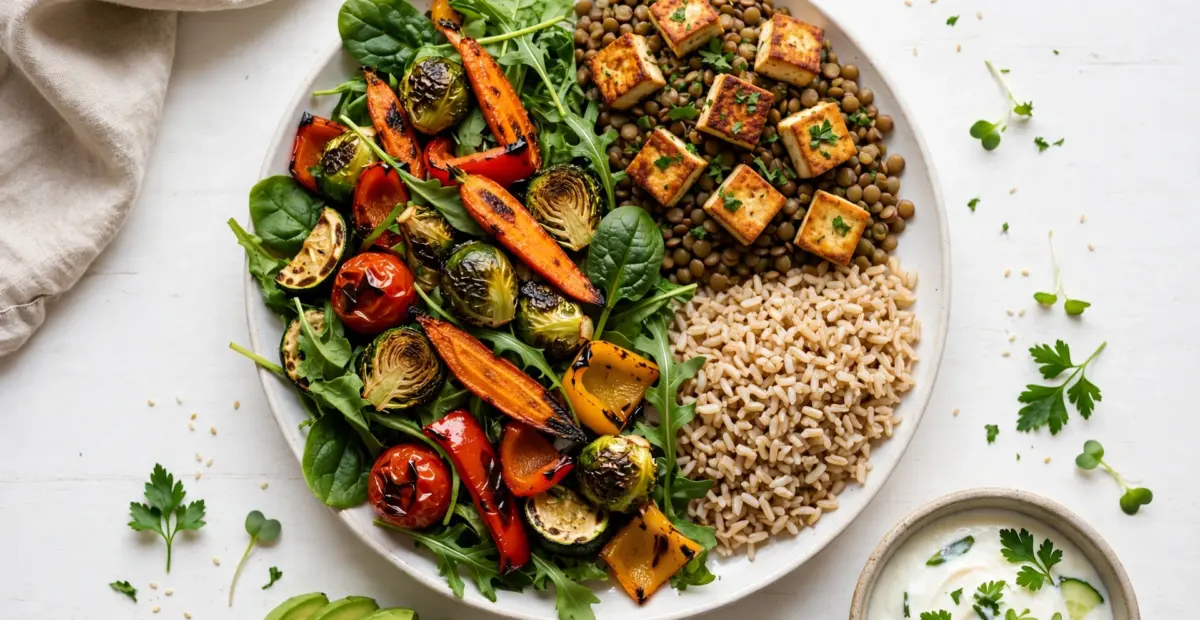
Start with proportions, not calories. Picture your plate divided like this:
- Half vegetables and fruit. Aim for variety and color — leafy greens, carrots, peppers, broccoli, tomatoes, berries, citrus. The World Health Organization recommends at least 400 grams (about five portions) of fruit and vegetables a day, and a plate that is half produce gets you most of the way there in one meal.
- A quarter protein foods. Beans, lentils, tofu, tempeh, edamame, eggs, or dairy. This is the anchor that keeps the meal satisfying.
- A quarter whole grains or starchy vegetables. Brown rice, quinoa, whole-wheat bread or pasta, oats, sweet potato, corn. These supply steady energy and fiber.
- Plus a thumb-sized portion of healthy fat. Olive oil, avocado, nuts, seeds, or tahini — for flavor, satiety, and fat-soluble vitamins.
- Plus a calcium source across the day. Milk, yogurt, cheese, calcium-set tofu, or a fortified plant milk.
Those proportions line up well with current U.S. guidance: the 2025–2030 Dietary Guidelines for Americans recommend about 3 servings of vegetables and 2 servings of fruit a day, 2 to 4 servings of whole grains, and 3 servings of dairy a day, with protein prioritized at every meal.
Read also: How to Build a Balanced Plate
Protein without meat: easier than you think
The most common worry about vegetarian eating is protein, and it’s also the easiest to solve. You do not need to combine specific proteins at the same meal — the old “complete protein at every meal” rule has been retired. The Academy of Nutrition and Dietetics notes that complementary plant proteins eaten across the day meet protein needs. What matters is eating a variety of protein foods across the day, so your body gets the full range of essential amino acids it needs.
Handy anchors to build meals around:
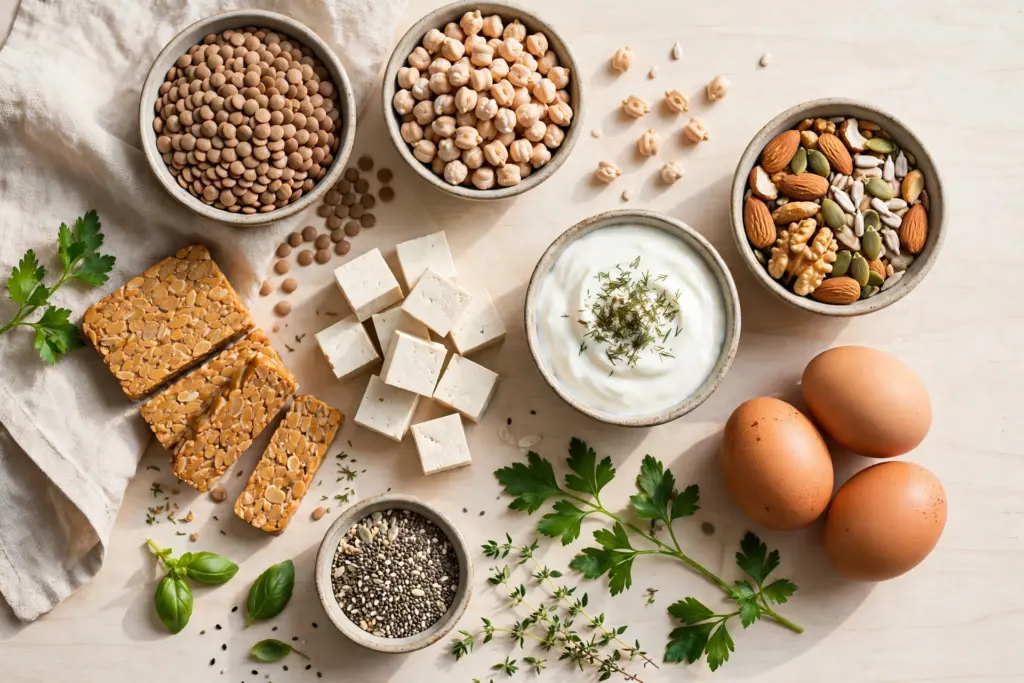
- Lentils: about 18 grams of protein per cooked cup, plus fiber and iron.
- Tofu: about 11 grams per half-cup, and calcium-set tofu adds calcium too.
- Greek yogurt: about 17 grams per 3/4 cup.
- Eggs: about 6 grams each, and an easy addition to grain bowls, salads, and toast.
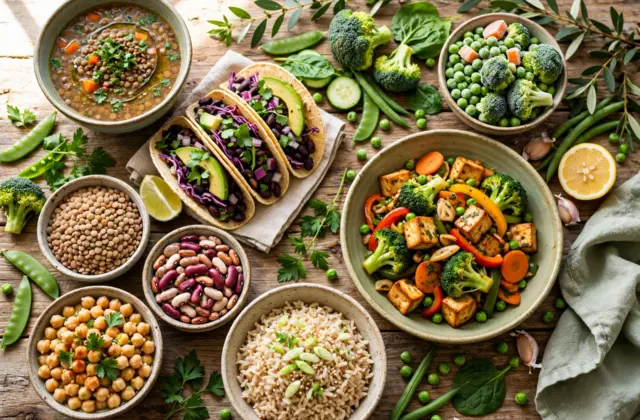
- Chickpeas, black beans, tempeh, edamame, nuts, and seeds: all pull their weight, and they each bring different minerals and fiber with them.
How much do you actually need? The 2025–2030 Dietary Guidelines set a target of 1.2 to 1.6 grams of protein per kilogram of body weight per day — noticeably higher than the older minimum of 0.8 grams. For a 70-kilogram adult, that works out to roughly 84 to 112 grams a day, spread across meals. That sounds like a lot until you add it up: Greek yogurt at breakfast, lentil soup at lunch, and tofu with quinoa at dinner gets you most of the way there without a single protein powder.
Read also: How to Add Protein to Everyday Meals
Five nutrients worth planning for
A vegetarian plate built on whole foods covers most nutrients comfortably. Five deserve deliberate attention:
1. Iron. Plants supply nonheme iron, which your body absorbs less readily than the heme iron in meat. The National Institutes of Health estimates iron absorption at roughly 5 to 12 percent from vegetarian diets, compared with 14 to 18 percent from mixed diets. The fix is simple: pair iron-rich foods (lentils, beans, tofu, spinach, fortified cereals) with vitamin C at the same meal — tomatoes, peppers, citrus, or broccoli. A squeeze of lemon over lentil soup or peppers in a bean salad genuinely helps. Tea and coffee with meals can work the other way, so keep them between meals if iron is a concern for you. Adult iron targets are 18 milligrams a day for women aged 19–50 and 8 milligrams for men in the same age range.
2. Vitamin B12. This one is non-negotiable. B12 keeps blood and nerve cells healthy, and the adult recommended amount is just 2.4 micrograms a day — a tiny amount, but one that plant foods cannot supply on their own. Lacto-ovo vegetarians usually get it from eggs and dairy. Vegans need fortified foods (nutritional yeast, fortified plant milks, fortified cereals) or a supplement, and should check labels, since fortification varies by product. If you are unsure about your intake, a blood test and a conversation with your clinician beat guessing.
3. Calcium. The adult recommended amount is 1,000 milligrams a day for ages 19–50 (1,200 milligrams for women aged 51–70). Dairy covers it easily for lacto-vegetarians. Without dairy, look to calcium-set tofu, fortified plant milks and yogurts, tahini, almonds, and leafy greens like kale and bok choy. Note that spinach, despite its calcium content, is a poor source in practice because oxalates bind much of it.
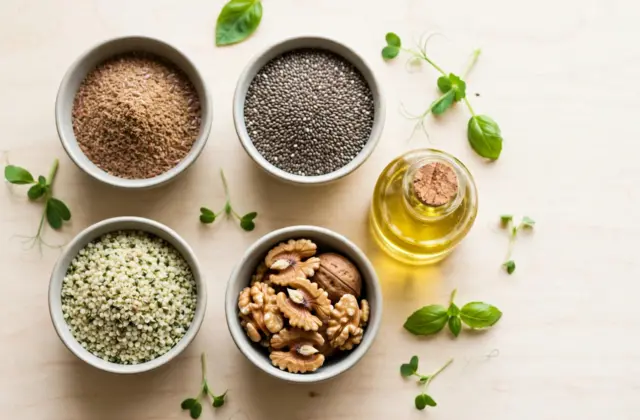
4. Omega-3 fats. Oily fish is the famous source, but plants offer ALA, the essential omega-3 fat, from flaxseed, chia seeds, walnuts, and canola oil. Adequate intakes are 1.1 grams a day for women and 1.6 grams for men. Your body can convert some ALA into EPA and DHA, though the conversion is limited, so a daily spoonful of ground flaxseed or a handful of walnuts is a habit worth keeping — and vegans who want EPA and DHA directly can look to algae-based supplements.
5. Iodine and vitamin D. Iodine deserves a quick check: if you use sea salt or no salt at all, you may miss the iodine that iodized salt provides; dairy and eggs supply some, and seaweed varies too wildly to rely on. Vitamin D, meanwhile, comes mainly from sun exposure and fortified foods for everyone, vegetarian or not — another reason fortified milks and cereals earn their place.
Three plates that put it together
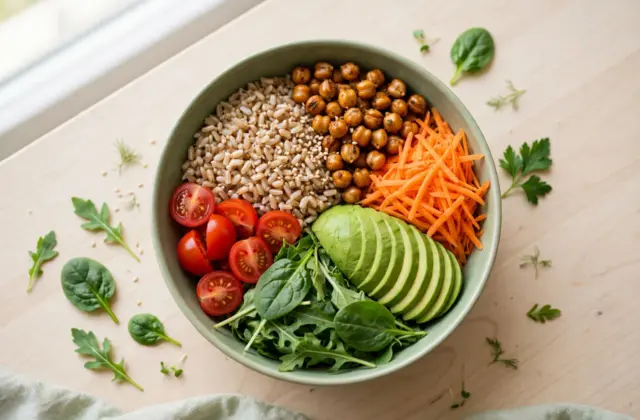
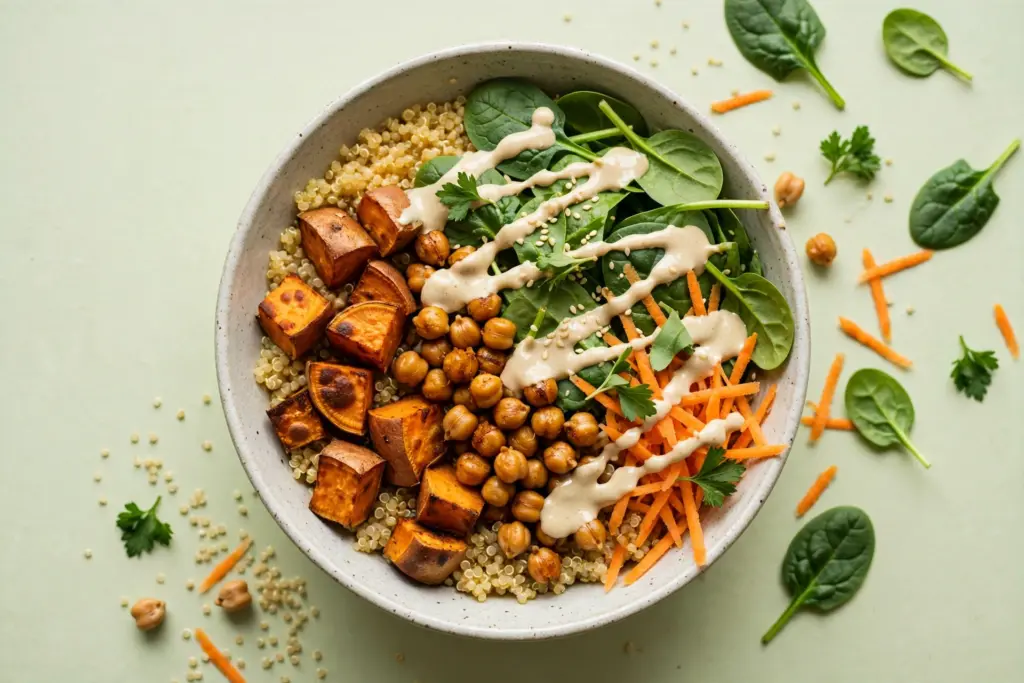
The weeknight grain bowl. Quinoa, roasted sweet potato and broccoli, chickpeas, a handful of spinach, pumpkin seeds, and a tahini-lemon dressing. Grain plus legume plus seeds plus vegetables — every part of the formula in one bowl, and it reheats well for lunch the next day.
The tofu stir-fry. Firm tofu and edamame with peppers, carrots, and bok choy over brown rice, finished with sesame oil and a splash of soy sauce. The peppers pull double duty, adding vitamin C alongside the iron in the tofu and edamame.
The lazy but balanced dinner. Scrambled eggs on whole-wheat toast with sautéed spinach and tomatoes, plus a piece of fruit. Ten minutes, and it proves a balanced vegetarian plate doesn’t require a recipe project.
Read also: How to Add More Vegetables to Your Meals
Three traps that unbalance a vegetarian plate
The cheese-heavy plate. Cheese adds protein and calcium, but it also adds a lot of saturated fat and sodium for relatively little fiber. Use it as an accent — a sprinkle of feta, a slice of cheese — not as the main protein at every meal.
The refined-carb plate. White pasta with tomato sauce, white bread, and a salad on the side is technically vegetarian, but it is low in fiber and protein and rarely keeps you full. Swapping in whole grains and adding beans or lentils changes the meal completely without changing its spirit.
The ultra-processed swap. Plant-based meat alternatives can be convenient, but many are high in sodium and saturated fat and low in fiber compared with the beans, lentils, and tofu they replace. Treat them as an occasional convenience, not the foundation of the plate — and check the label the way you would for any packaged food.
Make it stick
Start with one anchor habit rather than a full overhaul. Stock the pantry with lentils, canned beans, tofu, whole grains, and nuts, so a balanced plate is always possible without a special shopping trip. Cook a pot of grains and a pot of beans on Sunday, and the week’s plates nearly assemble themselves.
A balanced vegetarian plate isn’t a performance. It’s a pattern — half produce, a quarter protein, a quarter whole grains, a little healthy fat, and a plan for B12 and calcium. Get the pattern right most of the time, and the details mostly take care of themselves.
Frequently asked questions
Do vegetarians need to combine proteins at each meal?
No. Eating a variety of protein foods across the day — grains, legumes, soy foods, dairy, eggs, nuts, and seeds — supplies all the essential amino acids you need. The per-meal combining rule is outdated.
Can a vegetarian diet provide enough iron?
Yes, with planning. Iron from plants is absorbed less efficiently than iron from meat, so eat iron-rich foods with vitamin C sources at the same meal, and keep tea and coffee away from iron-rich meals when possible.
Do all vegetarians need a vitamin B12 supplement?
Lacto-ovo vegetarians who eat eggs and dairy regularly often meet their needs from food. Vegans, who eat no animal products, need B12 from fortified foods or a supplement — plant foods contain none unless fortified.
Is a vegetarian plate automatically healthy?
No. A plate of refined pasta, cheese, and fried snacks is vegetarian but not balanced. What matters is the pattern: plenty of vegetables, whole grains, legumes, and minimally processed foods, with attention to the nutrients outlined above.
This article is for general information only and is not medical advice. If you have a health condition, are pregnant, or are planning a vegetarian diet for a child, talk to your clinician or a registered dietitian about your individual needs.
Sources
- World Health Organization — Nutrition for a healthy life
- Dietary Guidelines for Americans, 2025–2030 — summary (American Academy of Family Physicians)
- National Institutes of Health, Office of Dietary Supplements — Vitamin B12, Consumer Fact Sheet
- National Institutes of Health, Office of Dietary Supplements — Iron, Consumer Fact Sheet
- Academy of Nutrition and Dietetics — Vegetarian Dietary Patterns for Adults: A Position Paper