How to Add Protein to Everyday Meals
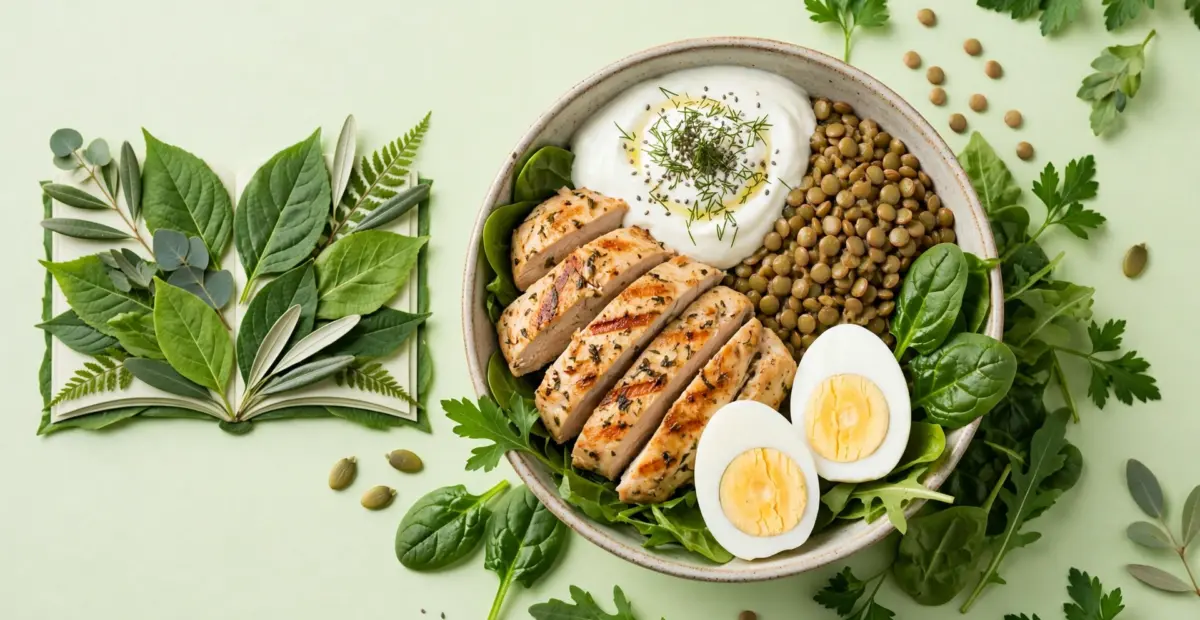
Most of us don’t have a protein problem at dinner. The chicken, the fish, the tofu stir-fry — dinner usually takes care of itself. The gap shows up everywhere else: a breakfast of toast and coffee, a lunch of salad leaves with a sprinkling of cheese, a 4 p.m. snack of crackers. By evening, you’ve eaten plenty of food but not much protein, and you’re wondering why you’re hungry again an hour after dinner.
Adding protein to everyday meals isn’t about eating like a bodybuilder or living on shakes. It’s about spreading a nutrient you already eat more evenly across the day, using foods you probably already buy. A spoonful here, a swap there, and the same meals you love start working harder for you.
How much protein do you actually need?
Start with the official floor, not the internet’s ceiling. The Recommended Dietary Allowance (RDA) for protein, set by the US National Academies, is 0.8 grams per kilogram of body weight per day — enough to meet the needs of about 97–98% of healthy adults. For a 70 kg (about 155 lb) person, that’s roughly 56 grams a day. Think of it as the minimum to avoid deficiency, not a target for feeling your best.
The current Dietary Guidelines for Americans, 2025–2030, go further, recommending about 1.2 to 1.6 grams per kilogram per day and urging people to prioritize protein foods at every meal. For that same 70 kg person, that’s roughly 84 to 112 grams a day. The older acceptable range — 10 to 35% of daily calories from protein — still holds as a sanity check: on a 2,000-calorie diet, that’s 50 to 175 grams. Most people land somewhere comfortable in the middle, and the exact number matters less than the pattern: some protein at each meal, from varied sources, rather than a mountain of it once a day.
Older adults, regular exercisers, and anyone recovering from illness may benefit from the higher end of that range, since muscle maintenance gets harder with age. If you have kidney disease or another condition affecting protein metabolism, though, this is a conversation for your clinician, not a blog post.
Start with breakfast, where the gap is biggest
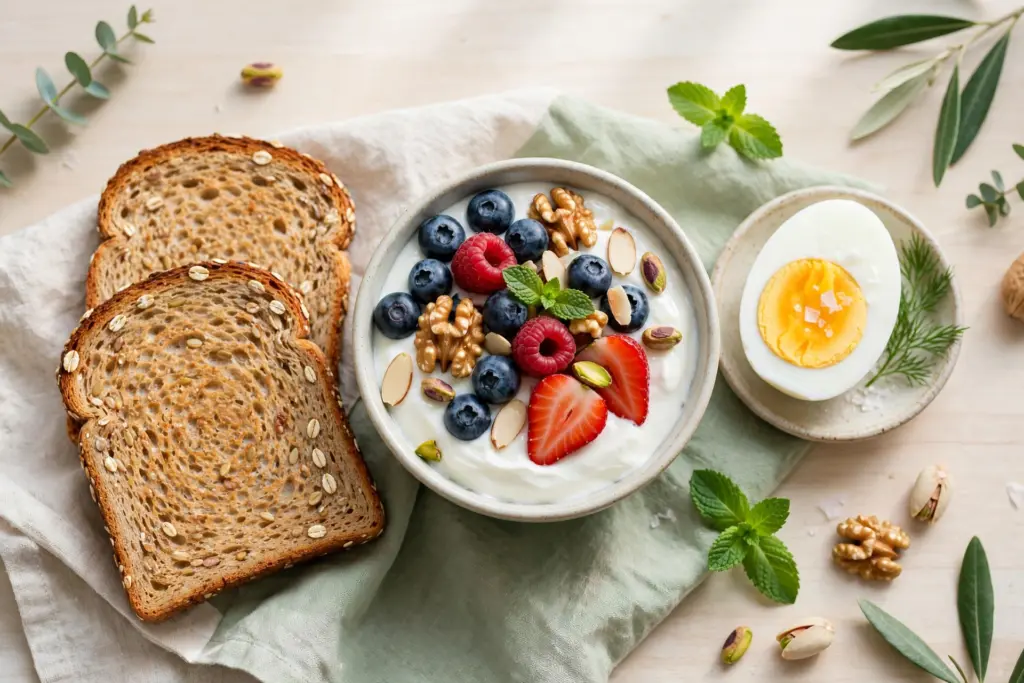
Breakfast is the easiest win in this whole article. A typical toast-and-jam breakfast might give you 4 or 5 grams of protein. Swap the jam for peanut butter and add an egg, and you’re suddenly near 20 grams before you’ve left the kitchen.
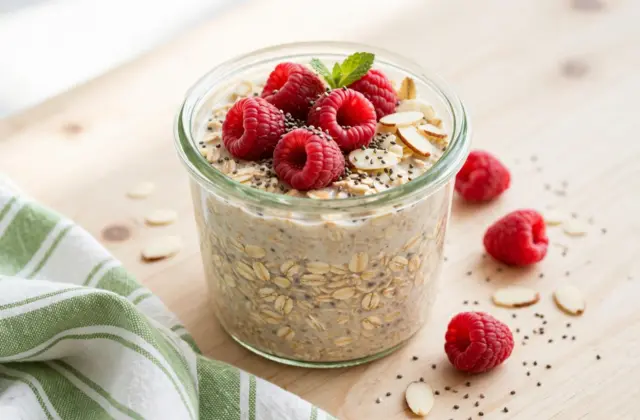
Greek yogurt is the quiet hero here. A 3/4-cup serving of plain nonfat Greek yogurt carries about 17 grams of protein, versus roughly 11 grams in a cup of regular nonfat yogurt. Stir in a handful of berries and a spoonful of seeds and you have a breakfast that actually keeps you full until lunch. Cottage cheese does similar work: about 12 grams per half cup, and it pairs just as happily with fruit as with tomatoes and black pepper on toast.
Eggs are the other obvious move — one large egg gives you about 6 grams — but don’t stop there. A slice of whole-wheat toast adds around 4 grams, oats add about 6 grams per cooked cup, and a glass of milk adds 8 grams. Small numbers stack up fast when you combine them, which is the whole trick of this article.
Read also: How to Build a Better Breakfast
The protein cheat sheet: what foods actually deliver
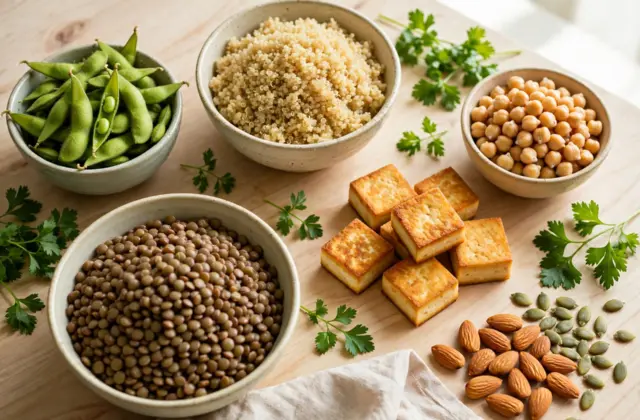
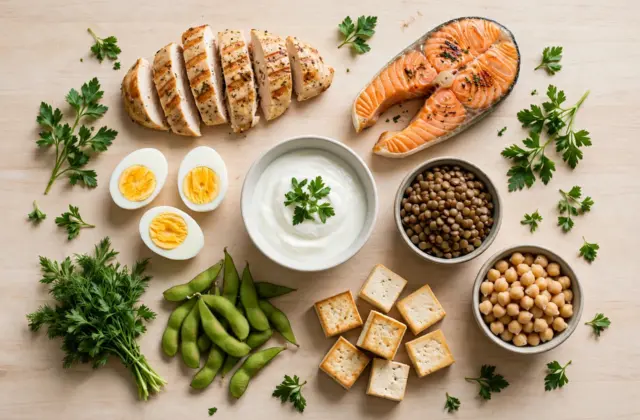
You don’t need to memorize a database. You need a rough sense of which foods pull their weight, so you can build meals without a calculator. All figures below come from USDA FoodData Central records, rounded to the nearest gram:
- Chicken breast, roasted, 3 oz: about 26 grams — the benchmark for a palm-sized portion.
- Salmon, cooked, 3 oz: about 19 grams, plus omega-3 fats.
- Canned light tuna in water, 3 oz drained: about 17 grams.
- Lentils, cooked, 1 cup: about 18 grams, plus plenty of fiber.
- Edamame, shelled, 1 cup: about 18 grams.
- Greek yogurt, plain nonfat, 3/4 cup: about 17 grams.
- Black beans or chickpeas, cooked, 1 cup: about 15 grams each.
- Cottage cheese, 2% milkfat, 1/2 cup: about 12 grams.
- Firm tofu, 1/2 cup: about 11 grams (brands vary, so check the label).
- Peanut butter, 2 tablespoons: about 8 grams.
- One large egg: about 6 grams.
- An ounce of almonds: about 6 grams; pumpkin seeds do a little better at around 9 grams.
Notice the pattern: animal foods and soy foods clear the bar easily, beans and lentils get there by the cupful, and nuts and seeds are toppings, not main events. That doesn’t make nuts useless — a handful on oatmeal or yogurt is still 6 or 7 grams you didn’t have before — it just means you shouldn’t count on a sprinkle of almonds to carry a meal.
Add protein without rebuilding dinner
You don’t need new recipes. You need upgrades to the meals already in your rotation:
- Soup and salad: stir a can of rinsed chickpeas or black beans into soup, or top a salad with a cup of edamame instead of a few croutons. That’s 15 to 18 grams, and the meal suddenly feels like a meal.
- Pasta night: toss in white beans, lentils, or shredded chicken. Lentil pasta itself adds protein too — check the label, since brands differ.
- Rice bowls: swap half the rice for quinoa (about 8 grams per cooked cup) and add tofu, tempeh (about 17 grams per half cup, cooked), or an egg.
- Sandwiches: double up the filling — two eggs instead of one, or hummus plus cheese instead of hummus alone. A sandwich with a thin smear of something is a snack, not lunch.
- Stir-fries and curries: these are forgiving. Tofu, tempeh, eggs, chicken, or lentils all slot in without changing the dish’s character.
Read also: How to Make Lunch More Nutritious
Stock a protein-friendly pantry
The real reason protein-poor meals happen is that there’s nothing protein-rich within reach when you’re hungry. A pantry that always holds a few staples fixes that:
- Canned beans, chickpeas, and lentils (dried lentils cook in 20 minutes with no soaking).
- Peanut butter or another nut butter, plus a jar of seeds for topping.
- Tofu or tempeh in the fridge, eggs always on hand.
- Greek yogurt and cottage cheese for the breakfast-and-snack slot.
- Frozen edamame and frozen shrimp — both cook in minutes straight from the freezer.
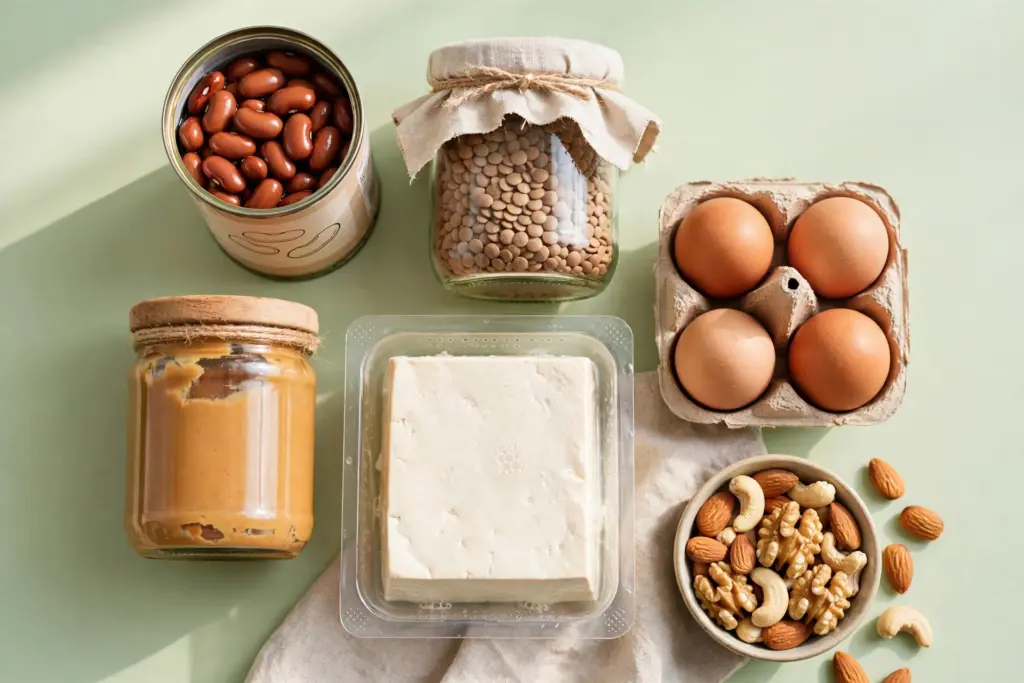
With that lineup, a “nothing in the house” night still produces beans on toast with an egg, or yogurt with peanut butter and fruit. Protein stops being a project and becomes the default.
Make plant proteins work harder
If you eat mostly plants, you don’t need to obsess over combining proteins at every meal — that old rule has softened considerably. Your body pools amino acids across the day, so what matters is variety over the whole day: beans at lunch, tofu at dinner, nuts at snack time, grains alongside. A varied plant-based day covers the essential amino acids without any spreadsheet.
Still, a few pairings are worth knowing because they taste good, not because they’re mandatory. Rice and beans, peanut butter on whole-wheat bread, hummus with whole-grain crackers, tofu with quinoa — each pair brings different amino acids to the table, and each is a complete, satisfying meal on its own. Soy foods are the exception that needs no pairing at all: tofu, tempeh, and edamame contain all nine essential amino acids in useful amounts.
One practical note: plant proteins usually come bundled with fiber, which helps fullness but means portions look bigger. A cup of cooked lentils is a generous serving — and also 18 grams of protein for very little money.
Read also: How to Build a Balanced Plate
Snacks that carry their weight
Snacks are where protein goes to die — most snack foods are built from refined grains and sugar. A protein-containing snack doesn’t just add grams; research on higher-protein eating has linked it with greater fullness, which is why a yogurt at 4 p.m. can quietly prevent a second dinner. Try these instead of the cracker default:
- Greek yogurt with berries, or cottage cheese with sliced cucumber and pepper.
- A small handful of nuts with a piece of fruit — the fruit gives you fiber and volume, the nuts give you staying power.
- Roasted chickpeas or edamame, salted and eaten by the handful.
- Peanut butter on apple slices or whole-grain crackers.
- A hard-boiled egg — the original portable protein, at about 6 grams and almost no effort.
Keep one or two of these ready to go. If the healthy snack requires cooking, you will eat the crackers instead — that’s a logistics problem, not a willpower problem.
Three mistakes that undo the effort
1. Saving it all for dinner. A 60-gram steak at dinner doesn’t make up for a protein-free day. Spreading protein across meals is linked with better muscle maintenance than loading it into one meal, and it keeps you fuller between meals too.
2. Reaching for powder first. Protein powder isn’t harmful, but it’s rarely necessary when real foods do the job for less money and more nutrients. A cup of Greek yogurt or a serving of lentils brings calcium, fiber, or probiotics along with the protein; powder brings protein and not much else. Save it for genuinely busy days, not as the default.
3. Adding protein but dropping everything else. A plate of chicken and cheese is high in protein and low in everything else that matters — fiber, vegetables, whole grains. Protein works best as part of a balanced plate, not as a replacement for one. Add the beans to the salad; don’t replace the salad with the beans.
Frequently asked questions
Do I need to count grams every day?
No. Count for a week if you’re curious — it teaches you which of your meals are light — then switch to the pattern: a palm-sized protein food at each meal, plus a protein-containing snack if you get hungry between meals. That’s enough for most people.
Can I get enough protein without meat?
Yes, comfortably. Beans, lentils, tofu, tempeh, edamame, dairy, and eggs (if you eat them) all deliver 11 to 18 grams per serving, and a varied day of plant foods covers all essential amino acids. The main thing to watch is portion size: plant portions tend to be bigger than meat portions for the same grams.
Is more protein always better?
No. Beyond the 1.2–1.6 g/kg/day range in the current Dietary Guidelines, extra protein offers little additional benefit for most people and can crowd out fiber-rich foods. People with kidney disease or certain other conditions should follow their clinician’s guidance, which may be lower.
What if I don’t like the taste of tofu or beans?
Start where your taste already is. Eggs, yogurt, cheese, and peanut butter are all protein-rich and familiar. Season tofu like you would chicken — it takes on whatever flavor you give it — and try lentils in soup, where they disappear into the background. You don’t have to love every protein food; you need three or four you like.
Sources
- Consumer Reports — How Much Protein Do You Really Need? (Dietary Guidelines 1.2–1.6 g/kg/day; RDA 0.8 g/kg/day)
- National Association of Counties — USDA and HHS release new dietary guidelines (2025–2030 Dietary Guidelines protein target)
- Scientific American — How Much Protein Do You Need? Experts Explain (RDA background; 1.2–1.6 g/kg/day optimal range)
- Food & Nutrition — Protein Sources Reference (per-serving protein values from USDA FoodData Central)
- Brain Responses to High-Protein Diets (PMC review) (protein and satiety research, including Weigle et al. 2005, Am J Clin Nutr)
This article is for general information only and is not medical advice. If you have kidney disease, a metabolic condition, or specific dietary needs, talk to your clinician or a registered dietitian about the protein intake that’s right for you.