How to Prep Produce for the Week
By Sunday evening, the fridge holds good intentions and not much else: a bag of spinach going soft in the back, two carrots with forgotten ambitions, a lemon from last week that nobody claims. Sound familiar? The gap between buying produce and actually eating it is where most healthy-eating plans quietly fall apart. Prepping produce for the week closes that gap — one short session that turns a counter full of groceries into ready-to-eat food your future self will thank you for.
It changes how much you eat, too. The World Health Organization recommends at least 400 grams of fruits and vegetables a day — roughly five portions — yet most adults fall short. Making vegetables as easy to grab as a bag of chips is one of the simplest ways to close that gap.
Read also: How to Create a Healthy Grocery List
Why one prep session beats willpower
Here is the uncomfortable truth about produce: you will eat what you can see, and you will ignore what requires work. A whole pineapple at 6 p.m. after a long day is a project. Pineapple chunks in a clear container are a snack. The difference between those two things is about twenty minutes of cutting on a Sunday — and it decides whether that pineapple ends up in your lunch or in the bin.
Most of us shop with our aspirational selves — then real life arrives, and every vegetable needs washing, peeling, and chopping before it can be eaten, so it wilts instead. A weekly prep session flips the effort: do the work once, when you have energy, so Tuesday-you just opens a container. Visible food gets eaten, which also cuts waste.
To wash now or wash later? The golden rule of prep day
This is where most people get it wrong, and it costs them half their berries. The rule is simple: wash sturdy produce now, hold off on the delicate stuff until just before you eat it.
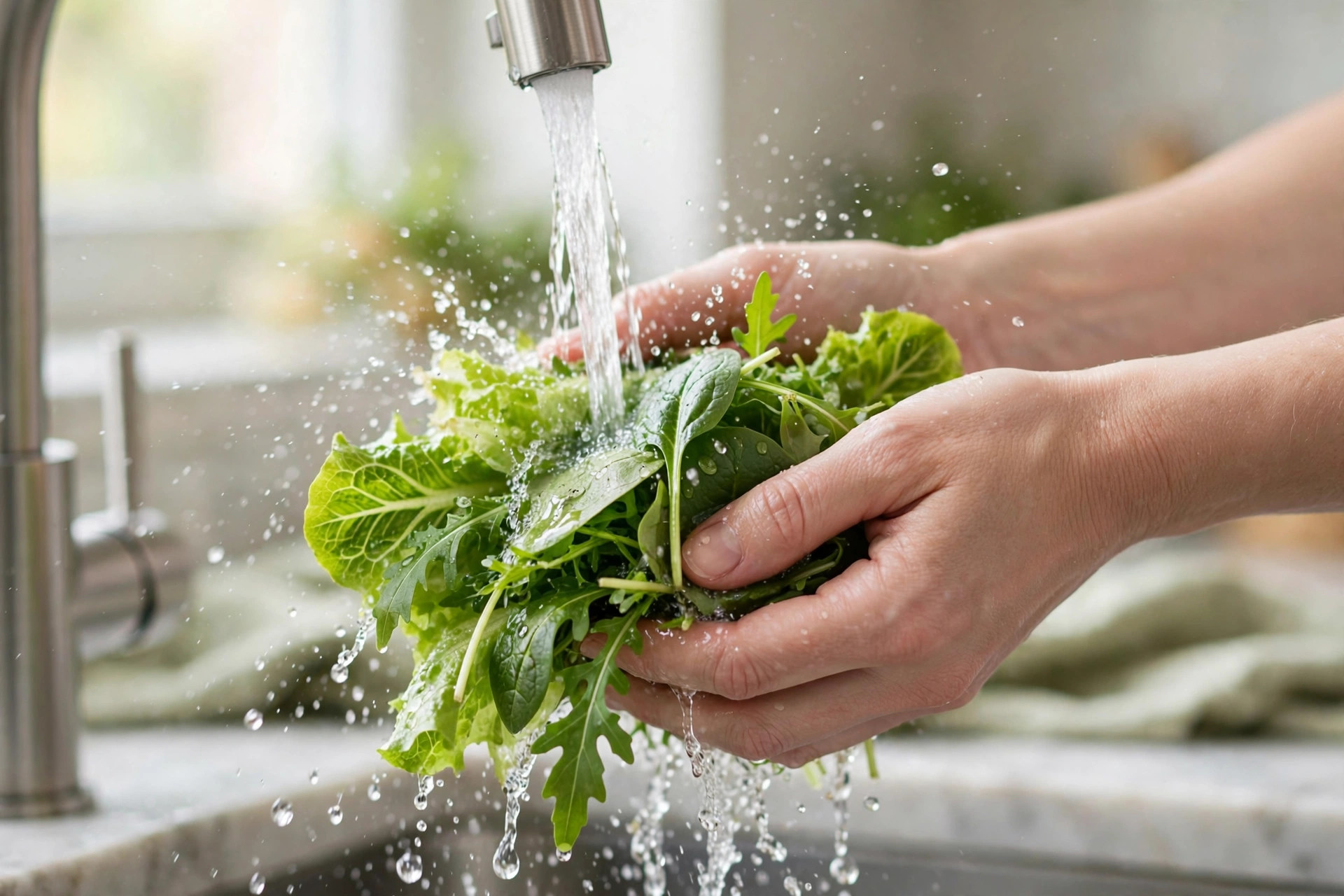
The FDA’s guidance is refreshingly low-tech: rub produce under plain running water — no soap or special wash needed. Scrub firm items like melons with a clean brush. Rinse everything before peeling or cutting, since a knife can drag surface bacteria into the flesh. Then dry with a clean cloth or paper towel — the step most people skip.
Drying matters more than most realize. Washing does not remove every germ — the CDC notes the safest produce is cooked, and the next safest is washed. And moisture left on the surface speeds up mold, which is exactly why washing too early can backfire: Sunday-washed berries tossed back in the fridge damp will fare worse than berries washed just before eating.
So here is the practical split:
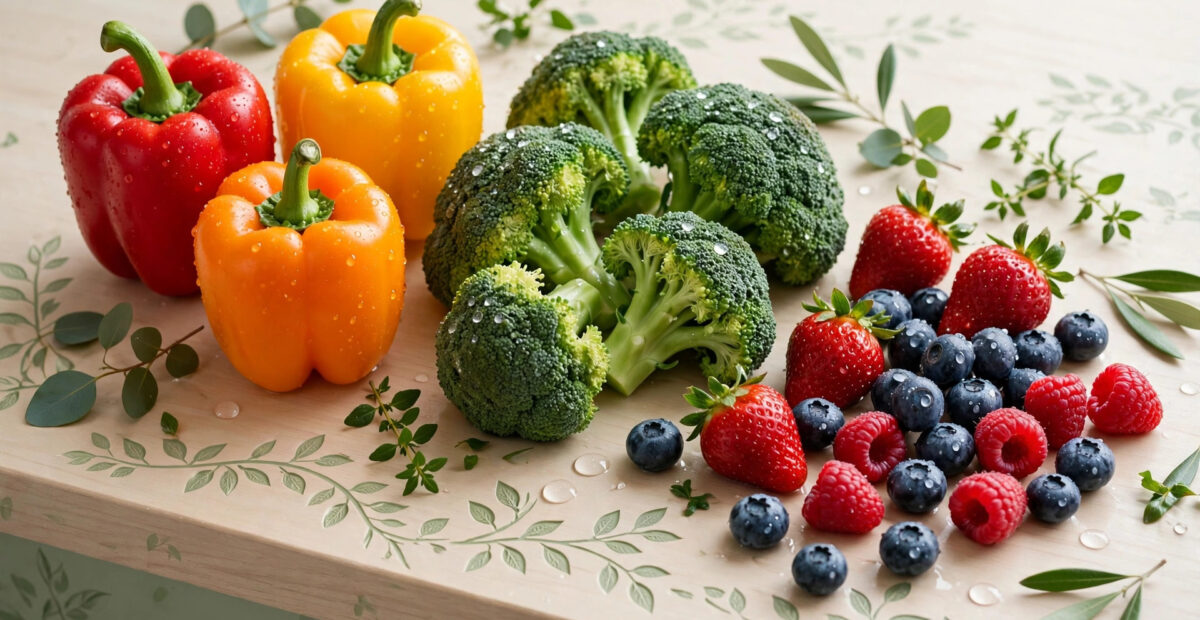
- Wash and prep now: carrots, celery, bell peppers, cucumbers, broccoli, cauliflower, apples, citrus, melons. Their skins can take it, and they will dry well.
- Wash just before eating: raspberries, blackberries, and other fragile berries. Extra moisture turns them to mush — if you must wash ahead, make sure they are bone dry first.
- Wash, but dry completely: leafy greens and herbs. A salad spinner is worth every penny here — spin, then lay the leaves on a towel and pat them dry.
One exception: bagged greens or pre-cut fruit labeled “pre-washed” do not need a re-wash — just keep them cold at home, as the FDA advises.
Read also: How to Eat More Whole Foods
Two prep systems that cover almost everything
Nearly all produce falls into one of two prep systems. Learn which item belongs where, and prep day runs itself.
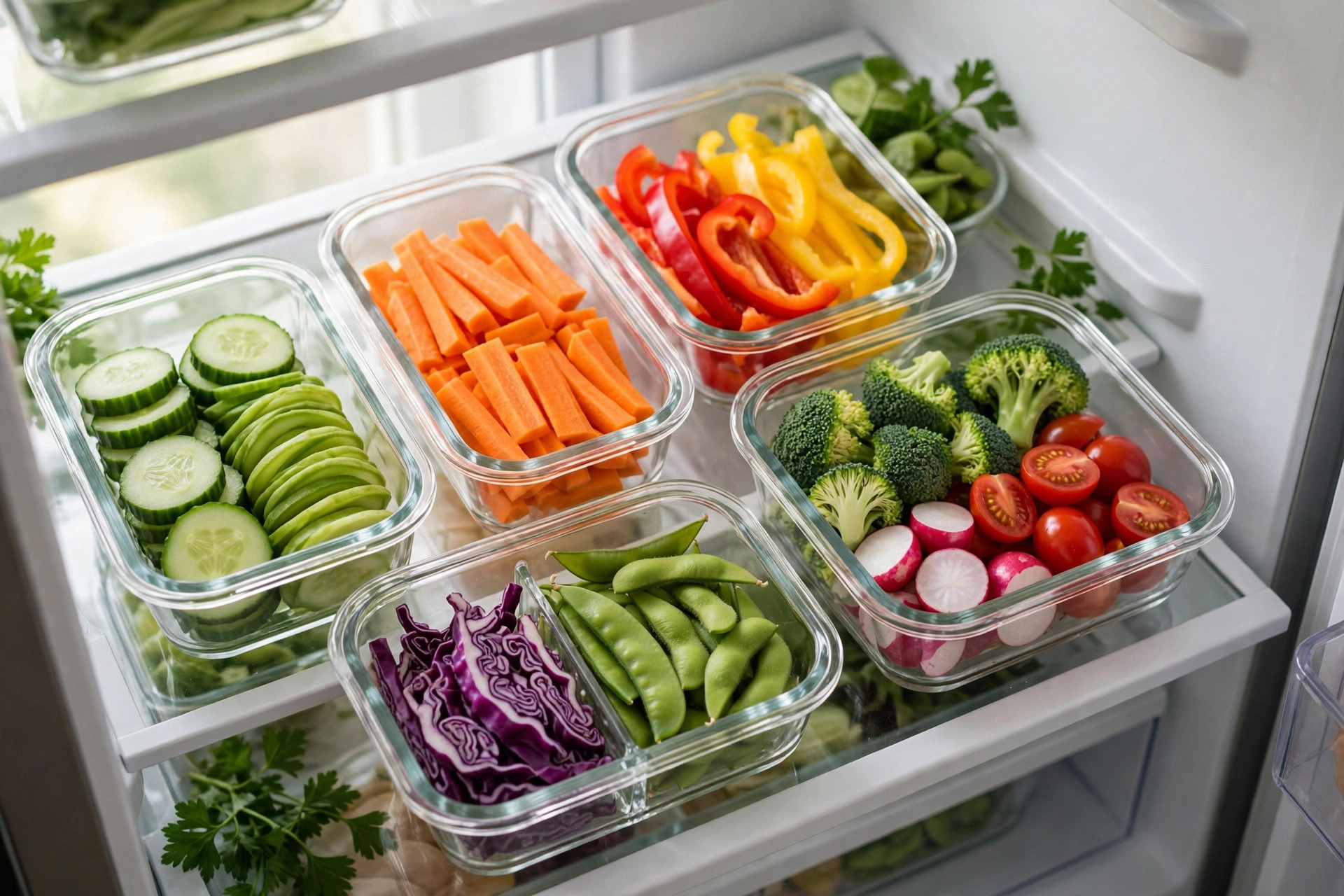
System one: wash-and-cut staples. Your workhorses for lunches, stir-fries, and snacks. Cut carrots, celery, peppers, and cucumbers into sticks. Break broccoli and cauliflower into florets. Cube melon; slice apples with a squeeze of lemon juice to slow browning. Everything goes into clear containers, front and center in the fridge.
System two: delicate greens and herbs. Greens need air and dryness, not a sealed plastic coffin. Spin washed lettuce or spinach dry, roll loosely in a paper towel, and box it with the lid on. The towel absorbs the moisture that would otherwise ruin your salad by Thursday.
Herbs get their own trick: trim the stems of cilantro, parsley, or mint, stand them in a jar with an inch of water, and drape a loose bag over the top before refrigerating. Most stay perky for a full week.
Skip the rest. Whole onions, garlic, potatoes, and whole citrus keep fine on the counter or in a cool pantry. Focus on what spoils fast or needs chopping before you will eat it.
Store it like you mean it: the cold, dry, sealed basics
All your chopping means nothing if the fridge is too warm. The number that matters: 40°F (4°C) or below — the line where bacterial growth slows enough to keep food safe, per FoodSafety.gov. Check it with an appliance thermometer; built-in dials are often optimistic. From there, a few habits do the rest:
- Use clear containers. Glass or clear plastic with snug lids keeps produce visible and protects it from drying out and absorbing fridge odors.
- Keep cut produce cold. Anything cut, peeled, or cooked goes in the fridge within two hours (one hour above 90°F). USDA guidance says refrigerated leftovers are safe for 3 to 4 days — so prep what you will use in four days, not seven.
- Give berries breathing room. Store unwashed berries in a single layer on a paper towel, lid slightly vented — the difference between firm blueberries on Friday and a furry surprise.
- Separate troublemakers. Keep cut produce away from raw meat, poultry, and seafood, and wash boards and knives between uses. Keep bananas and avocados away from leafy greens — their ripening gas speeds up wilting.
- Label the day. A piece of masking tape with Sunday’s date turns “how old is this?” from a mystery into a two-second check.
And if something looks slimy, smells off, or has mold, throw it out — no debate.
Frozen produce: your backup plan (and it is better than you think)
Even with a perfect prep session, life happens. A week gets busy, the fresh spinach fades, and the produce drawer becomes a graveyard. This is where the freezer earns its place — not as a sad backup, but as a genuinely good source of vegetables and fruit.
A 2015 University of California, Davis study (Bouzari, Holstege and Barrett, Journal of Agricultural and Food Chemistry) compared eight fruits and vegetables — corn, carrots, broccoli, spinach, peas, green beans, strawberries, and blueberries — stored fresh versus frozen. Their conclusion: “Overall, the vitamin content of the frozen commodities was comparable to and occasionally higher than that of their fresh counterparts.” Minerals and fiber held up well too.
It comes down to timing. Frozen vegetables are usually blanched and flash-frozen within hours of harvest, locking in nutrients at their peak, while fresh produce can spend days in transit losing nutrients before it reaches your fridge.
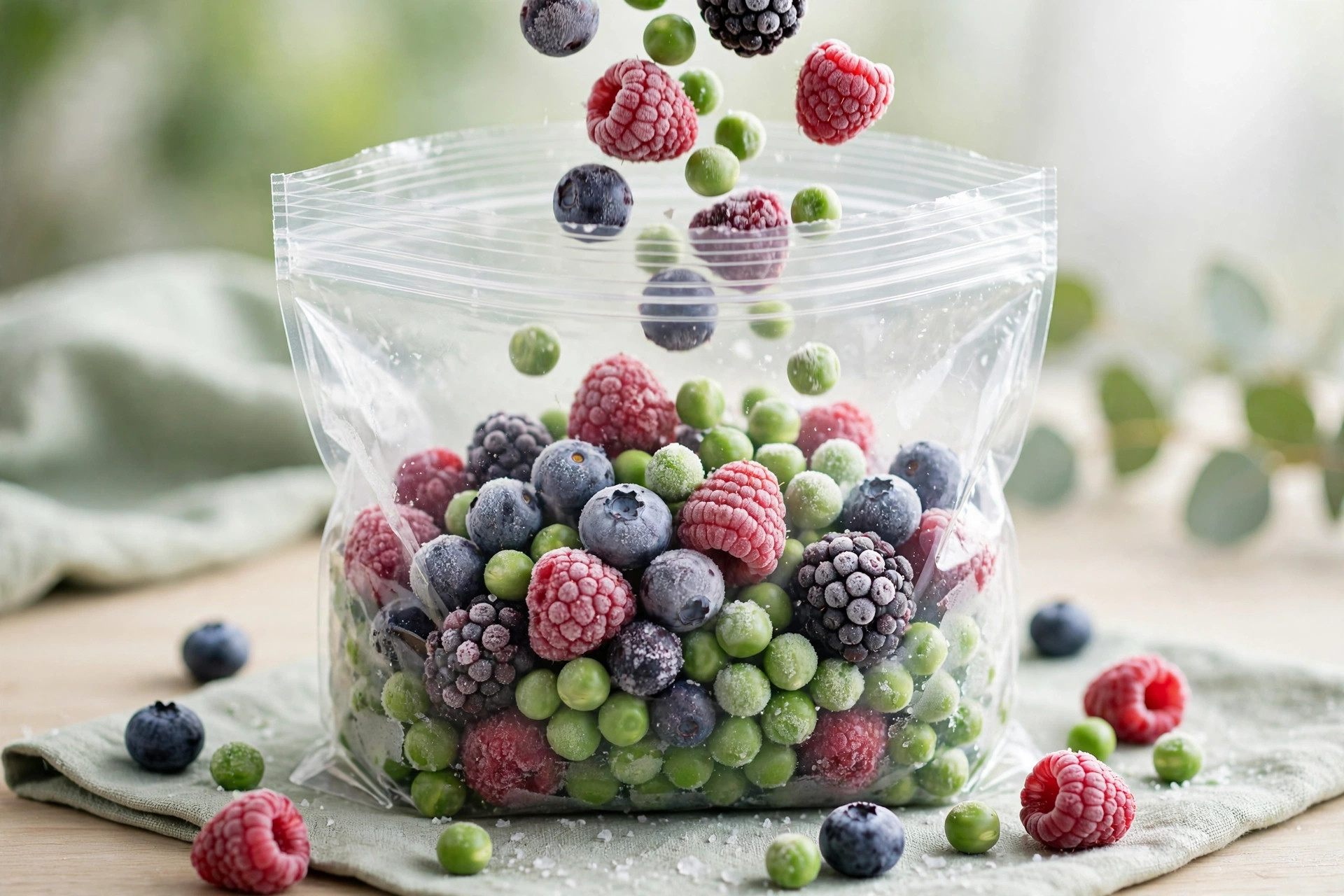
Keep frozen peas, spinach, broccoli, mango, and berries on hand for smoothies, stir-fries, and soups. Bag them, press out the air, store at 0°F (-18°C) — months of quality with no washing or wilting to worry about.
Read also: Meal Prep for Beginners: A Simple Sunday System
Your 30-minute Sunday prep plan
Thirty minutes is genuinely enough. Put on music, and follow this rhythm:
Minutes 0–8: Wash. Cold water in the sink or a big bowl. Sturdy vegetables first, then greens; scrub firm produce, plain water only, then dry everything thoroughly.
Minutes 8–18: Chop. Carrots, celery, cucumbers, and peppers into sticks. Broccoli and cauliflower into florets. Cube melon; slice apples with lemon juice. One knife, one board, straight into containers.
Minutes 18–26: Greens and herbs. Spin greens dry, roll in a paper towel, box up. Trim herb stems into a jar of water. This is what makes Wednesday salads happen with zero extra work.
Minutes 26–30: Fruit and finishing. Portion berries (unwashed) onto paper towels in a vented container. Label everything with today’s date. Glance at the fridge thermometer — still 40°F or below? Done.
That is the whole system. Half an hour, once a week, and the healthy choice becomes the easy choice for the next four days.
Frequently asked questions
Should I wash produce before storing it, or wait?
Wait, if you can. Wash sturdy items like carrots and cucumbers ahead of time if you dry them well, but hold fragile berries and pre-washed greens until just before eating — extra moisture is the fastest route to mold.
How long does prepped produce actually last?
Eat cut fruits and vegetables within 3 to 4 days when kept at 40°F (4°C) or below, per USDA guidance for refrigerated perishable foods. Whole produce lasts longer — apples and carrots can hold for weeks. When in doubt, check the container date and trust your eyes and nose.
Is frozen produce really as nutritious as fresh?
Very close. The 2015 UC Davis study found frozen fruits and vegetables had vitamin levels comparable to — sometimes higher than — fridge-stored fresh produce, with minerals and fiber well preserved. Frozen is a legitimate way to eat more vegetables, not a compromise.
Can I prep fruit for the whole week?
Sturdy fruits, yes: melon cubes, pineapple chunks, and apple slices (with lemon juice to prevent browning) hold well for 3 to 4 days refrigerated. Berries are the exception — they are best washed and eaten within a day or two. If you want berries all week, freeze a portion and thaw what you need.
Sources
- World Health Organization — Healthy diet fact sheet (at least 400 g of fruits and vegetables per day)
- U.S. Food and Drug Administration — 7 Tips for Cleaning Fruits, Vegetables
- U.S. Centers for Disease Control and Prevention — Safer Food Choices (fruit and vegetable safety guidance)
- FoodSafety.gov — Keep Food Safe (refrigerator at or below 40°F / 4°C)
- FoodSafety.gov — Cold Food Storage Charts
- U.S. Department of Agriculture — Loving Your Leftovers (refrigerated leftovers safe for 3 to 4 days)
- Bouzari, A., Holstege, D. & Barrett, D. M. (2015). Vitamin Retention in Eight Fruits and Vegetables: A Comparison of Refrigerated and Frozen Storage. Journal of Agricultural and Food Chemistry, 63, 957–962. DOI: 10.1021/jf5058793; summary at the American Frozen Food Institute
This article is for general information only and is not medical advice. If you have a health condition, are pregnant, or have a weakened immune system, talk to your doctor or a registered dietitian about food safety practices that fit your situation.