Fiber 101: Soluble vs Insoluble and Why Both Matter
Most adults eat about half the fibre they need. Understanding the two main types makes hitting 30 grams a day much simpler.
If you had to pick one nutrient most people quietly miss, fiber would be near the top. Many adults eat roughly half the fiber they need, and that shortfall shows up in sluggish digestion, faster hunger after meals, and — over years — higher risk for several common chronic diseases.
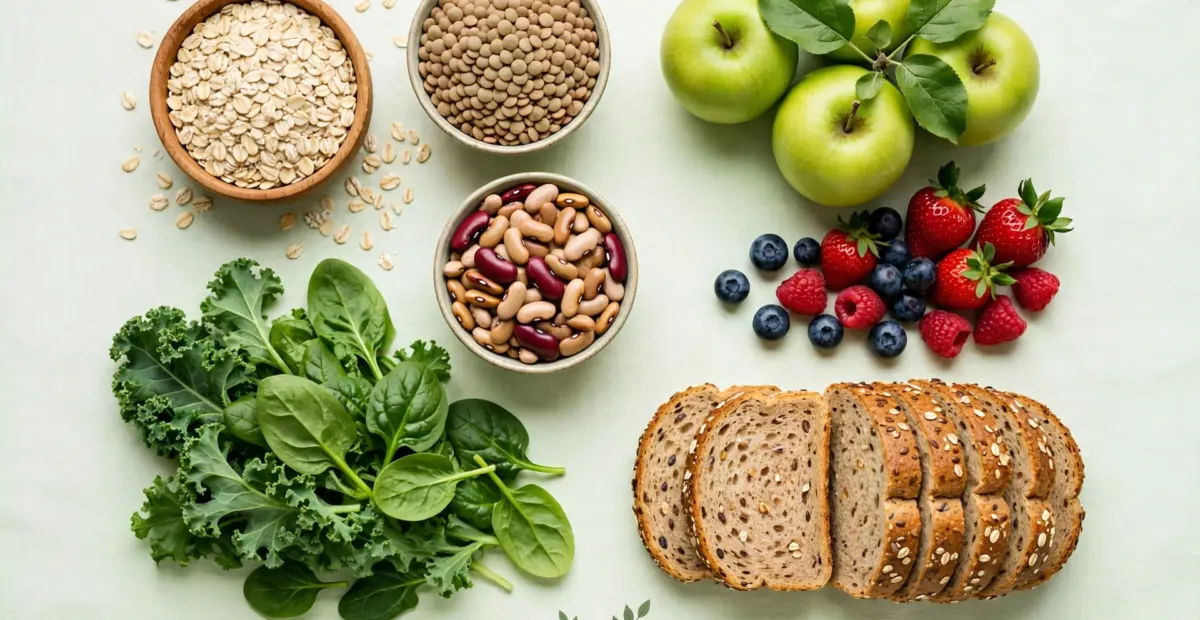
Closing the gap rarely requires a diet overhaul. Fiber lives in ordinary foods: oats in the morning, beans in a soup, an apple with its skin on, a handful of nuts. Once you know which foods carry which kind of fiber, hitting your target becomes a matter of small, repeatable swaps.
What fiber actually is
Fiber is the part of plant foods that your digestive enzymes cannot break down. Unlike starch, which is split into glucose in the small intestine, fiber travels on to the large intestine largely intact. There, some of it is fermented by gut bacteria, and the rest adds bulk that keeps things moving.
Researchers usually group fiber into two broad families: soluble and insoluble. Most real foods contain a mix of both, so a varied, plant-rich diet beats chasing a single “best” fiber source.
Soluble fiber: the gel former
Soluble fiber dissolves in water and forms a gel in your gut. That gel slows how quickly your stomach empties, which blunts the rise in blood sugar after a meal and helps you feel full for longer. It also binds bile acids — substances made from cholesterol — and carries them out of the body, prompting your liver to pull more cholesterol from your blood. Over time, that mechanism is linked to lower LDL (“bad”) cholesterol.
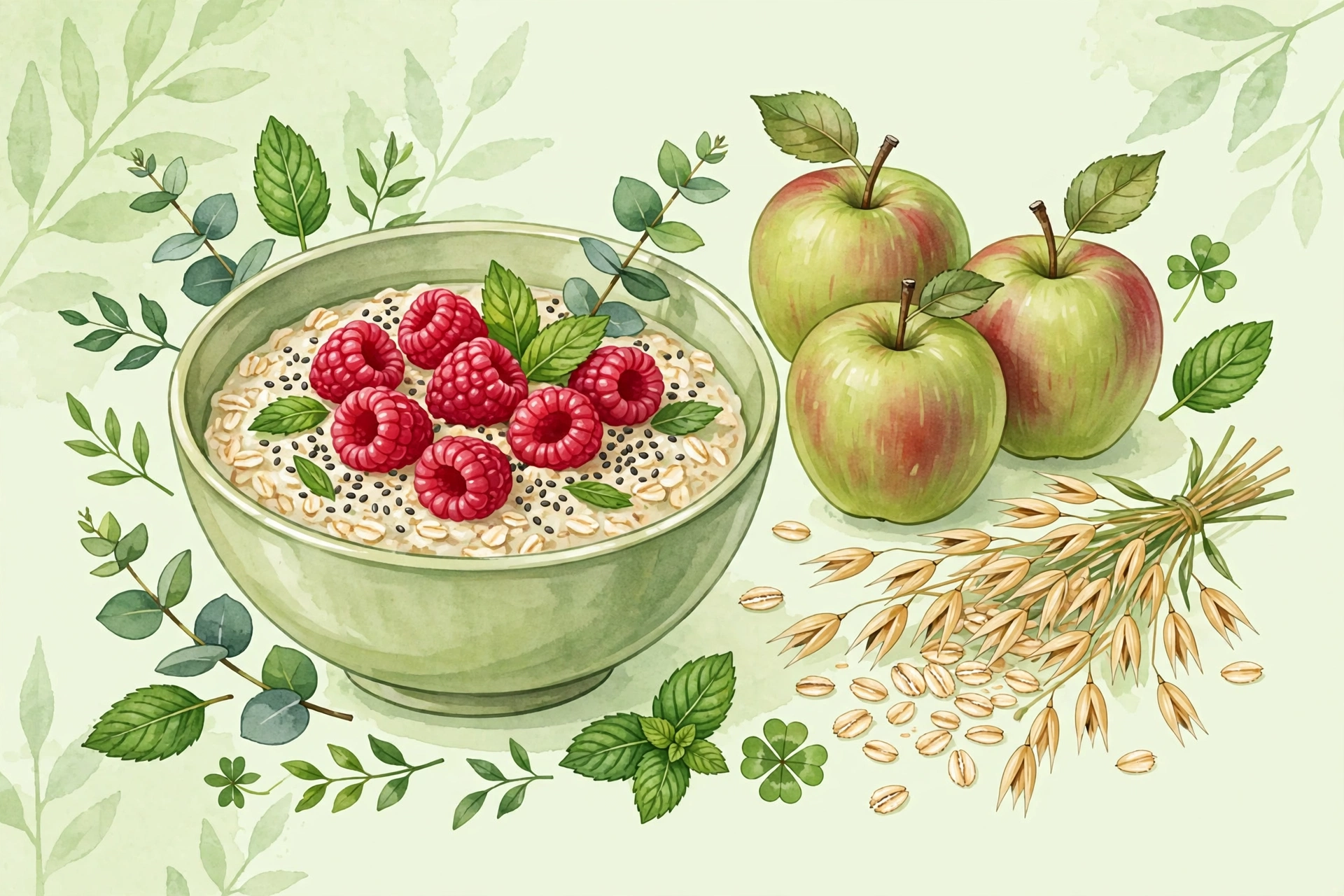
The best-studied example is beta-glucan, the soluble fiber in oats and barley. The U.S. Food and Drug Administration has allowed a health claim for oat beta-glucan since 1997: about 3 grams a day, as part of a diet low in saturated fat and cholesterol, may reduce the risk of heart disease. A meta-analysis of 28 randomized trials found that 3 grams or more a day lowered LDL cholesterol by roughly 10 mg/dL on average — modest next to a statin, but meaningful for a breakfast food.
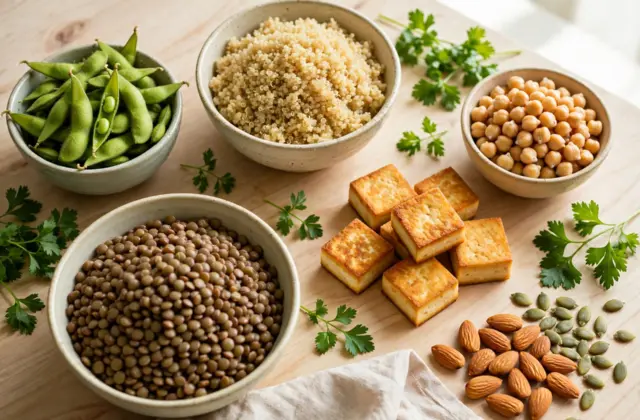
Where to find soluble fiber: oats and barley; beans, lentils, and chickpeas; apples, pears, citrus fruit, and berries; chia seeds and flaxseed; psyllium husk; and carrots and okra. If cholesterol or blood-sugar control is your main concern, soluble fiber deserves the most attention — a bowl of oatmeal, a bean-based lunch, and a piece of fruit already cover much of the ground.
Insoluble fiber: the bulk builder
Insoluble fiber does not dissolve in water. It adds bulk to stool and speeds its transit through the colon, which is why it is the type most associated with regularity. It helps prevent constipation and is linked to a lower risk of diverticular disease, the small pouches that can form in the colon wall.
Insoluble fiber does less for cholesterol directly, but foods rich in it — whole grains, vegetable skins, nuts, and seeds — bring other nutrients with them that refined versions have stripped away. Find it in wheat bran and whole-wheat bread, pasta, and crackers; brown rice, bulgur, and other intact whole grains; nuts and seeds; vegetable skins, stems, and stalks; and popcorn.
Notice the overlap: lentils, whole grains, and vegetables give you both types at once, so a varied plate handles the balance for you.
How much fiber do you actually need?
The widely used U.S. recommendations are 25 grams a day for women aged 19 to 50 and 38 grams a day for men in the same age range, dropping to 21 grams and 30 grams respectively after age 50. A simpler rule of thumb is about 14 grams per 1,000 calories eaten, which scales the target to your appetite.
Against those targets, average intake falls well short. In the United States, average intake sits around 16 to 17 grams a day, and only about 5% of adults meet the recommended amount. You do not need to hit your number perfectly every day — think of it as a range to land in most days. Going from 15 grams to 25 grams is a bigger health win than going from 25 to 35, and a much easier change to sustain.
What higher fiber intake is linked to
A large review commissioned by the World Health Organization, covering 185 observational studies and 58 clinical trials, found that eating at least 25 to 29 grams of fiber a day was associated with lower rates of coronary heart disease, stroke, type 2 diabetes, and colorectal cancer, as well as lower overall mortality.
It helps to be precise about what “linked to” means. Much of the evidence comes from long-term observational studies, where people who eat more fiber also tend to eat more vegetables, smoke less, and move more. Trials confirm the mechanisms — lower cholesterol, steadier blood sugar, healthier body weight — but no single nutrient can be credited with preventing a disease on its own. Fiber is best understood as one strong thread in a plant-rich eating pattern, not a shield.
Weight is a good example of the indirect benefit. High-fiber foods are bulky and chewy, so they slow you down and send stronger fullness signals. A lentil soup keeps you satisfied far longer than the same calories from white bread and cheese, because volume, chewing, and slower digestion all tell your brain you have eaten enough.
A day of fiber that adds up to about 30 grams
Targets feel abstract until you see them on a plate. Here is one ordinary day that reaches roughly 30 grams without supplements. The numbers are approximate — brands and portions vary — but they show how quickly small choices accumulate.
Read also: How to Add Fiber to Your Diet
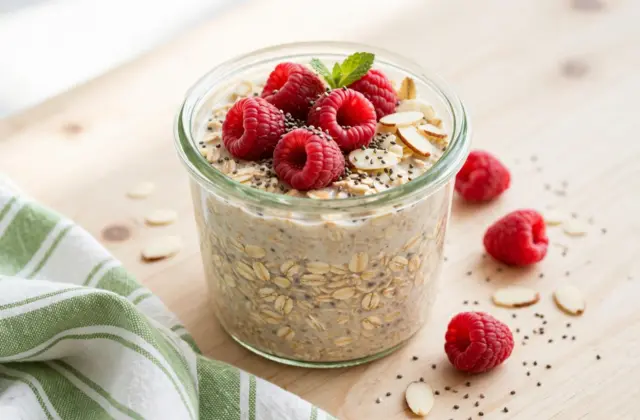
Breakfast — about 12 grams: oatmeal made with half a cup of dry rolled oats (about 4 grams), topped with a cup of raspberries (about 8 grams). A medium apple with its skin on adds about 4 grams instead, and a tablespoon of chia seeds adds about 5.
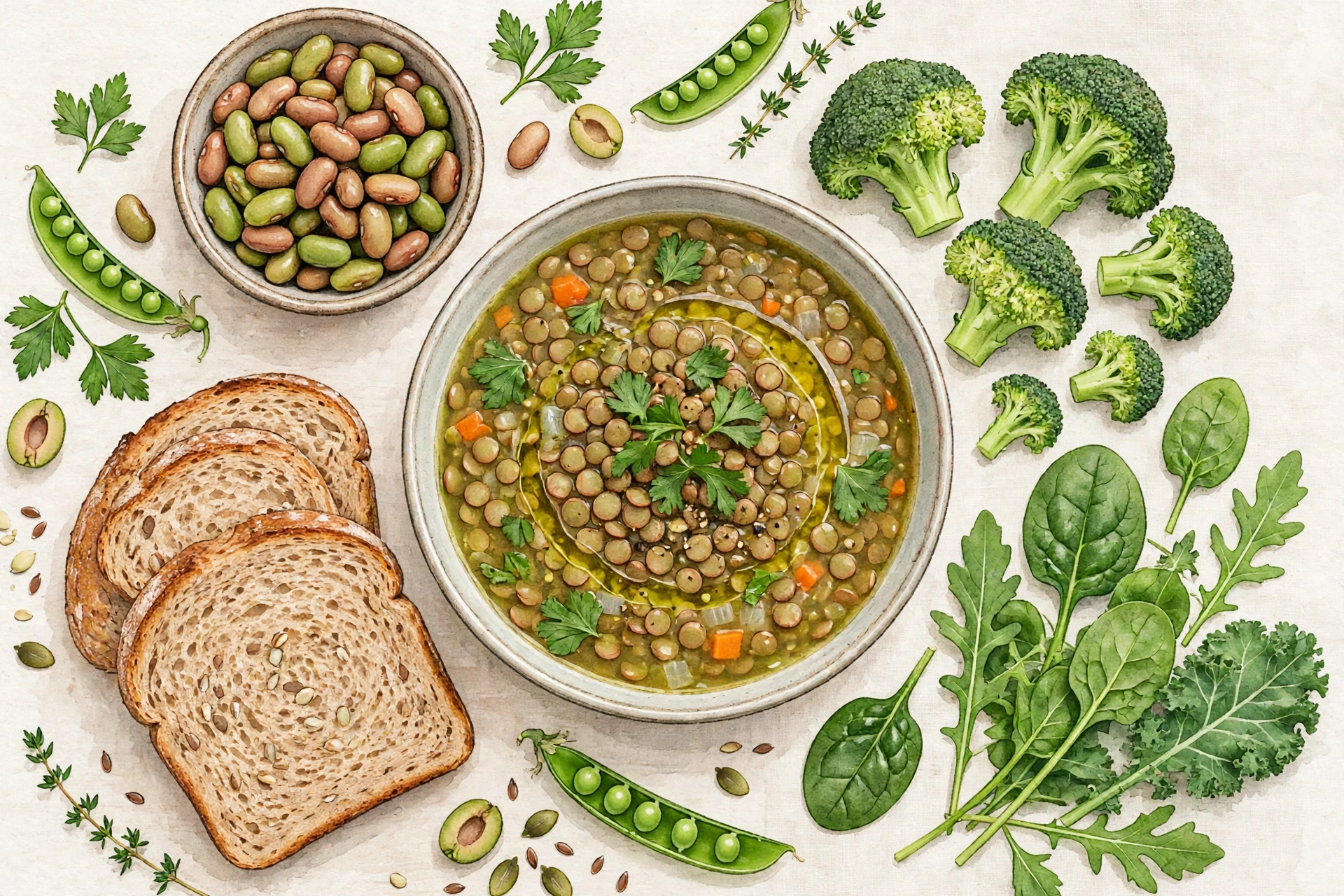
Lunch — about 10 grams: lentil soup with half to one cup of cooked lentils (6 to 8 grams) plus a slice of whole-wheat bread (2 to 4 grams). Lentils are the quiet workhorse of high-fiber eating: cheap, filling, and rich in both fiber and plant protein.
Snack — about 4 grams: a small handful of almonds, about 1 ounce or 23 nuts (about 3 to 4 grams), or a cup of popcorn (about 3 grams).
Dinner — about 8 grams: a cup of cooked broccoli (about 5 grams) with beans and brown rice (about 3 grams per cup of rice). The pattern to copy is the structure, not this exact menu: a whole grain at breakfast, a legume at lunch or dinner, fruit with its skin, and vegetables that still have their texture.
How to increase fiber without the bloating
The most common reason people quit a high-fiber plan is not taste. It is gas and bloating in the first week, after jumping from 15 grams to 35 grams overnight. Gut bacteria ferment some fibers, producing gas as a byproduct, and a sudden surge gives them more to ferment than they are used to.
Increase gradually instead. Add about 5 grams a week — one new high-fiber food, or a larger portion of one you already eat — until you reach your target over two to three weeks. Spread fiber across meals rather than loading it all into one giant salad, and drink water alongside it: fiber absorbs water, and without enough fluid, extra bulk can worsen constipation rather than relieve it.
Expect some mild gas in the first week even with a gradual ramp; it usually settles as your gut adapts. Persistent pain, major bloating, or a big change in bowel habits lasting more than a couple of weeks is worth raising with a clinician. Other tips: swap rather than add (whole-wheat for white bread, brown rice for white rice, whole fruit for juice); keep edible skins on; rinse canned beans; and check labels — look for at least 3 grams per serving with a whole grain as the first ingredient.
Do you need a fiber supplement?
For most people, food comes first. High-fiber foods bring vitamins, minerals, and plant compounds that a scoop of powder cannot replicate. Supplements have a place, though: psyllium husk has solid evidence for lowering LDL cholesterol and easing constipation, and it can help people who struggle to eat enough fiber from food alone.
If you use psyllium, start small, mix it well with water, and separate it from medications by a couple of hours, since it can interfere with absorption. Beware of gummies and “fiber” bars delivering only 2 to 3 grams alongside added sugar.
Who should be careful with extra fiber
More fiber is not automatically better for everyone. People with active inflammatory bowel disease, a recent bowel surgery, a narrowing in the gut, or a significant bloating disorder should increase fiber only under clinical guidance. Very high intakes — well above 50 grams a day from supplements on top of food — can also interfere with the absorption of minerals such as iron, zinc, and calcium. Children, pregnant people, and older adults have different targets, so age- and condition-specific guidance applies.
Frequently asked questions
Is soluble or insoluble fiber better?
Neither — they do different jobs. Soluble fiber is stronger for cholesterol and blood-sugar control; insoluble fiber is stronger for regularity and stool bulk. Most whole plant foods contain both, so a varied diet beats picking a winner.
Can I get enough fiber on a low-carbohydrate diet?
It is possible but harder, because grains and legumes are also carbohydrate-rich. Lean on non-starchy vegetables, nuts, seeds, avocado, and chia or flaxseed, and track fiber for a week to check.
Does cooking destroy fiber?
No. Cooking softens fiber but does not remove it. Cooked-and-cooled potatoes and rice even gain resistant starch. Peeling, juicing, and refining are what strip fiber away.
How quickly will I notice a difference?
Bowel regularity often improves within one to two weeks of a gradual increase, and fullness after meals can change within days. Cholesterol and blood-sugar effects build over weeks: trials of oat beta-glucan typically run four to twelve weeks before measuring a stable change.
Sources
- Stanford Medicine — Are you getting enough fiber?
- University of Delaware Cooperative Extension — Dietary Fiber
- ZOE — Can Eating Oats Reduce Cholesterol?
- WHO-commissioned review, reported in Medscape — High Fiber, Whole Grains Linked to Lower CVD, Diabetes, Cancer Risk
- Dietary Fiber Intake and Mortality (PMC)
Medical disclaimer: This article is for general information only and is not medical advice. If you have a digestive condition, take regular medication, or are planning a major diet change, talk to your clinician or a registered dietitian first.