How to Eat Well on a Busy Schedule
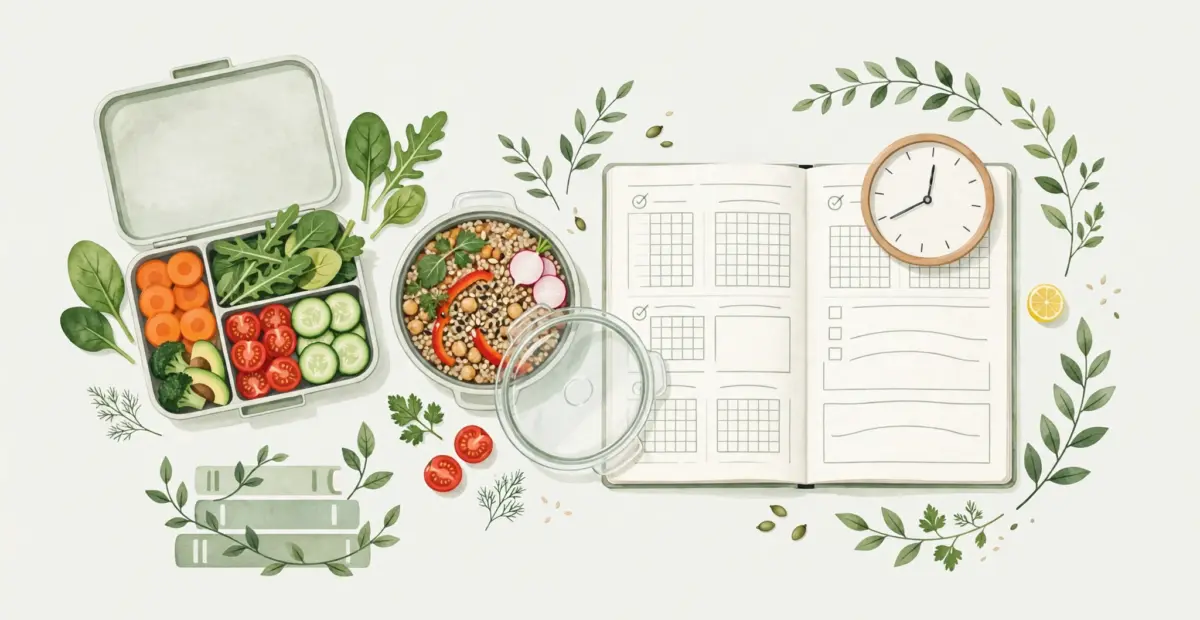
You know the pattern: the morning disappears into meetings, lunch becomes whatever is closest, and by 9 p.m. you’re standing in front of an open fridge eating cereal out of the box. Eating well feels like a luxury reserved for people with spare time — but it doesn’t have to be. The secret isn’t more willpower. It’s a few simple systems that make the healthy choice the easy one, even on your worst weeks.
Registered dietitians say the same thing in different words: people don’t eat badly because they lack knowledge. They eat badly because they lack a plan. When you’re tired, hungry, and short on time, your brain defaults to whatever requires the least effort. The fix is to make nutritious food the path of least resistance.
Why Busy Schedules Wreck Our Eating
There’s a real physiological reason your choices get worse when you’re slammed. Skipping meals lets hunger build until it becomes ravenous, and ravenous hunger is terrible at making balanced decisions. Sleep deprivation, which tends to ride along with busy schedules, can amplify cravings for quick-energy, high-sugar foods — your body is simply hunting for the fastest fuel available.
Then there’s decision fatigue. After a day of making hundreds of small choices, the mental effort of figuring out “what’s for dinner” feels enormous. That’s when the drive-thru wins — not because you want it more, but because deciding anything else is too much work. Every strategy below attacks this same problem: removing decisions from the moments when you’re least equipped to make them.
The 15-Minute Weekend Planning Habit
If you adopt only one habit from this article, make it this one. Dietitian Angie Zanger-Geiselman recommends sitting down on the weekend and writing out just five or six meal ideas for the coming week — not a minute-by-minute menu, just a short list you can reach for when you’re tired and unsure what to cook.
Here’s how to do it in about 15 minutes:
- Check your calendar. Which nights are genuinely free for cooking? Which are packed? Cooked-from-scratch meals go on the free nights; slow-cooker or leftover nights go on the packed ones.
- Pick a protein rotation. Choose two or three proteins for the week — chicken thighs, lentils, eggs, tinned tuna, tofu. Repeat them in different dishes. Variety is nice, but simplicity keeps you cooking.
- Anchor each meal with three items. Zanger-Geiselman suggests one protein, one item of color (a fruit or vegetable), and one other food — a whole grain or a healthy fat. Protein + color + grain is a complete dinner template that needs no recipe.
- Write a grocery list from the plan. A list built from actual meals wastes less food and fewer impulse buys than a list built from memory in the store aisle.
Children’s Health clinical dietitian Otto Santiago adds a family-friendly twist: shop your fridge before you shop the store. “Start your shopping at home to see if you have most of the ingredients” — checking what’s already there saves both money and a second grocery run.
Cook Once, Eat Twice (or Three Times)
Batch cooking sounds like a project, but it doesn’t have to be. You don’t need a Sunday marathon. You just need to cook slightly more than you need, on purpose.
When the pasta water boils, make double the noodles and stash half for a grain-bowl lunch. When the oven is already hot for dinner, throw in a tray of chopped vegetables for tomorrow. When you’re making rice, double the pot — cooked grains freeze beautifully and turn into fried rice, grain bowls, or soup in minutes.
The slow cooker deserves its reputation as a busy person’s best friend. Santiago calls it flatly: “The crock pot is your friend.” Put rice, meat or beans, herbs, and vegetables in early in the morning, and dinner is ready when everyone gets home. Pressure cookers work the same magic on a shorter fuse — many full meals finish in about 30 minutes.
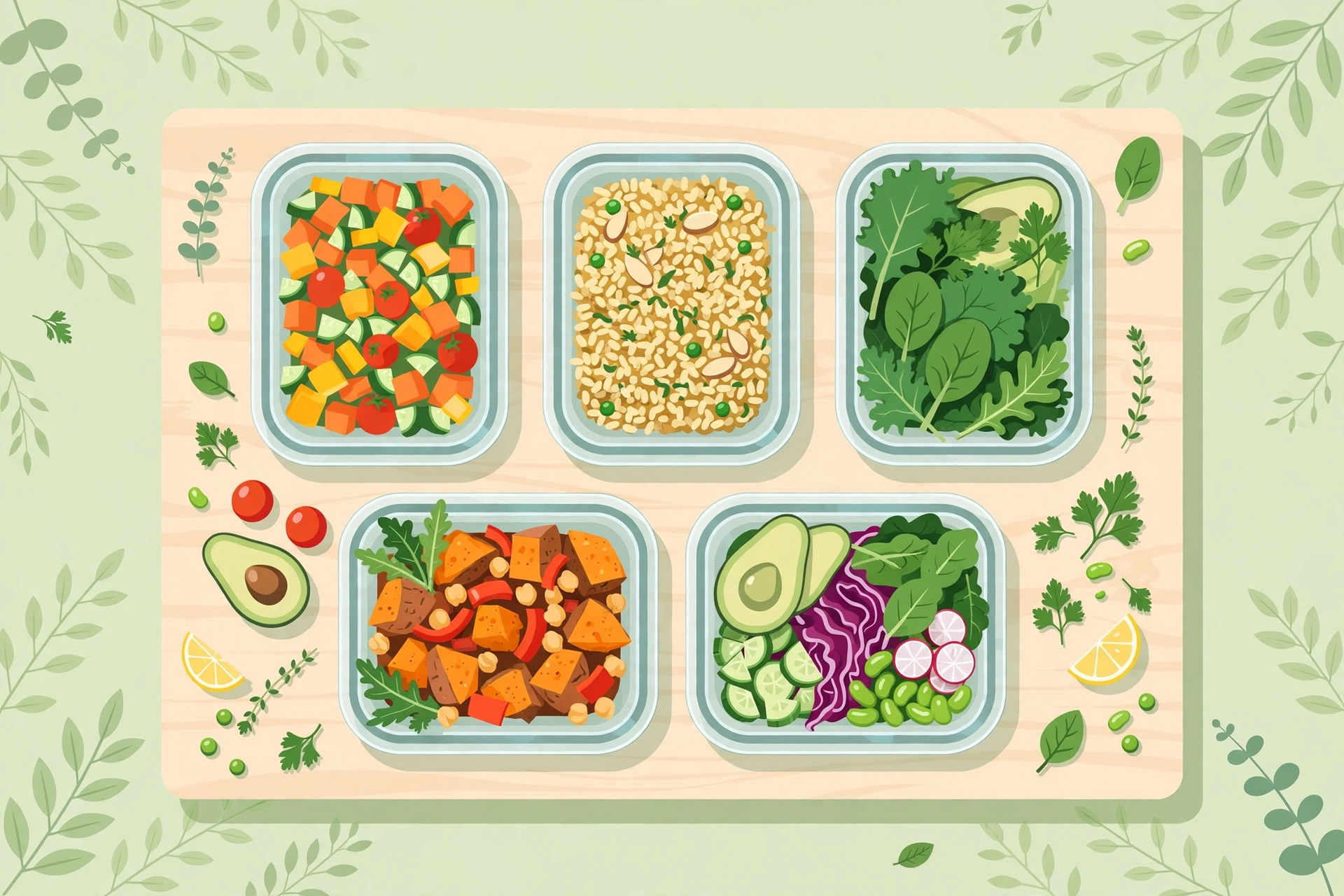
One habit that multiplies all of this: get into the rhythm of prepping right after shopping. Santiago’s family of seven preps the moment they get home from the store — cutting up all their vegetables and produce immediately. When ingredients are already washed, chopped, and visible in the fridge, the stir-fry that seemed like effort on Wednesday takes ten minutes instead of forty.
Healthy Shortcuts Are Not Cheating
Somewhere along the way, “healthy eating” got tangled up with cooking everything from scratch. Registered dietitian Kelly Harrington, MS, RDN, says that’s a myth worth killing: rotisserie chicken, bagged salads, and precooked brown rice are all healthy shortcuts.
Stock your kitchen with the time-savers that actually get used:
Read also: Your Gut Microbiome: What It Does and How to Feed It
- Frozen vegetables and fruit. Frozen produce is picked at peak ripeness and is just as nutritious as fresh — without the clock ticking on spoilage. Frozen berries go straight into oatmeal or smoothies; frozen peas, corn, and spinach stretch any grain bowl or soup.
- Pre-chopped and bagged produce. Bagged salad mixes, baby carrots, and pre-cut stir-fry vegetables cost a little more and save a lot of evenings.
- Canned and pouch proteins. Tinned tuna, salmon, lentils, and beans are shelf-stable protein. Choose low-sodium options and rinse canned beans to wash off extra sodium.
- Whole-grain shortcuts. Microwave brown rice cups, whole-wheat wraps, and oats turn a handful of ingredients into a complete meal.
The World Health Organization recommends at least 400 grams — roughly five portions — of fruits and vegetables a day, and the easiest way to hit that target on a busy schedule is to make produce the fastest thing in the kitchen, not the chore.
Build Your 15-Minute Meal Repertoire
Every busy cook needs a handful of meals that come together almost as fast as takeout. Registered dietitian Cynthia Sass suggests keeping a few “template” meals you can swap ingredients in and out of, so you’re never bored: stir-fries and grain bowls are the classics because they accept nearly any protein and vegetable.
Five templates worth learning:
- Egg scramble + toast. Scrambled eggs with a handful of spinach on whole-grain toast takes about five minutes and covers protein, vegetables, and whole grains.
- Grain bowl. Precooked grain + a protein (tinned tuna, leftover chicken, fried egg, edamame) + frozen or pre-cut vegetables + a drizzle of olive oil or sesame oil. No recipe required.
- Stir-fry. Whatever vegetables and protein you have, cooked hot and fast in a little oil with garlic and soy sauce, served over rice or noodles.
- Tortilla wraps. A whole-wheat wrap with hummus or nut butter, sliced vegetables, and a handful of greens works as lunch, dinner, or a desk meal.
- Sheet-pan dinner. Cubed vegetables and chicken or fish on one pan, roasted while you do something else. Nearly zero active cooking time.
Learn three of these cold and you’ll rarely need a recipe on a weeknight again.
Keep Snacks Working for You, Not Against You
Harrington recommends packing grab-and-go snacks so that the afternoon slump meets fruit and nuts instead of the vending machine. Good options: whole fruit, a small handful of nuts, trail mix, whole-grain crackers with nut butter, roasted chickpeas, or a hard-boiled egg.
Position matters as much as the food itself. Keep a fruit bowl where you’ll see it, stash snack portions where you grab your keys, and don’t keep the less nutritious options in the easiest reach. When you’re busy, you eat what’s closest — so make what’s closest count.
Eating Out Without Derailing the Week
Some weeks, eating out is unavoidable. The goal isn’t perfection; it’s steering the order toward something balanced. A few patterns help:
- Look for the vegetable on the plate. If none is visible in the dish, add a side salad or vegetable side.
- Ask for sauces and dressings on the side — you control how much you use.
- Choose grilled or baked over fried when the option is right there.
- Stop ordering “for now” and “for later” separately. One reasonable meal now beats one meal now plus grazing on leftovers all evening.
And skip the guilt spiral. One takeout dinner doesn’t undo a week of decent eating. What matters is the pattern, not the exception — get right back to your templates at the next meal.
Frequently Asked Questions
Can I really eat healthy if I can’t cook much?
Yes. Many of the fastest healthy meals need little more than assembly: wraps, grain bowls, smoothies, scrambled eggs. Lean hard on healthy shortcuts like frozen vegetables, rotisserie chicken, and canned beans — they’re tools, not compromises.
Is meal prepping once a week enough?
For most people, yes. Prepping proteins, grains, and chopped vegetables once a week gives you the raw materials for days of fast meals. You don’t need to cook full finished meals in advance — component prep is faster and more flexible.
What if my whole family has different schedules?
Cook components, not finished plates. A tray of roasted vegetables, a pot of grains, and a couple of proteins can be assembled into different bowls at different times. Everyone eats on their own schedule from the same base.
How do I stop ordering takeout when I’m exhausted?
Make the home option faster than the delivery app. If cooked grains, washed greens, and a protein are already in the fridge, a grain bowl takes less time than ordering, paying, and waiting. The 15-minute planning habit is what keeps those ingredients there in the first place.
Sources
- World Health Organization — Healthy diet (at least 400g of fruit and vegetables per day; fat, sugar, and salt limits)
- Quincy Medical Group — Tips for Healthy Meals on a Busy Schedule (Angie Zanger-Geiselman, RD: weekend planning, protein rotation, plate template)
- Children’s Health — 4 Meal Planning Tips for Busy Parents (Otto Santiago, clinical dietitian: post-shop prep, slow cooking, shopping your fridge first)
- Healthy Goods — Tips for Eating Healthy When You’re Short on Time (Kelly Harrington, MS, RDN: grab-and-go snacks, healthy shortcuts, smoothies)
- British Heart Foundation — How to Eat More Vegetables and Fruits (the WHO 5-a-day / 400g recommendation)
This article is for general information only and is not medical advice. If you have a health condition, disordered eating history, or specific dietary needs, talk to a registered dietitian or your clinician before making significant changes to your diet.