How to Build a Flexible Healthy Eating Routine
Most healthy eating plans fail the same way: they ask you to be perfect, and the first imperfect day breaks the whole thing. You skip the gym lunch, eat takeout twice, and suddenly the plan feels ruined — so you abandon it. The fix isn’t more willpower. It’s a routine built with flexibility on purpose, one that absorbs the messy days instead of collapsing under them.
A flexible routine isn’t a cheat code or an excuse to eat whatever you want. It’s a structure with room to bend: anchor habits that hold steady most days, plus rules that tell you exactly what to do when plans change. Research suggests this approach may be more sustainable than rigid dieting — in one study of 616 community-based participants, flexible restraint predicted dieting success, while rigid restraint predicted poorer outcomes through increased food cravings (Meule, Westenhöfer, & Kübler, 2011).
Here’s how to build one that actually fits your life.
Start with anchors, not rules
Rigid plans are made of rules: never eat carbs after 6 p.m., no sugar ever, salad every lunch. Flexible routines are made of anchors — a small set of default habits that you return to without thinking. Anchors work because they don’t require daily decision-making; they just become what you do.
Pick three to five anchors that cover the non-negotiables of a healthy diet. The World Health Organization recommends at least 400 grams (about five portions) of fruit and vegetables per day, free sugars below 10% of total energy intake, total fat below 30% of energy, and salt below 5 grams a day — roughly one teaspoon (WHO). Anchors that automatically move you toward those targets could be:
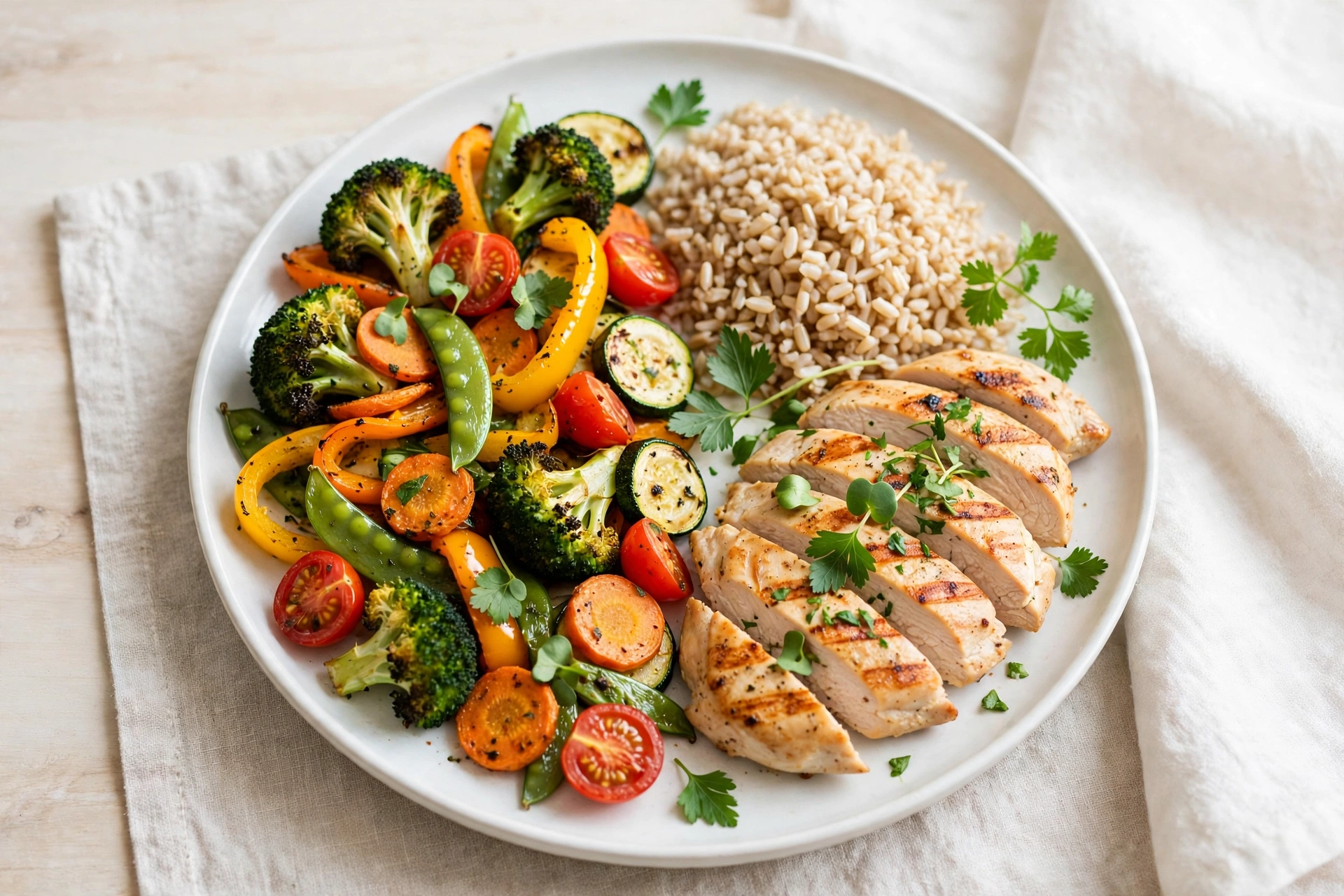
- A vegetable-forward dinner four or five nights a week — the classic plate method works fine here: half the plate vegetables, a quarter whole grains, a quarter protein.
- A protein source at every meal — eggs, beans, lentils, fish, chicken, or tofu. Protein helps with satiety and preserves muscle, which is one reason a 2021 randomized trial found flexible and rigid diets equally effective for weight loss but the flexible group maintained more fat-free mass afterward (Conlin et al., 2021).
- Fruit as the default snack — it satisfies a sweet craving and counts toward your five portions at the same time.
- Water first — the European Food Safety Authority sets adequate total water intake (from food and drinks) at 2.5 litres a day for men and 2.0 litres for women. A glass of water before reaching for a snack separates thirst from hunger.
Notice what anchors are not: they don’t forbid anything. They just define what “normal” looks like on a typical day.
Plan in pencil, not ink
Meal planning gets a bad reputation because people turn it into a contract. A flexible routine plans in pencil: sketch the week’s dinners loosely, leaving two nights deliberately unplanned. Those empty nights are where real life goes — the late meeting, the dinner invitation, the night you’re simply too tired to cook.
Practical setup that works for most households:
- One short grocery run with a loose list. Buy for the meals you sketched plus versatile basics (eggs, frozen vegetables, tinned beans, whole grains) that can fill any gap.
- Two planned “fallback” meals. Keep two genuinely easy meals you enjoy — an omelette with frozen veg, lentil soup from tins, stir-fried noodles with frozen stir-fry mix. When the plan falls apart, the fallback catches you instead of the delivery app.
- A repeatable breakfast. Breakfast is the easiest meal to automate. Overnight oats, Greek yogurt with fruit, or toast with eggs and tomatoes — same thing most mornings, zero thought required.
When someone asks you to dinner on a night you planned to cook, the plan doesn’t die. It moves. You cook that meal tomorrow or next week. Nothing in a flexible routine is wasted by being postponed.
Build treats into the routine, not around it
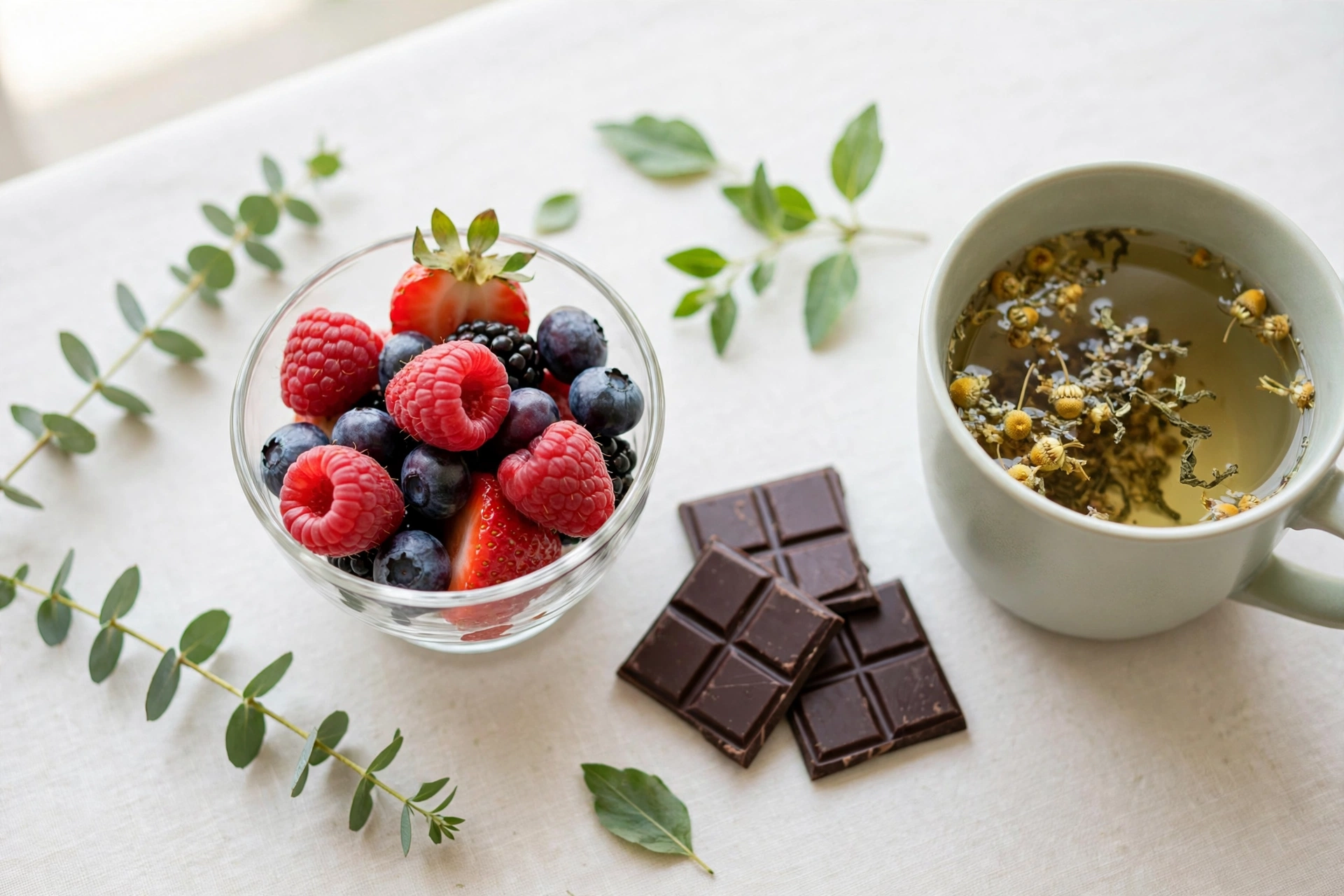
The most fragile part of rigid dieting is the “off-limits” list, because forbidden foods become the only thing you think about. A flexible routine includes treats by design, with a simple guardrail: frequency and portion, not guilt.
Two ways to do this:
1. The standing treat slot. Decide in advance when treats happen — dessert on weekends, or one small sweet each evening. When the slot arrives, enjoy it properly. This works because planned treats don’t trigger the “I’ve already blown it, might as well keep going” spiral that research links to rigid dieting styles.
2. The 80/20 frame. Most of your meals follow your anchors; some don’t, and that’s expected. WHO’s guideline of keeping free sugars below 10% of energy — about 50 grams or 12 teaspoons on a 2,000-calorie diet — is actually a built-in flexibility allowance: it’s a ceiling, not a target. You don’t have to eat the full 10%; the ceiling just means an occasional dessert doesn’t violate anything.
The point is that treats are a feature of the routine, not a failure of it. If your plan only works on days you feel virtuous, it’s not a routine — it’s a mood.
Read also: Healthy Eating Myths and Facts
Make the easy choice the automatic one
Flexibility doesn’t mean relying on choice. It means designing your environment so the default choice is the one you want. Three changes do most of the work:
- Front-of-kitchen foods. Keep fruit in a bowl on the counter and vegetables at eye level in the fridge. Foods that are visible get eaten; foods in the back of the pantry get forgotten.
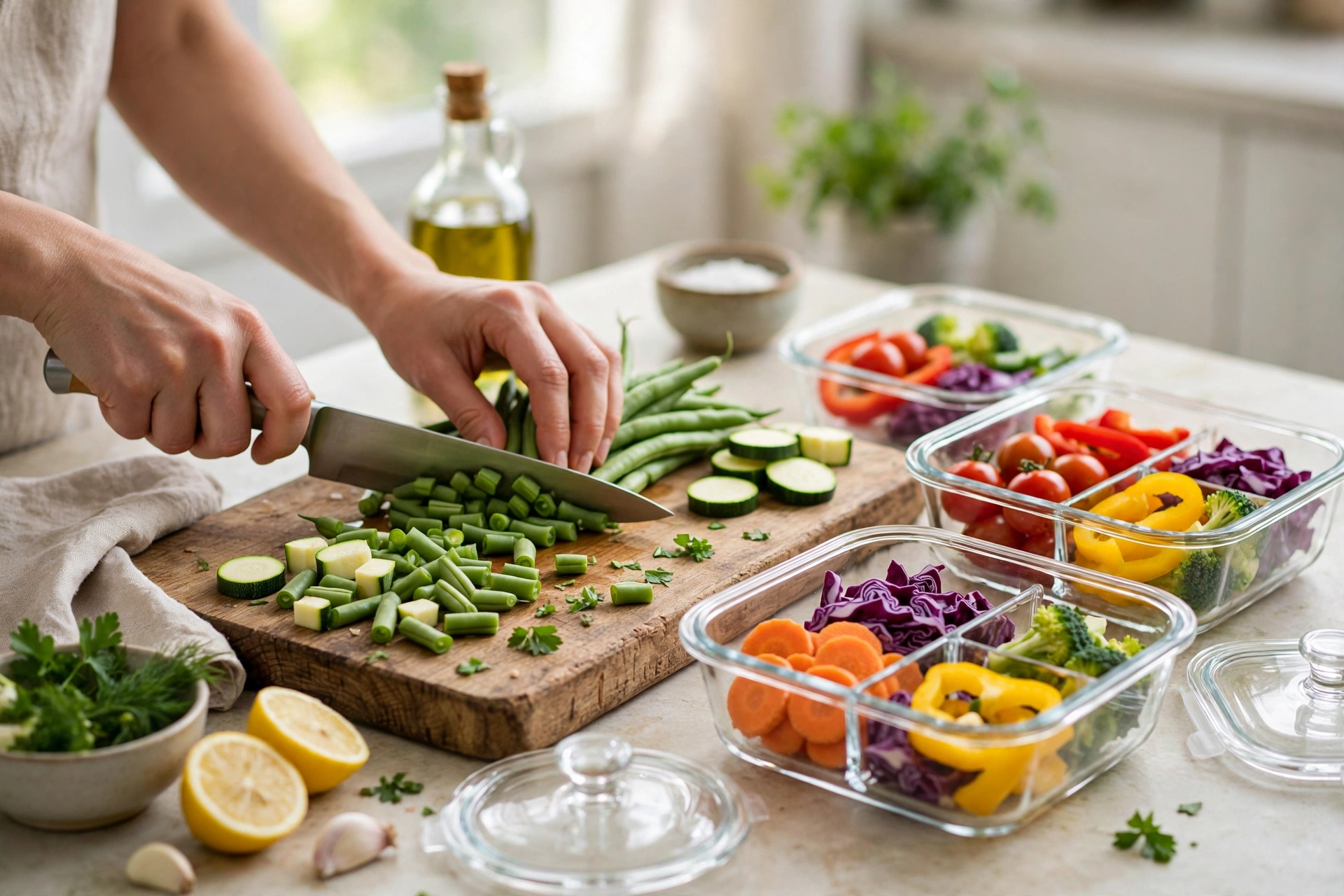
- Cut vegetables once. Spending ten minutes washing and chopping vegetables after the grocery run makes them as convenient as any packaged snack all week. Convenience is the single biggest predictor of what actually gets eaten on a tired evening.
- Right-size the trigger foods. Buy the small bag of crisps, not the family pack. Keep ice cream in single-serve portions. This isn’t about deprivation — it’s about making the portion decision in advance, at the store, when you’re thinking clearly.
Eating out and social occasions have rules too
Your routine needs a script for restaurants, parties, and holidays — the places where rigid plans go to die. Decide yours in advance:
- The “one plate, no seconds” rule at buffets and parties.
- Order first when eating with friends, so other people’s choices don’t steer yours.
- Pick the meal you’ll enjoy most, then adjust the rest of the day lightly — a lighter lunch before a dinner out, water instead of a second drink.
Social eating is part of a healthy relationship with food, not an interruption of one. A routine that treats a birthday dinner as a crisis isn’t sustainable; a routine that treats it as a normal, planned-for part of life is.
What to do after an “off” day
This is the hinge the whole routine turns on. After a day of eating differently — travel, celebrations, stress — rigid dieters do one of two things: punish themselves or give up entirely. A flexible routine has a third option: resume the anchors at the next meal.
Not Monday. Not next week. The next meal.
One day of different eating has a negligible effect on your long-term health; a week of “I’ll restart Monday” does not. The research on dieting styles backs this up: rigid control is linked to stronger cravings and poorer outcomes, while flexible control is linked to steadier success (Meule, Westenhöfer, & Kübler, 2011; Conlin et al., 2021). The skill that matters isn’t perfection — it’s recovery speed.
A simple reset script: drink a glass of water, eat your next meal from your normal anchors, and don’t compensate by skipping meals. Skipping meals usually backfires, landing you ravenous at the next one.
Check in monthly, not daily
A routine needs maintenance, not surveillance. Weighing yourself every morning or auditing every meal keeps you in the rigid mindset the routine is designed to escape. Instead, do a quick monthly check:
- Am I hitting my anchors most days without strain?
- Is one anchor consistently failing? (Replace it — the anchor is wrong, not you.)
- Have my treat slots grown into treat habits? (Adjust frequency or portion.)
- Do I feel better eating this way? Energy, digestion, and how you feel are valid data.
If the routine needs changing, change it. Flexibility applies to the routine itself — it evolves with your schedule, seasons, and life.
Frequently asked questions
Is a flexible routine the same as having no plan?
No. The plan is the anchors, the fallback meals, the treat slots, and the recovery script. Flexibility means the plan has built-in ways to handle disruption — it doesn’t mean improvising every meal.
Can I lose weight on a flexible routine?
Yes. In a 10-week randomized controlled trial, flexible and rigid dieting produced equivalent weight loss during calorie restriction — and the flexible group preserved more fat-free mass afterward (Conlin et al., 2021). Consistency over months matters more than strictness over days.
How many treats per week are okay?
There’s no magic number, but WHO’s guideline gives a ceiling: keep free sugars below 10% of total energy, roughly 50 grams (about 12 teaspoons) a day on a 2,000-calorie diet. Two or three planned treats a week fits comfortably inside that for most people — and treating the ceiling as permission for constant snacking is where the frame breaks.
What if my family doesn’t eat the same way?
Build anchors around add-ons rather than separate meals: cook one base dinner and add extra vegetables to your plate, or keep your own snacks stocked. Routines that require cooking two dinners rarely survive the month.
Sources
- World Health Organization — Healthy diet (fruit and vegetable intake, free sugars, fat, and salt recommendations)
- Conlin et al. (2021) — Flexible vs. rigid dieting in resistance-trained individuals: a randomized controlled trial, Journal of the International Society of Sports Nutrition
- Meule, Westenhöfer, & Kübler (2011) — on flexible vs. rigid control in dieting success
- British Nutrition Foundation — Hydration information (EFSA adequate water intake values)
Disclaimer: This article is for general information only and isn’t medical advice. If you have a health condition or are managing your weight with a clinician, talk to them before changing your eating pattern.