Fermented Foods: Kefir, Kimchi and Sauerkraut Explained
Fermented foods are an easy way to add flavour and live microbes to a meal. Here is what each one actually contains.
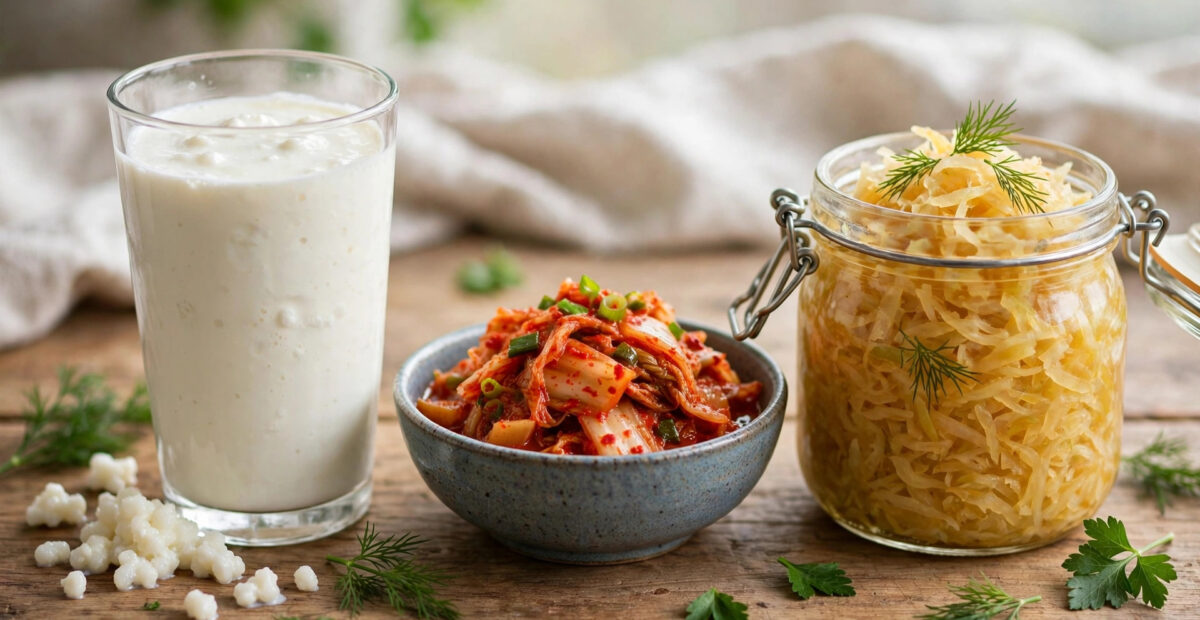
Fermented foods have gone from peasant staples to wellness darlings in about a decade. Supermarket fridges are stacked with cloudy sauerkraut, fiery kimchi and drinkable kefir, each promising a happier gut. Some of that is marketing — but fermentation is one of the oldest food technologies on earth, and one of the more interesting areas of nutrition research right now.
Here’s what kefir, kimchi and sauerkraut actually contain, which claims hold up, and where the evidence thins out. No miracle cures, no fear-mongering — just what’s in the jar.
What fermentation actually does to food
Fermentation is simple in concept. Microbes — mostly lactic acid bacteria that are already present on the food or added as a starter — eat the natural sugars in vegetables or milk and produce lactic acid. That acid does three useful things: it preserves the food, gives it its characteristic tang, and creates an environment where most harmful bacteria can’t grow.
Here is the distinction that matters more than anything else in this article: some fermented products reach you with live cultures intact, and others don’t. Pasteurization, cooking, and canning kill the microbes. A shelf-stable jar of sauerkraut at room temperature is still sauerkraut — just not a live-culture food. If you want the microbes, shop the refrigerated section and look for “raw” or “unpasteurized” on the label.
One more thing: vinegar pickles aren’t fermented — pickled cucumbers in white vinegar contain no live cultures.
Kefir: the drinkable one
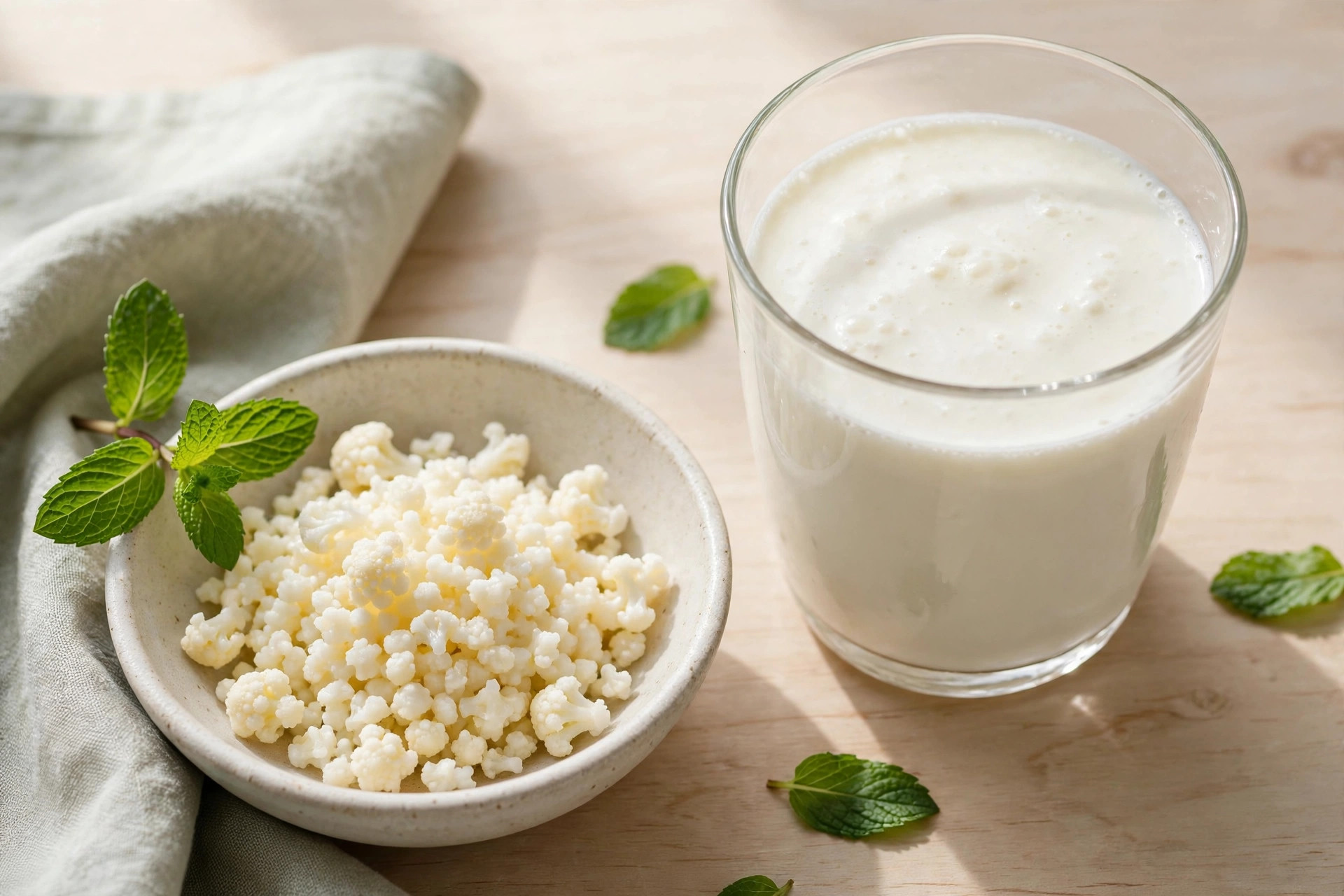
Kefir (keh-FEER) comes from the Caucasus Mountains. It’s made by culturing milk with kefir “grains” — which aren’t grain at all, but rubbery clumps of symbiotic bacteria and yeast. The result is a tangy, slightly fizzy drink.
What sets kefir apart from yogurt is diversity. Most commercial yogurt is fermented with 2 to 6 bacterial strains; kefir grains harbor dozens of microbial species, including beneficial yeasts yogurt doesn’t have. A cup of kefir can deliver roughly 25 to 30 billion colony-forming units (CFUs) of microbes — several times the count in a typical yogurt.
Nutritionally, a cup of plain whole-milk kefir lands around 161 calories with about 9 grams of protein, 9 grams of fat, 7 grams of sugar and roughly 300 mg of calcium — comparable to whole-milk yogurt. The fermentation bacteria also digest some of the milk’s lactose, and at least one small study found that kefir improved lactose digestion in people who normally struggle with dairy. That’s not a guarantee for everyone with lactose intolerance, but it’s a better bet than a glass of milk.
Buying tip: grab the plain version. Flavored kefirs can pack as much added sugar as a soda, which rather defeats the purpose. Use plain kefir in smoothies or over muesli — shaken, because it separates.
Kimchi: Korea’s spicy staple
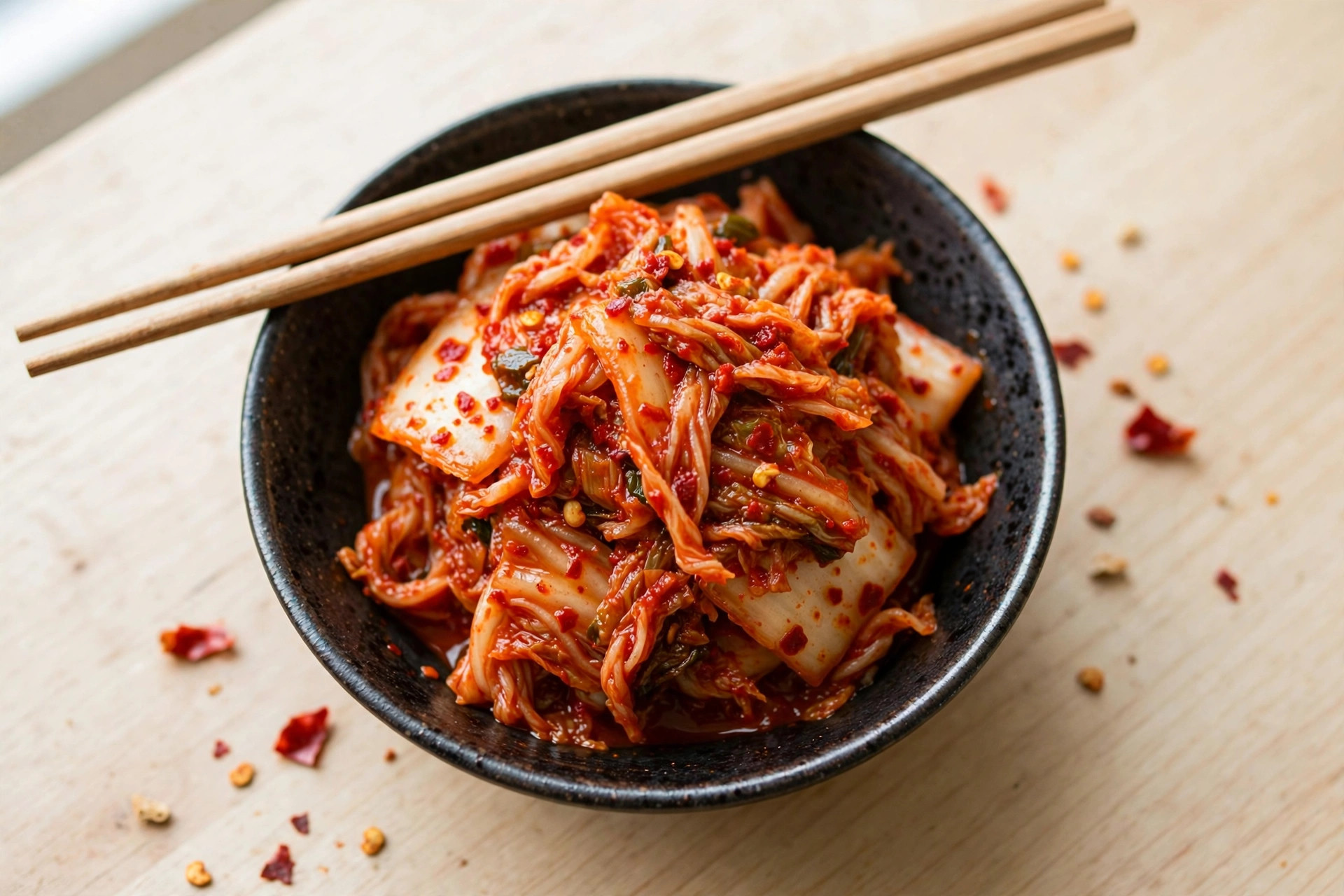
The classic version, baechu kimchi, layers napa cabbage with chili flakes (gochugaru), garlic, ginger, scallions and sometimes salted shrimp or fish sauce, then ferments for days to weeks. The lactic acid bacteria do the work; the chili does the talking.
A small serving (about two tablespoons, roughly 28–30 grams) is almost negligible in calories — typically 10 to 15 — and brings a little vitamin C (around 8 to 18 mg per serving, since cabbage is the base) along with lactic acid bacteria. But kimchi has one catch you can’t ignore: salt. Commercial brands vary enormously — anywhere from about 90 to 800 mg of sodium per serving, with 140 to 300 mg being typical. Two generous spoonfuls can add 200 to 300 mg of sodium to your day, which is fine inside the general 2,300 mg daily limit but worth budgeting if you watch your blood pressure.
Buying tip: refrigerated kimchi is almost always live; shelf-stable pouches and cans are pasteurized. White (non-spicy) kimchi exists if heat isn’t your thing. Treat kimchi like a condiment — a banchan-style side, a rice-bowl topping, folded into scrambled eggs — not a bowl-sized side.
Sauerkraut: the quiet workhorse
Sauerkraut has the shortest ingredient list of anything in this article: cabbage, salt, time. Shredded cabbage is massaged with about 2% salt by weight, packed into a jar, and left for one to three weeks while lactic acid bacteria turn it golden and tangy.
One cup (142 g) of drained sauerkraut has about 27 calories, 4 grams of fiber, 21 mg of vitamin C (roughly 23% of the daily value) and 2.1 mg of iron. The catch, again, is sodium: that cup carries around 940 mg — but nobody eats a cup of sauerkraut; a tablespoon or two adds more like 130 to 250 mg, which is entirely manageable.
Buying tip: refrigerated brands labeled “raw” or “unpasteurized” are the live ones; canned and shelf-stable jars are cooked.
Read also: Almond Milk vs. Soy Milk: How to Compare Them

The supporting cast: miso and tempeh
Two other ferments deserve a mention because they show up constantly in healthy eating patterns.
Miso, Japan’s fermented soybean paste, is a flavor powerhouse rather than a live-culture food in practice. A tablespoon carries about 34 calories, 2 grams of protein and a hefty 500 to 900 mg of sodium (around 630 mg is typical). Since miso soup uses near-boiling water, the cultures don’t survive — you keep the umami and protein, not the live microbes.
Tempeh, from Indonesia, is fermented whole soybeans bound into a firm cake. It’s one of the best plant proteins going: 100 grams delivers about 19 grams of complete protein (all nine essential amino acids), 5.4 grams of fiber, 111 mg of calcium and 2.7 mg of iron. It’s almost always cooked, which kills live cultures — but you eat it for the protein, not the microbes. Crumbled into tacos or sliced into stir-fries, it holds up to all of it.
What the science actually says about gut health
The most-cited evidence comes from Stanford Medicine, published in Cell in 2021. Researchers randomly assigned 36 healthy adults to a diet high in fermented foods (yogurt, kefir, kimchi, fermented vegetables, kombucha) or a high-fiber diet for ten weeks. The fermented-food group showed a steady increase in gut microbiome diversity and a drop in 19 markers of inflammation — with larger servings producing stronger effects. The high-fiber group, surprisingly, didn’t gain diversity at all.
A genuine, well-designed finding — but a small, short trial in healthy adults measuring lab markers, not health outcomes. A later, larger trial (147 people, a 2025 preprint) didn’t find the same diversity difference. The honest summary: promising, not settled.
The takeaway: fermented foods appear to support a more diverse gut microbiome, which is broadly associated with better metabolic health. They are not medicine — they won’t treat IBS, IBD or any diagnosed condition, and no fermented food has been shown to “detox” anything. They earn their place inside an already decent diet.
The sodium question, honestly
Let’s not dance around it: fermentation needs salt, and salt comes with the food. A day with a spoonful of miso (~630 mg), two tablespoons of kimchi (~200 mg) and some sauerkraut (~150 mg) is a day with roughly 1,000 mg of sodium from ferments alone — nearly half the general 2,300 mg daily limit before you’ve eaten anything else.
The answer isn’t to avoid them; it’s to treat fermented vegetables as condiments, not side dishes — a few tablespoons here and there, a cup of plain kefir (which is low in sodium), tempeh as your protein. If you have high blood pressure or your doctor has you on a low-sodium diet, talk it through with your clinician; they may still fit in smaller amounts.
How to start without the bloat
If fermented foods are new to your kitchen, your gut will notice. Gas and bloating in the first week are common and usually settle as your microbiome adjusts. The fix is boring: start small — a tablespoon or two a day — and build up over a week or two. A few servings a week is a perfectly reasonable target; daily small amounts if you love them.
Buy short ingredient lists (vegetables, salt, time) marked “live and active cultures” or “unpasteurized.” Keep everything refrigerated and use clean utensils — a little fizz on opening is normal, but visible mold or a slimy texture means throw it out.
A quick word on safety
Aged ferments are high in histamine, so people with histamine intolerance sometimes react with headaches or flushing. If you’re pregnant or immunocompromised, favor pasteurized versions and check with your doctor — unpasteurized products carry a small food-safety risk. Home fermenters: use the right salt ratio (about 2% by weight for sauerkraut), clean equipment, and keep food below the brine. When in doubt, throw it out.
Frequently asked questions
Are all fermented foods probiotic?
No. “Fermented” describes how a food was made; “probiotic” means live microbes that reach your gut. Pasteurized, cooked or vinegar-pickled products contain no live cultures — only raw, unpasteurized ones do.
How much should I eat?
There’s no official recommendation. A few servings a week is a sensible starting point — condiment-sized portions, not bowls.
Can fermented foods replace probiotic supplements?
Not exactly. Supplements deliver specific, studied strains at set doses; foods deliver broader diversity plus real nutrients. Foods are the foundation; supplements are the targeted add-on.
Sources
- Healthline — Kefir vs. Yogurt (kefir nutrition per cup, CFU and strain counts)
- Verywell Health — Kefir vs. Yogurt: Which One Is the Better Probiotic for Your Gut? (up to ~50 kefir strains, 25–30 billion CFU per cup vs yogurt’s 2–6 strains)
- Health.com — 7 Foods With More Probiotics Than Yogurt (yogurt and kefir CFU ranges)
- Heritage Diner — Fermentation Got Fashionable, the Science Got Murkier (summary of the Stanford fermented-food trial, Cell 2021)
- Yassine Lab — How Does Diet Talk to the Brain? (cites the Wastyk et al. Cell 2021 trial design and findings)
- Nutriscan — Sauerkraut: Calories, Nutrition and Health Benefits (per-cup figures: 27 kcal, 4 g fiber, 939 mg sodium, 21 mg vitamin C)
- LiveGusto — Tempeh vs Miso: Fermented Soy Showdown (USDA-sourced per-100 g tempeh and per-tablespoon miso nutrition)
- Trend Now — Miso Paste Nutrition Facts and Health Benefits (USDA: 1 tbsp miso ≈ 33.7 kcal, 634 mg sodium, 2.2 g protein)
- SnapCalorie — Tempeh Nutrition (100 g tempeh: ~193 kcal, 19 g protein, 5.4 g fiber, 111 mg calcium, 2.7 mg iron)
This article is for general information only, not medical advice. If you’re pregnant, immunocompromised, or managing a health condition, talk to your doctor or dietitian first.