Beverage Calories: How to Compare Common Drinks
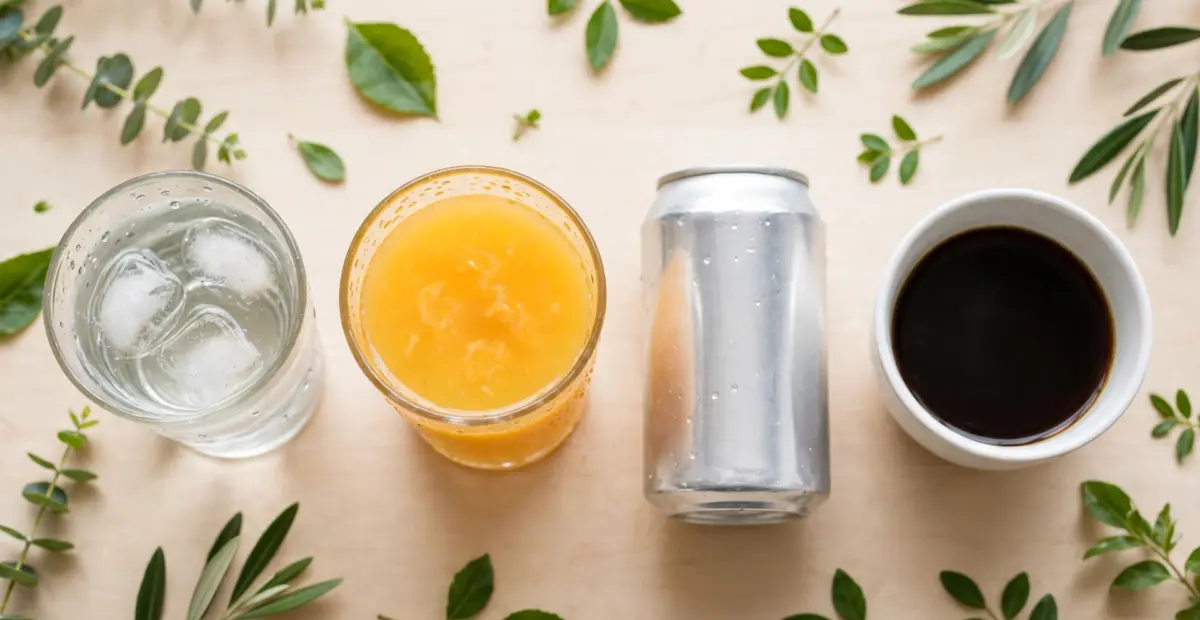
Pick up a bottle, a can, or a coffee cup and the calories inside can surprise you. A drink that feels light can carry as much sugar as a snack, and a “healthy-looking” juice can outdo a can of soda. None of this means you have to give up every sweet drink you enjoy. It just means it helps to know what you are actually drinking — so the choice stays yours.
Most of us track the calories on our plates and forget the ones in our glasses. Drinks do not fill you up the way food does, so their calories slip past almost unnoticed. Once you learn to read a drink the way you read a meal, comparing options gets a lot easier.
Why drinks deserve a closer look
Liquid calories behave differently from the calories in solid food. When you chew, your stomach gets a clear signal that food is coming, and fullness builds gradually. A sweet drink passes through quickly, and studies consistently link frequent sugary-drink intake with weight gain and a higher risk of type 2 diabetes. That is not a reason to panic about one soda at a barbecue — it is a reason to notice how often sweet drinks show up in an ordinary week.
The American Heart Association notes that sugar-sweetened beverages account for about 24% of the added sugars in the U.S. diet. Soft drinks, fruit drinks, sports drinks, and energy drinks top that list. The association recommends keeping added sugars to no more than 25 grams a day for most women (about 6 teaspoons, or 100 calories) and 36 grams a day for most men (about 9 teaspoons, or 150 calories). A single 12-ounce can of soda holds roughly 39 grams of sugar — more than a full day’s worth for most women, and over the daily amount for most men.
The World Health Organization takes a similar line: it recommends keeping free sugars — sugars added to foods and drinks, plus those naturally present in honey, syrups, and fruit juices — below 10% of total energy intake, with a further reduction to below 5% (roughly 25 grams a day) offering additional benefits.
How to compare drinks, step by step
Comparing drinks is a skill, and it only takes three checks.
1. Check the serving size first. A bottle that looks like one drink is often two or two-and-a-half servings. If the label says 150 calories per serving and the bottle holds 2.5 servings, the whole bottle is 375 calories. Always multiply before you decide.
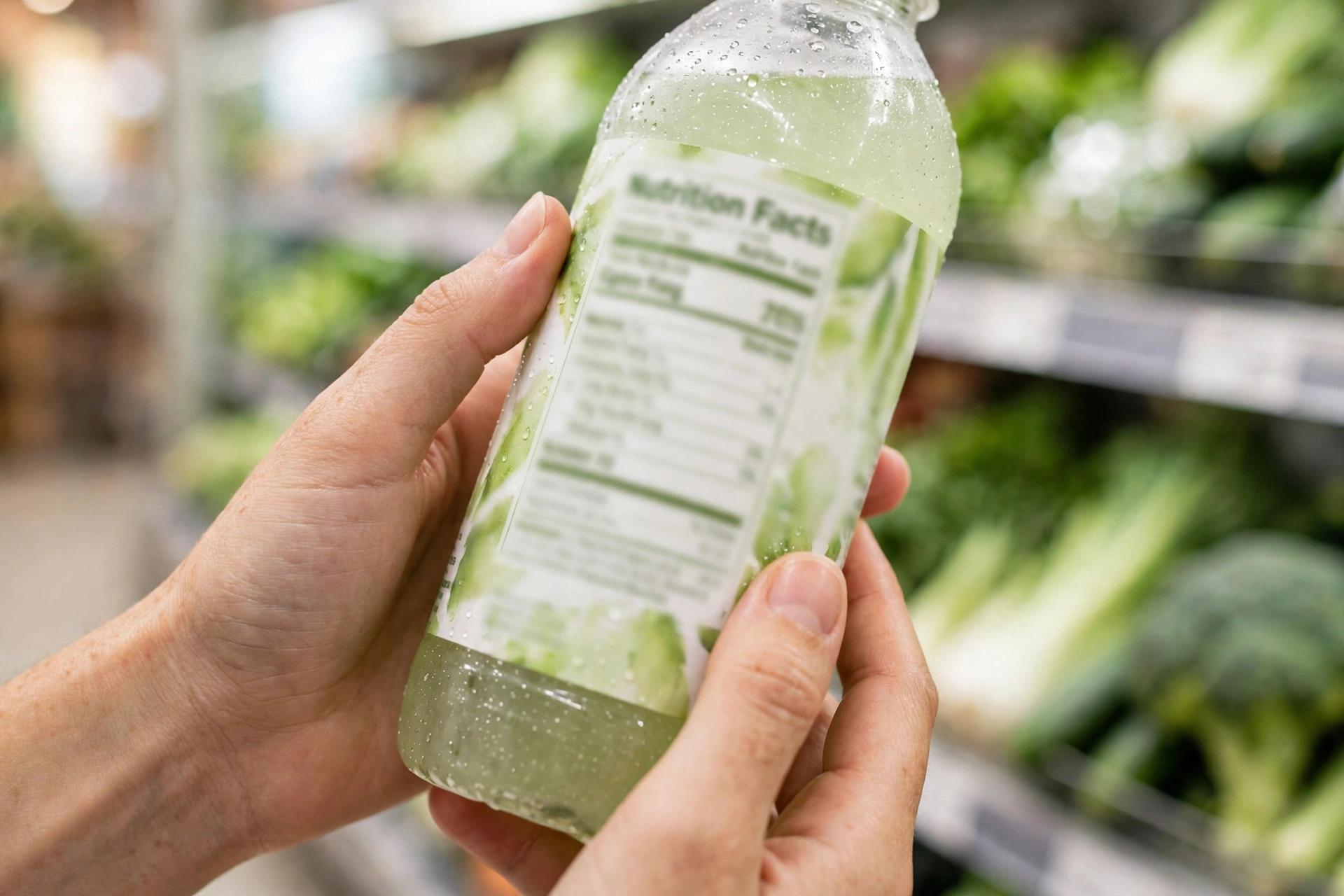
2. Look at the “Added Sugars” line. Since 2016, the U.S. Nutrition Facts label has listed added sugars separately from total sugars. Total sugars include the natural sugars in milk and 100% juice; added sugars are the ones stirred in during processing. That one line tells you how much of the sweetness was put there on purpose.
3. Compare grams, not just calories. Four grams of sugar equals about one teaspoon. A drink with 39 grams of sugar holds nearly 10 teaspoons — picture that spooned into a glass, and the number suddenly feels real.
Read also: How to Read Food Labels
Common drinks, side by side
All figures below are approximate, per 12 ounces (about 355 ml) unless noted, from USDA FoodData Central. Brands vary, so treat these as a map, not a verdict on any single product.
| Drink (12 oz) | Calories | Sugar | What to notice |
|---|---|---|---|
| Water | 0 | 0 g | The baseline — nothing to compare against, it just is. |
| Black coffee, unsweetened tea | 0–4 | 0 g | Practically calorie-free until milk or sugar joins in. |
| Diet soda | 0–7 | 0 g | Near-zero calories, but no nutrients either. |
| Sports drink | ~94 | ~21 g | Built for long, sweaty workouts — not for a desk afternoon. |
| Sweetened iced tea (bottled) | 129–143 | ~33 g | Tea itself is nearly free; the sugar does the damage. |
| Cola / soda | ~150 | ~39 g | A full day of added sugar for most women, in one can. |
| Orange juice, 100% | ~150 | ~21 g | Natural sugars, plus vitamin C — but no fiber, unlike the fruit. |
| Energy drink (8.3 oz can) | 105–112 | ~27 g | Small can, big sugar load, plus caffeine. |
| Whole milk (1 cup) | 149 | 12 g (lactose) | Natural milk sugar, plus 8 g protein and calcium. |
| Skim milk (1 cup) | 83 | 12 g (lactose) | Same protein and calcium, far fewer calories. |
| Cranberry juice cocktail | ~205 | ~34 g | Mostly sweetened water with a little cranberry — the highest on this list. |
Two surprises usually stand out. First, 100% orange juice has about the same calories as soda — the difference is that juice brings vitamin C and potassium, while soda brings nothing but sugar. Second, milk’s sugar is lactose, a natural sugar that comes packaged with protein, calcium, and vitamin D, which is a very different deal from the added sugars in a soft drink.
Read also: How to Compare Sugary and Unsweetened Drinks
The hidden add-ins: coffee, smoothies, and flavored drinks
The base drink is only half the story. A black coffee has about 2 calories a cup, but a large flavored latte with whole milk and syrup can reach 300 calories or more — a small meal in a cup. One tablespoon of honey adds about 64 calories, a teaspoon of sugar about 16, and a tablespoon of heavy cream about 51. None of these are “bad” on their own; they just add up fast when they become a daily habit.
Smoothies deserve the same honest look. A homemade blend of banana, berries, and Greek yogurt can be a genuinely nourishing snack. A café smoothie built on sweetened juice, syrup, and a scoop of sorbet can top 300 calories with 40 grams of sugar or more — closer to dessert than to breakfast. The fix is simple: build smoothies on whole fruit and unsweetened yogurt or milk, and skip the syrup.
What about diet drinks and flavored water?
Diet sodas and zero-sugar drinks contain little to no calories, which makes them a useful stepping stone if you are cutting back on sugar. They are not a health drink — they offer no nutrients — but swapping a daily regular soda for a diet one removes roughly 150 calories a day, or over 1,000 a week. That is a meaningful change for very little effort.
Flavored sparkling water sits in a friendlier spot: zero calories, zero sugar, and the fizz many people miss when they give up soda. A squeeze of lemon, lime, or a few crushed berries adds flavor without adding sugar. If plain water bores you, this is one of the easiest upgrades there is.
Read also: Simple Ways to Drink More Water Every Day
Everyday swaps that actually stick
Big changes fail; small ones last. Try one of these for a week and see how it feels:
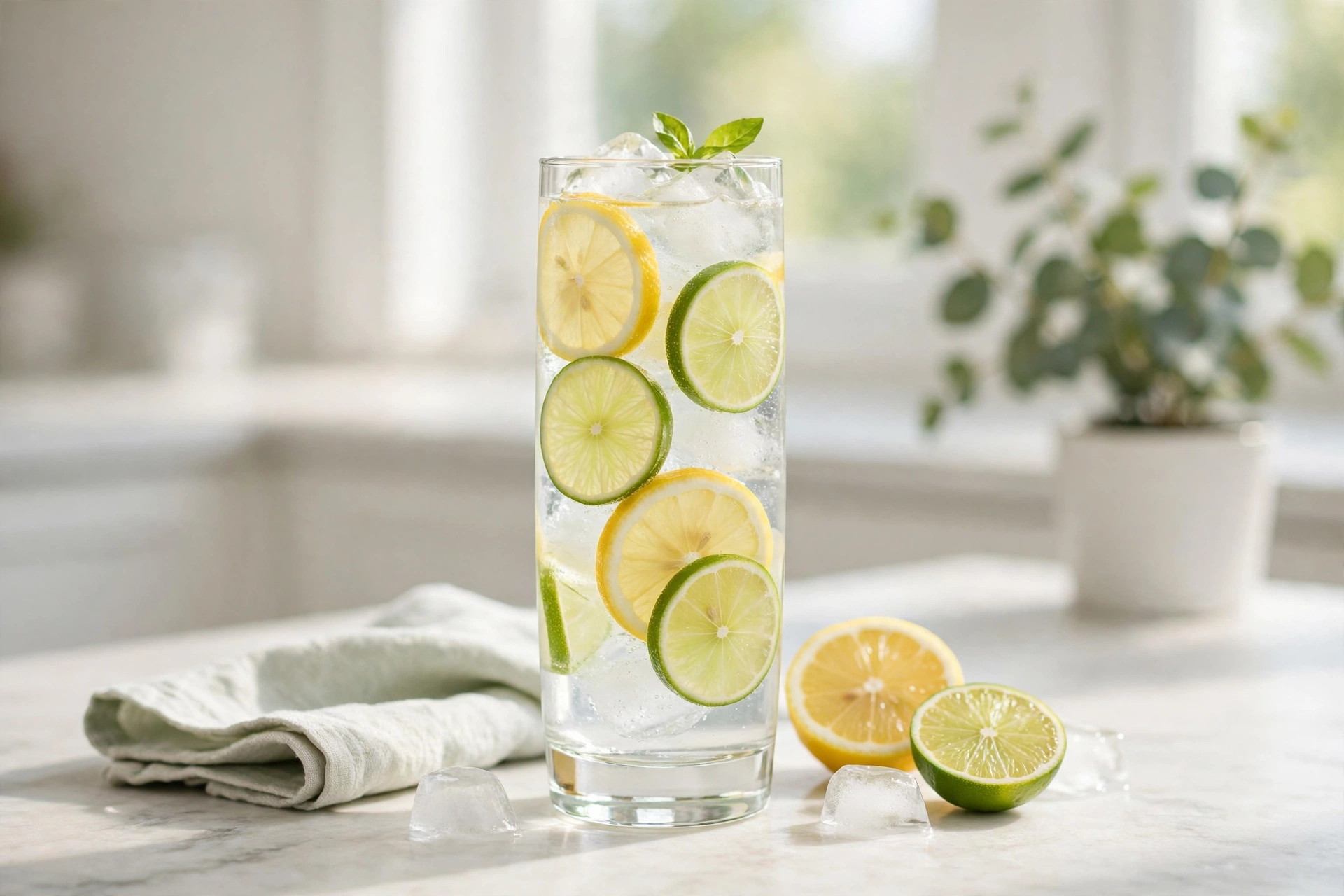
- Soda → sparkling water with citrus. Same fizz, same ritual, about 150 calories saved per can.
- Sweet tea → half sweet, half unsweet. You keep the flavor you like and cut the sugar in half overnight.
- Large flavored latte → small latte, no syrup. Ask for one pump instead of three, or none at all — the milk still makes it creamy.
- Juice with breakfast → a small glass, or the whole fruit. A 6-ounce glass instead of 12 halves the sugar, and an orange gives you fiber the juice lost.
- Sports drink at your desk → water. Unless you have been sweating hard for an hour or more, you probably do not need the sugar and salt.
None of these swaps asks you to give up enjoyment. They just move the sweetest drinks from “every day, without thinking” to “sometimes, on purpose.”
Frequently asked questions
Is 100% fruit juice healthier than soda?
Yes, but only by a modest margin. Juice delivers vitamins and minerals that soda lacks, but it has similar calories and sugar, and none of the fiber of whole fruit. Think of a small glass as a food, not a thirst quencher — and water as the default for hydration.
How much sugar is in a typical can of soda?
A 12-ounce can usually contains about 39 grams of sugar, or nearly 10 teaspoons. That exceeds the American Heart Association’s daily added-sugar limit for most women (25 grams) and tops the limit for most men (36 grams) in a single can.
Are sports drinks a good everyday choice?
Not usually. Sports drinks were designed to replace fluid, sugar, and electrolytes lost during long, intense exercise. For a normal day, a 12-ounce bottle adds about 94 calories and 21 grams of sugar your body did not ask for. Water covers everyday hydration better.
Do diet drinks help with weight management?
They can help as a transition. Swapping a daily regular soda for a zero-calorie version removes about 150 calories a day without changing anything else. That said, water, unsweetened tea, and sparkling water are stronger long-term habits because they retrain your taste buds to expect less sweetness.
Sources
- American Heart Association — How Much Sugar Is Too Much?
- World Health Organization — Guideline: Sugars Intake for Adults and Children (2015)
- WebMD — Calories in Drinks and Popular Beverages (medically reviewed, figures from USDA data)
- USDA FoodData Central — nutrient values for milk, juice, soda, coffee, and other beverages
This article is for general information only and is not medical advice. If you have diabetes, kidney disease, or another condition that affects what you should drink, talk with your clinician or a registered dietitian about the choices that fit you.