Easy High-Protein Breakfast Ideas
Most of us eat breakfast on autopilot: toast, a banana, coffee, out the door. It feels light and quick, and then by 10 a.m. the stomach is growling and the snack drawer starts calling. The missing piece is usually protein. A breakfast with a solid serving of protein keeps you full longer and steadies your energy — and it doesn’t require a protein shake or an hour in the kitchen. A couple of eggs, a bowl of Greek yogurt, or oats stirred with peanut butter can get you most of the way there.
This guide walks through how much protein to aim for in the morning, a simple formula for building a high-protein breakfast from foods you probably already buy, and ten ideas you can make on a weekday.
How much protein do you need at breakfast?
Start with the daily picture. The Recommended Dietary Allowance (RDA) for protein is 0.8 grams per kilogram of body weight per day for healthy adults — about 56 grams for a 70 kg (154 lb) person. That number is a floor set to prevent deficiency, not a target for feeling your best. The 2025–2030 Dietary Guidelines for Americans, released in January 2026, set a higher everyday goal of 1.2 to 1.6 grams per kilogram per day, adjusted to your calorie needs. For that same 70 kg adult, that works out to roughly 84 to 112 grams a day.
Spread across three meals, that means aiming for roughly 25 to 35 grams of protein at breakfast is a reasonable target for many adults. You don’t need to hit an exact number — the point is to stop treating breakfast as a carb-only meal. If your current breakfast gives you 5 to 10 grams, doubling or tripling it is a realistic first step, and your mid-morning hunger will likely notice the difference.
One more thing worth knowing: protein at breakfast works best as part of a balanced plate. The World Health Organization recommends at least 400 grams of fruits and vegetables a day and at least 25 grams of naturally occurring fiber. A breakfast that pairs protein with fruit, vegetables, or whole grains covers more of your day’s nutrition in one sitting than protein alone ever will.
The simple formula: protein anchor + produce + whole grain
You don’t need a new recipe book. Almost any high-protein breakfast follows the same three-part pattern:
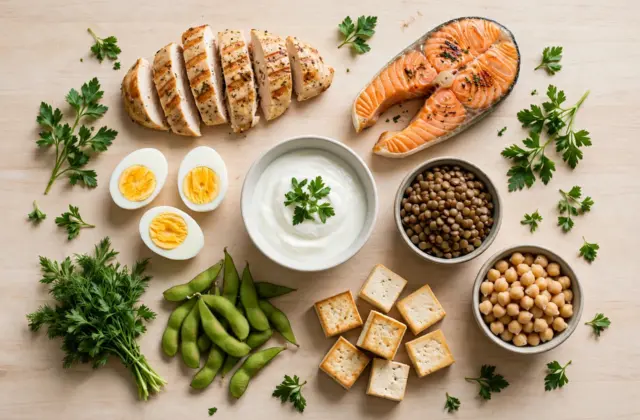
1. A protein anchor. Pick one main protein food: eggs, Greek yogurt, cottage cheese, tofu, or beans. This is the part that does the heavy lifting, so give it a real portion — two eggs, not one; a full cup of Greek yogurt, not two spoonfuls.
2. Something fresh. Fruit or vegetables add fiber, volume, and flavor for very few calories. Berries with yogurt, spinach folded into eggs, sliced tomato on toast — whatever you have on hand counts.
3. A whole grain or starchy base (optional but helpful). Whole-grain toast, oats, or a corn tortilla rounds the meal out and adds staying power, especially on active mornings.
Once you see the pattern, you can build breakfasts from whatever is in the fridge instead of starting from zero every morning.
Read also: How to Build a Better Breakfast
10 easy high-protein breakfast ideas
Each idea below lists an approximate protein total, based on USDA FoodData Central values for standard servings. Labels vary by brand, so treat these as a guide, not a lab measurement.
1. Two eggs on whole-grain toast with spinach
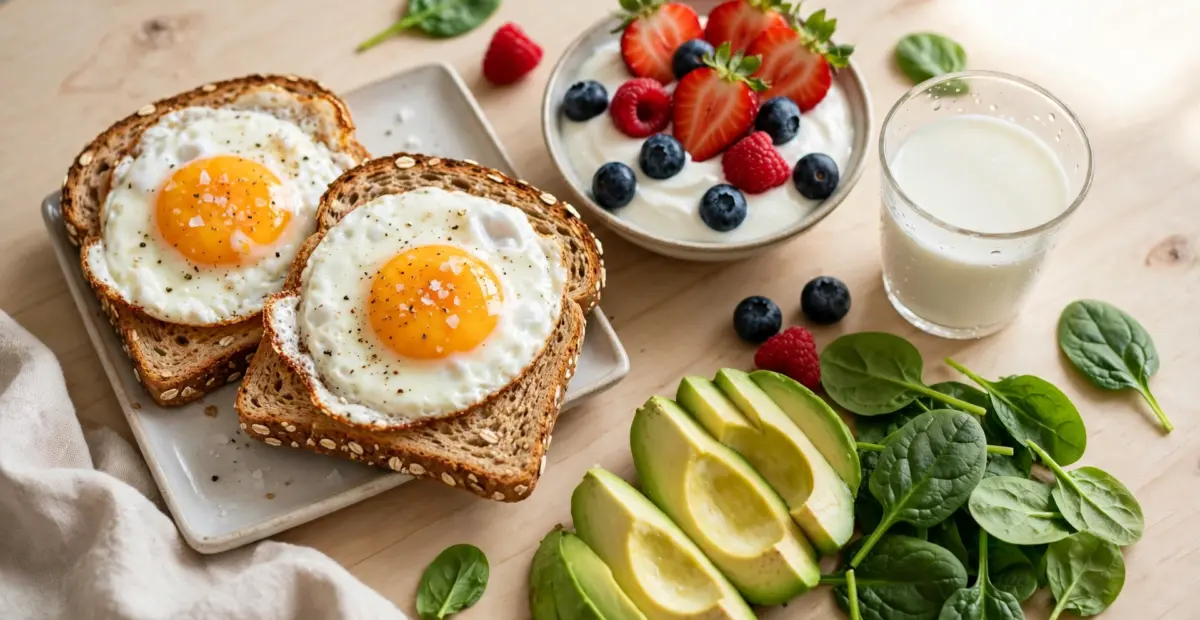
Two large eggs give you about 12 grams of protein. Scramble them or fry them in a little olive oil, pile them on whole-grain toast, and wilt a handful of spinach in the same pan. Add sliced tomato or avocado if you like. Total: roughly 17–20 grams of protein, ready in under ten minutes.
2. Greek yogurt bowl with berries and nuts
A cup (about 245 g) of plain nonfat Greek yogurt packs around 25 grams of protein — the single easiest high-protein breakfast there is. Top it with a handful of berries, a tablespoon of chopped walnuts or almonds, and a drizzle of honey if you want sweetness. Watch out for flavored yogurts, which can carry as much added sugar as a dessert.
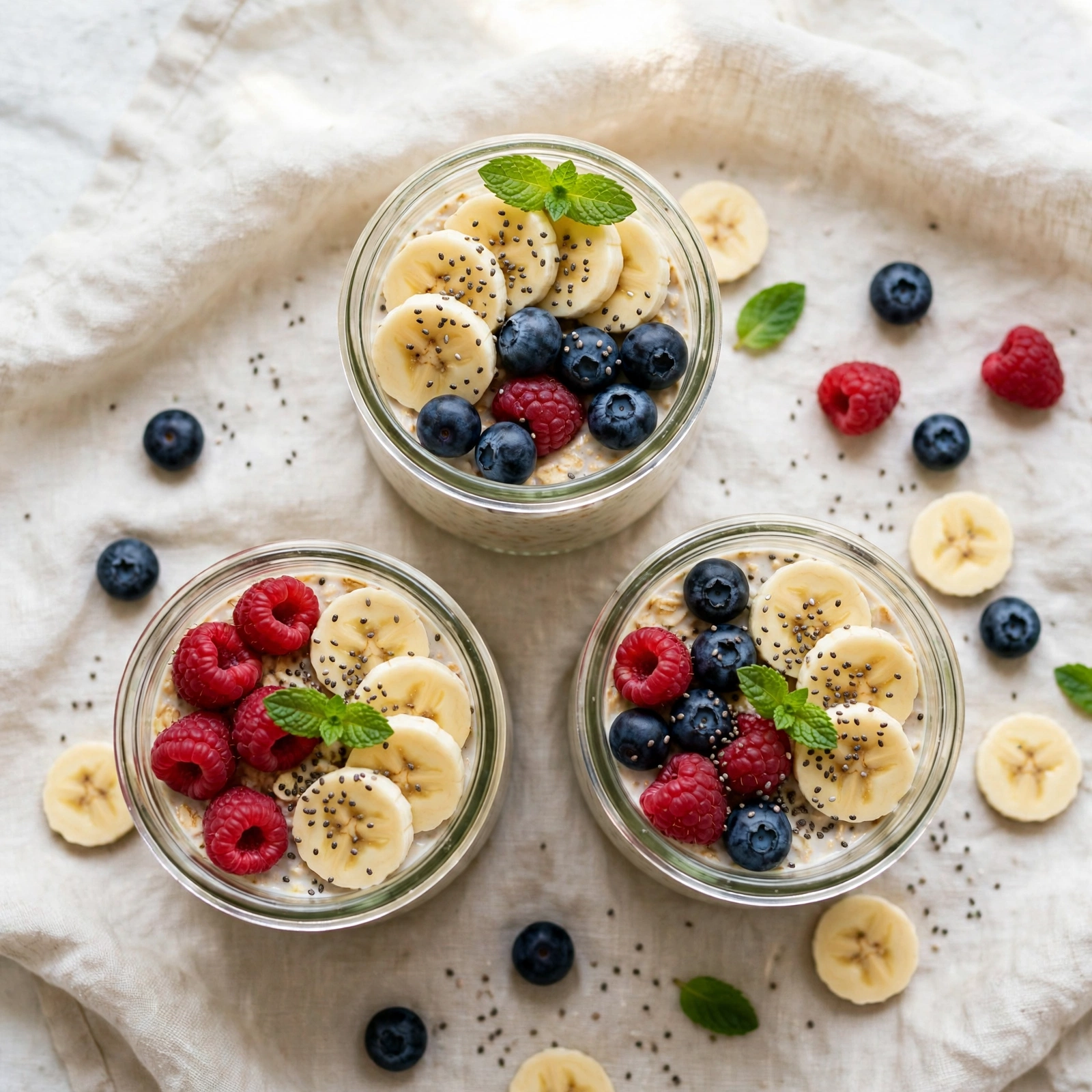
3. Overnight oats with yogurt and chia seeds
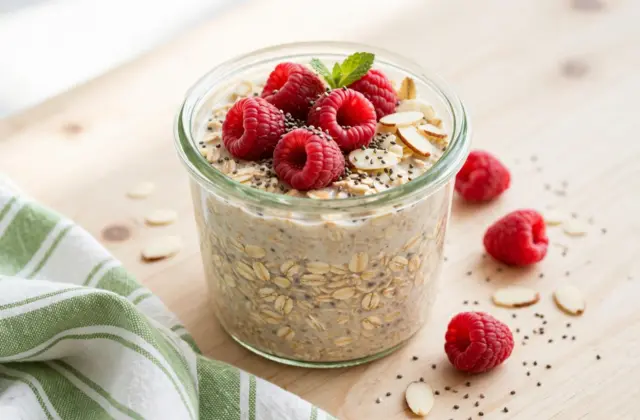
Stir 40 grams of rolled oats (about 5 grams of protein and 4 grams of fiber) with half a cup of Greek yogurt, milk, and a tablespoon of chia seeds, then leave it in the fridge overnight. In the morning, add fruit and eat it cold. The oats-plus-yogurt combination lands around 18–22 grams of protein, and you can make three jars on Sunday for the workweek.
4. Cottage cheese on toast with fruit
Half a cup of cottage cheese (about 113 g) gives you roughly 12 grams of protein. Spread it thickly on whole-grain toast and top with sliced peaches, berries, or tomato with a crack of black pepper. It’s an old-fashioned combination that holds up: high protein, low effort, and easy to scale up by simply using more cottage cheese.
5. Tofu scramble with vegetables
Crumble firm tofu into a hot pan with turmeric, garlic, and whatever vegetables you have — peppers, mushrooms, spinach. Tofu provides about 8 grams of protein per 100 grams, so a 150-gram portion gives you around 12 grams. It keeps well in the fridge for three to four days, so cook a big batch and reheat portions through the week.
6. Peanut butter banana oatmeal
Cook oats with milk instead of water, stir in a tablespoon of peanut butter, and top with half a sliced banana. The milk and peanut butter lift a plain bowl of oats from about 5 grams of protein to roughly 13–15 grams. Choose peanut butter whose label lists peanuts (and maybe salt) only — many sweetened spreads add sugar without adding protein.
7. Egg muffins, baked once and eaten all week
Whisk a dozen eggs with chopped vegetables, a little cheese, and cooked spinach, pour into a muffin tin, and bake. Two egg muffins give you about 12–14 grams of protein and reheat in a minute. Store them in the fridge and eat within three to four days, following the usual food-safety guidance to refrigerate perishable food within two hours of cooking.

8. Breakfast burrito with beans and eggs
Scramble one egg with a third of a cup of black beans, wrap it in a corn or whole-wheat tortilla with salsa, and you have about 15–18 grams of protein plus fiber from the beans. Beans are one of the cheapest protein sources there are, and a can of black beans in the pantry turns a plain egg into a genuinely filling meal.
9. Smoked salmon and cream cheese on a bagel half
A small portion of smoked salmon (about 60 g) adds roughly 12 grams of protein to a bagel half with cream cheese, cucumber, and dill. It takes five minutes and feels like a treat. If sodium is a concern for you, keep the portion modest and load up the cucumber and tomato.
10. Protein smoothie with fruit and greens
Blend a cup of milk, half a cup of Greek yogurt, a banana, and a handful of spinach. That’s around 20 grams of protein without any protein powder. Smoothies work best as a real meal, not a snack: keep the fruit to one or two portions and let the yogurt and milk carry the protein.
Read also: How to Add Protein to Everyday Meals
Make-ahead: prep protein once, eat all week
The difference between a high-protein breakfast and a skipped one is usually preparation. A little Sunday work removes the morning decision entirely:
- Boil a dozen eggs. Two hard-boiled eggs with fruit is a 12-gram-protein breakfast you can eat standing up.
- Bake a tray of egg muffins. See idea 7 above — they reheat in a minute and last three to four days in the fridge.
- Mix three jars of overnight oats. Oats, yogurt, milk, chia seeds, fruit. Grab and go.
- Cook a pot of lentils. A cup of cooked lentils gives you about 18 grams of protein and 15.6 grams of fiber, and they reheat well with eggs or in a breakfast burrito.
Refrigerate cooked eggs, tofu, and lentils within two hours, keep the fridge at or below 40°F (4°C), and eat leftovers within three to four days.
Plant-based high-protein breakfasts
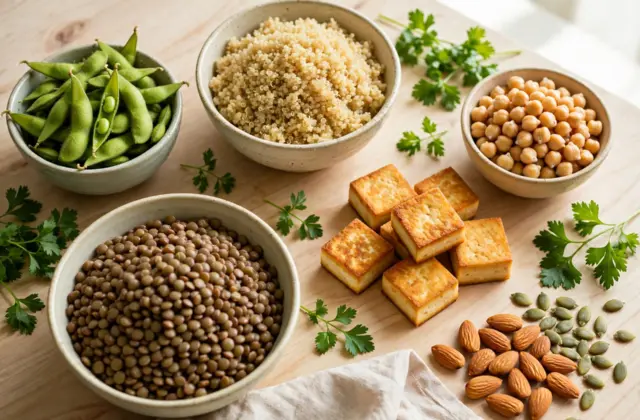
You don’t need eggs or dairy to hit a solid protein number in the morning. Tofu scramble, lentil breakfast burritos, and oats made with soy milk all work well. Soy milk typically has about 7–8 grams of protein per cup — far more than most other plant milks — so it’s the best swap when you make oatmeal or smoothies without dairy. A tofu scramble with beans and a whole-grain tortilla can easily reach 20 grams of protein with no animal products at all. If you eat mostly plant-based, combine grains with legumes or soy across the day and you’ll cover the full range of essential amino acids without thinking about it at every meal.
Read also: How to Add Fiber to Your Diet
Common mistakes that keep breakfast low in protein
Counting a splash of milk as protein. A spoonful of milk in coffee adds barely a gram. Protein needs a real portion to count.
Choosing flavored yogurt or sweetened cereal. Many breakfast products marketed as “protein” get most of their calories from added sugar. Check the label: if sugar is listed before protein-rich ingredients, it’s dessert in a breakfast costume.
Eating protein only at dinner. Most people back-load their protein into one evening meal. Spreading it across the day, starting at breakfast, is a simpler way to reach your daily target.
Skipping breakfast to “save” calories. For most people, skipping breakfast just moves the hunger to mid-morning, where it usually gets answered with something less nutritious. A protein-rich breakfast often makes the whole day easier to eat well.
Frequently asked questions
How much protein should breakfast have?
For many adults, 20 to 35 grams is a good target — roughly a third of the day’s protein if you follow the 2025–2030 Dietary Guidelines goal of 1.2 to 1.6 grams per kilogram of body weight. If your current breakfast has under 10 grams, adding one protein anchor like two eggs or a cup of Greek yogurt is a practical first step.
Is it okay to eat eggs every day?
For most healthy adults, eggs can be part of a daily breakfast. Dietary guidance no longer sets a strict daily limit on dietary cholesterol for the general population, and eggs provide complete protein plus choline and B vitamins. If your clinician has advised you to limit cholesterol, follow their guidance.
What is the highest-protein breakfast with no cooking?
A cup of plain Greek yogurt with nuts and berries — about 25 grams of protein, assembled in two minutes. Cottage cheese on toast with fruit is a close second at around 15–18 grams.
Can I get enough protein at breakfast without dairy or eggs?
Yes. A tofu scramble with beans, oatmeal made with soy milk and peanut butter, or a lentil breakfast burrito can each reach 15–25 grams of protein. Combining soy foods, legumes, and whole grains across the day covers your amino acid needs.
Sources
- Dietary Guidelines for Americans, 2025–2030 — U.S. Department of Agriculture and U.S. Department of Health and Human Services (protein serving goal 1.2–1.6 g/kg/day)
- Protein — Health Professional Fact Sheet — National Institutes of Health, Office of Dietary Supplements (RDA 0.8 g/kg/day)
- USDA FoodData Central — U.S. Department of Agriculture (protein values for eggs, Greek yogurt, cottage cheese, oats, lentils, tofu)
- Healthy diet — Fact sheet — World Health Organization (at least 400 g of fruits and vegetables a day; at least 25 g of naturally occurring fiber)
- FoodSafety.gov — U.S. Department of Health and Human Services (refrigerate perishable food within 2 hours; leftovers 3–4 days; fridge at or below 40°F)
This article is for general information only and is not a substitute for medical advice. If you have kidney disease, a food allergy, or a medical condition that affects your diet, talk to your clinician or a registered dietitian before making major changes to your protein intake.