How Much Water Do You Need? a General Guide

You have probably heard the eight-glasses-a-day rule so many times that it feels like a fact of nature. Fill a glass eight times, and you are done. The trouble is that the rule was never really a rule. It is a handy shortcut with no clear scientific origin, and it ignores the things that actually change how much water you need: your body size, the weather, how much you move, and what you eat. The honest answer to “how much water do I need?” is a range, not a single number — and once you understand where that range comes from, it is much easier to hit it without thinking about it all day.
This guide walks through the official numbers, what they do and do not mean, the signs that you are running low, and the situations where you genuinely need more. No counting apps required.
The official numbers: two sets of guidance
Two expert bodies have done the most careful reviews of water intake, and they land in a similar place. The U.S. National Academies of Sciences, Engineering, and Medicine set an Adequate Intake — the level that healthy people in a temperate climate were observed to consume — of about 3.7 litres of total water a day for men and 2.7 litres for women. The European Food Safety Authority (EFSA) sets its adequate intake a little lower, at 2.5 litres a day for men and 2.0 litres for women, under moderate temperatures and moderate activity.
Both figures describe total water, not just what you drink from a glass. That distinction matters more than most people realise. Roughly 20% of your daily water arrives in food, so the part you actually drink is smaller than the headline number: about 3.0 litres of drinks a day for men and 2.2 litres for women under the U.S. figures, or roughly 2.0 and 1.6 litres under the European ones.
| Group | National Academies (U.S.) — total water | EFSA (Europe) — total water |
|---|---|---|
| Men, 19 and over | 3.7 L (about 3.0 L from drinks) | 2.5 L (about 2.0 L from drinks) |
| Women, 19 and over | 2.7 L (about 2.2 L from drinks) | 2.0 L (about 1.6 L from drinks) |
| Pregnancy | 3.0 L | 2.3 L (2.0 L + 300 mL) |
| Breastfeeding | 3.8 L | About 2.7 L (2.0 L + 700 mL) |
Notice what these numbers are not. They are not prescriptions, and the National Academies say so directly: an Adequate Intake “should not be interpreted as a specific requirement.” The figures are population averages, built from what healthy, well-hydrated people were already consuming in national surveys. Your own number sits somewhere in a range around them — and for most healthy adults, thirst and a few simple checks will keep you in that range without any measuring.
Why there is no single magic number
Your body loses water all day: through urine, sweat, breathing, and even the moisture in your breath on a cold morning. How fast you lose it depends on a handful of things that change daily.
Body size. A bigger body has more tissue to keep hydrated and usually turns over more water. This is one reason the figures differ for men and women on average, and why a 50 kg woman and a 100 kg man will not need the same amount.
Activity. A brisk walk on a mild day costs you some sweat; an hour of running in the heat costs far more. Sweat rates vary enormously between people — some lose half a litre an hour, others more than two — so active days genuinely call for extra drinks, ideally spread across the day rather than gulped all at once afterwards.
Climate. Hot, humid weather raises sweat losses, and so does dry air at altitude or in an overheated room in winter. If you have moved somewhere warmer, or summer has arrived, your usual intake may quietly fall short.
What you eat. A diet rich in fruit, vegetables, soups, and yoghurt can deliver a large share of your water before you ever pick up a glass. A diet heavy on dry, salty snacks does the opposite. This is why the same person can need noticeably different amounts of drinking water from one week to the next.
Life stage and health. Pregnancy and breastfeeding raise needs — the National Academies add roughly 300 mL a day in pregnancy and about 1.1 litres while breastfeeding. Fever, vomiting, or diarrhoea can drain fluids fast and call for prompt replacement, and some medicines increase urination. If you have kidney, heart, or liver disease, or you have been told to restrict fluids, your target comes from your clinician, not from a general guide like this one.
Read also: Healthy Drinks to Pair With Everyday Meals
What counts toward your total (it is not just plain water)
Here is the good news: nearly everything you drink counts. Water is the simplest choice, but tea, coffee, milk, juice, and sparkling water all contribute to your daily total. Food counts too, and more than most people expect.
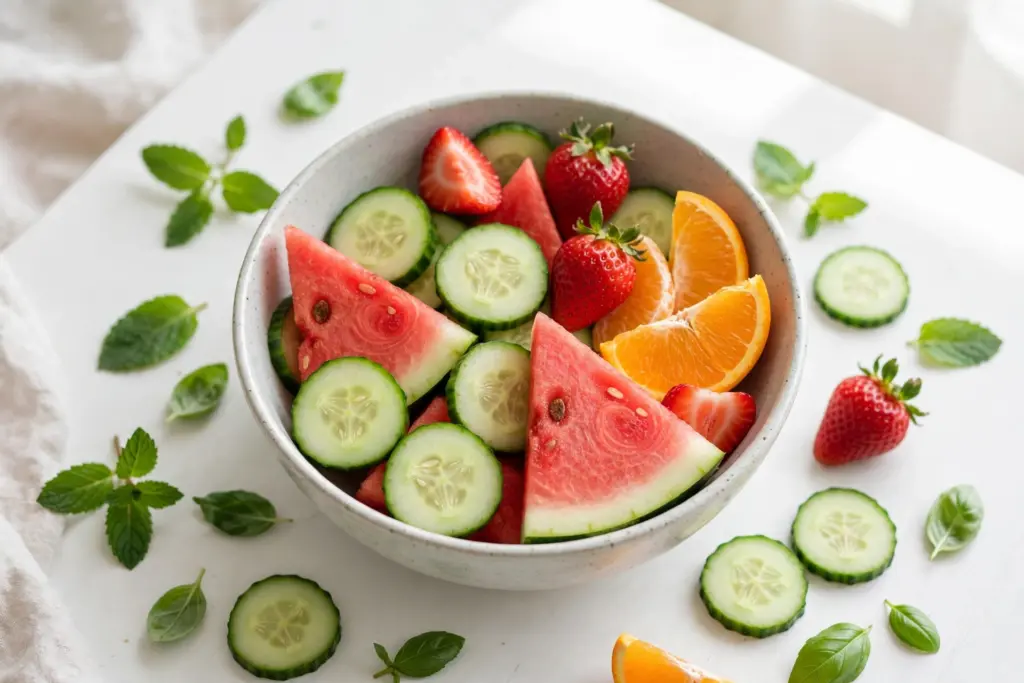
Many fruits and vegetables are mostly water by weight. Cucumber is about 96% water, celery around 95%, tomato about 94%, and watermelon about 92%, according to U.S. Department of Agriculture food data. A salad, a bowl of soup, or a piece of fruit is not just food — it is a meaningful drink in disguise. That is part of why people who eat plenty of produce often need less from the tap.
What about coffee? Caffeine is a mild diuretic, which is why coffee has a reputation for dehydrating you. In practice, the water in each cup more than offsets the small extra urine output, at least at ordinary intakes. In a 2014 crossover trial published in PLOS ONE, 50 men who regularly drank coffee consumed four cups a day for three days, then repeated the experiment with the same volume of plain water — and the researchers found no meaningful difference in hydration markers. So your morning coffee counts. It just should not be your only drink, and very high caffeine intakes are a different story: the U.S. Food and Drug Administration cites 400 mg of caffeine a day — roughly four cups of brewed coffee — as a general upper limit for healthy adults.
Sugary drinks are a trickier case. They hydrate you, technically, but they also load you with sugar you do not need — a 330 mL can of cola carries roughly 35 g of sugar, close to the American Heart Association’s whole-day added-sugar limit of 25 g for women and 36 g for men. Water, sparkling water, and unsweetened tea give you the fluid without the sugar.
How to tell if you are drinking enough
Your body gives you better feedback than any chart. Three checks, taken together, are more reliable than any single number:
Thirst. Thirst is a real signal, but it is a late one. By the time you feel properly thirsty, you are often already mildly short. Older adults are especially likely to feel little thirst until they are already dehydrated, according to the Mayo Clinic, so waiting for thirst alone is a weak strategy if you are over 65 or caring for someone who is.
Urine colour. Pale straw yellow is the usual sign of good hydration. Dark yellow or amber suggests you need more fluids. (A few supplements and foods, such as B vitamins and beetroot, can change the colour, so read it alongside the other signs.) Going to the toilet much less often than usual is another early clue.
How you feel. The Mayo Clinic lists the adult symptoms of dehydration as extreme thirst, urinating less, dark-coloured urine, tiredness, dizziness, and confusion. A headache, dry mouth, or an afternoon slump that lifts after a glass of water is often the same story in miniature. If you notice dizziness, confusion, or very little urination over many hours, that is a sign to seek medical care promptly rather than simply drinking more.
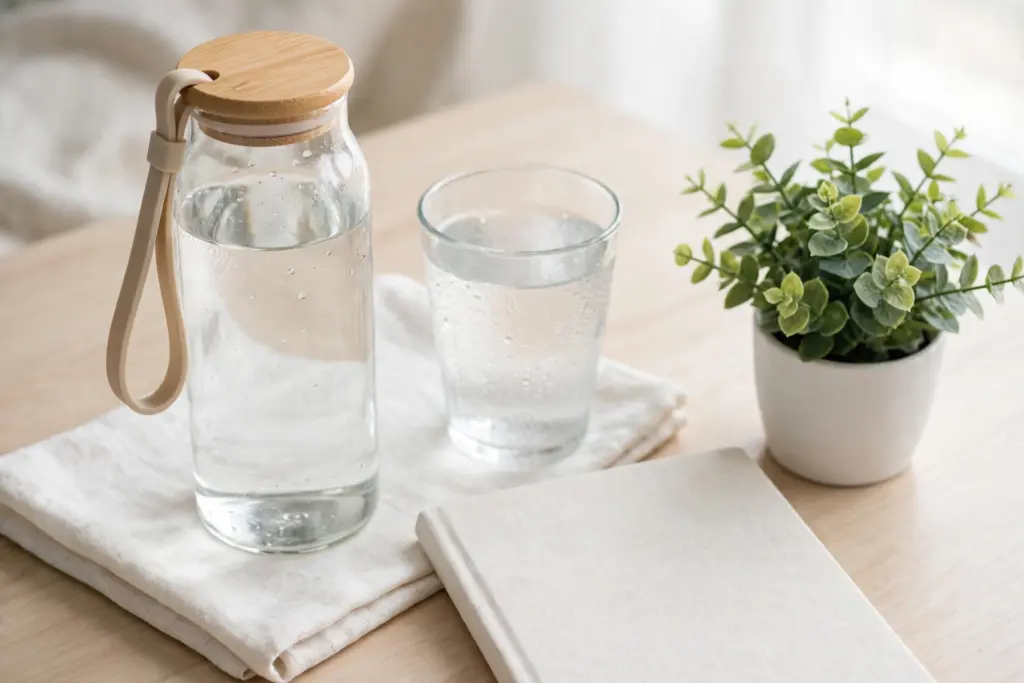
A practical habit that works for most people: keep water where you can see it — a bottle on your desk, a glass beside the kettle — and drink a glass with each meal. Three meals plus a glass between each one already lands most adults near the European drinking-water range, without any counting.
When you need more than usual
Some days call for a deliberate top-up. Drink more, and drink earlier, when you are:
- Exercising or working in the heat. Start hydrated, sip during the activity, and keep drinking afterwards. For sessions longer than an hour, or very sweaty ones, a drink with a little salt and carbohydrate — a sports drink, or water with a salty snack — helps replace what sweat takes out.
- Ill. Fever, vomiting, and diarrhoea all increase fluid loss. Small, frequent sips are easier to keep down than large glasses, and oral rehydration solutions replace salts as well as water.
- Flying or in dry air. Cabin air is very dry, and you may simply forget to drink. A bottle of water for the flight is a cheap fix.
- Pregnant or breastfeeding. Needs rise by roughly 300 mL a day in pregnancy and about 700 mL to 1.1 litres while breastfeeding, depending on which guidance you follow — and thirst is a good guide here, as long as you answer it.
- Eating a very high-fibre diet. Fibre absorbs water in the gut, so a sudden jump in fibre without extra fluids can leave you constipated and uncomfortable. Increase both together.
Read also: How to Add More Vegetables to Your Meals
Can you drink too much water?
Yes, though it is uncommon in everyday life. Drinking far more water than your kidneys can clear — usually many litres in a short period, often during endurance exercise — can dilute the sodium in your blood, a condition called hyponatremia. Its early symptoms, such as nausea, headache, and confusion, unfortunately overlap with dehydration, which is why the advice for long, sweaty efforts is to drink to thirst and replace some salt rather than forcing a fixed volume.
For most people, the practical rule is simple: drink steadily through the day, a bit more when you sweat, and do not try to force down litres at once. Your kidneys handle a gradual intake easily; they struggle with a sudden flood.
Simple ways to drink enough without thinking about it
You do not need a hydration app or a marked bottle to stay well hydrated. A few small habits cover most of it:
- Anchor water to meals. A glass with breakfast, lunch, and dinner, plus one mid-morning and one mid-afternoon, adds up to roughly 1.5 litres before you count anything else.
- Keep it visible. A bottle on your desk or in your bag gets refilled; a bottle in a cupboard does not.
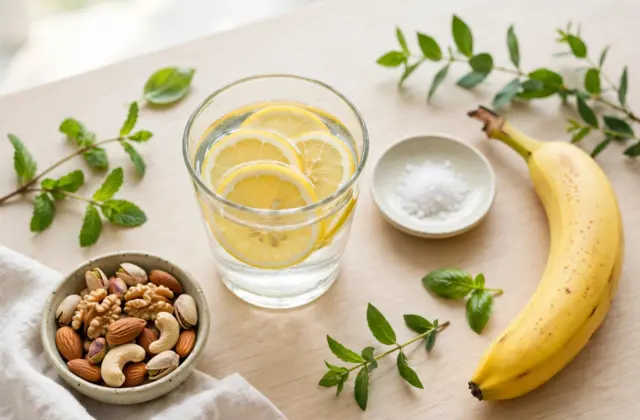
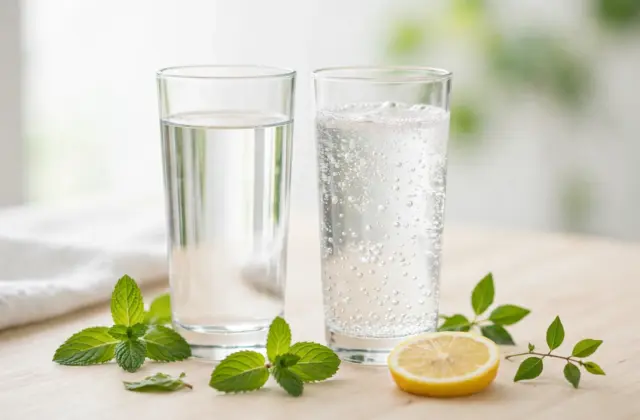
- Make it taste good. A slice of cucumber, lemon, or orange, or a handful of mint leaves, turns plain water into something you actually reach for. Sparkling water counts too.
- Eat your water. Soup, fruit, salads, and yoghurt all contribute. A watermelon snack on a hot afternoon is hydration with a bonus of vitamin C.
- Front-load the day. Many people drink almost nothing until lunch, then try to catch up in the evening and wake up at night to use the bathroom. Shifting more of your intake to the morning and afternoon usually feels better.
- Check in once a day. A quick glance at urine colour in the afternoon tells you whether today is on track — no numbers needed.
Read also: How to Build a Balanced Plate
The bottom line
Most healthy adults need roughly 2 to 3.7 litres of total water a day, depending on which expert guidance you follow and what your day looks like — and about a fifth of that comes from food, so the drinking part is smaller than the headline figure. The eight-glass rule is a decent rough guide for many people, but it was never a prescription. Your body size, activity, climate, diet, and health all move the number, and your own thirst, urine colour, and energy are better day-to-day guides than any chart.
Start with the simple version: a glass with each meal, water within reach, and a little extra when you sweat or feel unwell. That is the whole system — and for most people, it is enough.
Frequently asked questions
How much water should I drink a day?
For healthy adults, the U.S. National Academies suggest about 3.7 litres of total water a day for men and 2.7 litres for women, while EFSA suggests 2.5 and 2.0 litres. Both figures include water from food (roughly 20%), so the amount to drink is about 3.0 and 2.2 litres under the U.S. figures, or 2.0 and 1.6 litres under the European ones. Treat these as a range to aim around, not a pass-or-fail target.
Does coffee count toward my daily water intake?
Yes. Caffeine has a mild diuretic effect, but the water in tea and coffee more than makes up for it at ordinary intakes — a 2014 trial found no meaningful hydration difference between four cups of coffee a day and the same volume of water. Coffee counts; it just should not be your only source of fluid, and very high intakes are best avoided.
Is eight glasses of water a day a real rule?
No — it has no clear scientific origin and ignores body size, activity, climate, and diet. Eight 8-ounce glasses (about 1.9 litres) is a reasonable ballpark for many adults and sits near the lower end of the official range, but it is a starting point, not a rule. Some people need more, and some need less.
How do I know if I am dehydrated?
Early signs include thirst, a dry or sticky mouth, dark yellow urine, urinating less often, tiredness, headache, and dizziness. The Mayo Clinic notes that thirst is not always a reliable signal, especially in older adults. Severe signs — confusion, dizziness, or very little urination over many hours — need prompt medical attention.
Sources
- National Academies of Sciences, Engineering, and Medicine — Dietary Reference Intakes for Water, Potassium, Sodium, Chloride, and Sulfate (2005) — Adequate Intakes for total water: 3.7 L/day men, 2.7 L/day women; about 20% from food; pregnancy 3.0 L, lactation 3.8 L.
- EFSA Panel on Dietetic Products, Nutrition and Allergies — Scientific Opinion on Dietary Reference Values for water (EFSA Journal 2010;8(3):1459) — Adequate Intake of total water: 2.5 L/day men, 2.0 L/day women; +300 mL in pregnancy, +700 mL when breastfeeding.
- Mayo Clinic — Dehydration: Symptoms and causes — adult symptoms (extreme thirst, less urination, dark urine, tiredness, dizziness, confusion) and the warning that thirst is not always reliable.
- Mayo Clinic — Water: How much should you drink every day? — plain-language summary of the National Academies figures.
- Killer, S. C., Blannin, A. K., & Jeukendrup, A. E. (2014). No evidence of dehydration with moderate daily coffee intake: A counterbalanced cross-over study in a free-living population. PLOS ONE, 9(1), e84154 — four cups of coffee a day showed no meaningful hydration difference versus the same volume of water.
- Verywell Health — Hydrating foods (USDA-sourced water content) — cucumber about 96% water, watermelon about 92% water, celery about 95% water.
- U.S. Food and Drug Administration — Spilling the Beans: How Much Caffeine Is Too Much? — 400 mg of caffeine a day as a general limit for healthy adults.
- American Heart Association — How Much Sugar Is Too Much? — added-sugar limits of 25 g a day for women and 36 g for men.
Disclaimer: This article is for general information only and is not medical advice. If you have kidney, heart, or liver disease, take medicines that affect fluid balance, or have been told to limit fluids, ask your clinician how much you should drink.