One-Week Vegetarian Meal Plan
Going vegetarian for a week sounds simple until Monday lunch, when you’re staring into the fridge wondering what actually counts as a meal. Without meat on the plate, it’s easy to drift into a week of pasta, cheese toast, and the vague feeling that something is missing. A little planning fixes that. This seven-day plan gives you breakfast, lunch, and dinner for a full week — every day built around protein, fiber, vegetables, and whole grains, with leftovers doing real work so you don’t cook from scratch three times a day.
You don’t need to be vegetarian for life to try this, and you don’t need specialty products. The plan uses ordinary groceries: beans, lentils, eggs, tofu, yogurt, cheese, grains, and plenty of produce. If you eat dairy and eggs, this plan includes them; if you don’t, most meals still work with simple swaps, which are noted where they matter.
How this week is built
Every day follows the same loose template, which is what makes the week feel manageable rather than like seven separate projects. Breakfast pairs a whole grain or fruit with protein — think oats with yogurt, or eggs with whole-grain toast. Lunch is usually the biggest vegetable moment of the day: a grain bowl, a big salad, or soup with beans. Dinner leans on a hearty protein — lentils, tofu, chickpeas, or eggs — plus a grain and a vegetable.
Two habits carry the whole week. First, cook once and eat twice: Monday’s lentil soup becomes Tuesday’s lunch, and Wednesday’s roasted vegetables reappear in Thursday’s grain bowl. Second, put a protein food at every meal. The Dietary Guidelines for Americans, 2025–2030, recommend prioritizing protein foods at every meal, and for vegetarians they specifically name dairy, eggs, beans, peas, lentils, legumes, nuts, seeds, tofu, and tempeh. That variety matters: different plant proteins bring different amino acids and minerals, so rotating them across the week covers more ground than eating the same one daily.
Read also: How to Create a Balanced Vegetarian Plate
The seven-day plan
Monday: lentils take the lead
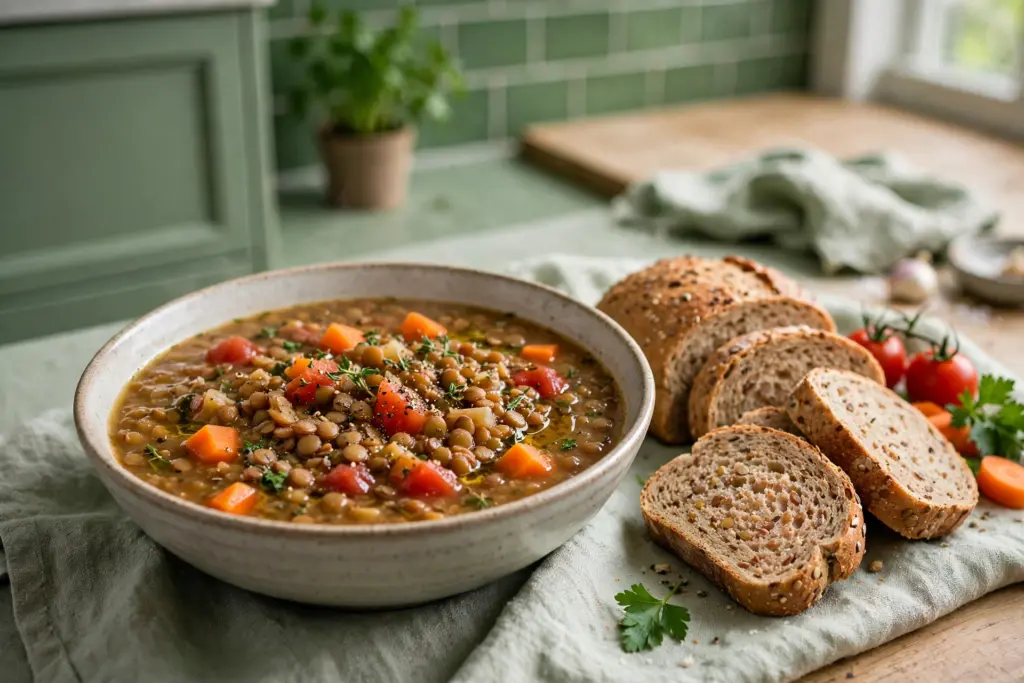
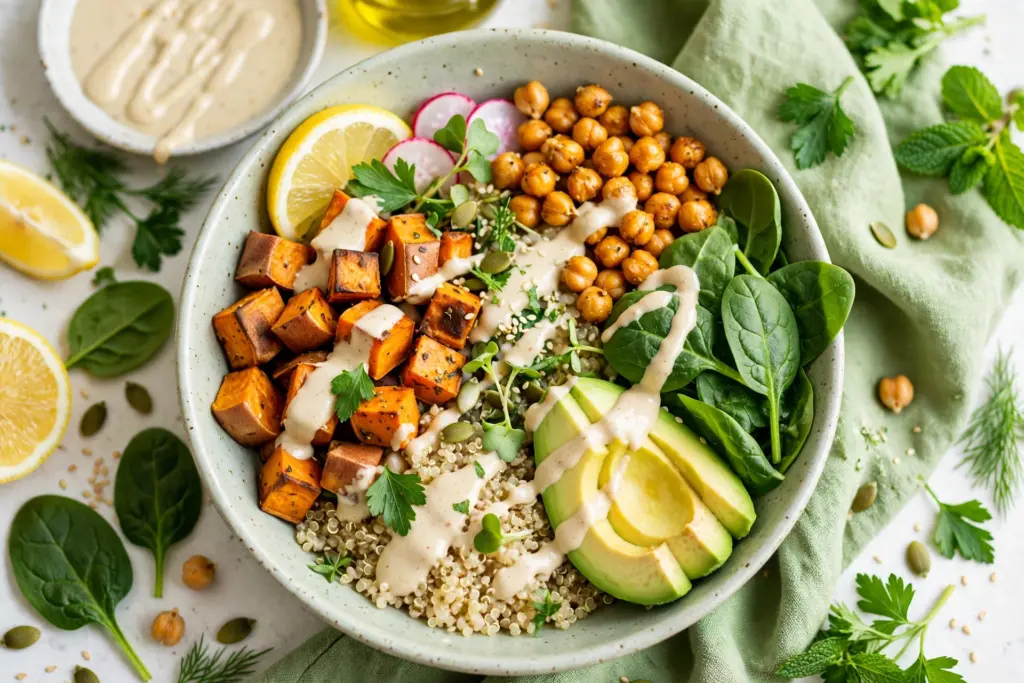
Breakfast: Overnight oats made with milk or a fortified plant milk, topped with Greek yogurt, berries, and a spoonful of ground flaxseed. Lunch: A grain bowl of quinoa, roasted sweet potato, chickpeas, baby spinach, and a tahini-lemon dressing. Dinner: Lentil soup with carrots, celery, and tomatoes, served with whole-grain bread and a side salad. Make a double batch of the soup — you’ll want it again tomorrow.
Tuesday: eggs and leftovers
Breakfast: Scrambled eggs on whole-grain toast with sautéed spinach and a sliced tomato. Lunch: Leftover lentil soup with a whole-grain roll and an apple. Dinner: Veggie stir-fry with tofu, broccoli, bell peppers, and snap peas over brown rice, finished with sesame seeds and a splash of soy sauce.
Wednesday: Mediterranean flavors
Breakfast: Greek yogurt with oats, chopped walnuts, and sliced pear. Lunch: Mediterranean chickpea salad — chickpeas, cucumber, cherry tomatoes, red onion, olives, feta, and olive oil with lemon. Dinner: Whole-wheat pasta with white beans, kale, garlic, and cherry tomatoes, plus a drizzle of olive oil. Roast an extra tray of vegetables tonight for Thursday.
Thursday: bowls and beans
Breakfast: A smoothie with milk or fortified plant milk, banana, frozen berries, oats, and a spoonful of peanut butter. Lunch: A grain bowl built from Wednesday’s roasted vegetables, brown rice, black beans, and avocado. Dinner: Black bean tacos with corn tortillas, shredded cabbage, salsa, yogurt or sour cream, and lime.
Read also: How to Add Protein to Everyday Meals
Friday: comfort food, vegetarian style
Breakfast: Whole-grain toast with peanut butter and banana slices. Lunch: Tomato and white bean soup with a grilled cheese sandwich on whole-grain bread. Dinner: Homemade veggie burgers — black beans and oats, mashed and pan-fried — on whole-grain buns with lettuce, tomato, and oven-baked sweet potato wedges.
Saturday: a slower, bigger breakfast
Breakfast: A vegetable frittata with eggs, mushrooms, spinach, and cheese, plus whole-grain toast and fruit. Lunch: A big salad with mixed greens, quinoa, roasted chickpeas, cucumber, and a yogurt-herb dressing. Dinner: Tempeh or tofu curry with coconut milk, sweet potato, and spinach, served over basmati or brown rice.
Sunday: use it all up
Breakfast: Oats cooked with milk, topped with stewed apple and cinnamon. Lunch: “Fridge clean-out” grain bowls: whatever grains, beans, and vegetables remain, topped with a fried egg or crumbled feta. Dinner: A simple vegetable and bean chili with rice or crusty bread — and a pot big enough that Monday, if you decide to keep going, starts with lunch already made.
The nutrients to watch in a vegetarian week
A week of well-planned vegetarian eating can be nutritionally adequate — the Academy of Nutrition and Dietetics’ 2025 position paper states that, in adults, appropriately planned vegetarian and vegan dietary patterns can be nutritionally adequate and may offer long-term benefits for several cardiometabolic outcomes. But a few nutrients deserve deliberate attention, because they’re the ones most likely to run low when meat leaves the menu.
Protein. The 2025–2030 Dietary Guidelines suggest aiming for 1.2 to 1.6 grams of protein per kilogram of body weight per day, while the long-standing recommended dietary allowance remains 0.8 grams per kilogram. In practice, that means most adults need a palm-sized protein food at each meal rather than a token sprinkle of beans. Eggs, dairy, tofu, tempeh, lentils, and chickpeas all count, and this plan includes at least one at every meal.
Iron. Plant iron (from beans, lentils, spinach, and fortified grains) is absorbed less readily than iron from animal foods, so vegetarians benefit from pairing iron-rich foods with vitamin C — lentil soup with tomatoes, or beans with bell peppers, both of which this plan does naturally. For reference, the National Institutes of Health lists the recommended dietary allowance for iron as 18 mg per day for women aged 19–50 and 8 mg per day for men in the same age range.
Vitamin B12, calcium, and vitamin D. B12 comes almost entirely from animal foods or fortified products, so if you eat eggs and dairy regularly you’re in better shape than a strict vegan, but fortified plant milks and nutritional yeast are still worth including. The NIH lists the adult recommended dietary allowance for vitamin B12 as 2.4 micrograms per day, and for calcium as 1,000 mg per day for most adults. Vitamin D is worth a thought too, especially if you get little sun: fortified milk, fortified plant milks, and eggs contribute, and the NIH lists 15 micrograms (600 IU) per day for adults up to age 70.
Fiber. This one mostly takes care of itself on a vegetarian plan. Beans, lentils, whole grains, vegetables, and fruit are all fiber-rich, which is one reason vegetarian weeks often feel more filling than people expect. If you’re new to eating this much fiber, build up over a few days and drink water alongside your meals — a sudden jump can leave you bloated.
Read also: How to Add Fiber to Your Diet
A shopping list for the week
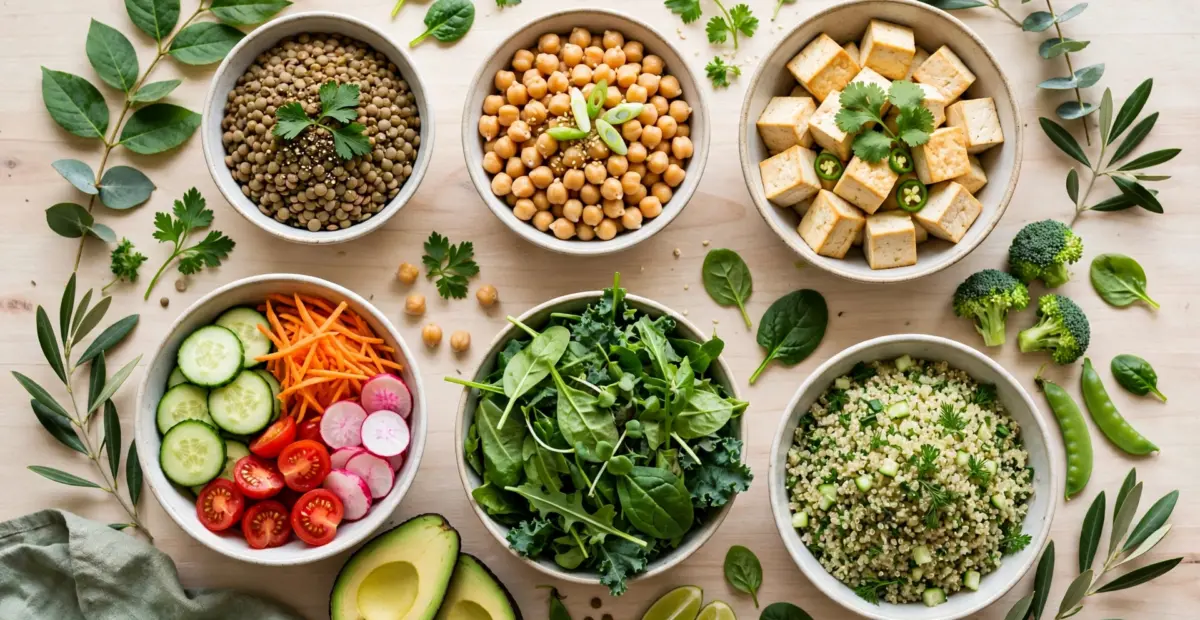
Shop once, and the week mostly runs itself. You need: oats, quinoa, brown rice, whole-wheat pasta, whole-grain bread and tortillas; canned or dried lentils, chickpeas, black beans, and white beans; tofu or tempeh; eggs; Greek yogurt, milk or a fortified plant milk, and feta or another cheese; sweet potatoes, broccoli, spinach, kale, carrots, bell peppers, tomatoes, cucumbers, onions, and mushrooms; bananas, berries, apples, pears, and lemons; plus olive oil, tahini, peanut butter, nuts, seeds, and canned tomatoes. Check your pantry first — you probably own half of this already.
One honest note: this plan skips meat, not cooking. If a day feels like too much, swap dinner for something simpler — eggs on toast with a salad still counts as a vegetarian dinner, and a plan you actually follow beats a perfect one you abandon by Wednesday.
Frequently asked questions
Will I get enough protein without meat? Yes, if you include a protein food at each meal rather than relying on vegetables and grains alone. Eggs, dairy, tofu, tempeh, beans, and lentils all contribute, and eating a variety across the day covers the range of amino acids your body needs.
Do I need supplements for a vegetarian week? For a single week, most people eating a varied vegetarian diet with dairy and eggs do not need new supplements. Vitamin B12 is the exception to keep in mind for longer-term vegetarian or vegan eating, since it comes mainly from animal foods or fortified products — talk to your clinician if you plan to continue beyond this week.
Can I repeat meals or swap days? Absolutely. The plan is a template, not a prescription. Swap any day’s meals with another’s, repeat a favorite dinner twice, or replace a meal you dislike with a similar one — a lentil dish for a bean dish, or tofu for tempeh. What matters is the pattern: protein, vegetables, and whole grains at each meal.
Is this plan suitable for vegans? Not as written, because several meals include eggs, yogurt, milk, and cheese. Most can be adapted — fortified plant milk for dairy milk, tofu scramble for eggs, and a plant-based yogurt — but vegans should pay extra attention to vitamin B12 and use fortified foods or a supplement as advised by a clinician.
Disclaimer: This article is for general information only and is not medical advice. If you have a health condition, are pregnant, or take medication, talk to your clinician or a registered dietitian before changing your eating pattern.
Sources
- Dietary Guidelines for Americans, 2025–2030 — U.S. Department of Agriculture and U.S. Department of Health and Human Services
- Vegetarian Dietary Patterns for Adults: A Position Paper of the Academy of Nutrition and Dietetics (2025)
- Iron: Fact Sheet for Consumers — National Institutes of Health, Office of Dietary Supplements
- Vitamin B12: Fact Sheet for Consumers — National Institutes of Health, Office of Dietary Supplements
- Calcium: Fact Sheet for Consumers — National Institutes of Health, Office of Dietary Supplements
- Vitamin D: Fact Sheet for Consumers — National Institutes of Health, Office of Dietary Supplements