How to Choose Canned Foods Wisely
Canned food gets a bad reputation it mostly doesn’t deserve. Walk down any grocery aisle and you’ll hear the same advice: fresh is best, frozen is second best, canned is last resort. The truth is messier — and much kinder to your pantry. A can of black beans, a tin of sardines, a jar of crushed tomatoes: these are some of the cheapest, longest-lasting, most nutritious foods you can buy. The trick isn’t avoiding cans. It’s knowing which ones to grab, which ones to skip, and the small habits that turn an average can into a genuinely good choice.
This guide walks you through it: how to read a canned food label in seconds, which cans are pantry heroes, which ones are mostly salt and syrup, and how to handle the safety questions people actually worry about.
Why canned food is better than its reputation
Canning is one of the oldest preservation methods we have, and it works by sealing food in an airtight container and heating it enough to stop spoilage. That heat does change some nutrients — heat-sensitive vitamin C drops during processing, for instance — but it leaves most of the good stuff intact. Fiber, protein, minerals like iron and potassium, and many vitamins survive canning well. In some cases, processing even helps: cooking tomatoes, which is exactly what happens before they go into a can, makes their lycopene — the antioxidant that gives tomatoes their red color — easier for your body to absorb.
Canned food also solves a real-world problem that fresh food can’t: it waits for you. Fresh produce goes soft in days. A can sits in your cupboard for months, ready on the night you didn’t plan dinner. That convenience is a nutrition win in disguise, because the healthiest meal is often the one you actually cook instead of ordering takeout.
Rule one: salt is the main thing to watch
If canned food has one consistent weakness, it’s sodium. Salt is part of the canning process, and many canned vegetables, beans, and soups carry far more of it than the food itself needs. The World Health Organization recommends keeping salt intake below 5 grams per day — roughly 2,000 mg of sodium — and a single serving of some canned soups can eat up half of that.
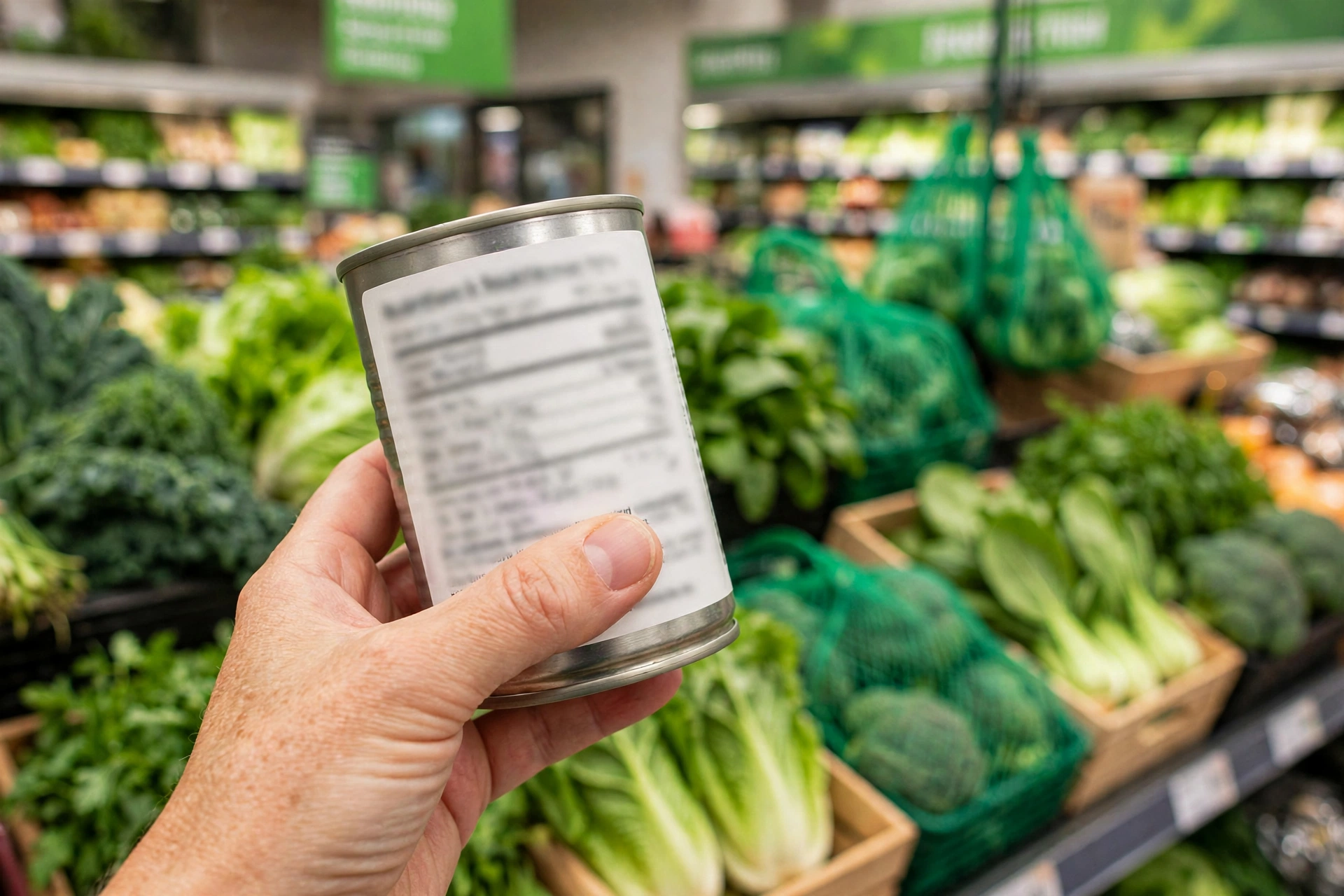
Here’s the label shortcut. On the Nutrition Facts panel, look at the sodium line and its % Daily Value. The FDA’s rule of thumb: 5% DV or less is low, 20% DV or more is high. For canned vegetables and beans, aim for the low end when you can.
The words on the front of the can matter too, and they have legal definitions. Under FDA rules, “low sodium” means 140 mg of sodium or less per serving. “Very low sodium” means 35 mg or less. “Reduced sodium” is the sneaky one — it only means at least 25% less sodium than the regular version, which can still leave a can with 300 mg or more per serving. “No salt added” means no salt was added during processing, though the food still contains its natural sodium. When in doubt, trust the Nutrition Facts panel, not the banner on the front.
The 30-second habit that cuts sodium dramatically
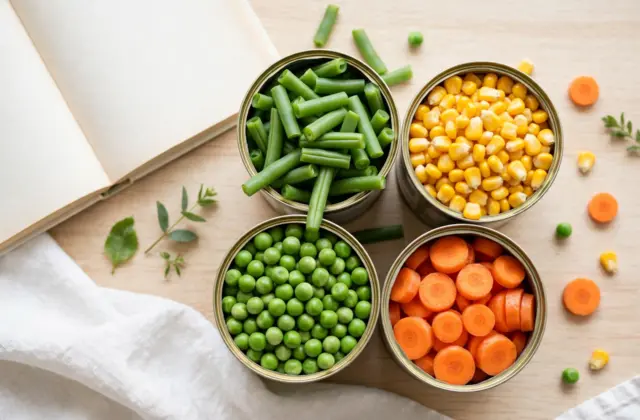
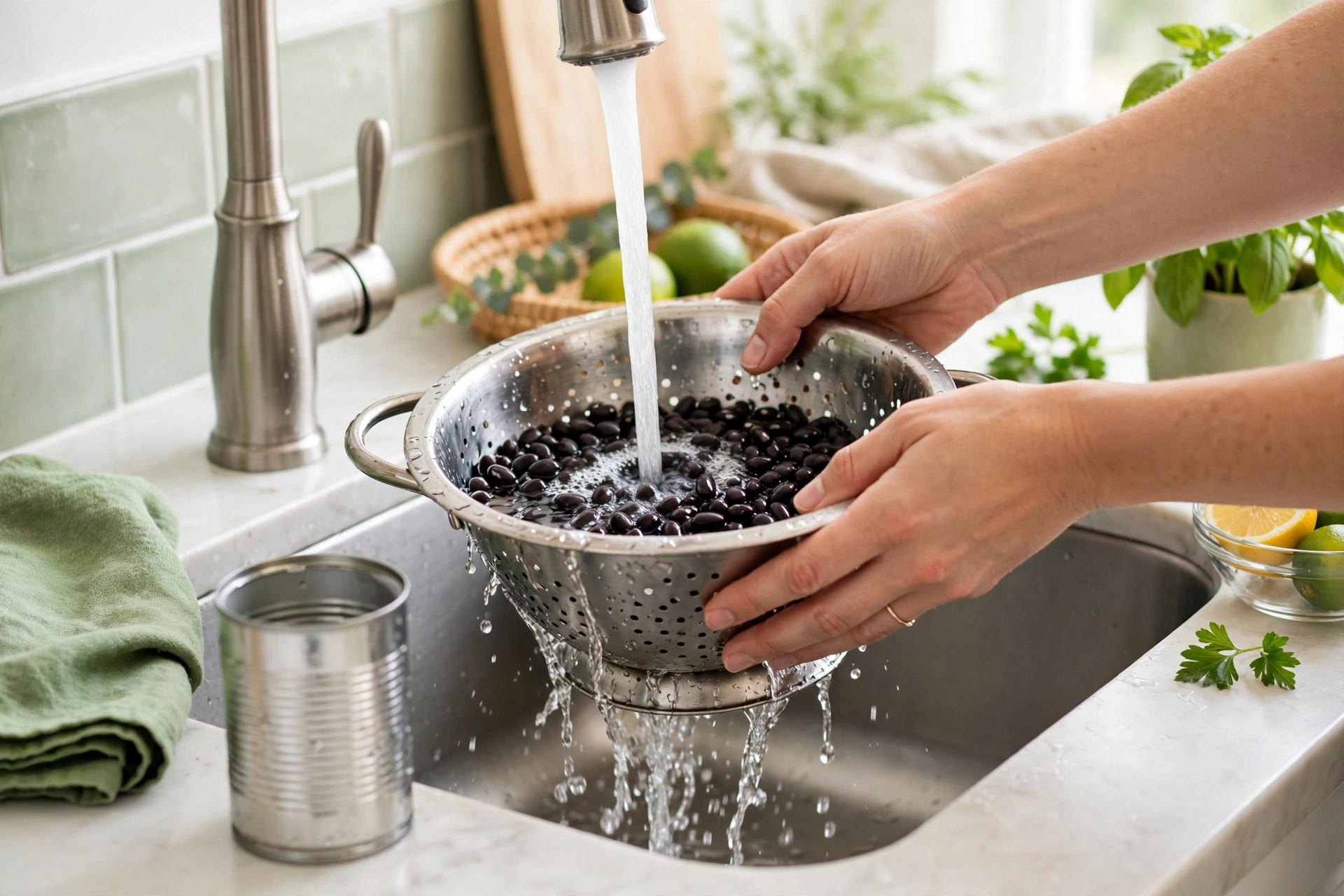
Here’s the single most useful canned-food habit there is: drain and rinse. Research from the University of Tennessee found that draining canned beans removes about 36% of their sodium, and draining plus rinsing removes about 41%. A similar USDA study on canned vegetables — green beans, corn, and peas — found draining and rinsing cut sodium by 9 to 23%.
It takes less than a minute. Tip the can into a colander, run cold water over the contents for 30 seconds, and let it drain. You lose a small amount of water-soluble vitamins in the process, but the fiber, protein, and minerals mostly stay put. The one exception: don’t rinse when the liquid is part of the recipe — the starchy liquid from chickpeas, called aquafaba, is genuinely useful in some dishes, and some bean soups are built around that broth.
Read also: How to Read Food Labels
Rule two: check what’s swimming in the can
What’s inside the can matters as much as the food itself. Three liquids to know:
Water or its own juices. This is the best case for fruit. Fruit packed in water or juice keeps its natural sweetness without added sugar.
Syrup. Fruit in “heavy syrup” is essentially fruit in sugar water, and it can add a surprising amount of added sugar to an otherwise healthy food. “Light syrup” is better but still sweetened. If the label lists sugar or corn syrup in the ingredients, you’re looking at a dessert wearing a fruit costume.
Oil. For fish like tuna and sardines, oil-packed versions carry extra calories — and the oil is often soybean oil rather than the olive oil pictured on the label. Water-packed tuna is the lighter default. With sardines, the oil question matters less: the fish itself is so rich in omega-3 fats that either version is a strong choice.
A quick ingredient-list rule covers most cases: the shorter the list, the better. “Tomatoes” is a great ingredient list. “Tomatoes, salt” is fine. A paragraph of additives, flavorings, and sweeteners is a sign to put the can back.
The pantry heroes: cans worth stocking
Some canned foods are so consistently nutritious that they deserve permanent pantry space:
Beans and lentils. Black beans, chickpeas, kidney beans, cannellini beans — all cheap, high in fiber and plant protein, and ready in seconds. Rinse them and they’re close to a perfect convenience food. Keep a few varieties so you don’t get bored.
Tomatoes. Crushed, diced, or whole peeled — canned tomatoes are the backbone of sauces, soups, and stews, and their lycopene is more available than in raw tomatoes. Choose ones with no added sugar; salt-only versions are fine.
Sardines and salmon. Sardines are one of the most nutrient-dense foods in the store: omega-3 fats, calcium (from the soft, edible bones), vitamin D, and protein in a tiny tin. Canned salmon is similar, and the bones in it are a real calcium source too.
Tuna — with a caveat. Canned light tuna is a “Best Choice” in the FDA and EPA’s fish advice, meaning 2 to 3 servings a week is fine. Albacore (white) tuna carries about three times the mercury of light tuna, so the same guidance caps it at 1 serving a week. If tuna is a weekly staple, light tuna is the smarter default.
Pumpkin purée. Not pumpkin pie filling — that one is sweetened and spiced. Plain pumpkin purée is mostly fiber, vitamin A, and potassium, and it thickens soups and bakes beautifully.
Read also: How to Navigate the Frozen Food Aisle
The cans to skip (or buy rarely)
Not every can earns its shelf space. Baked beans in sweet sauce, canned pastas like ravioli and spaghetti rings, and most canned chili con carne are typically high in sodium, added sugar, and saturated fat relative to what they offer. Canned soups are a mixed bag: some are genuinely decent, but many deliver 700–900 mg of sodium per cup — check the panel, and remember a can often holds two servings, not one.
Canned fruit in heavy syrup, as mentioned, is mostly a sugar delivery system. And “pasta in a can” meals tend to be low in fiber and vegetables while being high in salt — a homemade version with canned tomatoes and canned beans is faster than you think and far better.
What about BPA and can linings?
This is the question people worry about most, and the answer is reassuring. BPA is a chemical once widely used in the epoxy linings inside cans. The FDA’s current position, based on its safety reviews, is that BPA is safe at the very low levels found in foods. Meanwhile, the industry has largely moved on: Oregon State University Extension notes that most canneries now use alternative liners, with estimates that more than 95% of canned foods in the US are now made without BPA-containing liners.
If you’d still rather minimize exposure, you can: choose cans labeled BPA-free, favor fresh or frozen options for acidic foods like tomatoes when it’s easy, and store cans in a cool place rather than a hot garage — heat encourages more migration from any lining. None of this requires throwing out your pantry. It’s a preference, not an emergency.
Can safety: the quick checks
Canned food is safe for a long time, but not forever, and a few visible signs mean “don’t eat this.” Skip any can that is swollen or bulging, leaks, spurts when opened, or smells off — these can signal bacterial growth. Deep dents, especially on seams, are also a reason to pass, since they can compromise the seal. A small dent on the side of an otherwise normal can is usually harmless, but when in doubt, throw it out.
Once opened, treat canned food like any perishable: transfer leftovers to a covered container and refrigerate them, and use them within a few days. Don’t store opened food in the can itself.
As for “best by” dates — those are quality dates, not safety deadlines. A can past its date but in good condition is usually still fine to eat, though flavor and texture may have faded. Use your eyes, nose, and judgment alongside the date.
A 5-point checklist for the canned aisle
Next time you’re standing in the aisle, run through this:
- Sodium first. Look for 140 mg or less per serving, or plan to drain and rinse.
- Check the liquid. Water or juice for fruit; water-packed for tuna; avoid heavy syrup.
- Read the ingredients. Short lists win. Sugar in the first few ingredients is a red flag.
- Count the servings. The sodium on the panel is per serving — and many cans hold two.
- Inspect the can. No swelling, no deep seam dents, no leaks.
Read also: How to Shop the Grocery Store Perimeter
Frequently asked questions
Are canned vegetables as healthy as fresh?
Mostly, yes. Canning preserves fiber and minerals well, and some nutrients like lycopene in tomatoes become more available. Vitamin C drops during processing, but if you eat a varied diet, canned vegetables are a solid, affordable way to hit your daily vegetable intake.
Should I always rinse canned beans?
Almost always. Draining and rinsing cuts sodium by about 41%, and it also washes away some of the compounds that cause gas. The exception is when a recipe specifically uses the bean liquid, like aquafaba-based recipes.
Is canned tuna safe to eat every week?
For most adults, yes, within limits. The FDA and EPA place canned light tuna in their “Best Choices” category — 2 to 3 servings a week. Albacore (white) tuna is higher in mercury, so limit it to 1 serving a week.
Do I need to worry about BPA in cans?
Not urgently. The FDA considers current levels safe, and most US canned foods now use BPA-free linings. If you prefer, choose BPA-free labeled cans and store cans in a cool place.
The bottom line
Canned food isn’t a compromise — it’s a strategy. Stock the heroes, rinse the beans, read the sodium line, and skip the syrup. Done that way, the humble can becomes one of the easiest ways to eat well on a busy schedule and a tight budget. Your pantry is already halfway to a healthy meal; it just needs a little choosing wisely.
Disclaimer: This article is for general information only and is not medical advice. If you have a health condition that requires a low-sodium diet or limits on certain foods, talk to your doctor or a registered dietitian about what’s right for you.
Sources