How to Shop the Grocery Store Perimeter
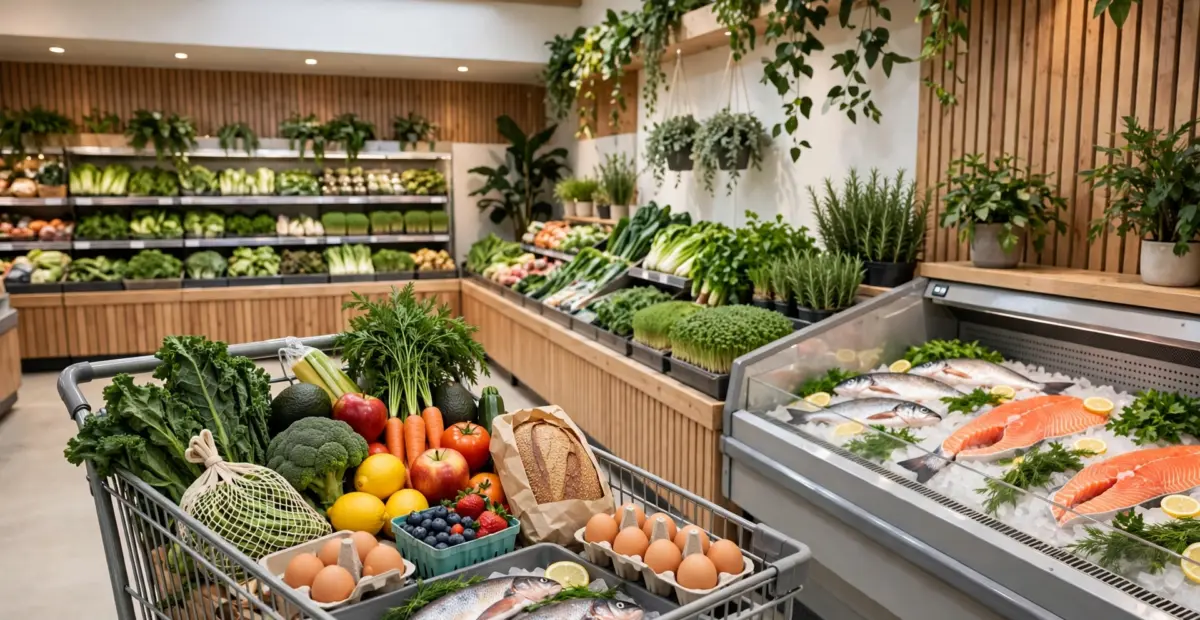
Walk into almost any supermarket and you will notice the same layout: fresh food hugs the walls, and packaged food fills the middle. That outer ring — produce, meat and seafood, dairy and eggs, and the bakery — is what shoppers call the grocery store perimeter. Shopping it first is not a magic trick, and it will not fix a diet on its own. But as a simple route through the store, it is one of the most practical habits you can build, because it puts whole foods in your cart before the snack aisle gets a vote.
The idea works because of what lives where. The perimeter is where you find foods that are closest to how they grew or were raised: apples that still look like apples, fish on ice, plain yogurt, eggs in a carton. The center aisles hold plenty of useful staples too — beans, oats, canned tomatoes, whole-grain pasta — but they also hold most of the products highest in added sugars, sodium, and saturated fat. Starting on the outside does not mean banning the middle. It means you shop the middle with a cart that is already mostly full of the good stuff.
What Counts as the Perimeter?
Picture the store as a loop. Most supermarkets arrange it roughly like this: produce near the entrance, then meat and seafood along the back wall, dairy and eggs in a refrigerated case, and a bakery or deli near the end. Some stores add a bulk section or a floral department along the way, and smaller shops may shuffle the order. The exact map matters less than the principle — begin with fresh, minimally processed foods, and treat the center aisles as a second, shorter trip for specific items on your list.
One honest caveat: the perimeter is not a purity test. The bakery counter sells whole-grain bread and also frosted cakes. The deli sells roast turkey and also salty, heavily processed meats. Frozen vegetables, canned beans, and dried lentils live in the center aisles and are genuinely nutritious choices. Use the perimeter as a route, not a rulebook, and let the label settle the close calls.
Start in Produce — and Fill Half the Cart
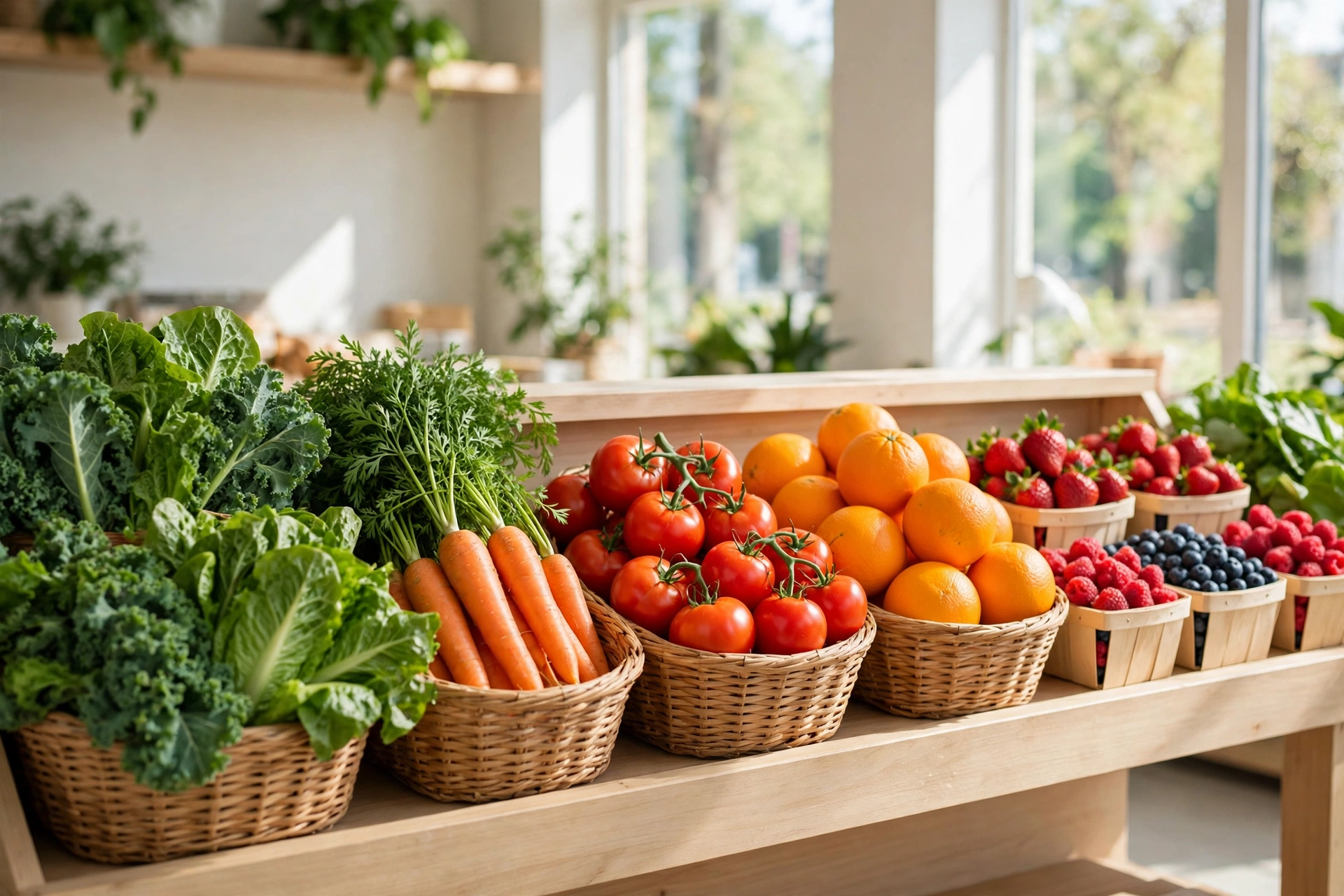
Produce is usually first for a reason, and it is worth lingering there. The World Health Organization recommends at least 400 grams — about five portions — of fruit and vegetables a day, along with at least 25 grams of naturally occurring dietary fiber for adults. Most people fall short of that, and the shopping cart is where the gap starts. If produce goes in first, the rest of the shop has to fit around it.
A workable approach: pick one leafy green, one crunchy vegetable, one fruit you will eat plain, and one vegetable you can roast in a big batch. Spinach or kale, carrots, apples, and sweet potatoes cover a week of lunches and dinners without much planning. Add a second fruit you actually enjoy — berries, bananas, pears, whatever you will reach for at 4 p.m. — because the healthiest fruit is the one you eat. Frozen fruit and vegetables deserve a spot too: they are picked and frozen at peak ripeness, they keep for weeks, and they rescue a dinner when the fresh supply runs out.
Read also: How to Add More Vegetables to Your Meals
The Meat, Seafood, and Dairy Loop
From produce, follow the wall to meat and seafood. This is where a little planning pays off. Choose a mix across the week rather than the same cut every night: chicken or turkey, a firm white fish or salmon if your budget allows, eggs, and a plant protein like tofu or lentils from the center aisles to round it out. Variety keeps meals interesting and spreads out both cost and nutrients.
At the seafood counter, freshness cues matter more than fancy labels. Fish should smell like the sea, not strongly “fishy,” and the flesh should spring back when pressed. If fresh fish is pricey or you are unsure about cooking it, canned tuna or sardines in water are a solid, budget-friendly alternative — just compare sodium across brands, since it varies a lot.
In the dairy case, plain is your friend. Plain yogurt, milk, and cottage cheese give you protein and calcium without the added sugars that flavored versions carry. The American Heart Association recommends limiting added sugars to no more than about 6 teaspoons a day for most women and 9 teaspoons for most men, and a single flavored yogurt can quietly use up a third of that. If plain yogurt tastes too sharp at first, sweeten it yourself with fresh berries — you control the amount, and you get fruit in the bargain.
The Bakery and Deli: Enjoy, but Read First
The bakery smells wonderful by design, and that is exactly why it deserves a pause. A loaf of genuine whole-grain bread — where whole wheat or another whole grain is the first ingredient — is a great perimeter buy. A tray of pastries, doughnuts, and frosted cakes is not, however fresh it looks. Freshness is not the same as nutrition, and the perimeter rule breaks down here if you let the smell do the shopping.
The same goes for the deli. Freshly sliced roast turkey or chicken can be a convenient protein, but many deli meats are high in sodium. The American Heart Association recommends no more than 2,300 mg of sodium a day, moving toward an ideal limit of 1,500 mg for most adults. One deli sandwich can hold half a day’s sodium before you add cheese or condiments. Check the label, ask for lower-sodium options when available, and balance a deli-meat lunch with low-sodium foods the rest of the day, like fresh vegetables and unsalted nuts.
Then Shop the Center Aisles — With a List
Once the perimeter loop is done, head inside for the staples your meals actually need: dried or canned beans, lentils, oats, brown rice, whole-grain pasta, canned tomatoes, olive oil, herbs and spices, and nuts or seeds. These are the backbone of affordable, balanced meals, and skipping them because they live in the “wrong” part of the store would be a mistake.
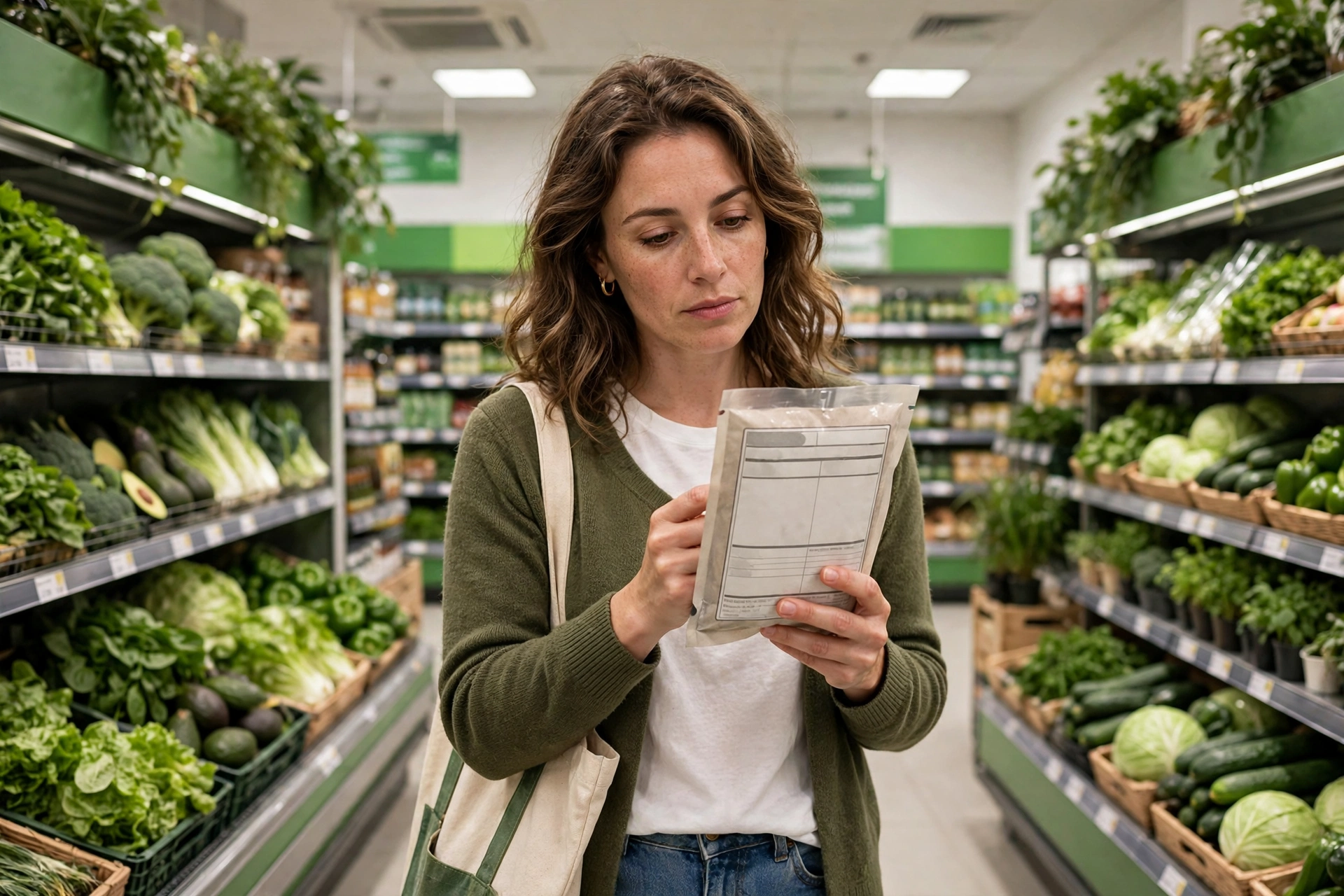
This is also where a list earns its keep. Center aisles are built to tempt — end caps, colorful boxes, and “new flavor” displays all compete for attention. If an item is not on your list and not a staple you genuinely need, it waits until next week. That single pause filters out most impulse buys. And when you do compare two similar products, flip to the nutrition label: check added sugars, sodium, and fiber per serving, and compare serving sizes, which are not always the same between brands.
Read also: How to Read Food Labels
A Five-Step Perimeter Route You Can Use Today
Here is the whole strategy boiled down to a route you can walk on your next shop:
- Produce first. Fill a good portion of the cart with vegetables and fruit, fresh plus a bag of frozen for backup.
- Protein along the back wall. Pick two or three proteins for the week — poultry, fish, eggs, or tofu — and vary them.
- Dairy and eggs. Favor plain yogurt, milk, and cheese in modest amounts; flavor them at home.
- Bakery with eyes open. Take the whole-grain bread; leave the pastries unless you planned a treat.
- Center aisles last, list in hand. Grab your staples — beans, grains, canned tomatoes, oils — and skip the rest.
Try it for two or three shops before judging it. The first trip feels slower because the route is new. By the third, you will notice the difference in your cart without thinking much about it: more color, more fresh food, fewer items you cannot remember choosing.
Read also: How to Create a Healthy Grocery List
Frequently Asked Questions
Is everything on the perimeter healthy?
No. The bakery and deli prove it — cakes, pastries, and salty processed meats all sit on the outer walls. The perimeter is a helpful route, not a guarantee. Labels and ingredient lists still decide individual products.
Does this mean I should avoid the center aisles?
Definitely not. Beans, lentils, oats, whole grains, canned tomatoes, and frozen vegetables are nutritious staples that mostly live in the center. Shop the perimeter first, then visit the middle for what your list actually needs.
What if my store has a different layout?
Follow the same order in whatever form your store takes: fresh produce and proteins first, dairy next, then staples. Small shops and markets may mix everything together — in that case, fill your basket with fresh foods before browsing packaged snacks.
Is perimeter shopping more expensive?
It can be if you buy only premium fresh items, but it does not have to be. Seasonal produce, frozen vegetables, eggs, canned fish, and dried beans are among the most affordable nutritious foods available. Planning meals around what is in season keeps the bill down.
Disclaimer: This article is for general information only and is not medical advice. If you have a health condition or specific dietary needs, talk to your doctor or a registered dietitian.
Sources