How to Choose Whole Grains
Stand in the bread aisle for thirty seconds and you will see the problem. One loaf shouts “wheat bread” in big brown letters. Another says “made with whole grains.” A third claims “multigrain,” which sounds impressive until you realize it only means more than one kind of grain — and every one of them could be refined. The packaging is doing its job, which is to sell bread, not to teach you anything. Learning to choose whole grains is mostly about learning to ignore the front of the package and read the parts that actually count.
First, what “whole grain” actually means
Every grain starts life as a whole grain: the entire seed of the plant. That seed, or kernel, has three edible parts. The bran is the fibrous outer skin, rich in fiber, B vitamins, and antioxidants. The germ is the embryo that could sprout into a new plant, carrying B vitamins, some protein, minerals, and healthy fats. The endosperm is the starchy middle, the plant’s energy store, and by far the largest part of the kernel.
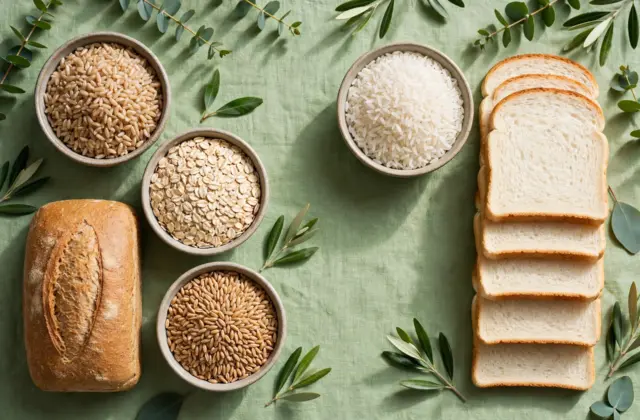
A grain counts as whole only when all three parts are present in the same proportions as in the original seed. That is the definition used by the Whole Grains Council, and it is the reason processing matters so much. Refining a grain typically strips away the bran and the germ — the two most nutrient-dense parts — and leaves mostly endosperm. White flour and white rice are the familiar results: softer, longer-lasting, and poorer in fiber and micronutrients than the grain they came from. Enriched flour has some vitamins added back, but enrichment does not restore the fiber or the full package of nutrients that were removed.
That distinction explains why two loaves that look nearly identical can be nutritionally different. A 100% whole wheat bread keeps the whole kernel. A “wheat bread” made mostly from refined wheat flour does not, whatever color the crust happens to be. Brown coloring, by the way, proves nothing — some breads are brown because of molasses or caramel color, not because they contain whole grain.
Why bother switching?
Whole grains are one of the few food swaps where the evidence is both large and consistent. A dose-response meta-analysis of 45 prospective studies by Aune and colleagues, published in the BMJ in 2016, found that each additional 90 grams of whole grains per day — roughly three servings — was associated with a lower risk of coronary heart disease (relative risk 0.81), cardiovascular disease (0.78), and death from all causes (0.83). The benefits kept increasing up to about seven servings a day, though you certainly do not need to eat that much to gain something. Even moving from zero whole grains to one or two servings a day is a step in the right direction.
The current Dietary Guidelines for Americans (2025–2030) reflect that evidence with an unusually direct message: prioritize fiber-rich whole grains, and significantly cut back on highly processed, refined carbohydrates such as white bread, packaged breakfast options, flour tortillas, and crackers. For adults on a typical 2,000-calorie diet, the guidelines set a whole-grain goal of 2–4 servings per day.
Read also: How to Eat More Whole Foods
The 10-second label check
Here is the fastest reliable test in the store. Turn the package over and read the first ingredient. Ingredients are listed by weight, so the first one is what the food is mostly made of. You want it to start with the word “whole” or “whole grain”: whole wheat, whole oats, whole rye, whole grain corn, brown rice. If the first ingredient is “wheat flour,” “enriched flour,” or “enriched bleached flour,” the product is mostly refined grain, no matter what the front of the package says.
A few label traps are worth memorizing:
- “Made with whole grains” or “contains whole grains.” This can mean a dusting of whole grain in an otherwise refined product. Check the first ingredient and the grams of whole grain per serving.
- “Multigrain.” It only means several grains are present. All of them can be refined.
- “Wheat flour” or “wheat bread.” Without the word “whole” in front of it, this is refined wheat flour.
- “Stone-ground” or “cracked wheat.” These describe how the grain was processed, not whether it is whole. Cracked wheat can be whole; stone-ground flour often is not.
- “Enriched.” This means some nutrients lost in refining were added back. It is better than unenriched refined flour, but it is not a whole grain.
Second, look for a whole-grain amount. The Whole Grain Stamp, used on thousands of products, tells you the grams of whole grain per serving. The 100% Stamp means all the grain in the product is whole and there are at least 16 grams — one full serving — of whole grain per labeled serving.
Third, glance at the fiber. Fiber is not a perfect proxy for whole grain — a manufacturer can add isolated bran or inulin to a refined product — but as a rough check it helps. The USDA’s fiber tables make the difference concrete: a slice of 100% whole wheat bread has about 2 grams of fiber versus about 1 gram in white bread, and a cup of cooked brown rice has about 4 grams versus about 1 gram in cooked white rice. Small differences per serving, but they add up across a day, and they come packaged with the rest of the kernel’s nutrients rather than added in isolation.
Choosing well in each aisle
Bread
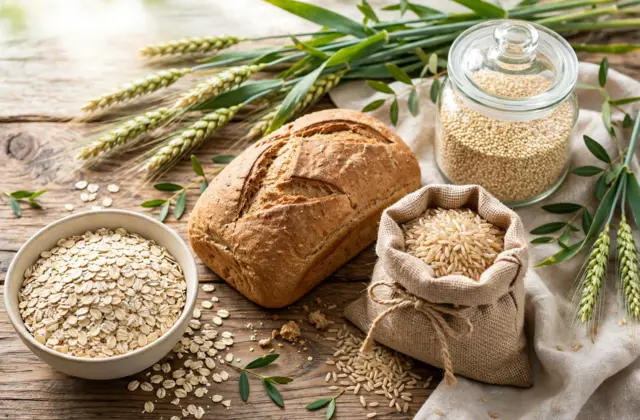
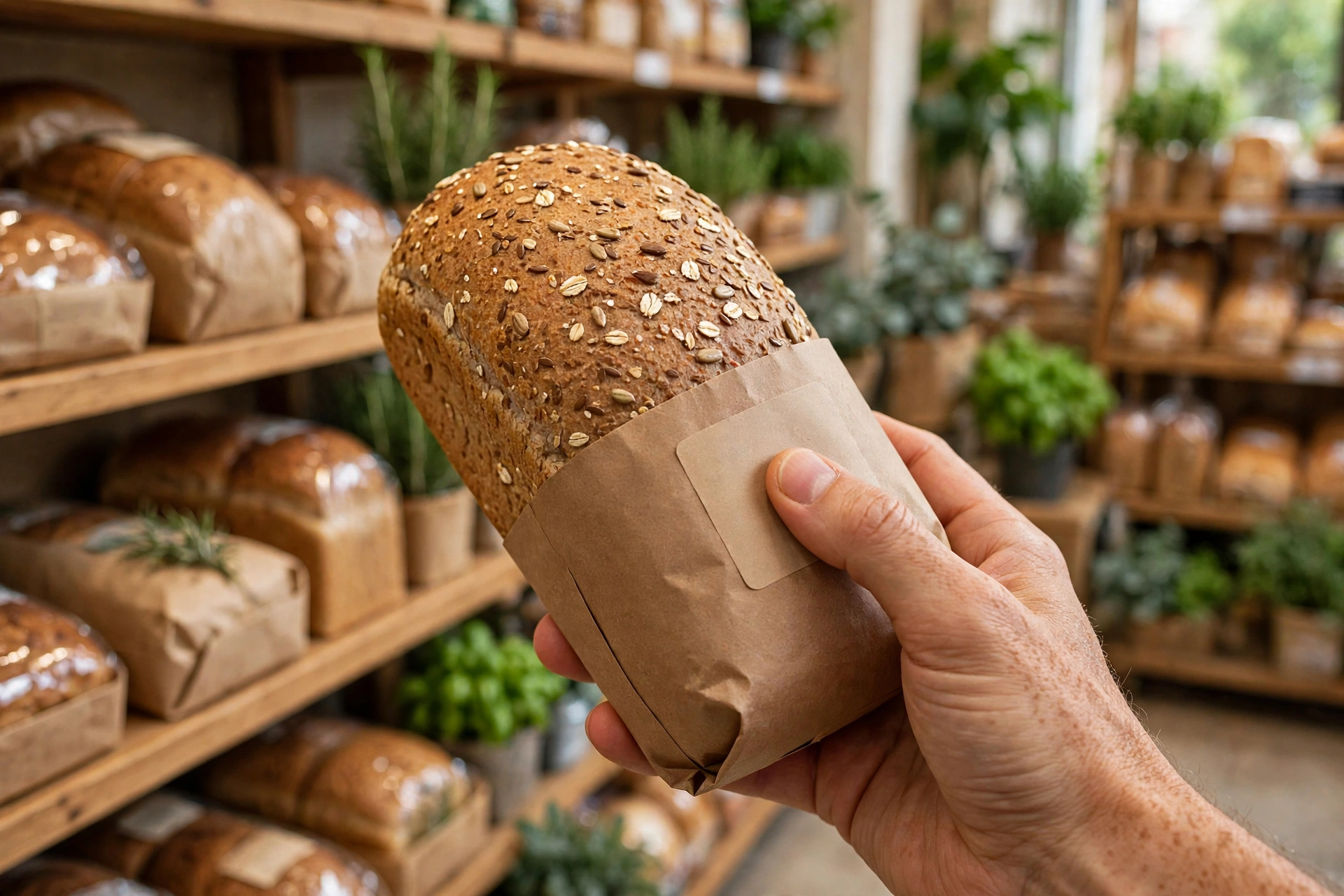
Bread is where most people meet whole grains, and where the labeling is messiest. Your best bet is a loaf whose first ingredient is “whole wheat flour” or “whole grain wheat flour” and that carries the 100% Stamp or lists at least 16 grams of whole grain per slice. Rye bread deserves a caution flag: many deli ryes are mostly refined wheat flour with a little rye and caraway for flavor. If rye is not first on the list, it is not a whole-grain rye.
Rice, pasta, and other cooked grains
Brown rice is the simplest swap in this group: same grain as white rice, with the bran and germ intact, and roughly four times the fiber per cup. Black rice and red rice are also whole grains and bring a nuttier flavor and deeper color to grain bowls. If brown rice’s longer cooking time is the obstacle, keep a bag of quick-cook brown rice or a rice cooker with a brown-rice setting — or cook a big batch on Sunday and refrigerate it for the week.
Whole wheat pasta is another easy win, though the texture is denser than regular pasta. Cook it a minute or two less than the package says if you prefer it firmer, and pair it with a strongly flavored sauce the first few times — tomato, garlic, and olive oil carry it well.
Read also: How to Read Food Labels
Oats and breakfast cereals
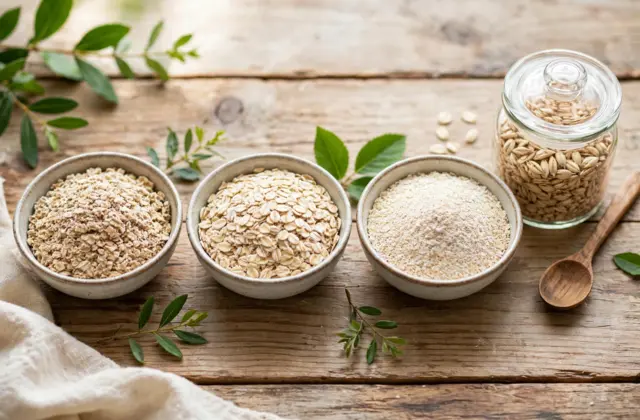
Oats are one of the least confusing whole grains, because most oat products are whole by nature: rolled oats, steel-cut oats, and plain instant oatmeal are all whole grains. The trouble starts with flavored instant oatmeal packets and breakfast cereals, where added sugar can outweigh the grain’s virtues. Check the first ingredient (it should be whole grain oats or whole wheat), then check the added sugars line. A plain oat base that you sweeten yourself with fruit is almost always the better deal.
Crackers, tortillas, and snacks
These are the hardest category, because most crackers and tortillas are refined by default. For crackers, look for “whole wheat flour” or “whole grain oats” first on the list, and compare the fiber — many whole-grain crackers land around 2–3 grams per serving, while refined ones sit near zero. For tortillas, corn tortillas made from whole corn are a whole grain; most flour tortillas are not, unless the label says whole wheat flour first. Popcorn, incidentally, is a whole grain too — air-popped popcorn with a little salt is one of the simplest whole-grain snacks there is.
Going beyond wheat, oats, and rice
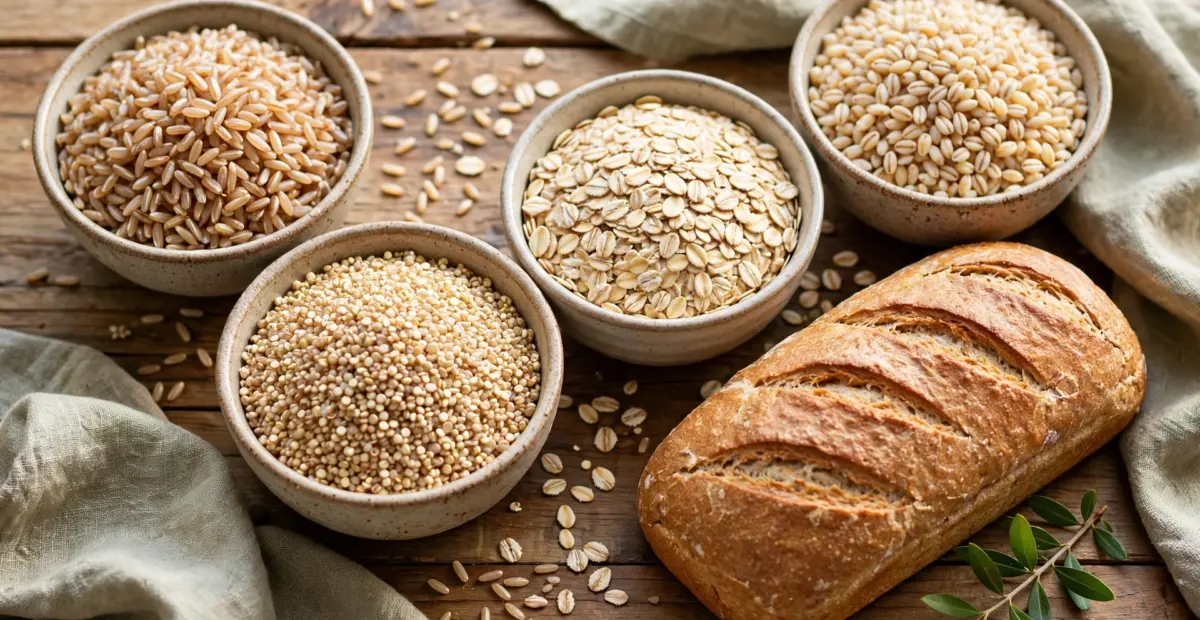
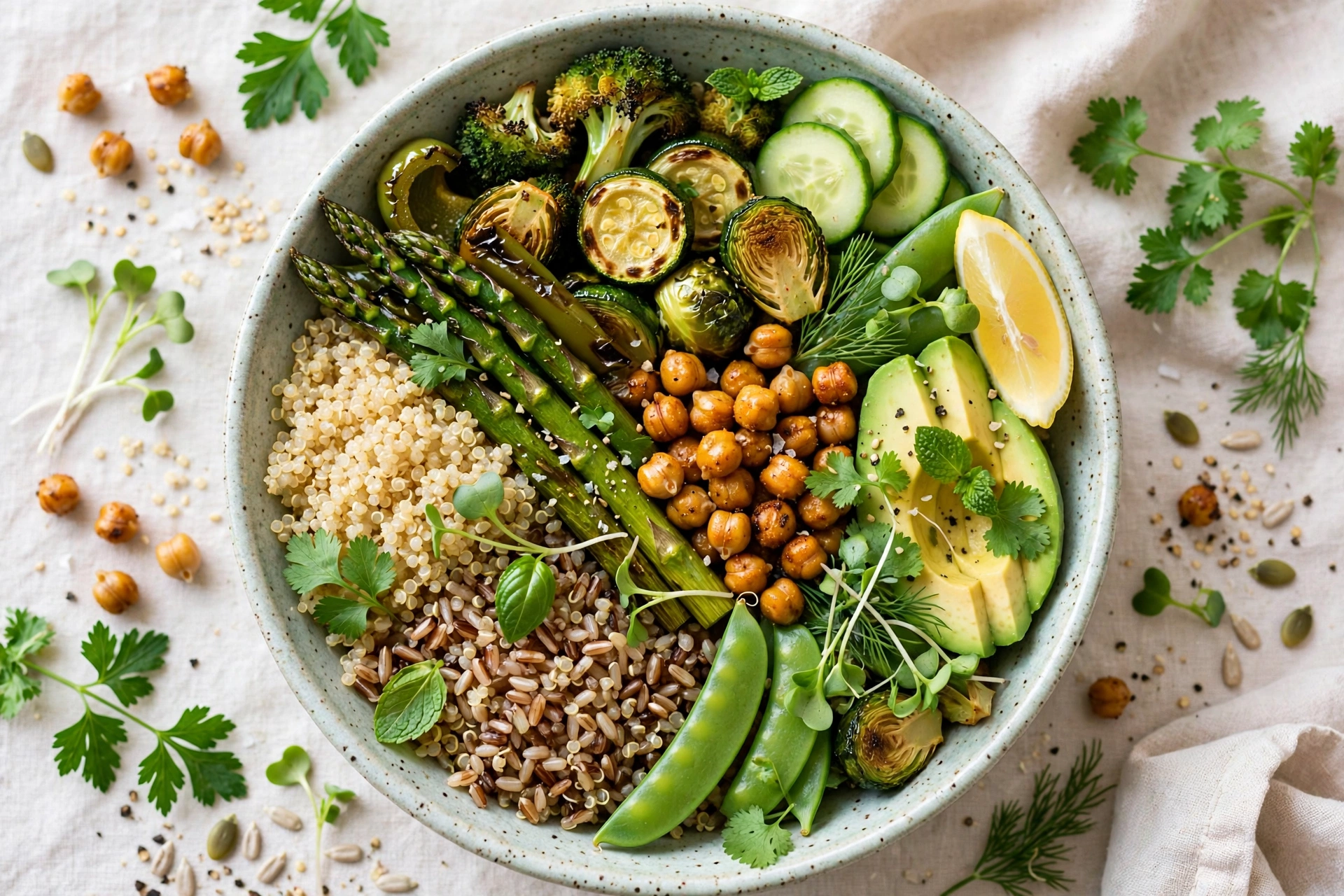
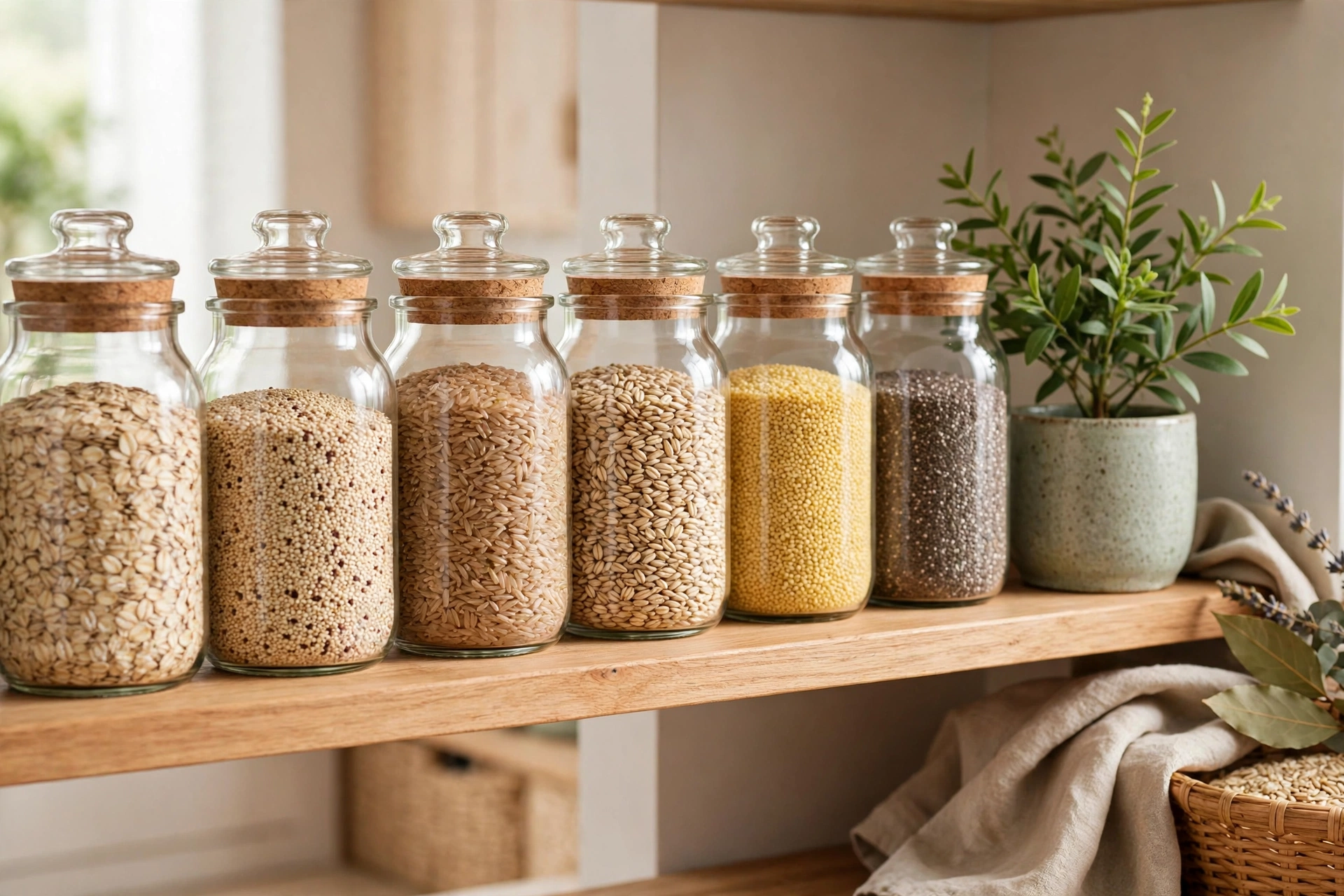
Once the basics are comfortable, variety is where whole grains get interesting. Quinoa cooks in about 15 minutes, brings all nine essential amino acids, and works hot or cold. Barley is chewy, hearty, and excellent in soups — pearl barley is the common supermarket form, though hulled barley retains more of the bran. Farro, the ancient wheat popular in Italian cooking, has a nutty bite that holds up in salads. Millet is mild and quick-cooking, sorghum pops like miniature popcorn, and buckwheat — despite the name — contains no wheat and is naturally gluten-free.
One caution for people who need to avoid gluten: wheat, barley, rye, and their relatives (spelt, farro, Kamut) all contain gluten. The naturally gluten-free whole grains — rice, oats certified gluten-free, quinoa, buckwheat, millet, sorghum, amaranth, teff — are plentiful, but check labels for cross-contact warnings if celiac disease is a factor, since oats in particular are often processed on shared equipment.
Read also: How to Stock a Healthy Pantry
Making the switch stick
The people who succeed with whole grains rarely overhaul everything at once. They pick one swap, live with it for a week or two, and then add another. A workable sequence:
- Week 1: Switch your everyday bread to 100% whole wheat. Nothing else changes.
- Week 2: Swap white rice for brown rice (or a half-and-half mix, if the texture is a leap) in one regular meal.
- Week 3: Make breakfast a whole grain by default — oatmeal, whole-grain cereal, or whole wheat toast.
- Week 4: Try one new grain — quinoa, barley, or farro — in a dish you already like.
Two practical tips smooth the transition. First, increase fiber gradually and drink water with your meals; a sudden jump in fiber can mean bloating and discomfort, which is the most common reason people abandon the switch.
Frequently asked questions
Is “wheat bread” the same as whole wheat bread?
No. “Wheat bread” usually means bread made from refined wheat flour. Only bread labeled “100% whole wheat” or with whole wheat flour as the first ingredient is a whole-grain bread. Always check the ingredient list, not the color or the name on the front.
How many servings of whole grains do I need each day?
The 2025–2030 Dietary Guidelines for Americans suggest 2–4 servings per day for adults on a 2,000-calorie diet, with one serving equal to about 16 grams of whole grain — roughly a slice of whole-grain bread or half a cup of cooked brown rice or oatmeal.
Are gluten-free products automatically whole grain?
No. Many gluten-free breads and pastas are made from refined rice flour, potato starch, or tapioca starch, which are not whole grains. Look for gluten-free whole grains — brown rice, quinoa, buckwheat, millet, sorghum — as the first ingredients instead.
Does popcorn count as a whole grain?
Yes. Popcorn is a whole grain, since the popped kernel keeps its bran, germ, and endosperm. Air-popped popcorn with a little salt is a genuinely good whole-grain snack; heavily buttered or caramel-coated versions add fat and sugar that undercut the benefit.
The bottom line
Choosing whole grains comes down to a short checklist you can use in any aisle: a whole grain first on the ingredient list, a meaningful amount per serving (16 grams is the benchmark), and a fiber number that backs it up. Start with one swap — usually bread — and build from there.
This article is for general nutrition information only and is not medical advice. If you have celiac disease, a wheat allergy, diabetes, or another condition that affects how you tolerate grains, talk with your clinician or a registered dietitian about what fits your needs.
Sources
- Whole Grains Council — Definition of a Whole Grain
- Whole Grains Council — U.S. Dietary Guidelines and Whole Grains (2025–2030)
- Johns Hopkins Medicine — Barley, Farro, Sorghum and More: 9 Whole Grains to Try
- USDA FSRG Dietary Data Brief — Comparison of the Fiber Content of Different Forms of Selected Foods
- Aune et al. (2016), BMJ — Whole grain consumption and risk of cardiovascular disease, cancer, and all cause and cause specific mortality
- Mayo Clinic (DAHLC) — Whole Grains 101