What Makes a Diet Balanced?
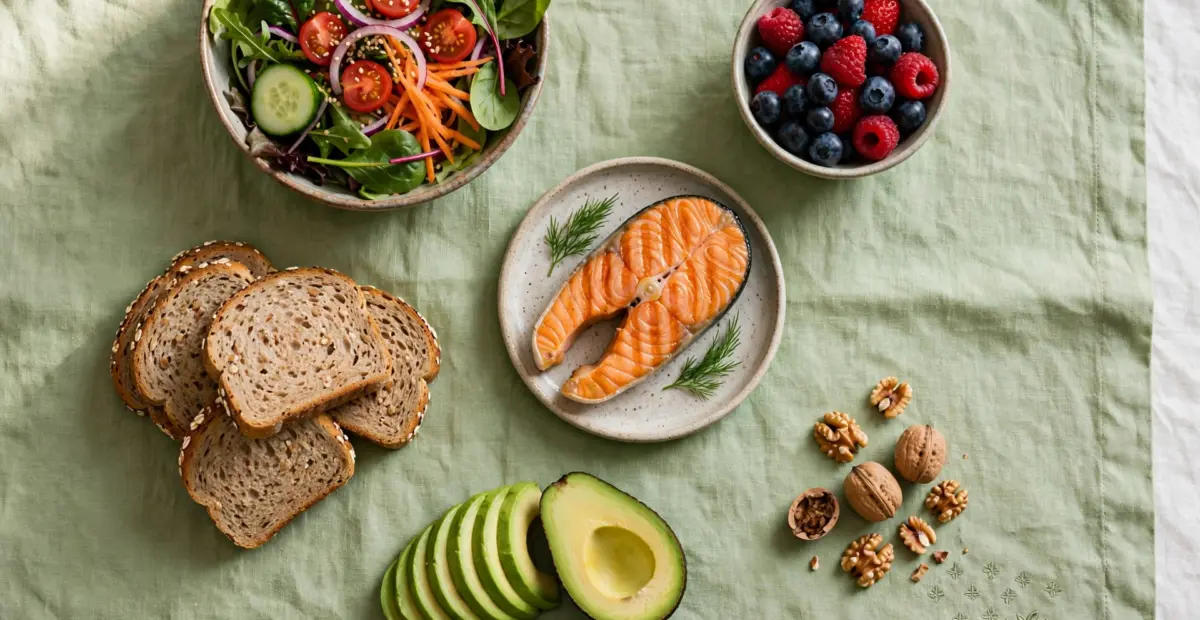
You’ve probably seen the word “balanced” stamped across food packaging, diet books, and meal plans — used so loosely it barely means anything anymore. But strip away the marketing, and nutrition scientists are surprisingly specific about what makes a diet balanced. It isn’t a particular superfood, a banned list, or a ratio you need a calculator to maintain. It’s a pattern: enough of the foods that keep you healthy, limited amounts of the ones that don’t, sustained over weeks and months rather than judged meal by meal.
Here’s what “balanced” actually means — the proportions that major guidelines agree on, and what they look like in an ordinary day.
Balance is a pattern, not a single perfect meal
One salad doesn’t make your diet balanced, and one slice of cake doesn’t break it. Researchers who study dietary patterns look at the big picture: what you eat across days and weeks. The World Health Organization describes a healthy diet in plain terms — varied, built on whole foods like vegetables, fruits, legumes, nuts, and whole grains, with modest amounts of sugar, salt, and unhealthy fats.
That’s the first thing worth internalizing. Balance isn’t about perfection; it’s about direction. If most of your meals point toward whole foods and plants, the occasional indulgence is noise, not signal.
The foods to eat more of
Guidelines differ on details, but on what deserves more room in your diet, the consensus is unusually steady.
Vegetables and fruit — and more than most of us eat. The WHO’s headline number is at least 400 grams a day, roughly five portions, not counting starchy roots like potatoes or cassava. That’s some vegetable or fruit at every meal, plus a snack. Different colors tend to carry different nutrients, so rotating what you buy through the week does more for you than eating the same two vegetables on repeat.
Whole grains and fiber. The WHO’s 2023 guidance on carbohydrates says they should come mainly from whole grains, vegetables, fruits, and pulses — and recommends at least 25 grams of naturally occurring dietary fiber per day for adults. Swapping refined grains for whole ones (brown rice for white, whole-grain bread instead of white, oats instead of sugary cereal) is the simplest way to get there. Fiber feeds the gut microbes tied to better metabolic health, and it keeps you full longer — which quietly makes the rest of the pattern easier to hold.
Protein at every meal. The 2025–2030 Dietary Guidelines for Americans raised the bar here: protein increased from 0.8 to 1.2–1.6 grams per kilogram of body weight per day, with quality protein from both animal and plant sources — eggs, poultry, seafood, legumes, nuts, seeds, soy. You don’t need to weigh your food; a palm-sized portion of a protein food at each meal gets most people close.
Healthy fats from whole-food sources. The low-fat era is over. The current advice: favor unsaturated fats from nuts, seeds, avocado, olive oil, and omega-3-rich seafood over saturated ones. And drink water — plain, throughout the day — instead of treating sweetened drinks as hydration.
The foods to keep in check
A balanced diet isn’t defined only by what you add. The other half is what you keep in the background.
Free sugars. The WHO recommends keeping free sugars — sugars added by a manufacturer, a cook, or you, plus those naturally present in honey, syrups, and fruit juice — below 10% of daily energy, ideally below 5%. For someone eating around 2,000 calories a day, 10% is about 50 grams, or 12 teaspoons; the ideal 5% is roughly 25 grams. The newest US guidelines go further: no more than 10 grams of added sugar per meal, and they state that no amount of added sugar is considered part of a healthy diet. Sugar-sweetened drinks are the biggest lever by far — dropping one daily soda often does more than months of careful label-reading.
Salt. Less than 5 grams of salt per day — about one teaspoon — is the WHO target, and it should be iodized. Most of it doesn’t come from your salt shaker; it arrives hidden in processed and restaurant food. Which makes this really an argument for cooking at home more often.
Read also: Healthy Eating Myths and Facts
Unhealthy fats. The WHO advises keeping total fat below 30% of energy, saturated fats below 10%, and trans fats below 1% — and to avoid industrially produced trans fats entirely. In plain language: butter, fatty meats, and palm or coconut oil in moderation; the partially hydrogenated fats in cheap baked goods and fried snacks, not at all.
Where the experts agree — and what just changed
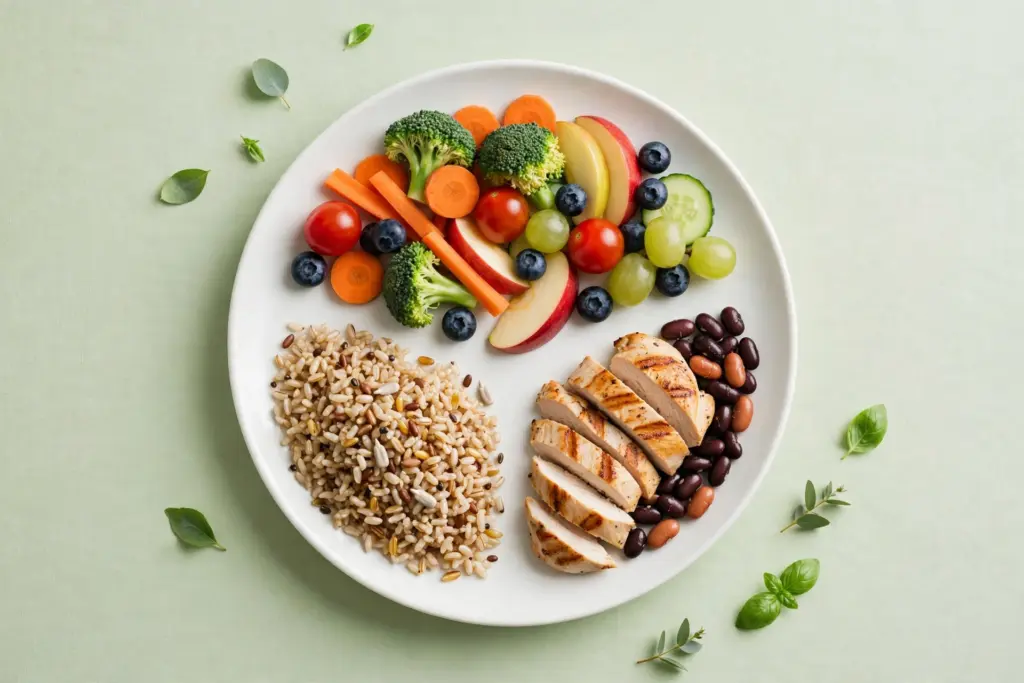
Here’s something worth knowing: in January 2026, the US replaced its familiar MyPlate graphic with a new food pyramid that puts protein, dairy, healthy fats, vegetables, and fruits front and center, while whole grains take a smaller role at the base. The message behind it: eat “real food” — whole, nutrient-dense, minimally processed — and avoid highly processed products heavy in salt, sugar, and artificial additives.
Harvard’s researchers have long offered their own take: the Healthy Eating Plate suggests filling half your plate with vegetables and fruit, a quarter with whole grains, and a quarter with healthy protein, plus healthy plant oils in moderation — a visual guide to the same proportions the WHO recommends.
Step back and the global consensus is remarkably stable: plants first, whole foods over processed, water over sweet drinks, portions matched to your age, activity, and needs. The details shift between agencies; the direction doesn’t.

What a balanced day actually looks like
Theory is nice, but here’s an ordinary day that hits the marks — no exotic ingredients, no chef skills required:
- Breakfast: Oatmeal with berries and a handful of walnuts, plus milk or soy milk. Fiber, fruit, protein, healthy fat — done before 9 a.m.
- Lunch: A rice or quinoa bowl with grilled chicken or tofu, a big handful of mixed vegetables, and a drizzle of olive oil. Half the bowl is vegetables.
- Snack: An apple and a small handful of peanuts. Fruit plus protein beats the vending machine.
- Dinner: A vegetable soup or stir-fry with lentils or fish, and a slice of whole-grain bread. Plant-heavy, light, finished well before bed.
- Drinks: Water through the day, maybe tea. No soda, no juice-as-hydration.
Notice the pattern: plants dominate, protein appears every time, grains are whole, and sugar and salt stay in the background. That’s the whole method, applied three or four times a day.

Three habits that carry most of the weight
- Cook most of your meals. Home cooking is the fastest way to control salt, sugar, and fat quality. It doesn’t have to be fancy — batch-cooked grains, roasted vegetables, and one simple protein carry most of the week.
- Read labels for three things only. Added sugars, sodium, and how long the ingredient list is. If sugar appears under three different names in the first five ingredients, treat the product as dessert, not breakfast.
- Drink water first. Thirst often shows up disguised as hunger, and sweet drinks can quietly undo a good day’s eating. Keep water within reach and the rest gets easier.
Frequently asked questions
Can a balanced diet include snacks and desserts?
Yes. Balance is a pattern, not a prison. The occasional dessert doesn’t unbalance a diet built on vegetables, whole grains, and protein — it becomes a problem only when sweet, salty, ultra-processed foods make up most of your daily energy.
Do I need supplements if my diet is balanced?
For most healthy adults eating a varied diet, no — food covers it. Some situations have specific needs (vitamin D in low-sun regions, B12 on strict plant-based diets, iron or folate during pregnancy), and those are conversations for a clinician, not a shopping list.
Is a balanced diet expensive?
It can be the opposite. Beans, lentils, oats, seasonal vegetables, and frozen produce are among the cheapest foods in any market. The expensive version of “healthy eating” is mostly marketing; the real version is an ordinary grocery list.
How soon will I feel a difference?
Energy and digestion often respond within a couple of weeks of steadier eating — fewer sugar crashes, more even appetite. Lab markers like cholesterol and blood pressure move over months. Give the pattern time to do its work.
Sources
- World Health Organization — Healthy diet fact sheet
- WHO — Updated guidelines on fats and carbohydrates (2023)
- HHS releases 2025–2030 Dietary Guidelines for Americans (Healio)
- 2025–2030 Dietary Guidelines for Americans: key changes (Mondaq)
- Harvard T.H. Chan School of Public Health — Healthy Eating Plate
Medical disclaimer: This article is for general information only and is not medical advice. If you have a health condition or take medication, talk to a qualified health professional before making significant dietary changes.