Electrolytes Explained: Sodium, Potassium and Magnesium
Most people need more potassium and less sodium, and only occasionally a sports drink. Here is how to tell which situation you are in.

Every nerve impulse, every heartbeat, every muscle contraction runs on electricity — tiny electrical charges carried through your body by minerals dissolved in your blood and tissues. Those minerals are electrolytes. Three of them do most of the heavy lifting: sodium, potassium, and magnesium. When they’re in balance, you feel normal and never think about them. When they’re off, you notice — cramps, fatigue, headaches, an oddly fast heartbeat.
Here’s the short version of what most people get wrong: the typical diet has far too much sodium and not enough potassium or magnesium. Fixing that doesn’t require a supplement cabinet or a fancy sports drink. It mostly requires paying attention to what lands on your plate.
Sodium: you’re almost certainly getting more than you need
Sodium is essential — your body uses it to keep fluid balanced, transmit nerve signals, and contract muscles. But the dose makes the poison, and most adults in the US consume about 3,400 mg of sodium per day, roughly 50% above the recommended limit of 2,300 mg per day for adults set by the National Academies (the CDRR, or Chronic Disease Risk Reduction intake). For comparison, one teaspoon of table salt contains about 2,300 mg of sodium. The minimum adequate intake is only 1,500 mg per day — your body needs surprisingly little.
Higher sodium intake is linked to higher blood pressure, and reducing intake lowers blood pressure and the risk of cardiovascular disease across adults, with or without hypertension. The excess doesn’t come from your salt shaker. The majority arrives through packaged and restaurant food — bread, processed meats, canned soups, sauces, fast-food meals — where salt is used for flavor and preservation, not something you taste in real time.
Practical cuts that actually move the needle:
- Check the Nutrition Facts label and compare: 5% Daily Value for sodium is low, 20% is high.
- Cook from basic ingredients more often; even simple home cooking slashes sodium compared with packaged meals.
- When buying canned beans or vegetables, choose no-salt-added versions, or drain and rinse.
- Flavor with herbs, garlic, citrus, and spices instead of reaching for salt first.
One exception matters: heavy, prolonged sweating — think a long run in summer heat — flushes sodium out through sweat. Athletes training hard for over an hour may genuinely need more sodium on those days. For everyone else at a desk or doing moderate exercise, sodium is not the electrolyte to chase.
Potassium: the mirror problem
Potassium is sodium’s counterpart. Where sodium holds water in the blood, potassium works inside your cells — keeping fluid balanced across cell walls, steadying your heartbeat, and helping muscles contract and relax properly. It also helps your kidneys excrete more sodium, which is why getting enough potassium blunts some of sodium’s effect on blood pressure. The FDA has even approved a health claim that diets containing foods that are good sources of potassium and low in sodium may reduce the risk of high blood pressure and stroke.
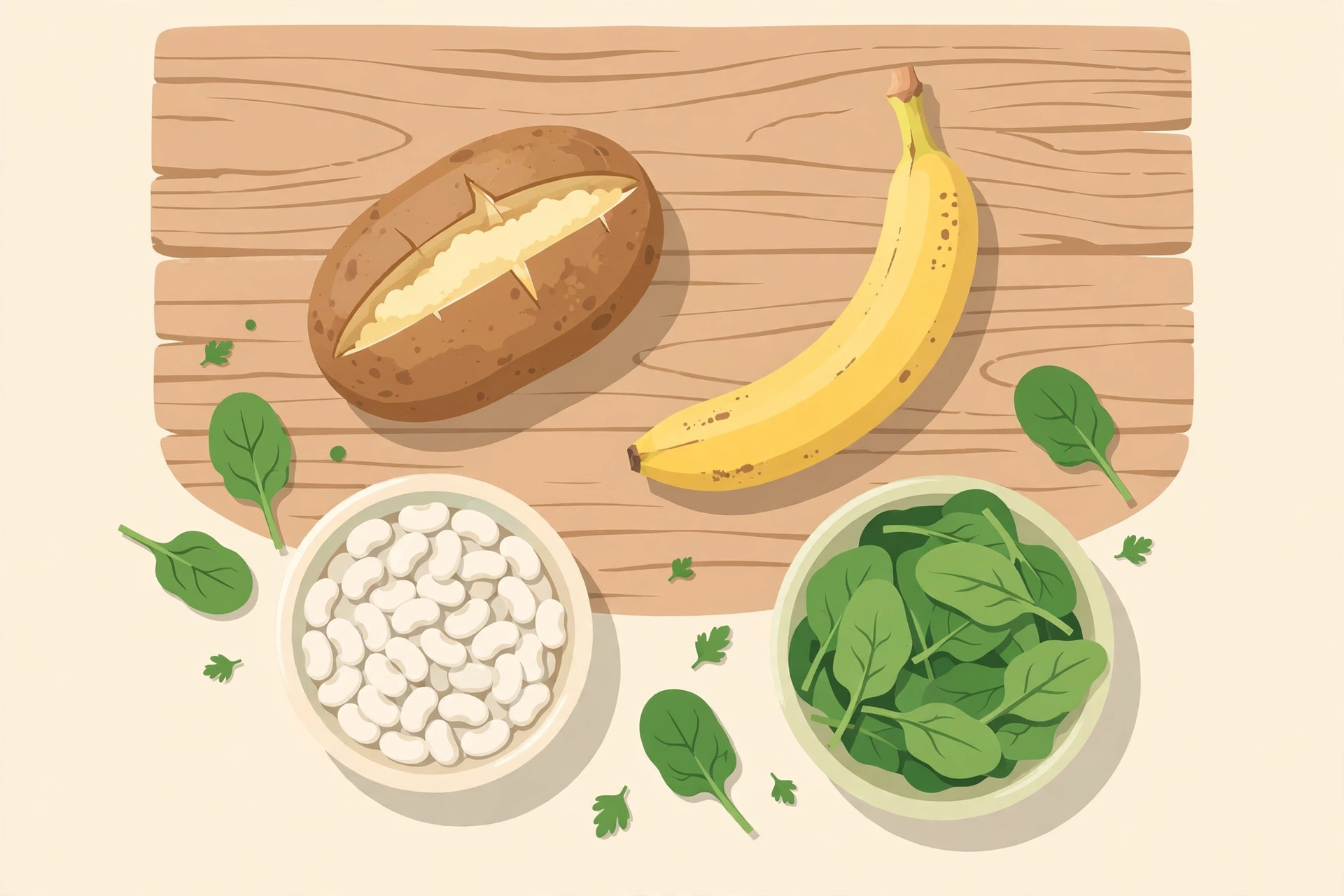
Yet most people fall short. The adequate intake is 3,400 mg per day for adult men and 2,600 mg for adult women, and only a small share of adults hit those numbers. Potassium is widely distributed in whole foods — no supplement required. Per the USDA’s food composition data, a few standouts:
- Baked potato with skin (1 medium): about 950 mg
- Banana (1 medium): about 422 mg
- White beans, cooked (½ cup): about 595 mg
- Spinach, cooked (½ cup): about 419 mg
- Plain low-fat yogurt (1 cup): about 531 mg
Notice the pattern: vegetables, legumes, dairy, and fish dominate the list. A dinner of baked salmon, a baked potato, and a side of greens can deliver well over 1,500 mg of potassium in one sitting. Bananas are fine but middle of the pack — they’re just the most famous.
One caution: people with chronic kidney disease, or those taking ACE inhibitors, ARBs, or potassium-sparing diuretics, may need to limit potassium. If that describes you, follow your clinician’s guidance rather than loading up on potassium-rich foods.
Magnesium: the one nobody talks about
Magnesium flies under the radar, but it participates in hundreds of biochemical reactions — muscle and nerve function, blood pressure regulation, blood sugar control, and the making of protein, bone, and DNA. And most adults don’t get enough of it. The recommended daily amount is 400–420 mg for adult men and 310–320 mg for adult women, and a large share of adults fall below those marks — in one Framingham study, only about 1 in 10 men and 1 in 5 women met the magnesium RDA.
Read also: Water vs. Sparkling Water: Key Differences
Signs of true deficiency — loss of appetite, nausea, fatigue, weakness — usually only show up when intake is very low for a long time, since the kidneys conserve magnesium well. But consistently hitting the target matters, and food makes it straightforward. Good sources include legumes, nuts, seeds, whole grains, and leafy greens. From the NIH’s food table:
- Dry-roasted almonds (1 oz): about 80 mg
- Boiled spinach (½ cup): about 78 mg
- Cooked black beans (½ cup): about 60 mg
- Peanuts (1 oz): about 63 mg
- Banana (1 medium): about 32 mg
Magnesium pills are heavily marketed, especially for cramps and sleep. A balanced diet of whole foods usually covers it, and the tolerable upper limit from supplements and medications is 350 mg per day — high-dose supplements can cause diarrhea and other problems. If you suspect a real deficiency, talk to a clinician rather than self-dosing from a jar.
When a sports drink is actually worth it
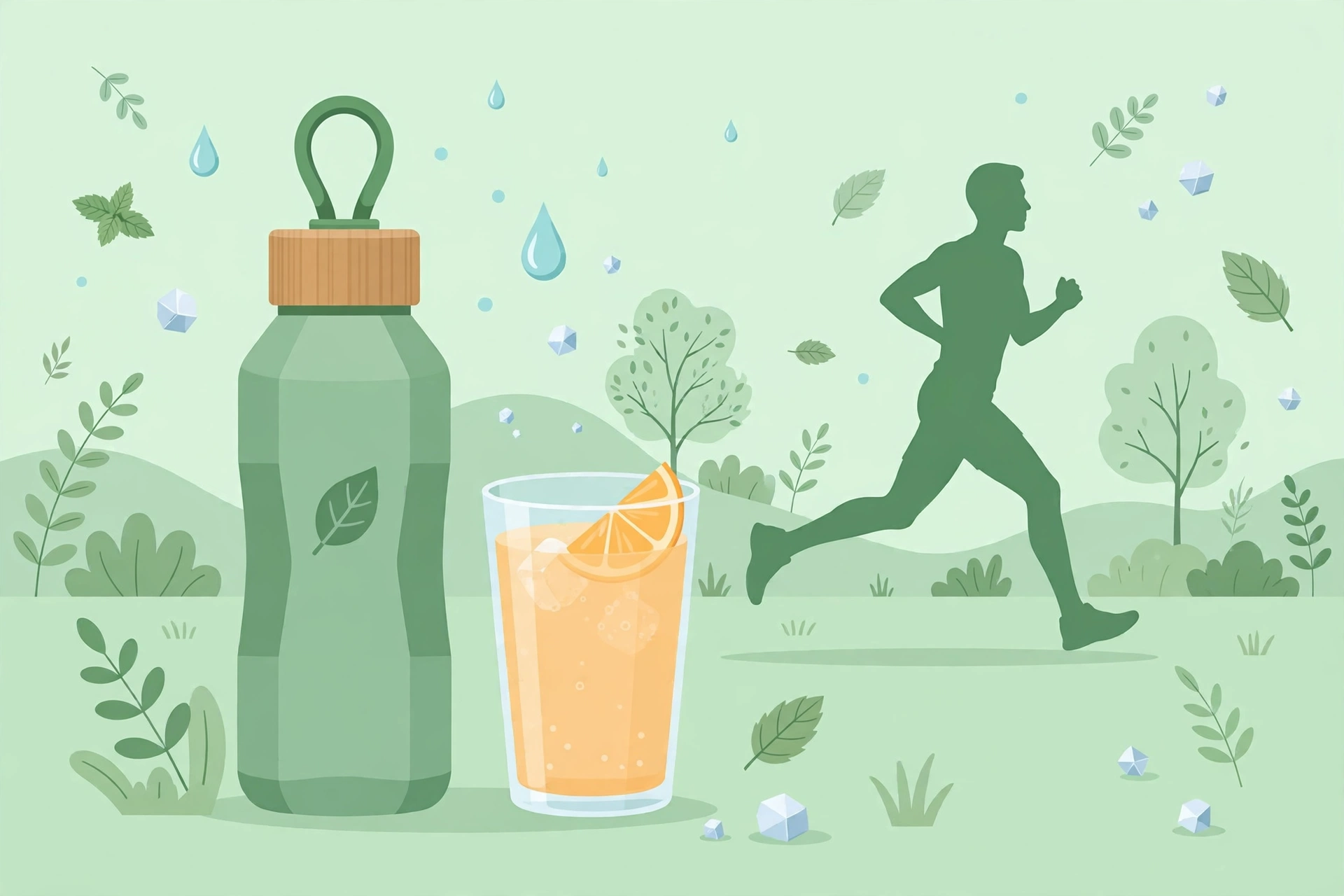
Sports drinks have electrolytes in their name, so it’s easy to assume you need them daily. You don’t. Water and food handle hydration for nearly everything a normal week throws at you. The situations where an electrolyte drink earns its place:
- Continuous exercise longer than about 60–90 minutes
- Heavy sweating or exercising in heat and humidity
- Illness with vomiting or diarrhea — oral rehydration solutions are specifically designed for this
Otherwise, a glass of water and your next meal replenish everything. Many sports drinks also come with 20–35 grams of added sugar per bottle (it varies by brand and bottle size — check the label), which makes them a poor daily habit for sedentary adults — you’re trading a small electrolyte top-up for a sugar load your body didn’t ask for.
Putting it together: a day of electrolyte balance
You don’t need to track milligrams. A simple pattern hits all three targets without thinking: vegetables or fruit at every meal, a protein source, beans or whole grains most days, and a small handful of nuts or seeds. Breakfast of yogurt with banana and oats. Lunch with beans, greens, and rice. Dinner with fish, potatoes, and vegetables. That’s roughly on target for potassium and magnesium, naturally moderate in sodium if you cook it yourself — and no brightly colored drink required.
Frequently asked questions
Do I need an electrolyte supplement if I don’t exercise much?
No. For sedentary or lightly active people, a normal diet supplies all three electrolytes. Supplements solve a problem most people don’t have — and can cause one for people with kidney disease.
Is coconut water a good source of electrolytes?
It’s a decent natural source of potassium (a cup provides roughly 400–600 mg depending on the brand), but it’s modest in sodium and shouldn’t replace an oral rehydration solution during real fluid loss.
Can I get too much potassium from food?
In healthy adults, the kidneys efficiently excrete excess potassium from whole foods, so overdoing it from food alone is rare. The risk — hyperkalemia, which can disturb heart rhythm — applies mainly to people with kidney disease or those on certain blood-pressure medications. Those are the people who need medical guidance, not a banana ban.
Does cutting sodium make food taste bland?
Briefly. Taste buds adapt within a couple of weeks, and most people find heavily salted food tastes excessive afterward. Herbs, acids, and spices carry flavor in the meantime.
Sources
- National Academies — Dietary Reference Intakes for Sodium and Potassium (sodium AI 1,500 mg/day, CDRR 2,300 mg/day)
- NIH Office of Dietary Supplements — Potassium Fact Sheet (potassium AI: 2,600 mg women, 3,400 mg men)
- NIH Office of Dietary Supplements — Magnesium Fact Sheet (magnesium RDA and food content)
- Indian Health Service — Sodium and Your Health (average intake ~3,400 mg/day; 1 tsp salt ≈ 2,300 mg)
- Harvard Health — The best foods high in potassium (USDA potassium food values)
- Hoy et al. — Potassium Intake of the U.S. Population, NHANES 2017–2018 (potassium under-consumption; AI values)
- McCartney et al. — Higher Intakes of Potassium and Magnesium, Framingham Offspring Study (intakes vs. RDA)
Medical disclaimer: This article is for general information only and is not medical advice. If you have kidney disease, heart disease, or take blood-pressure or diuretic medications, talk to your clinician before changing your electrolyte intake.