Brown Rice vs. White Rice: Nutrition Differences
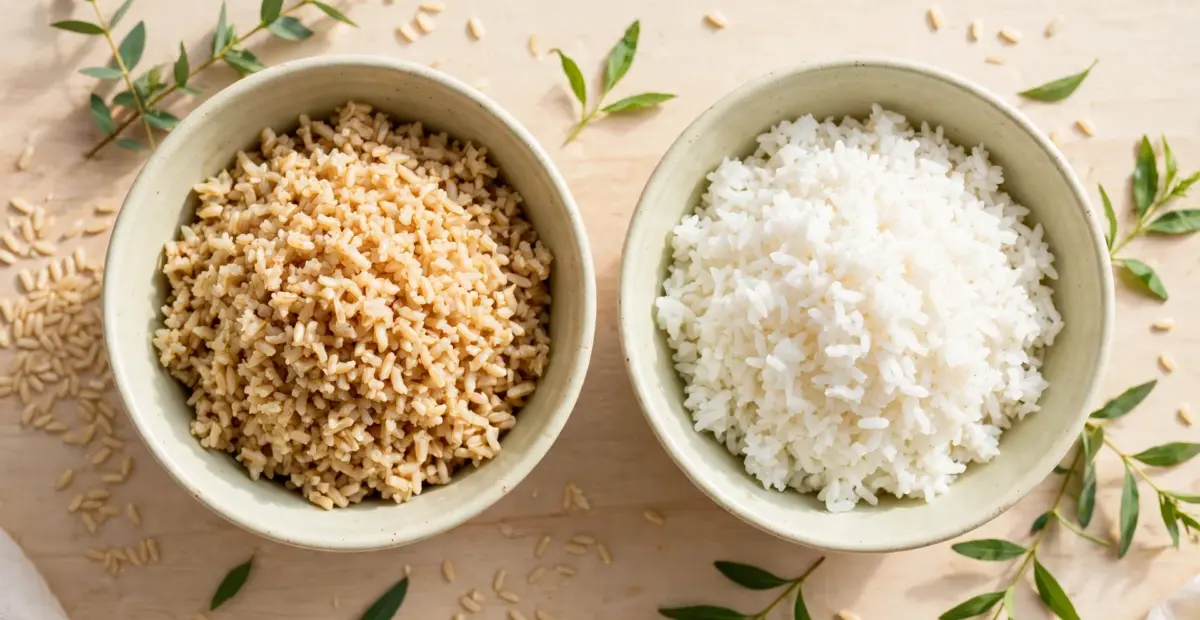
Walk down any rice aisle and you will see the same choice staring back at you: a bag of brown rice next to a bag of white rice, often at nearly the same price. They come from the same grain, they cook into the same kind of fluffy side dish, and they sit on the same plate next to the same stir-fry. So does it actually matter which one you pick?
It does — but probably not in the way you expect. Brown rice wins on fiber and several minerals, and the research links it to a lower risk of type 2 diabetes. White rice, meanwhile, is not the nutritional villain it is sometimes made out to be: it is easier to digest, it cooks in a fraction of the time, and in many countries it is enriched with iron and B vitamins. The honest answer is that the better choice depends on your health, your cooking time, and how often rice shows up on your plate.
Same grain, different journey
Brown rice and white rice start life as the exact same grain of rice. The difference is how much of that grain survives processing.
Brown rice is a whole grain. It keeps all three parts of the grain: the fibrous outer bran, the nutrient-rich germ, and the starchy endosperm inside. White rice is what remains after milling and polishing strip away the bran and germ, leaving mostly the endosperm — soft, mild, quick to cook, and much lower in fiber and minerals.
That is why brown rice looks tan, tastes slightly nutty, and takes 40 to 45 minutes to cook, while white rice looks bright, tastes neutral, and is ready in 15 to 20 minutes. Nothing is added to brown rice to make it healthier; it is simply less processed. And nothing sinister is added to white rice either — it is just a more refined version of the same food.
Read also: Whole Grains vs. Refined Grains: What’s the Difference?
The nutrition numbers, side by side
Per 100 grams cooked, the two rices are closer than most people assume — and the gap is concentrated in a few specific nutrients. These figures come from the USDA FoodData Central entries for cooked long-grain brown rice and cooked enriched long-grain white rice:
| Nutrient (per 100 g cooked) | Brown rice | White rice (enriched) |
|---|---|---|
| Calories | 123 kcal | 130 kcal |
| Carbohydrate | 25.6 g | 28.2 g |
| Protein | 2.7 g | 2.7 g |
| Fat | 1.0 g | 0.3 g |
| Fiber | 1.6 g | 0.4 g |
| Magnesium | 39 mg | 12 mg |
| Phosphorus | 103 mg | 43 mg |
| Manganese | 0.97 mg | 0.47 mg |
| Iron | 0.56 mg | 1.20 mg |
| Folate | 9 mcg | 58 mcg |
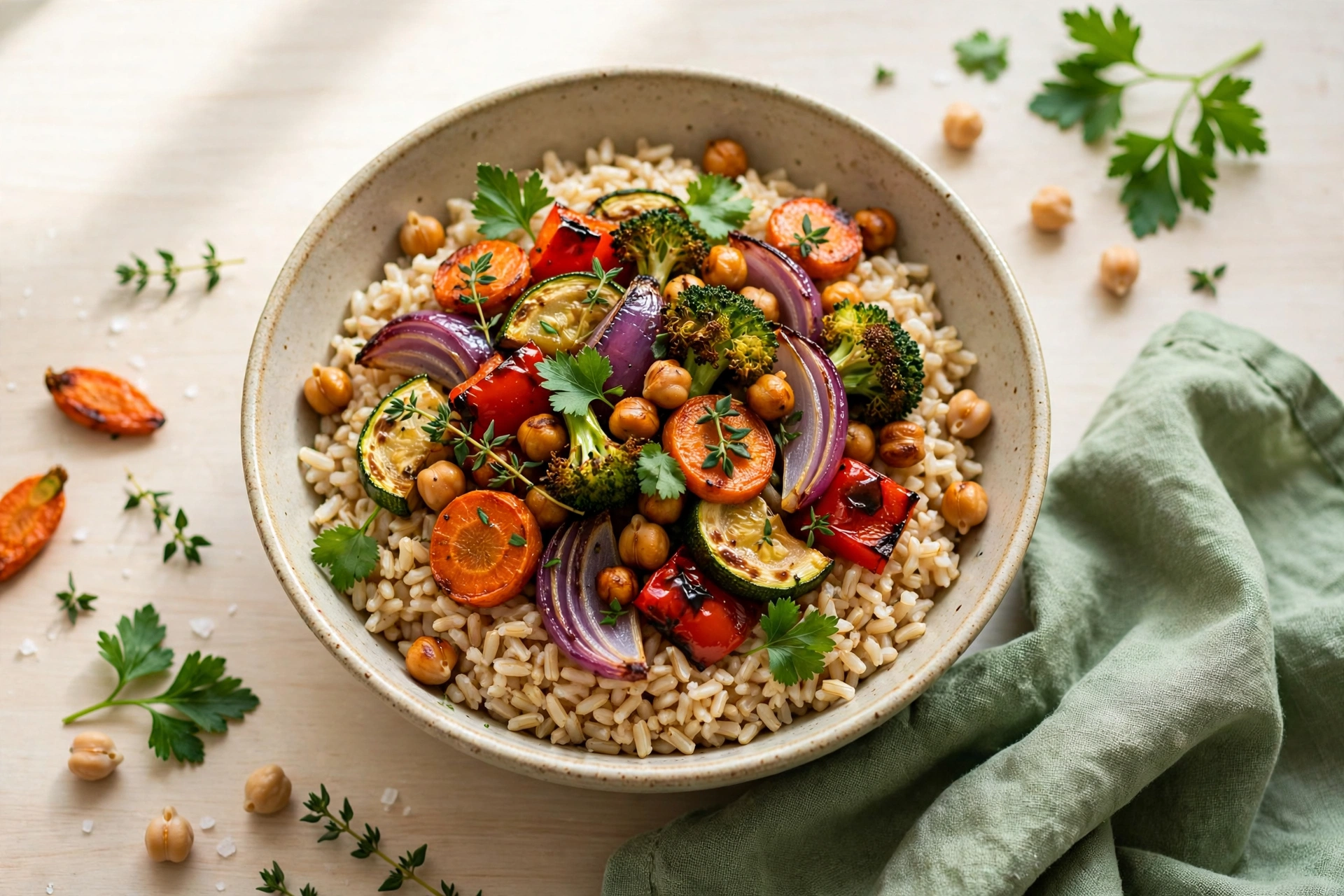
Two things stand out. First, the calorie difference is tiny — 123 versus 130 per 100 grams — so swapping rices is not a weight-loss shortcut on its own. Second, fiber is where brown rice pulls clearly ahead: it has about four times the fiber of white rice, because the bran layer that carries most of a grain’s fiber is still intact. Brown rice also delivers roughly three times the magnesium and more than twice the phosphorus and manganese.
White rice fights back in one column: enrichment. In the United States and many other countries, white rice is enriched with iron and B vitamins (including folate, thiamin, and niacin) to replace some of what milling removed. That is why the enriched white rice in the table has more iron and far more folate than brown rice. Enrichment does not restore everything — magnesium and fiber stay low — but it means white rice is not nutritionally empty.
One practical catch: cup sizes differ. A cup of cooked brown rice weighs about 202 grams, while a cup of cooked white rice weighs about 158 grams, because brown rice absorbs more water and fluffs up differently. Per cup, brown rice gives you roughly 248 calories and 3.2 grams of fiber; white rice gives you about 205 calories and 0.6 grams of fiber. Comparing per cup instead of per 100 grams makes the fiber gap look even bigger.
Read also: How to Choose Whole Grains
What the fiber actually does for you
Fiber is the headline difference, and it matters more than the calorie numbers suggest. The fiber in brown rice’s bran slows digestion, which means the starch inside breaks down more gradually and glucose enters your bloodstream at a steadier pace. It also adds bulk that helps you feel full, and it feeds the gut microbes that thrive on fermentable fiber.
Most of us do not get enough of it. The adequate intake for fiber is 25 grams a day for women and 38 grams for men, and a cup of brown rice covers about 3 grams of that — modest on its own, but a real contribution when the rest of the plate is vegetables, beans, or lentils. A cup of white rice, at 0.6 grams, barely moves the needle.
That said, fiber is not the only nutrient that counts, and a single food rarely decides a diet. Brown rice helps you reach your fiber goal; it does not finish the job by itself.
Blood sugar and diabetes risk: what the research says
This is where the brown-versus-white debate gets its sharpest evidence — and also where the evidence needs the most careful reading.
On glycemic index, the difference is real but modest. Harvard Health Publishing puts white rice at a glycemic index of about 73 (high) and brown rice at about 68 (medium). That means white rice tends to raise blood sugar a little faster, but the two are not in different leagues. The variety of rice, how it is cooked, and what you eat with it all shift the number: cooling cooked rice and reheating it, for example, increases its resistant starch, and eating rice with vegetables, beans, or a protein slows the glucose rise either way.
The longer-term picture comes from a 2022 systematic review and meta-analysis in BMJ Open that pooled 19 studies, including cohort studies following 577,426 people. Comparing the highest and lowest intakes, higher white rice consumption was associated with a 16% higher risk of type 2 diabetes, while higher brown rice consumption was associated with an 11% lower risk. Above roughly 300 grams of white rice a day, each extra 158-gram serving was associated with a 13% higher risk; each 50-gram daily serving of brown rice was associated with a 13% lower risk. The same review also found that replacing 50 grams of white rice a day with brown rice was linked to a 16% lower risk.
Those are associations, not proof that the rice itself caused the difference — people who choose brown rice also tend to eat more vegetables and exercise more, and the researchers flagged that the brown-rice findings rest on only three cohort studies, all among US health professionals. The review’s 11 randomized trials, which directly swapped brown rice for white rice in 1,034 participants, did not show consistent improvements in blood sugar control. A separate 2021 meta-analysis of trials in people with prediabetes and type 2 diabetes reached a similar conclusion: swapping in brown rice did not significantly change HbA1c or fasting blood glucose, though it did reduce body weight by an average of 2.2 kg and slightly raise HDL (“good”) cholesterol.
The fair summary: brown rice is associated with a lower diabetes risk in large observational studies, but the trials suggest the swap alone is not a blood-sugar fix. It is one sensible piece of a broader pattern — more whole grains, more fiber, more vegetables — rather than a magic ingredient.
Heart health and weight
Whole grains as a group have a stronger track record than any single grain. An analysis of 45 studies found that people who ate the most whole grains had a 16–21% lower risk of heart disease than people who ate the fewest. Brown rice contributes to that pattern through its fiber and magnesium, both of which support healthy blood pressure and cholesterol levels, though the evidence is for whole grains overall rather than brown rice alone.
On weight, the trial data are encouraging but modest. In the 2021 meta-analysis mentioned above, people who switched from white to brown rice lost an average of 2.2 kg over the study periods, likely because the extra fiber kept them fuller and they ate slightly less overall. Nobody should expect brown rice to do the work of a whole eating pattern, but as a swap it points in the right direction.
The 2025–2030 Dietary Guidelines for Americans take a clear stance here: they urge people to focus on whole grains, recommending 2–4 servings a day for a typical 2,000-calorie diet (a serving is half a cup of cooked brown rice), and to significantly cut back on highly processed refined carbohydrates. Swapping your regular rice for brown rice is one of the simplest ways to move toward that goal.
Where white rice wins
Fairness demands a defense of white rice, because it has real advantages.
First, digestion. White rice is low in fiber and easy on the stomach, which is genuinely useful during a flare-up of irritable bowel syndrome or inflammatory bowel disease, after stomach surgery, or whenever your clinician has advised a low-fiber diet for a while. Brown rice’s bran can be hard to tolerate in those situations, and white rice is the kinder choice.
Second, time. White rice cooks in 15 to 20 minutes; brown rice needs 40 to 45. On a busy weeknight, that difference can decide whether dinner happens at home or comes from a takeout bag — and a home-cooked meal with white rice beats a skipped meal or fast food most nights.
Third, arsenic. Rice absorbs more inorganic arsenic from soil and water than most grains, and brown rice tends to carry more of it than white rice because arsenic concentrates in the bran. The levels in rice are generally considered low, and the risk can be reduced by rinsing rice before cooking, soaking it, and cooking it in plenty of water (like pasta) and draining the excess. It is a reason for variety in your grains, not a reason to fear brown rice.
Finally, taste and texture. Some dishes simply work better with white rice — sushi, risotto, and many Southeast Asian dishes rely on its soft, sticky texture. Food is also culture, comfort, and pleasure, and a grain you enjoy is a grain you will actually eat.
How to make brown rice work in real life
The two complaints people have about brown rice are the cooking time and the texture. Both have easy fixes.
Batch-cook it. Make a big pot on Sunday — brown rice keeps four to five days in the fridge and freezes well in portion-sized containers for up to three months. A quick reheat gives you a whole-grain base in two minutes on a weeknight, which erases the time advantage of white rice entirely.
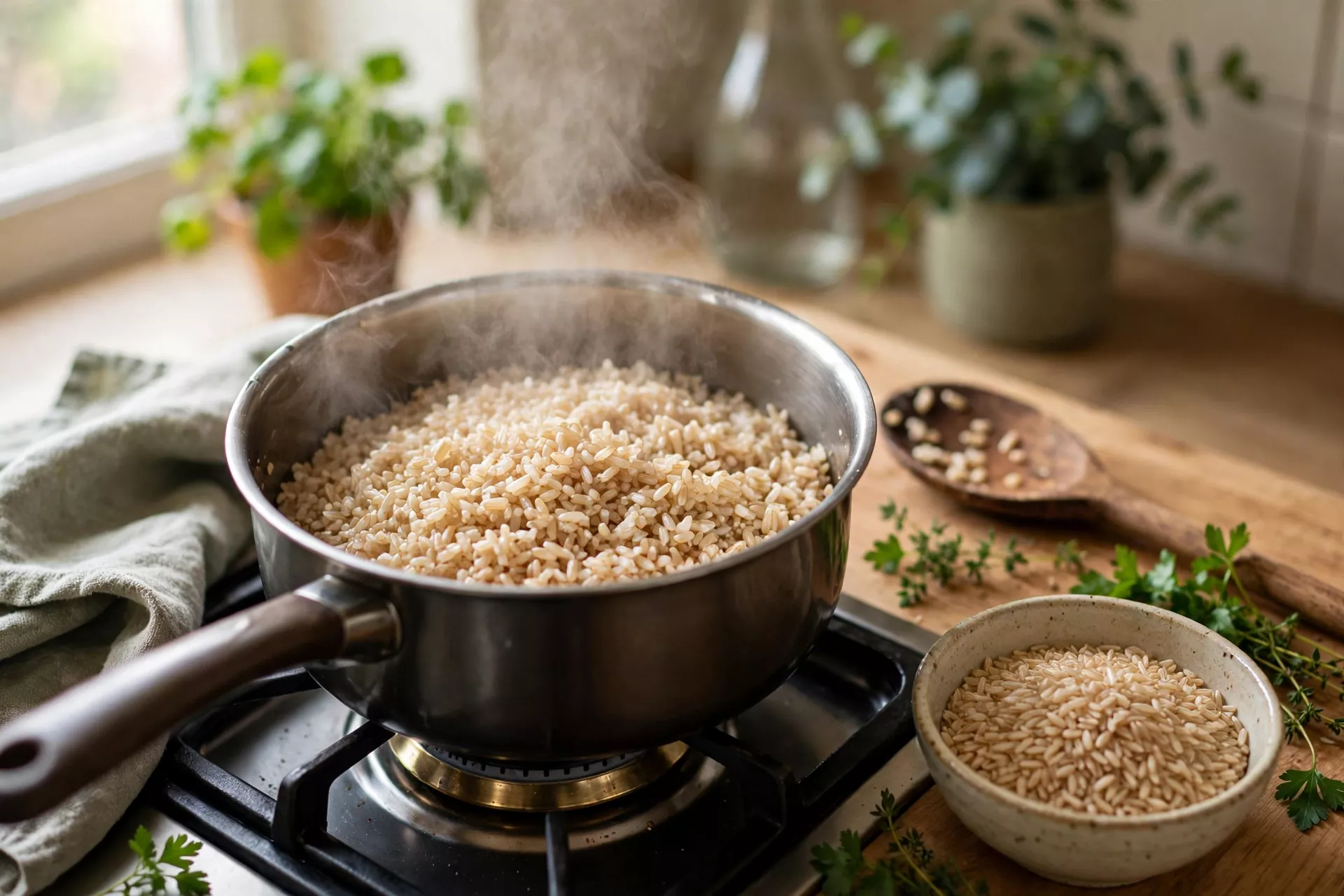
Soak it first. A 30-minute soak (or overnight in the fridge) shortens the cooking time and gives a softer, less chewy result. Rinse it well before cooking, use a ratio of about one part rice to two parts water, and let it rest off the heat for ten minutes before fluffing — that rest is what turns it from crunchy to tender.
Mix it. If your household is not ready for a full switch, start with half brown and half white in the same pot. You get more fiber and magnesium than white rice alone, the texture stays familiar, and nobody has to make a dramatic change overnight. The same trick works with other grains: brown rice plus quinoa, barley, or lentils makes a base that is more interesting than either grain alone.
And keep perspective on the plate. Rice is usually the supporting act, not the star. A bowl of white rice next to vegetables, beans, and a protein is a far healthier meal than a bowl of brown rice next to nothing. The grain matters — but what you put around it matters more.
Read also: Oats vs. Oatmeal: Understanding the Basics
The bottom line
Brown rice is the healthier choice for most people, most of the time. It keeps the bran and germ that white rice loses, so it delivers about four times the fiber, three times the magnesium, and a slower rise in blood sugar — and large studies link it to a lower risk of type 2 diabetes and heart disease. The dietary guidelines back that up with a clear recommendation to make most of your grains whole.
But white rice still earns its place. It is enriched, easy to digest, fast to cook, and the right choice during digestive flare-ups or in dishes that need its texture. The smartest approach is not to ban one and worship the other: make brown rice your default, keep white rice for the times it fits better, and build the rest of the plate with vegetables, protein, and healthy fats. That is a pattern you can keep for years — and that is what actually moves the needle on health.
Frequently asked questions
Is brown rice actually healthier than white rice?
Yes, for most people. Brown rice has about four times the fiber, three times the magnesium, and more phosphorus and manganese than white rice, plus a slightly lower glycemic index. Large observational studies also link it to a lower risk of type 2 diabetes. But the gap is modest, and white rice is enriched with iron and B vitamins, so the overall diet matters far more than any single swap.
Can I eat white rice if I have diabetes?
White rice can fit into a diabetes-friendly eating pattern, but portion size and pairings matter more than the rice itself. A smaller portion (about half a cup cooked) eaten with vegetables, beans, or a protein will raise blood sugar more slowly than a large plate of plain rice. Brown rice is generally the better default choice, but talk with your clinician or dietitian about what fits your individual plan.
Does brown rice help with weight loss?
It can help a little. Trials that swapped brown rice for white rice found an average weight loss of about 2.2 kg, likely because the extra fiber kept people fuller and they ate slightly less overall. Brown rice is not a weight-loss food on its own, but as part of a balanced plate it supports the pattern that leads to gradual, lasting weight management.
How do I make brown rice taste better?
Soak it for 30 minutes before cooking, cook it in well-salted water or broth, and let it rest ten minutes off the heat before fluffing. Toasting the dry grains in a little oil for a minute before adding water adds a nutty flavor. And if the texture still puts you off, try a half-and-half mix with white rice — you get most of the nutritional benefit with a familiar bite.
Sources
- USDA FoodData Central — Rice, brown, long-grain, cooked (FDC ID 169704) and Rice, white, long-grain, regular, enriched, cooked (FDC ID 168878). fdc.nal.usda.gov
- Harvard Health Publishing — Brown rice versus white rice: A head-to-head comparison. health.harvard.edu
- Yu J, et al. White rice, brown rice and the risk of type 2 diabetes: a systematic review and meta-analysis. BMJ Open 2022;12:e065426. pmc.ncbi.nlm.nih.gov
- PeerJ — The effect of a brown-rice diet on glycemic control and metabolic parameters in prediabetes and type 2 diabetes mellitus: a meta-analysis. pmc.ncbi.nlm.nih.gov
- Whole Grains Council — Grain recommendations in the 2025–2030 Dietary Guidelines for Americans. wholegrainscouncil.org
- Healthline — Brown vs. White Rice: Which Is Better for Your Health? healthline.com
This article is for general nutrition education and is not medical advice. If you have diabetes, a digestive condition, or another health concern, talk with your clinician or a registered dietitian before changing your diet.