How to Stay Hydrated on a Busy Day

Somewhere between your first meeting and your last errand, the water bottle you filled this morning is still sitting on the kitchen counter, three-quarters full. You meant to drink it. You just never got around to it. If that sounds familiar, you are not alone — and on a busy day, staying hydrated takes a little planning, not a lot of willpower.
Hydration matters because water does quiet work all day long: it carries nutrients to your cells, helps regulate body temperature, cushions joints, and keeps your kidneys doing their job. When you fall behind, the first signs are easy to miss — a dull headache in the afternoon, a dip in focus, a mouth that feels a bit dry. The good news is that a few small habits, built into routines you already have, can keep you comfortably hydrated without turning water into another chore.
How much water do you actually need?
You have probably heard the “eight glasses a day” rule. It is a handy shorthand, but the official guidance is a bit more generous — and it counts more than plain water. The U.S. National Academies set an Adequate Intake for total water of about 3.7 liters (roughly 125 ounces) a day for men and 2.7 liters (about 91 ounces) for women. That total includes water from every drink and from food, and about 80 percent of it typically comes from beverages — roughly 3.0 liters (about 13 cups) for men and 2.2 liters (about 9 cups) for women.
Those numbers are guides, not targets you must hit to the milliliter. Your needs shift with the weather, how active you are, and what you eat. A hot day, a long walk, or a salty lunch all nudge the number up. The National Academies note that most healthy people meet their needs by letting thirst be their guide — but on a packed day, thirst is easy to ignore until you are already running low. That is where a simple routine earns its keep.
Read also: How Much Water Do You Need? a General Guide
Start the day with a glass, not a scramble
The easiest hydration habit is the one that happens before the day gets loud. Keep a glass or bottle by your bed or next to the coffee maker and drink a full glass of water when you wake up. You have gone seven or eight hours without fluids, so a morning glass simply tops the tank back up.
Pair it with something you already do. Water while the coffee brews. Water with breakfast. Water before you check your phone. Anchoring the habit to an existing routine means you do not have to remember it — the routine remembers for you.
Carry water with you — and make it visible
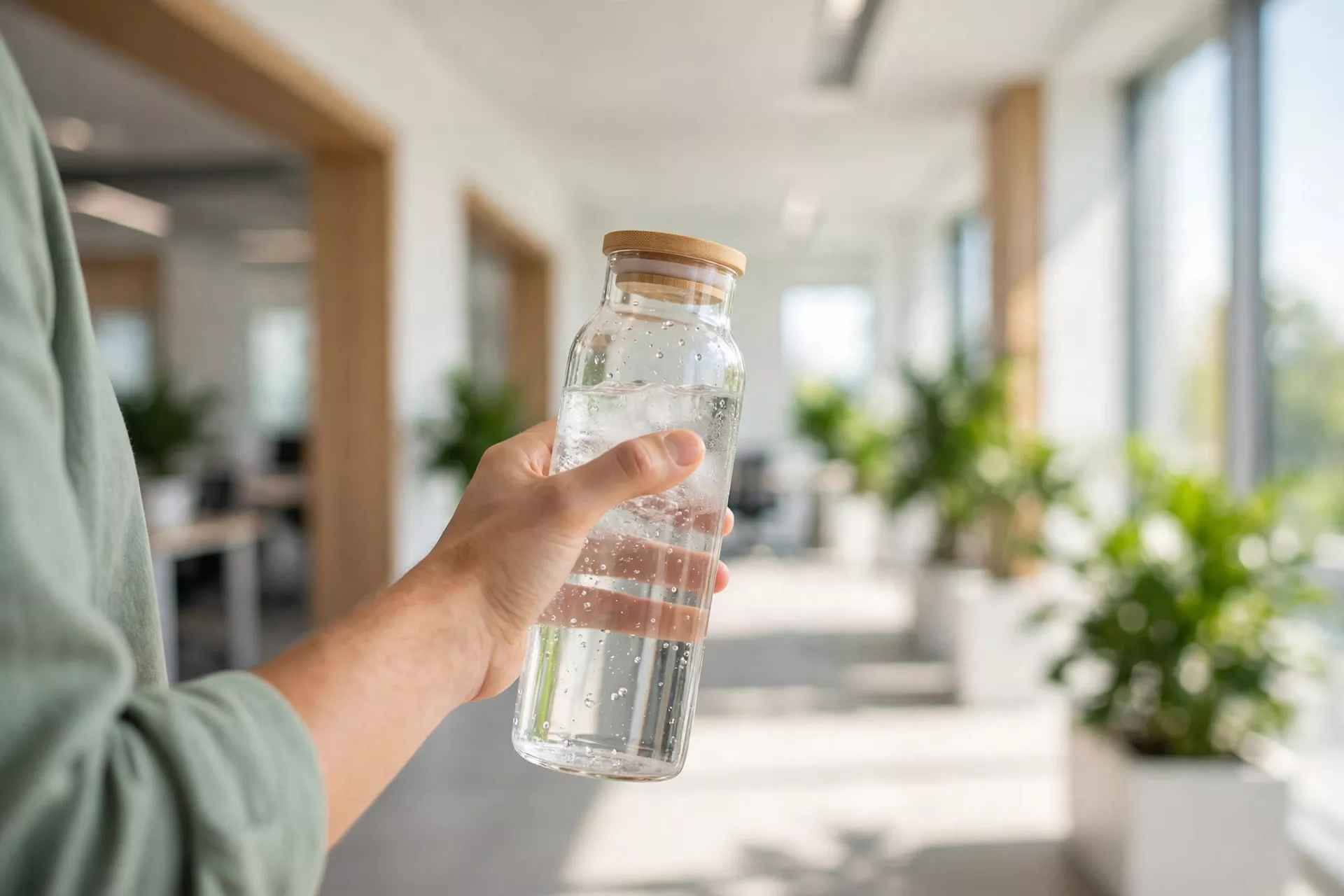
Out of sight really is out of mind. A bottle on your desk, in your bag, or in the car cup holder works like a quiet reminder every time your eyes land on it. Pick a bottle you actually like using: one that fits your bag, does not leak, and holds enough that you are not refilling it every hour. Many people find a 750 ml to 1 liter bottle about right — finish it once before lunch, once after, and you are most of the way there.
If you drive a lot, keep a bottle in the car and another at your desk, so there is always one within reach. Refill the moment it is empty rather than “later,” because later has a habit of becoming tomorrow.
Build drinks into the day’s natural breaks
You do not need a reminder app if your day already has built-in pauses. Tie a drink to each one:
- Before each meal: a glass of water while food is heating up or being served.
- Between meetings: a few sips on the walk back to your desk or while the next call loads.
- Mid-afternoon: a glass of water or unsweetened tea when the 3 p.m. slump arrives — that tired, foggy feeling is often mild dehydration as much as anything else.
- With every coffee: a glass of water alongside it. Coffee and tea do count toward your fluid intake, but water alongside keeps the balance honest.
Spreading drinks across the day works better than saving it all for the evening. Gulping a liter at 9 p.m. mostly buys you a trip to the bathroom at 2 a.m.
Let food do some of the work
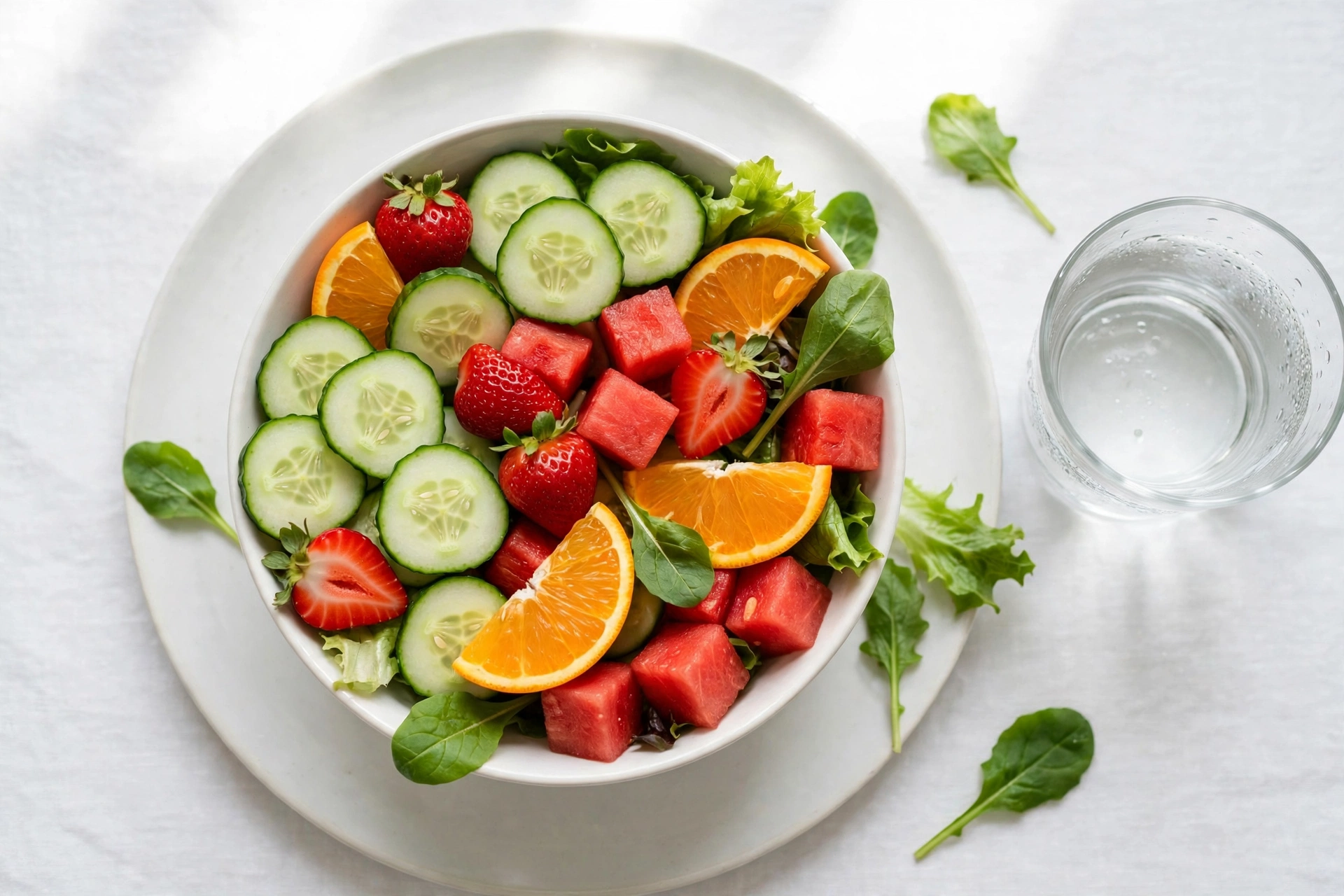
About a fifth of your daily water comes from food, and some foods carry a surprising amount of it. Cucumber and watermelon are more than 90 percent water, and oranges, strawberries, lettuce, and tomatoes are not far behind. Soup counts too — a bowl of vegetable soup at lunch can contribute a meaningful share of your fluids while also adding vegetables to your day.
On a busy day, this is an easy win: add a piece of fruit to your snack, a side salad to your lunch, or a cucumber and tomato salad to dinner. You are eating anyway — let the food hydrate you at the same time.
Read also: Simple Ways to Drink More Water Every Day
What about coffee, tea, and flavored drinks?
Yes, coffee and tea count toward your fluid intake. The old idea that caffeine dehydrates you has been softened by research: at the amounts most people drink, caffeinated beverages still add more fluid than they remove. The U.S. Food and Drug Administration cites 400 milligrams of caffeine a day — about two to three 12-ounce cups of coffee — as an amount not generally associated with negative effects for most adults.
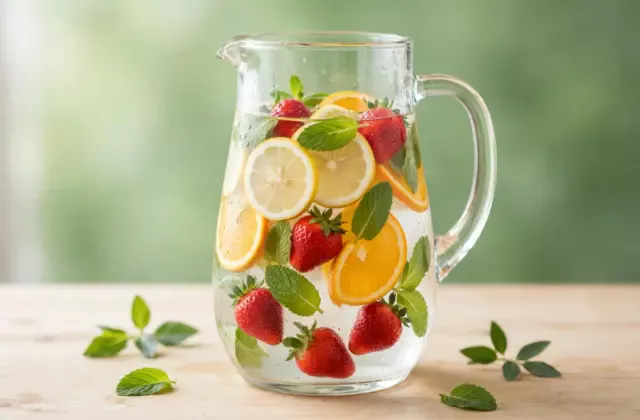
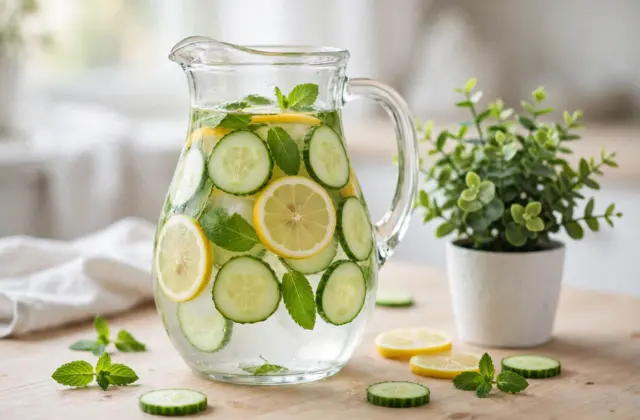
That said, water should still be your main drink. The 2025 Dietary Guidelines Advisory Committee recommended plain drinking water as the primary beverage, with sugar-sweetened drinks limited. If plain water bores you, try it with a squeeze of lemon, a few cucumber slices, or a splash of 100 percent fruit juice — flavor without the sugar load of soda or sweet tea.
Sports drinks deserve a mention here, because busy days sometimes include a workout. For most everyday activity, plain water is enough. Drinks with added electrolytes are mainly useful for long, sweaty exercise sessions — usually over an hour — rather than a normal workday.
How to tell when you are falling behind
Thirst is your body’s first signal, but the Mayo Clinic notes that thirst is not always a reliable early indicator — many people, especially older adults, do not feel thirsty until they are already dehydrated. A few other clues are worth knowing:
- Urine color: pale yellow generally means you are well hydrated; darker yellow suggests you need more fluid.
- How often you go: urinating less often than usual can be a sign you are running low.
- Headache or fatigue: a dull headache or an energy dip in the afternoon can be early signs of mild dehydration.
- Dry mouth or dizziness: a dry, sticky mouth, lightheadedness, or confusion are signs to take seriously and drink up — and to seek medical care if they are severe or do not improve.
Severe dehydration — very dark or no urine, rapid heartbeat, confusion, or fainting — needs prompt medical attention. For everyday busy days, though, the goal is simpler: notice the small signals before they become big ones.
A simple plan for your busiest days
Here is a routine you can copy as-is, no tracking app required:
- Wake up: one glass of water before coffee.
- Breakfast: water or unsweetened tea with your meal, plus a piece of fruit.
- Mid-morning: keep your bottle at your desk and sip while you work; aim to finish it by lunch.
- Lunch: a glass of water with your meal, and something water-rich on the plate — salad, soup, or fruit.
- Afternoon: refill the bottle; a glass of water or herbal tea when the slump hits.
- Dinner: water with the meal, and a lighter evening so you are not drinking large amounts right before bed.
Read also: How to Build a Daily Hydration Routine
Frequently asked questions
Does coffee dehydrate you?
Not in the way people often assume. Coffee and tea contribute fluid, and at moderate intakes — up to about 400 mg of caffeine a day for most adults, per the FDA — they still add more water than they remove. Water should still be your main drink, but your morning coffee is not working against you.
How do I know if I am drinking enough?
Pale yellow urine, regular bathroom trips, and steady energy are good signs. Dark yellow urine, going much less often, headaches, or unusual tiredness suggest you could use more fluid. Thirst helps, but it is not always an early warning, so do not wait for it.
Do I need electrolyte drinks on a busy day?
Usually not. Electrolyte drinks are mainly for long, sweaty exercise — typically an hour or more — or illness with heavy fluid loss. For a normal workday, water and water-rich foods cover it.
Is it bad to drink a lot of water at once?
For healthy adults, spreading drinks through the day is more comfortable and more useful than saving it all for one big gulp. Very large amounts in a very short time can dilute blood sodium, but that is rare and mostly a concern with extreme over-drinking, not normal habits.
The bottom line
Staying hydrated on a busy day is not about hitting a magic number or carrying a gallon jug everywhere. It is about making water easy to reach and tying drinks to moments that already exist in your day — a glass when you wake, a bottle on your desk, water with every meal, and a piece of fruit or a bowl of soup doing quiet double duty. Start with one of those habits this week. Your afternoon self will notice the difference.
This article is for general information only and is not a substitute for medical advice. If you have a health condition that affects fluid intake — such as kidney, heart, or liver disease — or you take medication that affects hydration, talk with your clinician about the right fluid target for you.
Sources
- National Academies of Sciences, Engineering, and Medicine — Dietary Reference Intakes for Water, Potassium, Sodium, Chloride, and Sulfate (2005)
- Mayo Clinic — Dehydration: Symptoms and causes
- U.S. Food and Drug Administration — Spilling the Beans: How Much Caffeine is Too Much?
- 2025 Dietary Guidelines Advisory Committee — Scientific Report, Part D, Chapter 3: Beverages
- MedlinePlus — Dehydration