How to Build a Balanced Plate
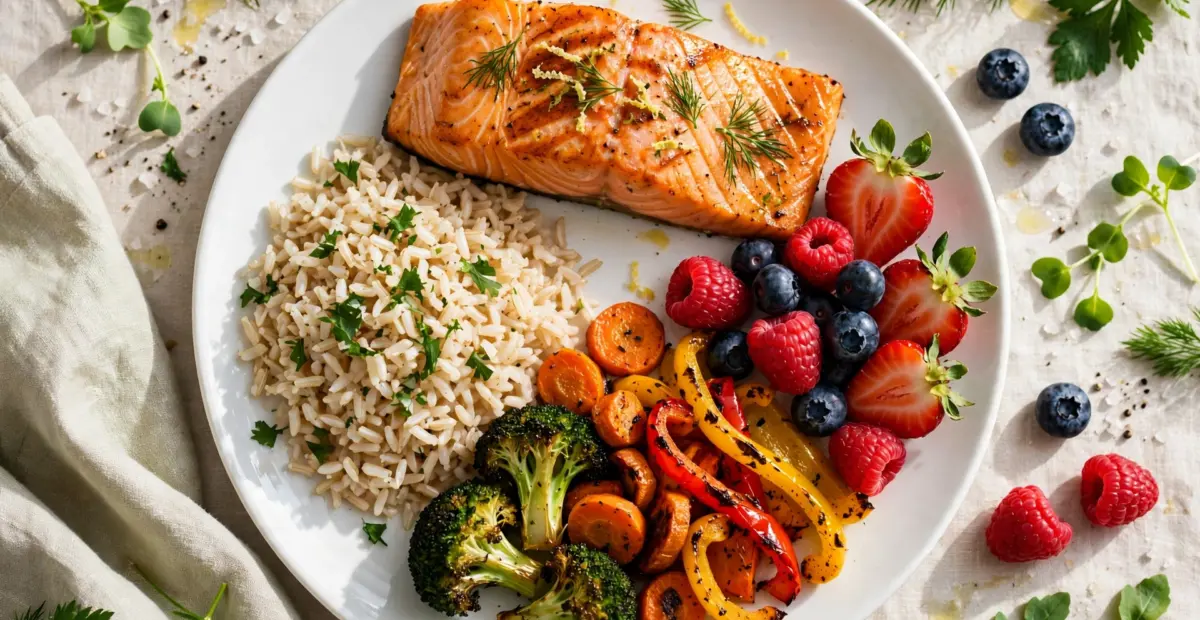
“Eat healthier.” Easy to say. But at 7pm, staring into the fridge, the advice evaporates and the pasta wins again. That’s not a willpower problem — it’s a design problem. You don’t need a meal plan, an app, or a food scale. You need a picture. That’s exactly what a balanced plate gives you: one glance at your dinner, and you know whether it’s working.
Two of the world’s most trusted nutrition authorities — the U.S. Department of Agriculture and the Harvard T.H. Chan School of Public Health — both landed on the same idea: forget complicated rules and just look at your plate. Here’s how to build one.
What a Balanced Plate Actually Looks Like
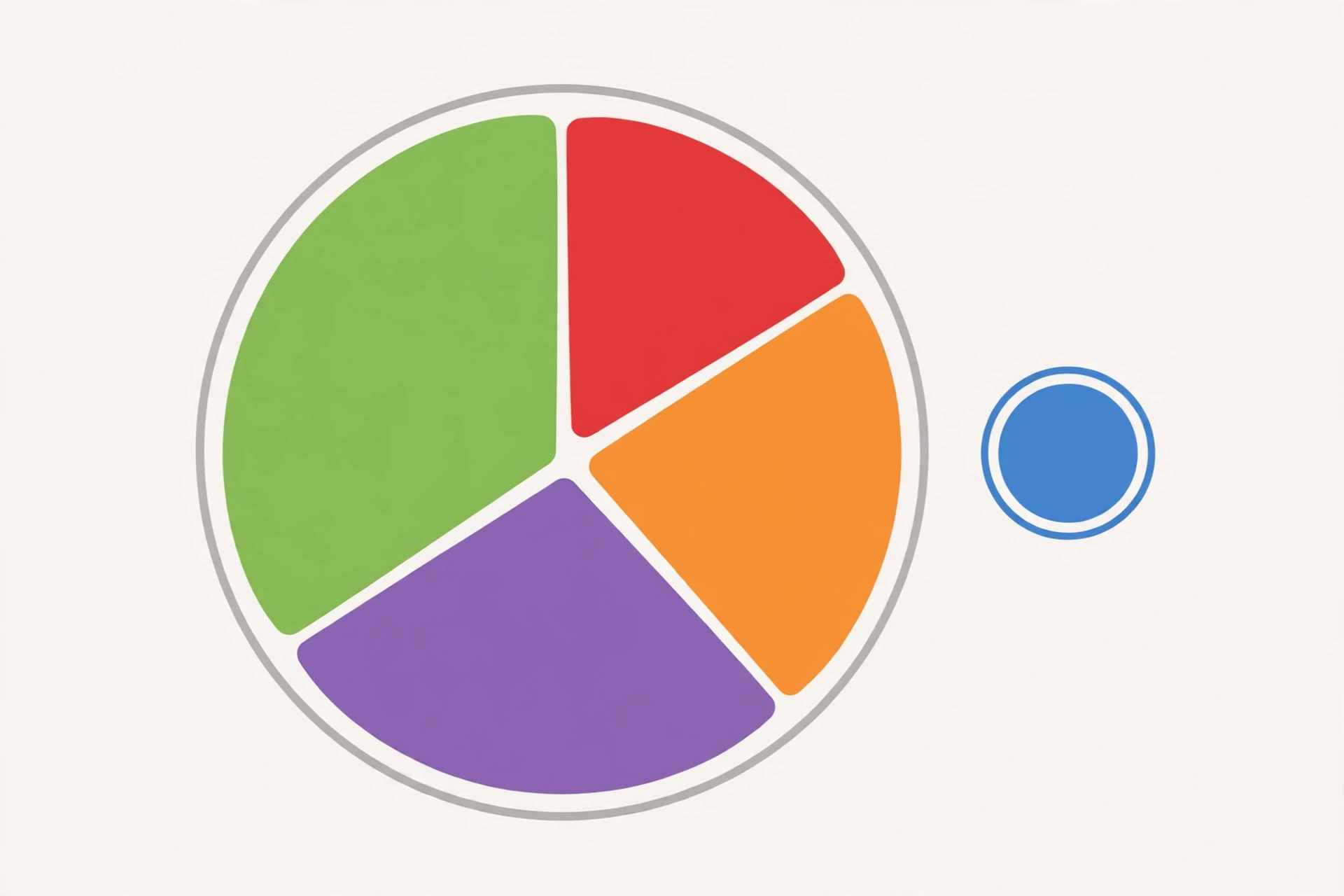
In 2011, the USDA replaced the old food pyramid with MyPlate: a simple image of a dinner plate divided into sections. Roughly 30% grains, 30% vegetables, 20% fruit, and 20% protein, with a smaller circle on the side for dairy. The headline rule is beautifully simple: make half your plate fruits and vegetables.
Quick update: the USDA retired the MyPlate graphic in January 2026, replacing it with a new dietary guide — but the plate method and proportions described here remain nutritionally sound.
Harvard’s experts released their own version the same year — the Healthy Eating Plate — with a nearly identical layout: half vegetables and fruits, one-quarter whole grains, one-quarter healthy protein. When two independent teams of nutrition scientists draw the same picture, it’s worth paying attention.
Start With Half: Vegetables and Fruits
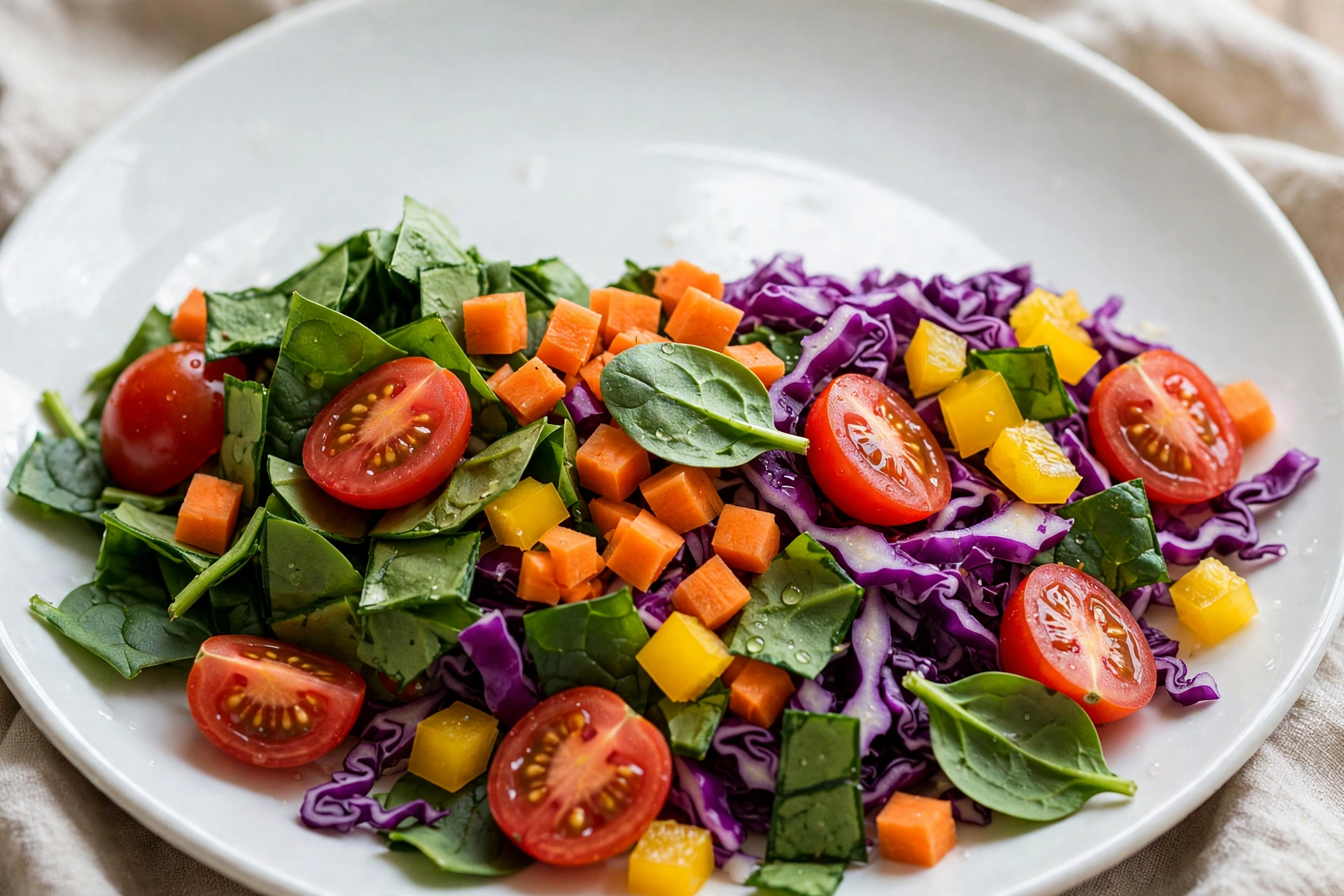
This is the non-negotiable half. Vegetables and fruits deliver fiber, potassium, folate, vitamin C, and a spectrum of plant compounds linked to lower risks of heart disease and certain cancers — all for very few calories.
A few practical notes:
- Eat the rainbow. Different colors signal different nutrients — dark leafy greens, orange carrots and sweet potatoes, red peppers and tomatoes, purple cabbage and berries.
- Fresh, frozen, or canned all count. Frozen vegetables are picked at peak ripeness and are often just as nutritious as fresh. If you buy canned, choose versions with no added salt or sugar.
- One Harvard caveat: potatoes and French fries don’t count as vegetables on the Healthy Eating Plate — they behave more like a refined starch in the body.
A Quarter for Whole Grains
The USDA’s advice: make at least half your grains whole. Harvard goes further and says make it all whole grains. Whole grains — brown rice, quinoa, oats, barley, whole-wheat bread and pasta — keep their fiber-rich bran and germ, which means steadier blood sugar and longer-lasting fullness than their refined cousins.
For reference, at a 2,000-calorie daily intake, the USDA suggests about 6 ounce-equivalents of grains per day — that’s roughly 6 slices of bread, or a combination like 2 slices of toast at breakfast plus a cup of cooked rice at dinner.
A Quarter for Protein
Protein repairs tissue, builds enzymes, and keeps you satisfied. The MyPlate guidance at 2,000 calories is about 5½ ounce-equivalents a day — picture a deck-of-cards-sized piece of fish plus an egg and a handful of nuts spread across the day.
The key word from both guides is variety: rotate through fish, poultry, beans, lentils, eggs, tofu, and nuts across the week. Both guides also agree on what to limit — processed meats like bacon, sausage, and hot dogs, and large amounts of red meat.
The Supporting Cast: Dairy, Fats, and Drinks
Dairy sits beside the plate, not on it: the USDA recommends about 3 cups a day of low-fat or fat-free milk, yogurt, or fortified soy alternatives. (One cup of yogurt or 1½ ounces of natural cheese each count as a cup.) Harvard is more cautious, suggesting just 1–2 servings a day and putting water front and center instead.
Read also: Homemade Low-Sugar Drink Ideas
Fats deserve a small but deliberate spot. Drizzle vegetables or grains with olive or canola oil, add avocado slices, or sprinkle nuts and seeds. These unsaturated fats support heart health — it’s the trans fats and heavy saturated fats worth keeping low (under 10% of daily calories, per the Dietary Guidelines).
Drinks matter more than people think. Water should be the default. Sugary drinks are one of the largest sources of added sugars — and the guidelines cap added sugars at less than 10% of daily calories, with sodium under 2,300 mg a day.
MyPlate vs. Harvard’s Plate: What’s Different?
The two guides agree on the big picture but differ in the details:
- Grains: MyPlate says “grains” (aim for half whole); Harvard says whole grains, full stop.
- Dairy: MyPlate keeps a dairy circle; Harvard swaps it for a glass of water.
- Fats: Harvard explicitly pictures healthy oils; MyPlate mentions them in the fine print.
- Lifestyle: Harvard’s plate includes a “stay active” reminder. MyPlate doesn’t.
You can’t go wrong following either one. If you want the simplest possible rule, use Harvard’s version: half vegetables and fruit, a quarter whole grains, a quarter protein, water to drink.
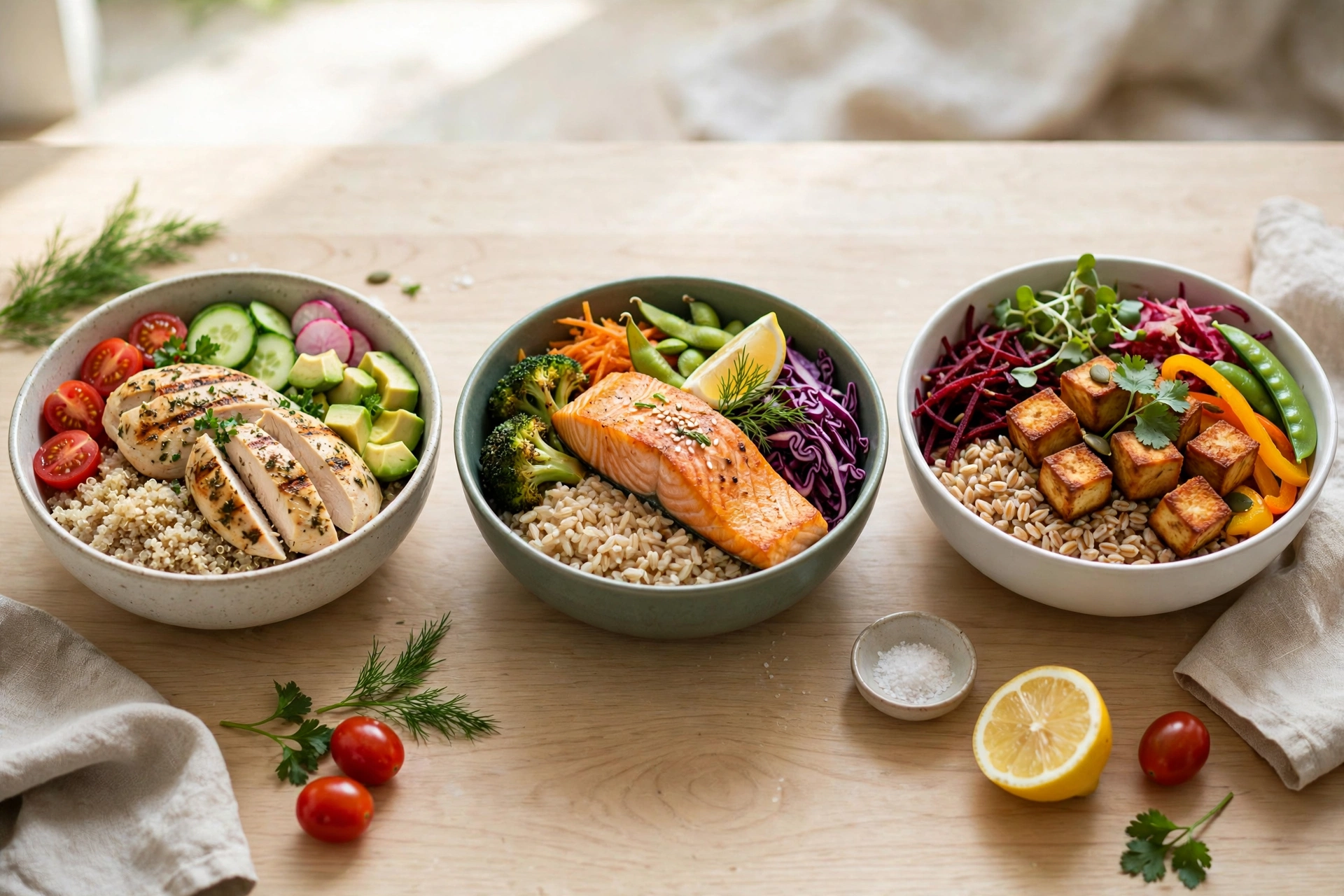
5 Balanced Plates You Can Make Tonight
- Salmon night: baked salmon (protein) + quinoa (whole grain) + roasted broccoli and carrots (vegetables) + a handful of berries for dessert.
- Stir-fry: chicken or tofu with bell peppers, snap peas, and mushrooms over brown rice.
- Soup and salad: lentil soup (protein + vegetables) + a whole-grain roll + a simple side salad.
- Breakfast for dinner: vegetable omelet + whole-wheat toast + an orange.
- Burrito bowl: black beans, brown rice, corn, tomatoes, lettuce, and avocado — no tortilla engineering required.
3 Mistakes That Unbalance the Plate
1. The grain avalanche. A mountain of pasta with a snowcap of sauce. Fix it by serving the pasta, then filling the freed-up half of the plate with a big salad or roasted vegetables.
2. The lonely protein. A steak with nothing else going on. Even adding a fistful of greens and a scoop of beans transforms it.
3. The invisible vegetables. A sprig of parsley doesn’t count. Vegetables should be visible from across the room — that’s the half-plate rule doing its job.
Frequently Asked Questions
Do I need to measure everything?
No — that’s the beauty of it. The plate is the measuring tool. Your hand works too: a fist for vegetables, a cupped hand for grains, a palm for protein.
What if I don’t eat dairy?
Fortified soy milk and soy yogurt count cup-for-cup toward the dairy group. Leafy greens, tofu made with calcium sulfate, and fortified plant milks also help cover calcium.
Does this work for kids?
Yes — same proportions, smaller plate. Letting kids see the colorful sections can actually make them more willing to try new vegetables.
What about snacks?
Apply the same logic in miniature: pair a protein or whole grain with a fruit or vegetable — apple with peanut butter, yogurt with berries, whole-grain crackers with hummus and cucumber.
This article is for general information only and is not medical advice. If you have a health condition or specific dietary needs, talk to a qualified healthcare professional or registered dietitian.
Sources: U.S. Department of Agriculture, MyPlate; Harvard T.H. Chan School of Public Health, Healthy Eating Plate.