How to Keep Healthy Eating Simple
Healthy eating sounds simple until you try to follow every rule at once. Count this, avoid that, time your meals, buy only organic, never eat after eight — no wonder so many people give up by Thursday. The truth is less dramatic: most of the benefit comes from a handful of repeatable choices, and the rest is detail you can safely ignore for now.
This guide strips healthy eating back to what actually moves the needle. One plate formula, five everyday habits, and a shopping list you can reuse week after week. No calorie counting, no banned foods, and no perfect week required.
The one rule that replaces most rules
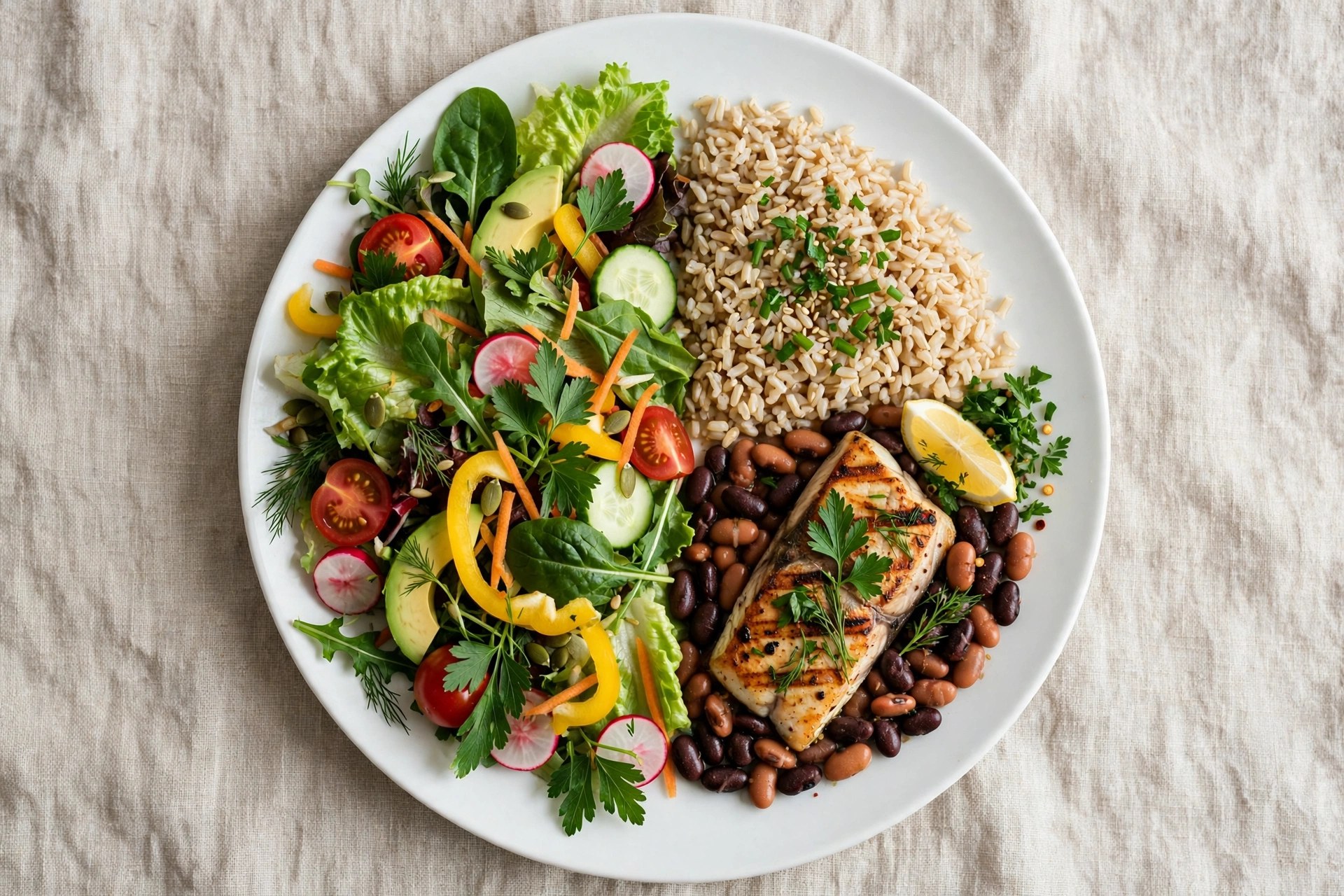
If you remember nothing else, remember the plate. Harvard’s Healthy Eating Plate suggests filling about half your plate with vegetables and fruit, a quarter with whole grains, and a quarter with a healthy protein such as fish, beans, eggs, poultry, or tofu, with water as the usual drink and healthy oils like olive oil on the side. That single picture answers the question most diets turn into a spreadsheet: what should I actually put on my plate tonight?
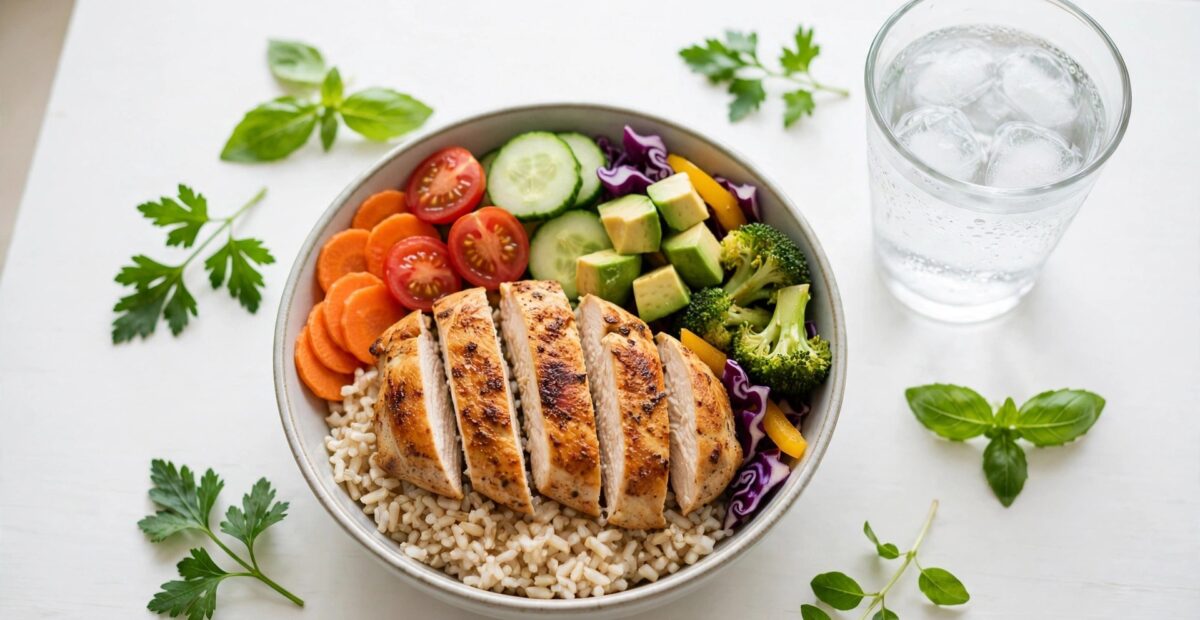
It works because it shifts your attention from nutrients to food. You do not need to calculate grams of anything to see whether your plate is mostly vegetables or mostly fried food. A palm-sized portion of protein, a fist-sized scoop of brown rice or quinoa, and the rest of the plate filled with whatever vegetables you like gets you close enough — and close enough, repeated most days, beats a perfect plan followed twice.
Start with the vegetables, since they are the part people most often skip. Frozen vegetables count, canned beans count, and a bag of salad leaves with a tin of chickpeas is a perfectly respectable dinner base. The World Health Organization (WHO) recommends at least 400 grams — about five portions — of fruit and vegetables a day, and every portion you add moves you toward that target, whether it comes from fresh, frozen, or canned produce.
Read also: How to Build a Balanced Plate
Five habits that do most of the work
You do not need twenty new habits. You need a few that survive a busy week, a bad night’s sleep, and a fridge that is running low. These five are the ones worth building first.
1. Anchor every meal with a vegetable or fruit. Add cucumber to a sandwich, berries to oatmeal, or a side salad to pasta. You are not redesigning the meal; you are rounding it out. Over a week, those additions add up to several extra portions without a single special shopping trip.
2. Pick a default protein and a default grain. Decision fatigue is real, and it strikes hardest at dinner. Keep two or three combinations you can cook without thinking — eggs with whole-grain toast and spinach, rice with beans and salsa, yogurt with oats and fruit. When the default is already decent, you stop defaulting to takeout.
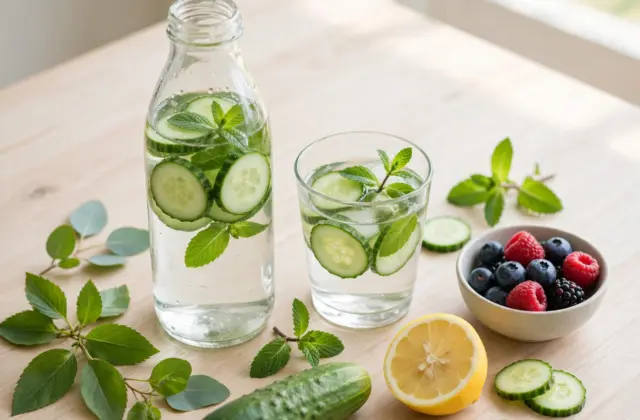
3. Drink water first. Keep a bottle where you can see it and make water your usual drink with meals. Sweetened drinks are one of the easiest sources of free sugars to cut, and the WHO recommends keeping free sugars below 10% of daily energy, ideally below 5% — about 50 grams, or 12 teaspoons, at a 2,000-calorie intake, with 5% equal to roughly 25 grams. Swapping one sweetened drink a day for water is a bigger change than most people credit it with.
4. Make the healthy choice the easy choice. Put fruit in a bowl on the counter, keep washed vegetables at eye level in the fridge, and store snacks you want less of somewhere you have to reach for them. Willpower is unreliable; your kitchen layout is not. Small changes to what you see first quietly change what you eat.
5. Use the same few meals on rotation. Eating well does not require a new recipe every night. Most households thrive on eight to ten meals they know by heart, varied with different vegetables, sauces, and seasonings. Rotation keeps shopping simple, cooking fast, and leftovers useful.
Read also: Small Diet Changes That Last
A shopping list you can reuse every week
A short, repeatable list is the secret weapon of simple eating. Instead of starting from scratch each week, keep a standing list and only swap the fresh items. A good base looks like this:
- Vegetables and fruit, fresh or frozen: leafy greens, carrots, onions, peppers, bananas, apples, berries
- Protein staples: eggs, canned beans or lentils, tofu, yogurt, and fish or poultry if you eat them
- Whole grains: oats, brown rice, whole-wheat bread or pasta, quinoa
- Healthy fats: olive oil, nuts or seeds, avocado when it is good value
- Flavour without much salt or sugar: garlic, herbs, spices, vinegar, mustard, chili
Shop with the list, not your appetite, and check the label on packaged foods before they land in the basket. The U.S. Food and Drug Administration (FDA) notes that 5% Daily Value or less of a nutrient per serving is low, while 20% or more is high — a quick way to spot a product that is high in sodium or saturated fat and low in fiber. You do not need to read every label in the store; reading the ones on foods you buy every week is enough.
Read also: How to Read Food Labels
Eating out, takeout, and genuinely busy days
Simple eating has to survive real life, not just quiet Sundays. On busy days, aim for “good enough” rather than perfect. A takeout meal with a side of vegetables beats skipping dinner and snacking all evening. A sandwich on whole-grain bread with salad beats a vending-machine lunch. The plate idea still applies when someone else cooks: ask for extra vegetables, pick a whole-grain option when it is available, and choose water over a sweetened drink.
Salt deserves a quick mention here, because restaurant and packaged foods are where most of it hides. The WHO recommends keeping salt below 5 grams a day — about one teaspoon, or under 2,000 milligrams of sodium. You do not need to track every milligram; cooking most meals at home, rinsing canned beans and vegetables, and flavouring food with herbs, citrus, and spices instead of extra salt already pulls your intake down a long way.
And if a day goes sideways — a birthday cake, a late pizza, a weekend away — let it be one day. Healthy eating is a pattern across weeks, not a streak that breaks with a single meal. The simplest response to an indulgent day is an ordinary one the next day: vegetables, a whole grain, a protein you like, and water. No punishment meals, no skipped breakfasts to “make up for it.”
What you can stop worrying about
Much of the noise around food comes from products and programs that need you to feel confused. You can safely set aside a few worries. You do not need a superfood to be healthy; ordinary beans, oats, cabbage, and apples do plenty. You do not need to eat at exact times, and the classic plate method — half vegetables and fruit, a quarter whole grains, a quarter protein — remains a sound way to build a meal even though dietary graphics have changed over the years. And you do not need to cut out an entire food group unless a clinician has advised it for a specific reason.
Be wary of any plan that promises fast, dramatic results, bans most foods, or sells you the solution. If a claim sounds too good to be true — a tea that melts fat, a powder that replaces vegetables — it almost certainly is. The unglamorous truth is that steady, ordinary meals, eaten most of the time, are what support health over years.
Your simple-eating starter plan
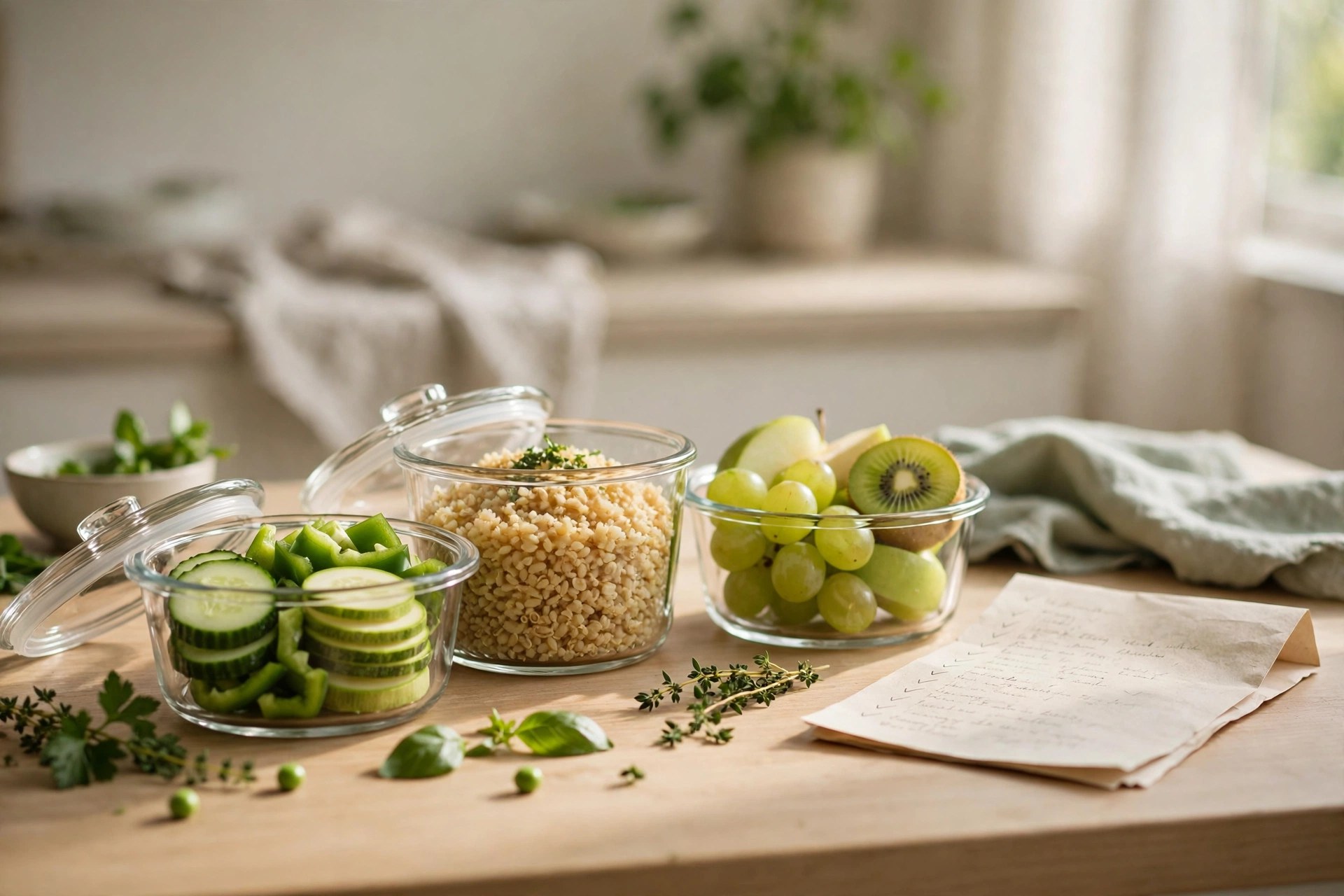
Try this for two weeks before adding anything else. Build each main meal around the plate formula. Keep one vegetable or fruit at every meal. Drink water with meals. Shop from a short standing list. Cook a double batch of grains or beans once a week so tomorrow’s lunch is already half done. That is the whole plan — and it is enough to start.
After two weeks, review what actually happened. Which meals felt easy? Which days fell apart, and why? Fix the friction — a missing staple, a dinner with no default, a snack drawer that works against you — rather than adding new rules. Simple eating stays simple when you solve the one problem that keeps tripping you up, then leave the rest alone.
Frequently asked questions
Do I need to count calories to eat healthily?
No. For most people, the plate formula and a short list of everyday habits are enough. Calorie counting can help some people for a short period, but it is not required for a balanced diet, and it makes eating feel like homework. If you have a medical reason to track intake, discuss it with a clinician or dietitian.
Are frozen and canned vegetables as good as fresh?
They are a practical, nutritious option. Frozen vegetables are usually frozen soon after harvest, and canned beans and vegetables are convenient pantry staples — rinsing canned vegetables can reduce their sodium. What matters most is eating vegetables regularly, in whatever form fits your budget and schedule.
What if I hate cooking?
Keep it minimal. A meal can be yogurt with oats and fruit, whole-grain toast with eggs and spinach, or a tin of beans warmed with frozen vegetables and rice. Simple eating favours short ingredient lists and repeatable meals, not elaborate recipes.
How quickly will I notice a difference?
Energy, digestion, and how you feel after meals may shift within a couple of weeks, but the real payoff of simple eating is long-term and gradual. Judge the plan by whether you can still follow it in three months, not by how dramatic week one feels.
Sources
- World Health Organization (WHO) — Healthy diet fact sheet
- Harvard T.H. Chan School of Public Health — Healthy Eating Plate
- U.S. Food and Drug Administration (FDA) — Daily Value on the Nutrition and Supplement Facts Labels
Disclaimer: This article is for general information only and is not medical advice. If you have a health condition, food allergy, or specific dietary needs, talk to a qualified health professional before changing your diet.