How to Make Healthy Eating Family-Friendly
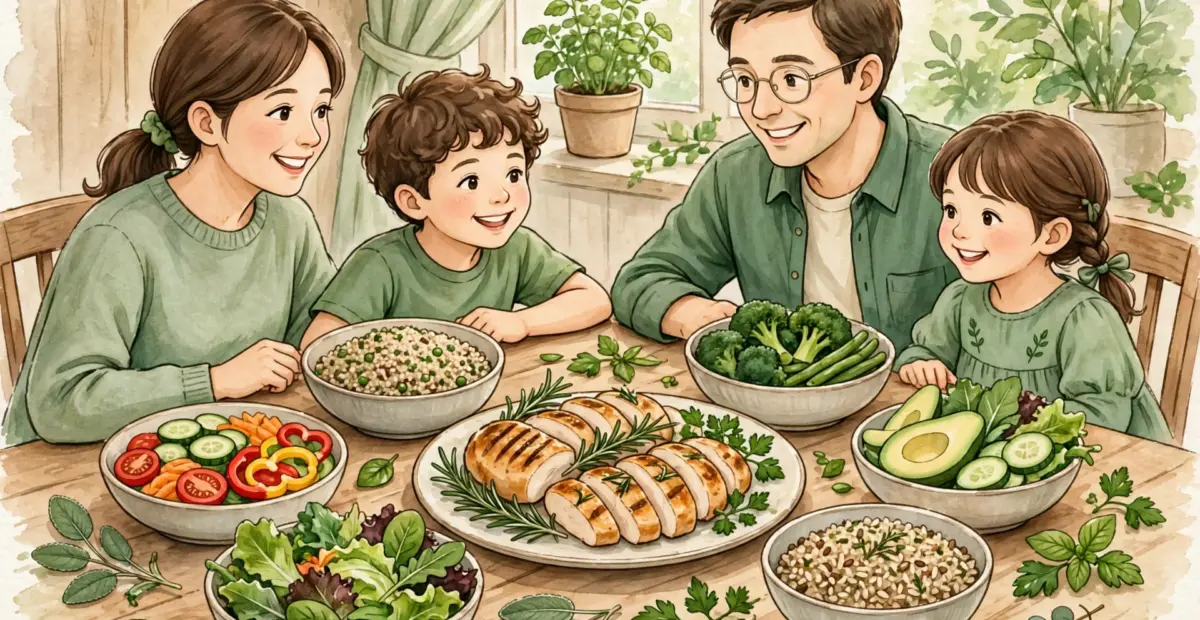
Somewhere between school pickups, work deadlines, and the nightly question of “what’s for dinner?”, healthy eating can start to feel like one more chore on an already full list. If your family has ever ended a busy day with cereal for dinner or takeout eaten straight from the box, you are not failing at this. You are living a normal family life — and that is exactly where healthy eating has to fit, not the other way around.
Making healthy eating family-friendly does not mean cooking two separate meals, banning every treat, or turning dinner into a nutrition lecture. It means building a few simple routines that make the healthier choice the easier one most of the time: one shared meal you can actually repeat, a plate that works for adults and kids without a spreadsheet, and a calmer table where new foods get a fair chance. Small, steady changes like these tend to stick far longer than a dramatic overhaul that lasts a week.
Start with one shared meal, not a perfect week
The most realistic place to begin is a single meal you eat together most days. For many families that is dinner; for others, breakfast is the only time everyone is in the same room. Pick the meal that already happens, and protect it. You do not need a candlelit, phone-free ritual every night. You need a regular slot where food is shared and nobody is eating alone over the sink.
Research gives you a reason to bother. A systematic umbrella review of family mealtime studies found that more frequent family meals are linked to better diet quality and protection against poorer diet, obesity, and related risks in children and adolescents. In an earlier meta-analysis of 17 studies, children in families sharing at least three meals a week were 12% less likely to be overweight than those sharing fewer than three, and older children in those families had 24% higher odds of eating healthy foods. These are associations, not guarantees — family meals are not magic — but the pattern is consistent: eating together more often tends to go hand in hand with eating better.
If three shared meals a week sounds ambitious, start with two. Cook one extra portion on Sunday for Monday, or agree that Tuesdays and Thursdays are sit-down nights. The goal is a rhythm your family can keep on a tired week, not a streak you abandon the first time life gets in the way.
Build one plate that works for everyone
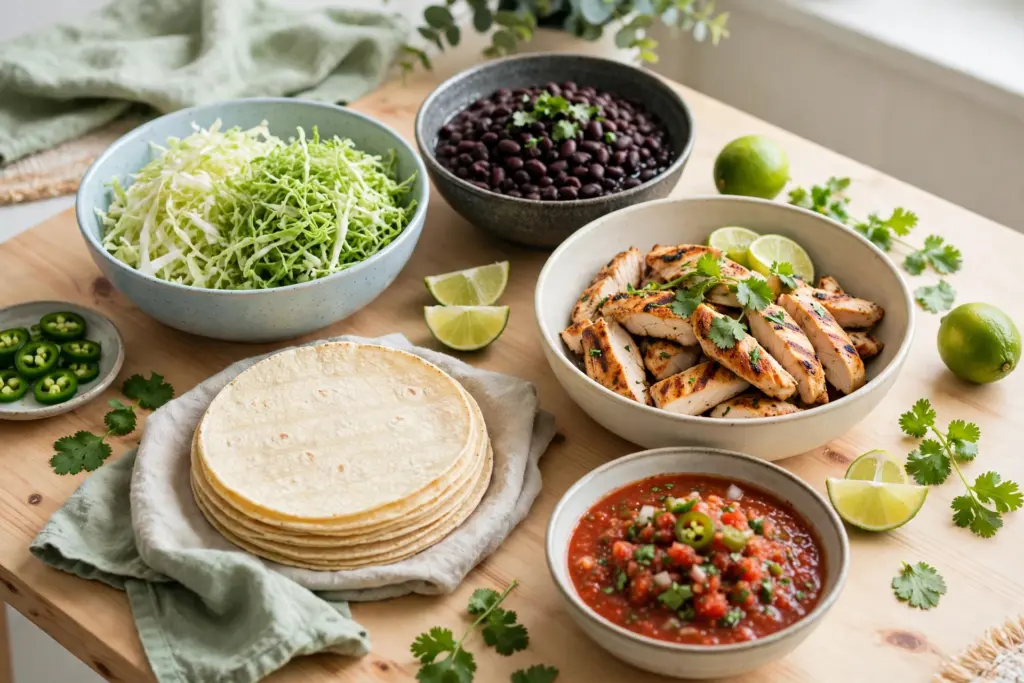
Cooking separate “kid food” and “adult food” doubles your work and teaches children that the family meal is not really for them. A better approach is one base meal with small adjustments. A taco night, for example, works for almost everyone: seasoned chicken or beans, warm tortillas, shredded cabbage, grated carrot, salsa, and yogurt or cheese on the side. Adults load up on vegetables; a cautious child can build a plain cheese-and-chicken taco and still sit at the same table eating recognizably the same dinner.
Use the classic plate method as your template: roughly half the plate vegetables and fruit, a quarter protein, and a quarter whole grains or starchy vegetables, plus a source of healthy fat such as olive oil, nuts, or avocado. The World Health Organization recommends at least 400 grams — about five portions — of fruit and vegetables a day for adults, with total fat below 30% of energy, saturated fat below 10%, free sugars below 10%, and salt below 5 grams a day. The current U.S. Dietary Guidelines for Americans (2025–2030) point in the same direction in everyday terms: three servings of vegetables and two of fruit a day, two to four servings of whole grains, three servings of dairy, and protein at every meal. You do not need to count any of this at the table. If half the plate is plants and the rest is a protein plus a whole grain, you are already close.
Read also: How to Build a Balanced Plate
For mixed ages, think in building blocks rather than exact portions. A toddler’s portion is roughly the size of their palm for protein and a small handful of vegetables; a teenager may eat close to an adult portion. Serve food family-style when you can — bowls in the middle of the table — so each person takes what suits them. It removes the negotiation over a pre-loaded plate and quietly lets children practise choosing.
Make vegetables the easy option, not the battle
Most parents do not struggle to serve vegetables once; they struggle with the tenth refusal. This is where expectations matter. Young children may need many exposures — research reviews describe roughly 8 to 15 tastes — before a new food is accepted, and the U.S. Department of Agriculture’s Nutrition Evidence Systematic Review found moderate evidence that tasting a vegetable or fruit on 8 to 10 or more days can increase acceptance in infants and toddlers. A refusal on Tuesday is not a verdict. It is exposure number three.
A few tactics make those exposures less painful:
- Pair the new with the familiar. Roasted broccoli next to a favourite pasta, or cucumber sticks with a dip your child already likes, lowers the stakes of trying.
- Change the form, not the food. A child who rejects steamed carrots may happily eat them roasted until sweet, grated into a sauce, or cut into crunchy sticks.
- Keep portions tiny. One bite is a win. A mountain of a new food on the plate invites a standoff before anyone has tasted anything.
- Stay neutral. Praise the tasting, not the clean plate, and skip the “just one more bite” negotiation. Pressure tends to make a disliked food even less appealing.
It also helps to put vegetables where hunger lives. A plate of cucumber, peppers, and cherry tomatoes on the table while dinner finishes cooking often disappears faster than the same vegetables served as a formal side dish — because children arrive at the table hungry, not because they have suddenly converted to salad.
Read also: How to Add More Vegetables to Your Meals
Let kids help — even a little
Children are far more willing to try food they helped make. That does not mean handing a six-year-old the chef’s knife. A preschooler can wash lettuce, tear herbs, or stir a pot with supervision. An older child can pick between two vegetables at the store, read a recipe step aloud, or be in charge of the salad one night a week. Ownership changes the relationship with the food before it ever reaches the plate.
The same logic applies to planning. Once a week, let each family member choose one dinner — within a loose frame you set, such as “one protein, one vegetable, one grain.” A child who picks bean tacos will defend bean tacos at the table. You keep the nutritional guardrails; they get a genuine say. Over time, this also builds the skill that matters most: not a perfect diet at age eight, but a teenager who can put together a decent meal without a delivery app.

A realistic weeknight system
Family-friendly eating stands or falls on weeknights, when time is shortest. A simple system beats a collection of impressive recipes:
- Repeat a loose template. Monday pasta with vegetables and beans, Tuesday tacos, Wednesday soup and bread, Thursday stir-fry, Friday build-your-own bowls. Templates cut decision fatigue, and repetition is what makes shopping and prep faster.
- Cook once, eat twice. Double the rice, roast an extra tray of vegetables, or cook extra chicken for tomorrow’s wraps. Leftovers are a feature, not a failure.
- Keep five emergency meals. Eggs on whole-grain toast with tomatoes, bean quesadillas, pasta with frozen vegetables and tinned tomatoes, soup from the freezer, or yogurt with fruit and oats. When the plan collapses, an emergency meal you can make in fifteen minutes beats a takeout order you did not really want.
- Stock the pantry for it. Tinned beans and tomatoes, frozen vegetables, whole grains, eggs, and a few sauces you like mean a decent dinner is almost always possible without a special trip.
Read also: How to Cook More Meals at Home
None of this requires cooking from scratch every night. Frozen vegetables count toward your daily total, tinned beans are a perfectly good protein, and a rotisserie chicken with a bagged salad is a legitimate family dinner. The healthiest meal is the one that actually gets made.
Snacks, treats, and the sugar question
Families often worry most about sugar, and the guidance is straightforward: keep free sugars — added sugars plus those in honey, syrups, and fruit juice — below 10% of daily energy, ideally below 5%, according to the WHO. In practical terms, that means water or milk as the everyday drinks, fruit rather than juice most of the time, and sweet foods as treats rather than the default after-school snack.
That does not mean a sugar-free household. Banning treats outright tends to make them more desirable, not less. A calmer approach is structure: snacks at roughly set times rather than grazing all afternoon, a fruit-and-protein pairing that actually fills a hungry child (apple slices with peanut butter, yogurt with berries), and dessert as a normal, unremarkable part of some meals rather than a reward for finishing vegetables. When a treat is neither forbidden nor a prize, it loses much of its power.
The same steady approach works for drinks. If juice is a daily habit, dilute it gradually or move it to weekends. If fizzy drinks live in the fridge, they will be drunk; if they live in the shop, they become an occasional choice. You are not policing your family — you are designing the default.
What about different needs at one table?
Most families juggle at least one wrinkle: a vegetarian teenager, a dairy-free child, a parent watching salt, or an allergy that changes everything. The one-meal approach still works if you plan for the difference at the edges rather than the centre. A vegetable and bean stew is vegan before anyone adds cheese; a stir-fry base can split into two pans, one with tofu and one with chicken; a baked potato bar lets everyone build their own version. Season at the end where possible, so a low-salt portion can be set aside before the rest is salted.
Allergies are the exception to every shortcut in this article: if a family member has a diagnosed food allergy, follow their medical advice exactly, read labels every time, and keep their safe foods genuinely separate. For everyone else, small adaptations beat parallel menus.
Keep the table calm
The atmosphere at the table shapes eating as much as the food does. Screens at dinner tend to shorten attention to food and stretch meals into background snacking; you do not need a strict ban, but a basket for phones during the meal changes the dynamic quickly. Conversation — even a simple “best and worst part of your day” round — slows everyone down and makes the meal feel like something worth sitting through.
It is also worth dropping the clean-plate rule. Children, like adults, have varying appetites from day to day, and pressuring them to finish teaches them to ignore fullness cues. Offer a balanced plate, let them decide how much of it they eat, and trust that over a week — not a single meal — the pattern evens out. If you are worried about a child’s growth, appetite, or a restricted diet, a paediatrician or registered dietitian can give advice tailored to them; this article is general information, not medical advice for your family.
Frequently asked questions
How many family meals a week should we aim for?
Research points to three or more shared meals a week as a useful target — that was the threshold linked to better eating patterns in the meta-analysis described above. But any increase helps, and two calm shared meals beat five tense ones. Start where you are and add one.
My child only eats five foods. Should I worry?
Extreme pickiness is common in early childhood and usually narrows with time and repeated low-pressure exposure. Keep offering a variety alongside safe foods, avoid turning meals into battles, and speak to a paediatrician or dietitian if your child is losing weight, eats from very few food groups, or mealtimes cause real distress.
Do I need to cook everything from scratch?
No. Frozen vegetables, tinned beans and tomatoes, pre-washed salad, and rotisserie chicken are all legitimate shortcuts. The goal is a balanced plate most days, not a from-scratch performance.
How do I handle treats at parties and grandparents’ houses?
Let them be occasional and unremarkable. One birthday party does not undo a family’s eating pattern, and making a fuss about it teaches children that those foods are special. Keep the everyday defaults steady at home and relax elsewhere.
Sources
- World Health Organization — Healthy diet
- World Health Organization — Nutrition for a healthy life
- Dallacker, M., et al. — Family Mealtimes: A Systematic Umbrella Review (Nutrients, 2023)
- USDA Nutrition Evidence Systematic Review — Repeated exposure and early food acceptance
- Dietary Guidelines for Americans, 2025–2030 — summary (American Family Physician)
Disclaimer: This article is for general information only and is not a substitute for professional medical or dietary advice. If you have concerns about your child’s growth, nutrition, or a medical condition, consult a qualified health professional.