How to Make Healthy Eating Convenient
You don’t have a motivation problem. You have a friction problem.
Most people know what healthy eating looks like: vegetables on half the plate, whole grains, lean protein, less sugar. And yet dinner still ends up being whatever is fastest. That’s not a failure of character — it’s a design flaw in the average week. When you’re tired, hungry, and the fridge is empty, the path of least resistance wins. Every single time.
The fix isn’t more discipline. It’s making the healthy choice the easy choice. Research on how Americans actually spend their time backs this up: a peer-reviewed analysis of national nutrition and time-use surveys found that US adults have steadily spent less time cooking since 1965, and the authors concluded that efforts to improve diets need to work around real time constraints, not pretend they don’t exist (Smith et al., 2013).
This guide shows you how to do exactly that — concrete systems, shortcuts, and habits that make eating well feel almost automatic.
Make Your Kitchen Do the Heavy Lifting
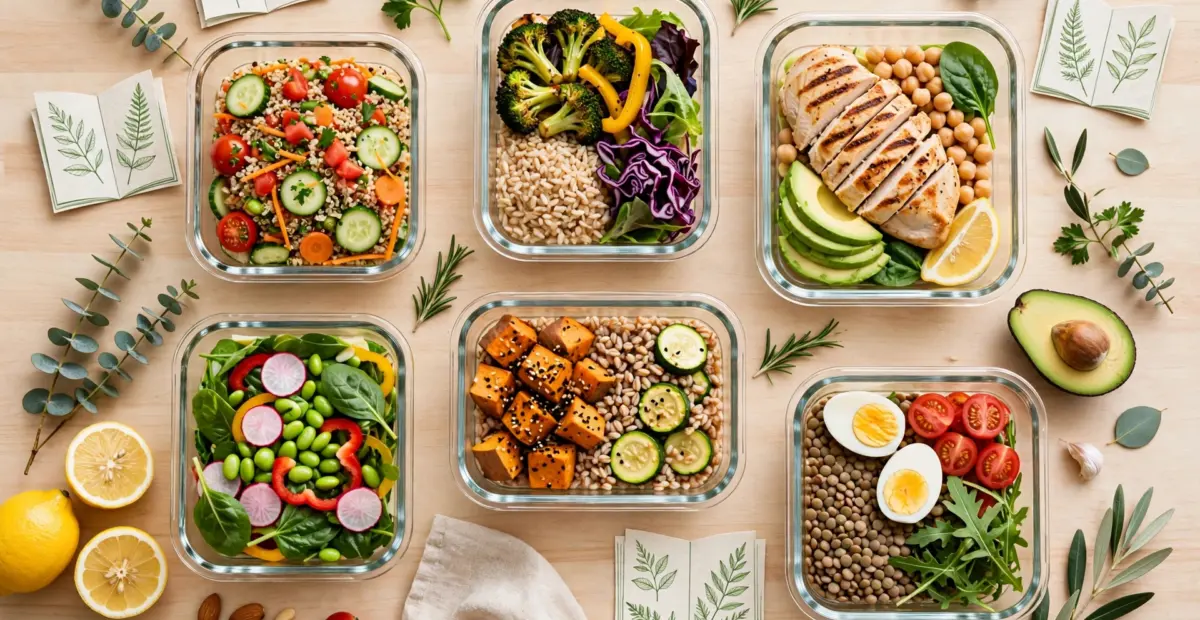
The single biggest favor you can do for your future self is a short prep session once a week. Not an elaborate ritual — just 45 minutes on a Sunday with a pot, a sheet pan, and the oven.
Cook one batch grain (brown rice, quinoa, or farro), roast two sheet pans of vegetables, and prep a protein that reheats well (grilled chicken thighs, baked tofu, or a pot of lentils). Suddenly, five lunches assemble themselves in about three minutes each. That rhythm is the whole game: you front-load the effort once, then coast on convenience all week.
Start smaller than you think you should. If 45 minutes sounds like a lot, prep just one component — a grain, or a bag of washed greens. The habit has to survive your worst week, not your best one.
Read also: How to Eat Well on a Busy Schedule
Frozen Produce: The Most Underrated Shortcut in the Aisle
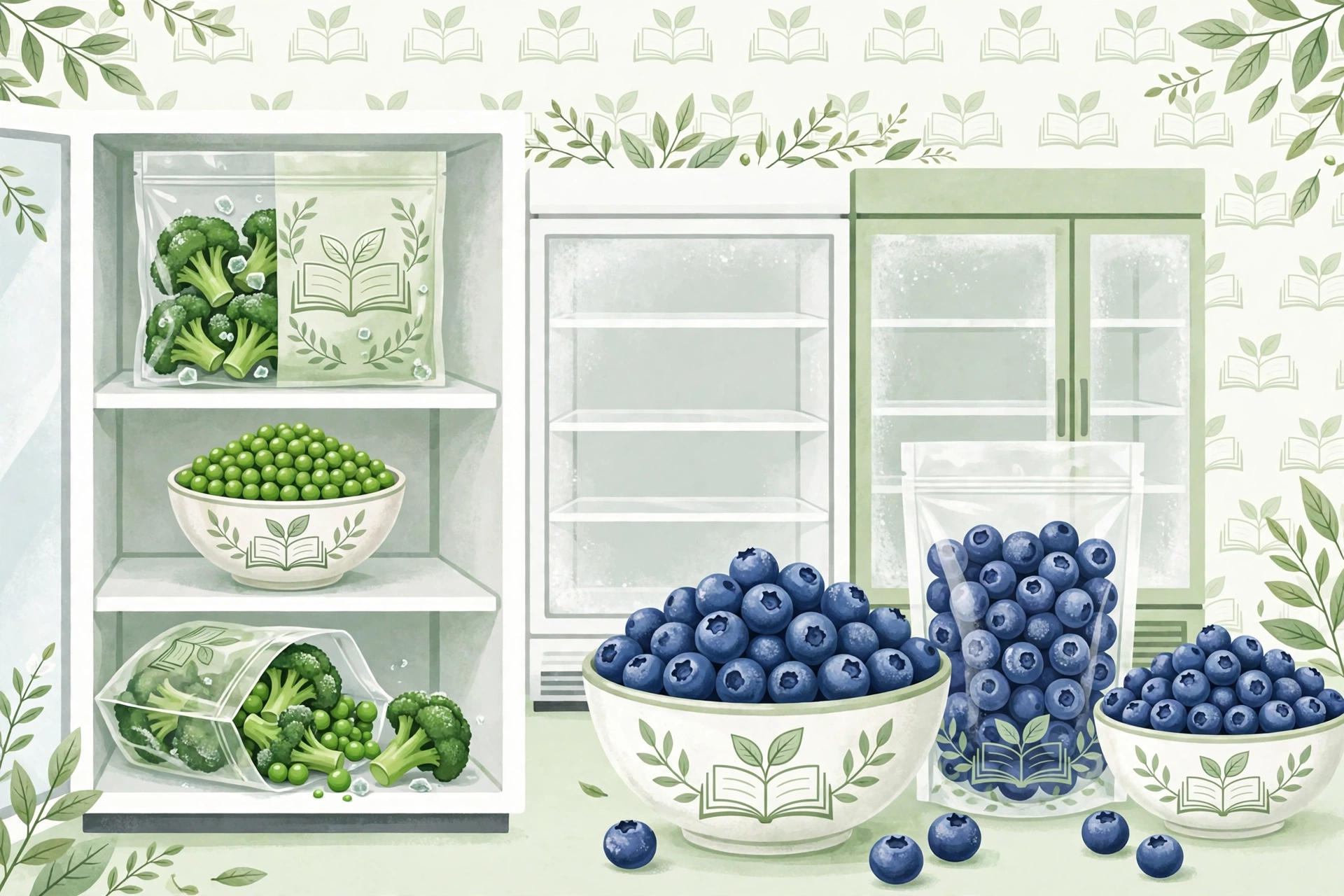
There’s a quiet myth in most kitchens: fresh vegetables are always better than frozen. The science says otherwise. Researchers at UC Davis compared eight fruits and vegetables — including corn, carrots, broccoli, spinach, peas, green beans, strawberries, and blueberries — stored either refrigerated or frozen. Their conclusion: the vitamin content of the frozen produce was comparable to, and occasionally higher than, that of its fresh counterparts (Bouzari et al., 2015).
Why? Frozen produce is typically processed within hours of harvest, right where it grows, locking in nutrients at peak ripeness. Fresh produce starts losing vitamins from the moment it’s picked — through transport, storage, and the days it sits in your fridge. For vitamin C in particular, frozen corn, green beans, and blueberries actually tested higher than the refrigerated versions.
For your purposes, the takeaway is simple: a bag of frozen broccoli is a healthy choice that requires zero washing, zero chopping, and zero guilt about the bunch wilting in your crisper drawer. Keep peas, mixed vegetables, berries, mango chunks, and spinach on hand, and “there’s nothing healthy to eat” stops being an excuse.
Stock the Pantry and Freezer for Speed
A well-stocked kitchen is a fast kitchen. You don’t need exotic ingredients — you need a short list of workhorses that turn into meals with almost no thought:
- Freezer: frozen vegetables and berries, pre-cooked brown rice or quinoa (or microwaveable pouches), frozen fish fillets, edamame
- Pantry: canned beans and lentils, canned tuna or salmon, whole-grain pasta, rolled oats, nut butter, olive oil, spices
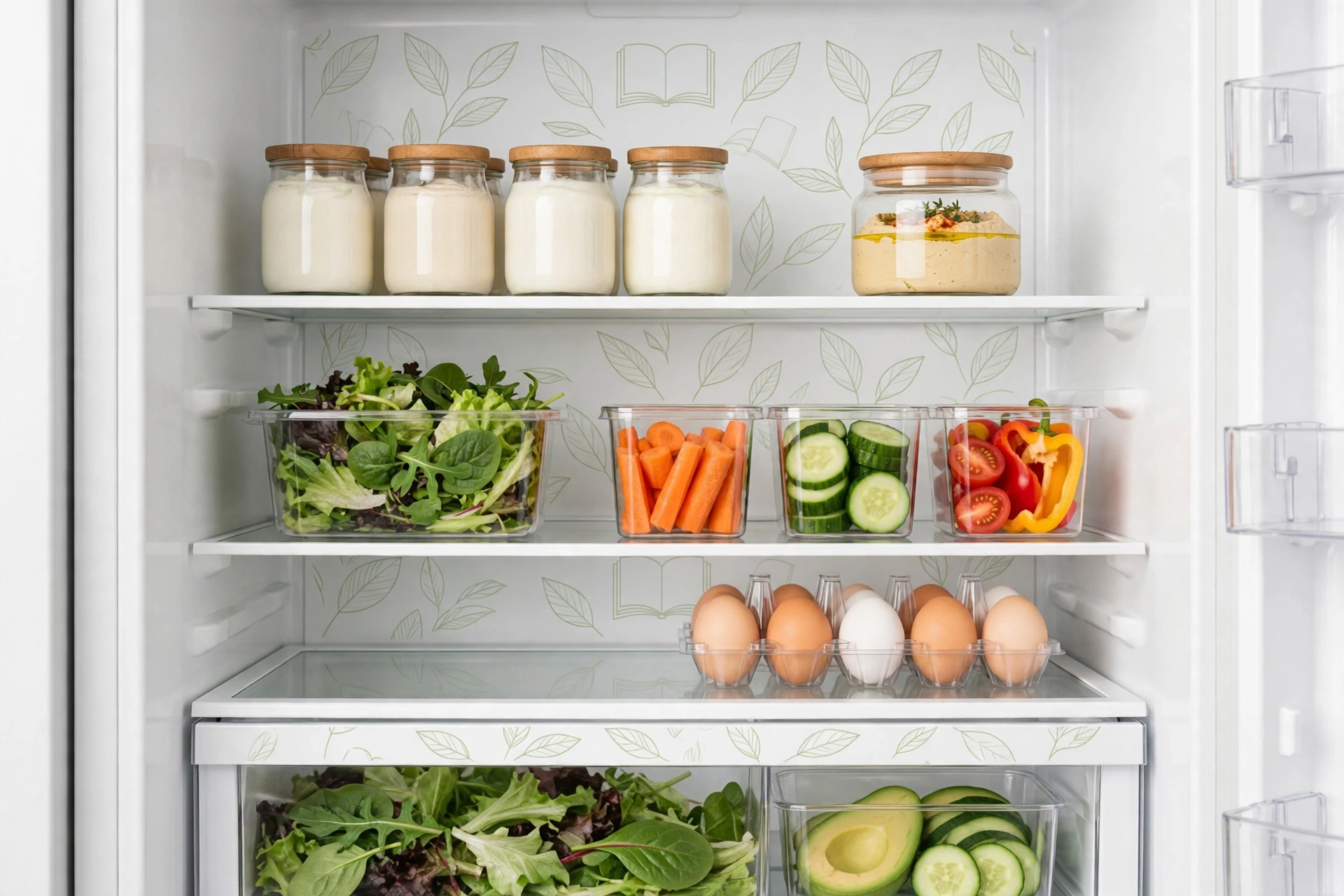
- Fridge: eggs, pre-washed greens, Greek yogurt, a versatile sauce or two (salsa, hummus, tahini dressing)
Canned beans deserve a special mention. Rinse them under water before using — it washes away a good portion of the added sodium — and they become one of the cheapest, fastest protein-and-fiber sources you own. That last point matters: in the UC Davis analysis, fiber and minerals like calcium, magnesium, zinc, copper, and iron were all well preserved in frozen produce compared to fresh.
Read also: How to Create a Healthy Grocery List
The 10-Minute Meal Formula
When a recipe takes an hour and dirty dishes, convenience loses. So stop thinking in recipes and start thinking in formulas. Nearly every balanced dinner can be built from three components:
- A protein: rotisserie chicken, canned tuna, eggs, tofu, frozen shrimp, lentils
- A vegetable: frozen stir-fry mix, pre-washed greens, roasted sweet potato, microwaved frozen broccoli
- A whole grain: brown rice pouch, whole-wheat wrap, quinoa, oatmeal for breakfast versions
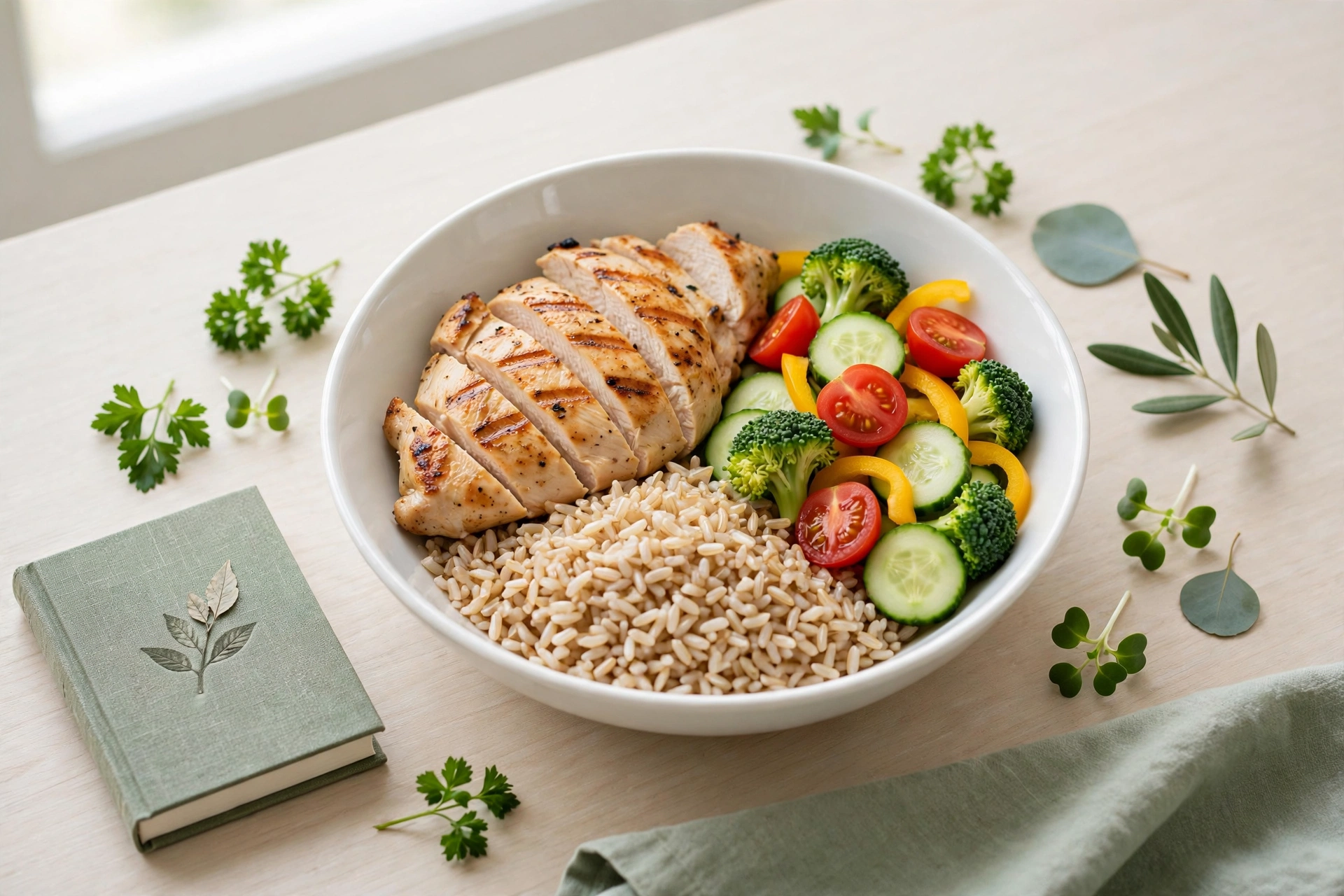
Protein + vegetable + grain, plus a sauce you like. That’s tacos, that’s grain bowls, that’s stir-fry, that’s a pasta night with the jarred marinara you’ll find in any pantry. The variety comes from mixing and matching, not from following new recipes. Most of these assemble in under ten minutes, and there’s exactly one bowl to wash.
Healthy Convenience Foods That Are Actually Worth It
Convenience foods get a bad reputation, and some of it is deserved. But a lot of what’s in the “shortcut” section of the grocery store is genuinely helpful. Here’s what’s worth buying:
- Pre-washed salad greens and slaw mixes: the difference between eating a salad and not eating one is often just the washing.
- Rotisserie chicken: one bird becomes three or four meals — shred it over salads, wrap it in tortillas, stir it into soup.
- Microwaveable whole grains: brown rice or quinoa pouches cook in 90 seconds and keep portions honest.
- Pre-cut vegetables: yes, they cost a bit more. If that’s what gets vegetables onto your plate on a Tuesday night, it’s money well spent.
- Frozen fruit: smoothies in two minutes, no peeling, no spoilage, and berries picked at peak ripeness.
Read the ingredient list on anything packaged — shorter is better, and single-ingredient bags (just peas, just blueberries) are the gold standard. Frozen produce needs no added salt or sugar to keep, which is why that short list is the norm.
Cut the Friction, Not the Nutrition
Small environment tweaks compound fast:
- Keep healthy food visible. Fruit in a bowl on the counter, cut vegetables at eye level in the fridge. What you see is what you eat.
- Keep a “good enough” list on the fridge. Five meals you can make without thinking, so a hungry evening never starts from zero.
- Embrace leftovers on purpose. Cook double at dinner and tomorrow’s lunch is done. The laziest meal prep is just cooking extra.
- Make the default order a healthy one. If you order delivery, pick your two or three go-to balanced meals in advance, so a tired Thursday doesn’t become a decision — it’s just what you get.
None of these require willpower. They just remove the steps where good intentions usually die: the chopping, the deciding, the “there’s nothing to eat” moment. Build the system once, and convenience starts working for you instead of against you.
Read also: Healthy Eating Habits for Beginners
Frequently Asked Questions
Is frozen food really as healthy as fresh?
In most cases, yes. A UC Davis study found that frozen fruits and vegetables retained vitamins as well as or better than refrigerated fresh produce across eight commodities — particularly for vitamin C and vitamin E. The main exceptions were some beta-carotene losses in peas, carrots, and spinach during frozen storage (Bouzari et al., 2015). A separate 2017 study likewise found that when a difference existed, frozen produce more often beat five-day refrigerated produce (Li et al., 2017).
What are the fastest healthy meals I can make?
The 10-minute formula covers it: a protein (eggs, canned tuna, rotisserie chicken), a vegetable (frozen stir-fry mix, pre-washed greens), and a whole grain (microwaveable rice, whole-wheat wrap), plus a sauce. Smoothies with frozen fruit and Greek yogurt are a two-minute breakfast.
How much time does meal prepping actually take?
One weekly session of about 45–60 minutes — cooking a batch grain, roasting vegetables, and prepping a protein — covers five days of lunches or quick dinners. On an average day, Americans aged 18 and over spend roughly 37 minutes on food preparation and cleanup, so batching that time once can cut the daily kitchen burden noticeably.
Isn’t eating healthy more expensive than fast food?
Not necessarily. Frozen produce, canned beans, lentils, oats, and eggs are among the cheapest foods in any store, and cooking at home is typically far less expensive per meal than takeout. The expensive version of healthy eating — the premium meal kits and juice bars — is optional, not the baseline.
Sources
- Bouzari A, Holstege D, Barrett DM. Vitamin retention in eight fruits and vegetables: a comparison of refrigerated and frozen storage. Journal of Agricultural and Food Chemistry. 2015;63(3):957–962. PubMed
- Smith LP, Ng SW, Popkin BM. Trends in US home food preparation and consumption: analysis of national nutrition surveys and time use studies from 1965–1966 to 2007–2008. Nutrition Journal. 2013;12:45. PubMed
- Li L, Pegg RB, Eitenmiller RR, Chun J-Y, Kerrihard AL. Selected nutrient analyses of fresh, fresh-stored, and frozen fruits and vegetables. Journal of Food Composition and Analysis. 2017;59:8–17.
- Frozen food fan? As sales rise, studies show frozen produce is as healthy as fresh. NPR / WUOT
- Are frozen fruits and vegetables as healthy as fresh? Health.com
Medical disclaimer: This article is for general information only and is not medical advice. Talk to your doctor or a registered dietitian before making significant changes to your diet, especially if you manage a health condition.