Your Gut Microbiome: What It Does and How to Feed It
Trillions of microbes ferment what you cannot digest. Diversity, not any single strain, is the outcome worth aiming for.
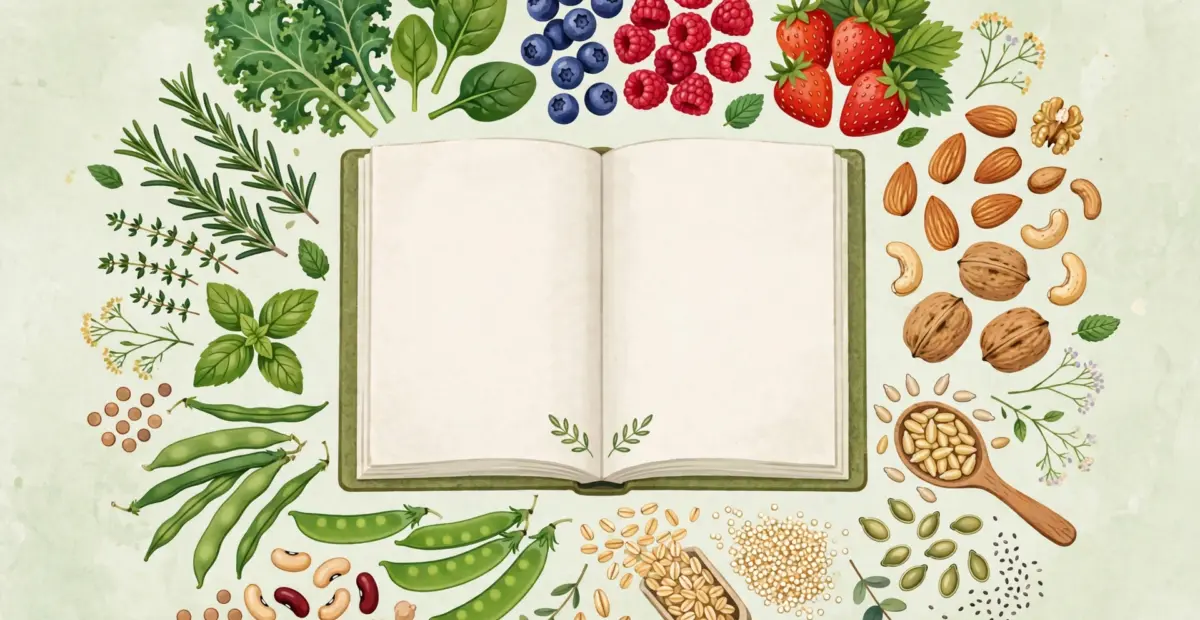
Your gut is home to trillions of microbes, mostly bacteria, living mainly in your large intestine. Together they are called the gut microbiome, and they do far more than help you digest dinner. They ferment fibre you cannot digest, make vitamins, train your immune system, and send signals along the gut-brain axis. What you eat every day shapes which ones thrive, and feeding them well does not require a special diet, an expensive supplement, or a test kit.
What lives in your gut, and what does it actually do?
Think of your microbiome less like a single organ and more like a garden. Hundreds of species live there, each with its own preferences: some break down resistant starch, others ferment soluble fibre, and still others turn plant compounds called polyphenols into forms your body can use. When the garden is varied, it tends to be more resilient.
Microbes also do jobs you would otherwise miss: they help produce some B vitamins and vitamin K, crowd out harmful bacteria, and support the mucus layer and tight junctions that keep your gut lining sealed. No single species is simply “good” or “bad” on its own; context matters, which is why researchers keep coming back to diversity and balance rather than a hero strain.
Why diversity matters more than any single strain
Higher microbial diversity is consistently associated with better metabolic markers in observational studies, while low diversity shows up more often alongside obesity, type 2 diabetes, and inflammatory conditions. Association is not proof of cause, and a diverse microbiome does not guarantee good health. Still, the pattern is steady enough that diversity has become the most useful shorthand for a healthy gut community.
The clearest everyday illustration comes from the American Gut Project, a large citizen-science study. Participants who ate more than 30 different plant types per week had more diverse gut microbiomes than those who ate 10 or fewer plant types per week. The comparison groups were small, 41 people and 44 people, so treat 30 as a helpful variety goal, not a medical cutoff. The same study found that the 30-plus group also carried fewer antibiotic-resistance genes in their gut microbes. American Gut Project findings are a useful starting point, not a prescription.
What counts toward that 30? Vegetables, fruit, beans and lentils, whole grains, nuts, seeds, herbs, and spices all count. A pinch of cumin in a stew, a handful of mixed nuts, or a different herb on your eggs each adds a point, which is why variety is easier than it first sounds. You do not need 30 salads. You need a wider rotation across the week.
How your microbes feed you back: short-chain fatty acids
When gut bacteria ferment dietary fibre, they produce short-chain fatty acids, mainly acetate, propionate, and butyrate. Butyrate is the standout for your colon: it provides a large share of the energy used by the cells lining your colon and helps maintain the gut barrier. Reviews of butyrate describe its role in supporting barrier integrity, calming inflammation in the gut lining, and helping immune cells stay balanced. Butyrate’s role in gut and immune function is well described in the literature, though much of the detailed mechanism work comes from laboratory and animal studies, so human claims should stay modest.
That is the trade at the heart of gut health: you feed microbes fibre you cannot use, and they make compounds that help feed and protect your gut lining. A low-fibre diet starves that trade, and different fibres feed different microbes, which is why variety beats a single supplement.
Feeding the community: start with fibre, then add variety
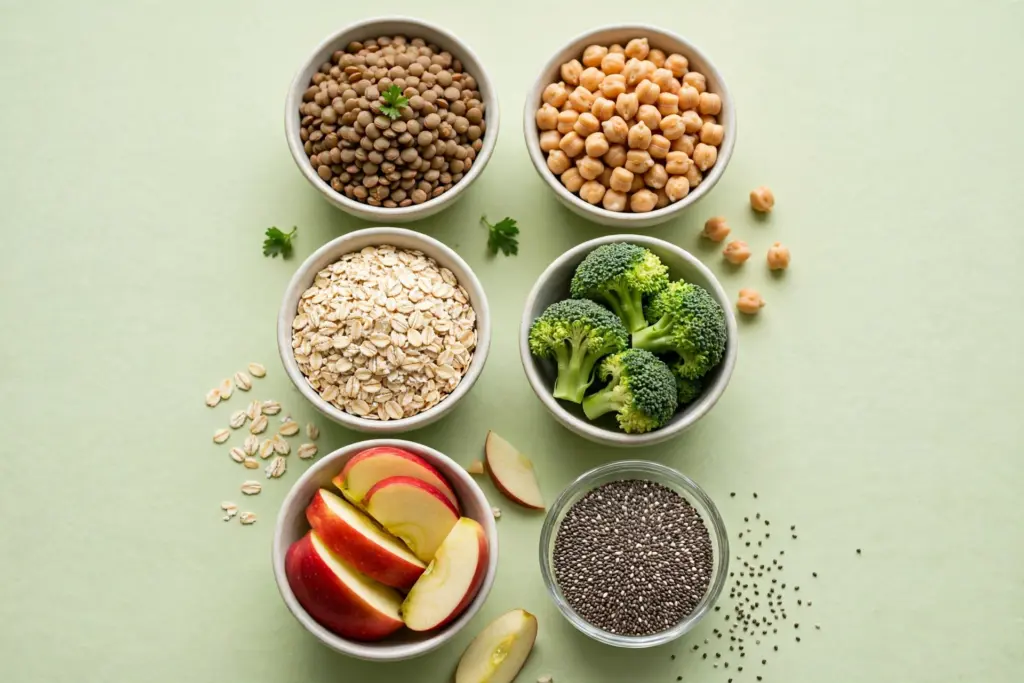
The World Health Organization recommends that everyone older than 10 aim for at least 400 grams of fruit and vegetables per day and at least 25 grams of naturally occurring dietary fibre from foods. WHO’s healthy diet guidance sets those as minimums, not ideals, and many people fall short of both. A practical way to close the gap is to anchor each meal with a plant food and add one new plant a day: a different bean in your soup, a new grain at lunch, a seed you have not tried before.
If your current fibre intake is low, build up slowly. Jumping from very little fibre to a large amount in one weekend is a reliable way to earn bloating and gas, because your microbes need time to adjust and fibre needs water to do its job. Add a serving or two a day and give it a week or two before adding more.
A simple weekly pattern is enough. Anchor breakfast, lunch, and dinner with a plant food, then add one new plant a day.
Read also: Fiber 101: Soluble vs Insoluble and Why Both Matter

Fermented foods: genuinely useful, honestly modest
Fermented foods such as plain yogurt, kefir, kimchi, sauerkraut, and kombucha contain live microbes and the compounds those microbes make during fermentation. In a small Stanford trial, 36 healthy adults were assigned for 10 weeks to either a high-fermented-food diet or a high-fibre diet. The fermented-food group, eating up to about six servings a day, saw gut microbiome diversity rise and 19 of 93 measured inflammatory markers fall, while the high-fibre group’s diversity stayed roughly stable even as its microbes gained fibre-digesting tools. That is a promising result from a small, short trial, not proof that fermented foods treat disease or that fibre failed.
What fermented foods can reasonably offer is regular, low-dose exposure to diverse microbes, plus foods that are often nutritious in their own right. Most food microbes pass through within days, which is why regularity matters more than a single large serving. Choose refrigerated, live-culture products when you want live microbes, watch the salt in brined vegetables and the sugar in sweetened kombucha, and start with a small serving if they are new to you.
Read also: Fermented Foods: Kefir, Kimchi and Sauerkraut Explained
Probiotics: realistic expectations, strain by strain
Probiotics are live microbes sold as supplements or added to foods, and the honest summary is that their effects are strain-specific and condition-specific. A Cochrane review of probiotics during antibiotic treatment found that probiotics may result in a large reduction in antibiotic-associated diarrhoea and a small reduction in Clostridioides difficile diarrhoea, with the strongest support for specific strains such as Lactobacillus rhamnosus GG and Saccharomyces boulardii at adequate doses. Cochrane review of probiotics for preventing C. difficile diarrhoea underlines why the strain on the label matters more than the word “probiotic” on the front of the pack.
For general gut health in healthy people, the evidence is much thinner. Most commercial strains pass through without colonising, and benefits seen in one trial do not transfer to a different strain, dose, or condition. If you are considering a probiotic for a specific issue, ask a clinician or pharmacist which strain and dose has evidence for it. Food first is a reasonable default.
What harms the microbiome
Some disruptions are unavoidable, and that is worth saying plainly. Antibiotics save lives, and when you need them, you should take them as prescribed. The American Gut Project found that participants who had taken antibiotics in the past month had less diverse microbiomes than those who had not taken them in the past year, but diversity typically recovers over weeks to months, especially with a varied diet afterwards. Do not skip prescribed antibiotics to protect your microbes.
The avoidable harms are the familiar ones, and they compound. A very low-fibre diet over long periods starves fermenting bacteria, while smoking, heavy alcohol use, chronic sleep deprivation, and ongoing stress are all linked to less diverse, less stable gut communities. Be sceptical of “reset” or “cleanse” products: aggressive cleanses and extreme restriction can reduce diversity and irritate your gut lining.
A simple week of gut-friendly eating
You do not need a separate gut-health meal plan. Add one plant food to each meal you already eat, include a fermented food a few times a week in a portion you enjoy, and keep a loose count of different plants across the week, trying to beat last week’s number by two or three. Drink water steadily through the day so fibre can do its work, and give yourself three to four weeks to build up if you eat mostly processed, low-fibre foods now.
Read also: How Much Water Should You Really Drink?
When to get checked instead of self-managing
Most gut grumbles settle with diet, sleep, and time. See a clinician promptly for blood in your stool, black stools, unintentional weight loss, persistent vomiting, severe abdominal pain, or a change in bowel habits lasting more than a few weeks. Microbiome tests sold directly to consumers can describe which microbes were in a sample, but they cannot diagnose disease.
Frequently asked questions
Do I need to eat 30 different plants every week?
No. Thirty is a variety goal drawn from an observational study, not a requirement. People eating more than 30 plant types a week had more diverse microbiomes than people eating 10 or fewer, but the benefit is a gradient: moving from 10 to 15 or 20 different plants is still progress.
Are fermented foods better than fibre for gut health?
They do different jobs, and the Stanford trial that compared them was small and short. Fermented foods were linked to rising diversity over 10 weeks, while the high-fibre diet changed microbial function without raising diversity in that window. A sensible approach is both: plenty of fibre as the foundation, plus fermented foods a few times a week if you enjoy them.
Will a probiotic permanently change my microbiome?
Usually not. Most probiotic strains pass through within days and do not colonise long term. That is why any benefit tends to last only while you take them, and why strain, dose, and the specific condition matter far more than a general “gut health” label.
How long does it take for diet changes to affect the microbiome?
Microbial composition can shift within days of a diet change, but stable, meaningful change takes weeks, and diversity gains from fermented foods in trials built up over about 10 weeks. Think in months for habits, not days for miracles, and judge progress by how you feel and eat, not by a single test result.
Disclaimer: This article is for general information only and is not medical advice. If you have a digestive condition, take regular medication, are pregnant, or are immunocompromised, talk to a clinician before changing your diet or starting a probiotic supplement.
Sources
- World Health Organization — Healthy diet fact sheet
- American Gut Project — plant diversity findings (McDonald et al., 2018)
- Butyrate and gut health — narrative review
- Fermented foods and the gut microbiome — review (Wastyk et al., 2021)
- Cochrane review — Probiotics and C. difficile diarrhoea prevention