How to Build a Better Breakfast
You probably have a breakfast story. Maybe it’s toast eaten over the sink while answering emails, or a pastry grabbed between the parking lot and your desk, or nothing at all until the 11 a.m. vending-machine run. None of that is a moral failing — it’s just life moving faster than your morning. But breakfast is the one meal where small upgrades pay you back all day, and the bar for “better” is lower than you think.
This isn’t about five-ingredient green smoothies or eating at exactly 7 a.m. A better breakfast is one built from real foods you actually like, in a combination that keeps you fueled until lunch. Here’s what the research supports, plus practical formulas you can use tomorrow.
Why the morning meal still deserves your attention
People who eat breakfast regularly tend to have healthier daily eating patterns — not because the meal has magic, but because it sets the tone. A meta-analysis of prospective studies covering more than 2.3 million people found that skipping breakfast was associated with about 17% higher cardiovascular disease risk compared with regular breakfast consumption (published in Frontiers in Cardiovascular Medicine, 2025). Earlier, a Harvard cohort study of nearly 27,000 men followed for 16 years linked skipping breakfast to a 27% greater risk of coronary heart disease.
These are observational associations, not proof that skipping breakfast causes heart disease — breakfast skippers also tend to have other habits that raise risk. But the pattern is consistent enough across studies to take seriously: a thought-out morning meal correlates with better long-term outcomes. And in the short term, the effect is immediate and personal — a protein- and fiber-rich breakfast reliably beats a sugar spike when it comes to staying focused and not raiding the pantry by 10:30.
The better-breakfast formula: protein + fiber + fat + color
Forget rigid rules. Almost any solid breakfast can be built from four parts:
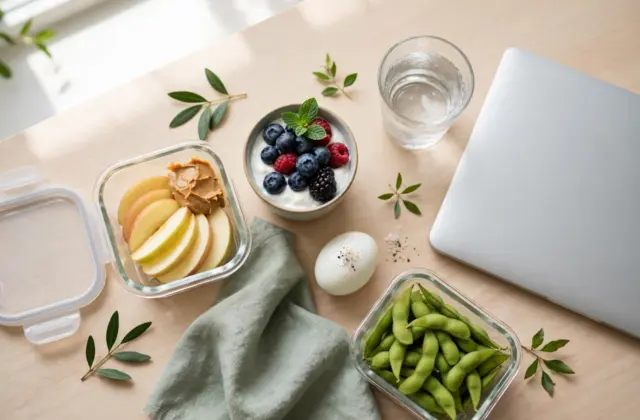
- Protein (eggs, Greek yogurt, cottage cheese, tofu, nut butter, smoked fish). Protein is the most satiating macronutrient, so this is the part that keeps you full.
- Fiber (oats, whole-grain bread, fruit, vegetables, chia or flaxseed). The FDA’s Daily Value for fiber is 28 grams a day on a 2,000-calorie diet, and most people land well below it. Breakfast is an easy place to close the gap.
- Healthy fat (a small handful of nuts, avocado, olive oil, nut butter). A little fat slows digestion and carries flavor.
- Something colorful (berries, a banana, tomatoes, spinach, peppers). Plants bring vitamins, minerals, and the polyphenols researchers keep getting excited about.
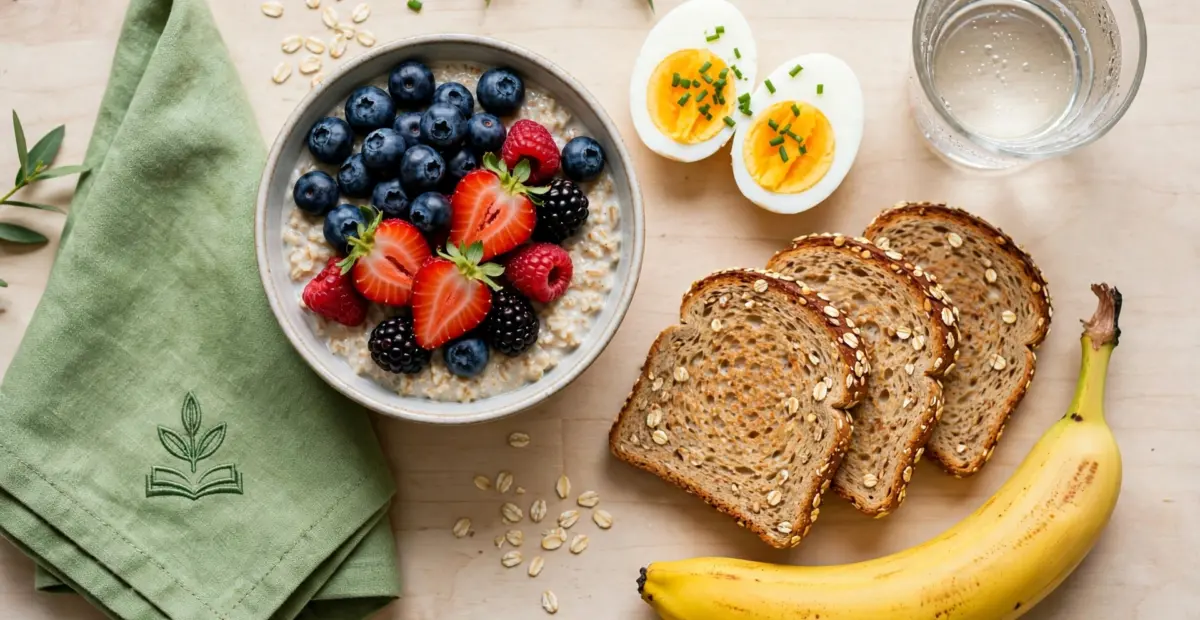
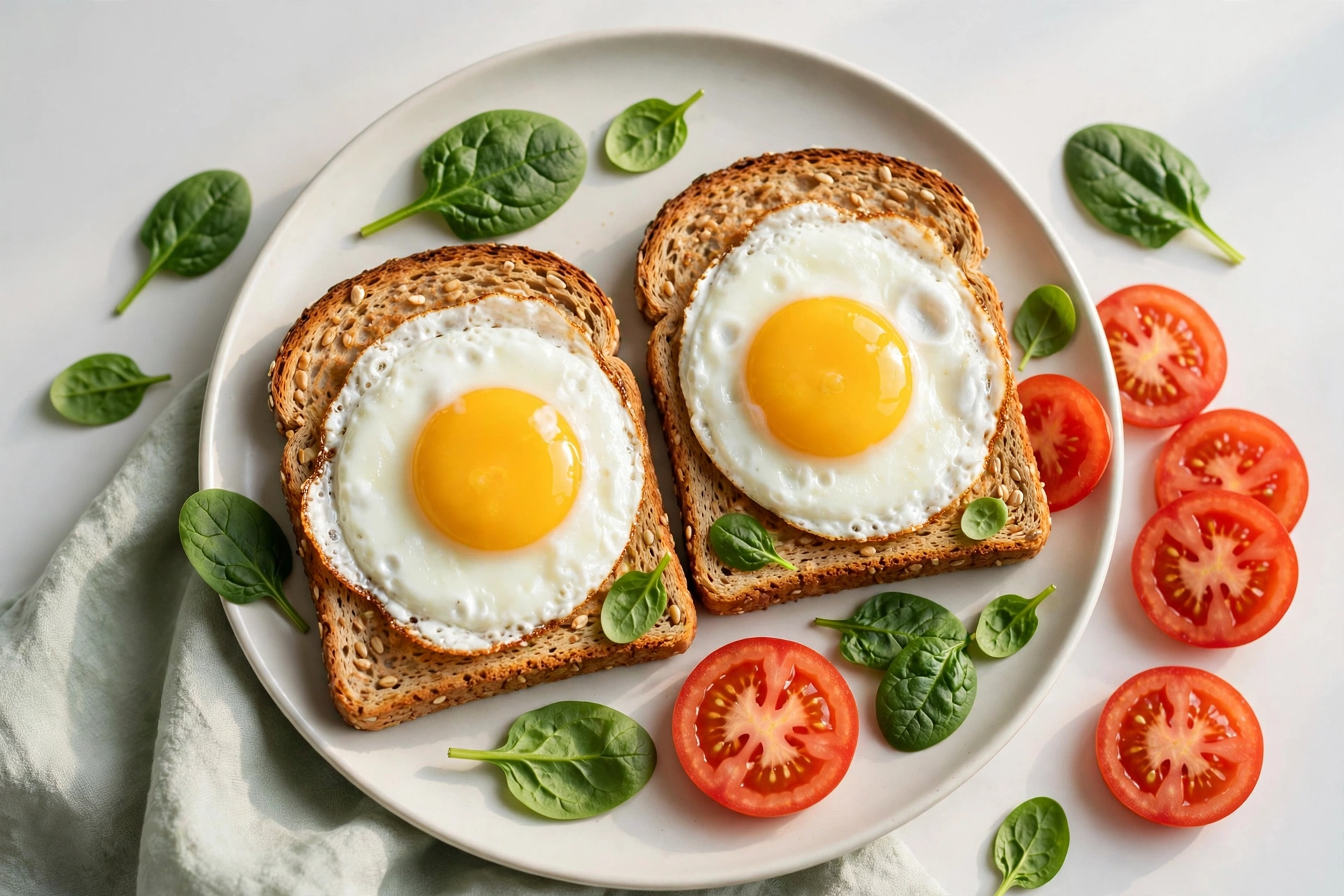
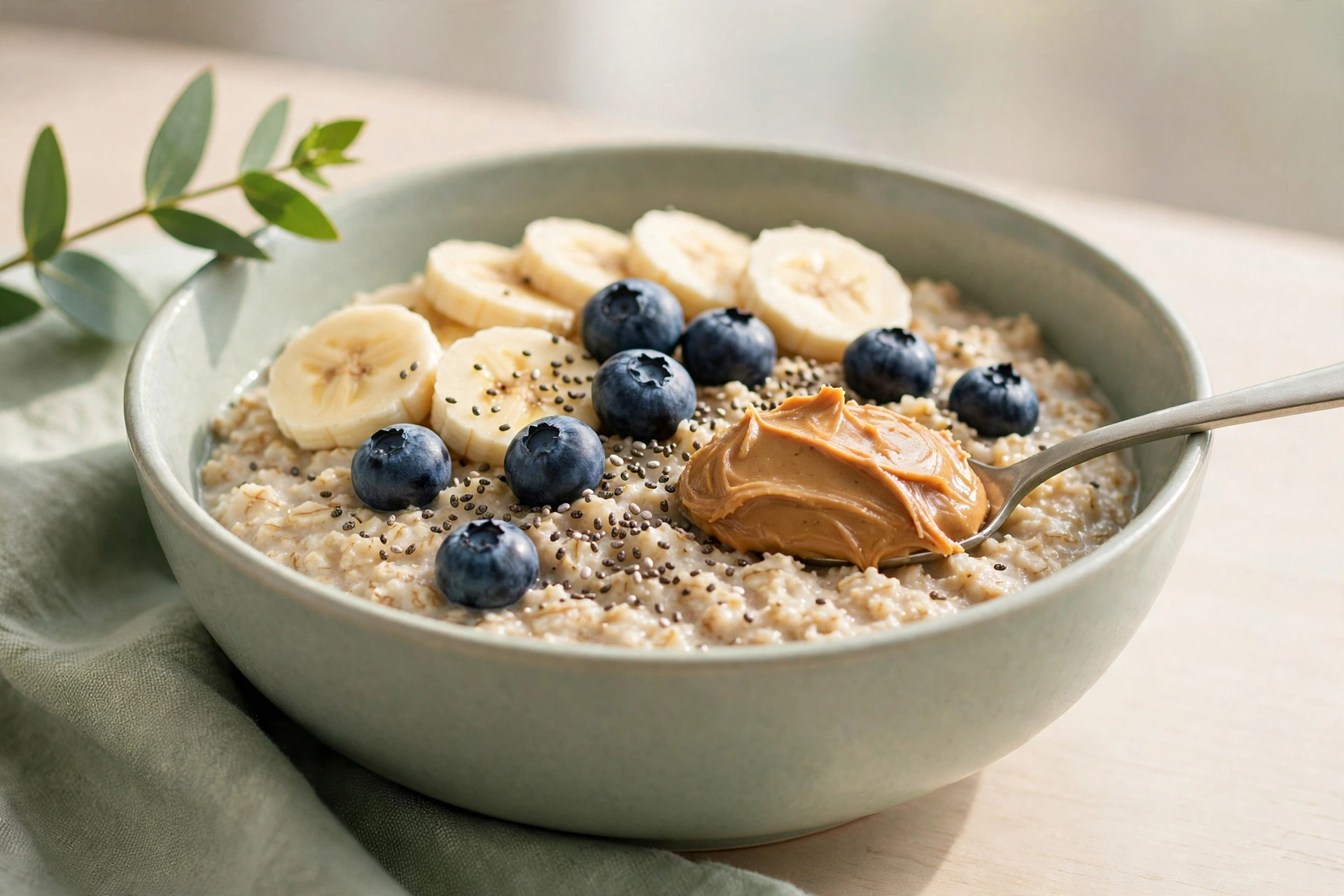
A bowl of oatmeal with peanut butter and banana hits all four. So does whole-grain toast with eggs and a tomato on the side. The classic plate method — roughly half vegetables and fruit, a quarter protein, a quarter whole grains — works at breakfast just as well as at dinner.
Protein without the fuss
You don’t need a protein shake at dawn. Two eggs give you about 12 grams of high-quality protein, and current guidance is reassuring: a 2020 American Heart Association science advisory concluded that healthy individuals can include up to one whole egg a day as part of a heart-healthy diet. (If you have high cholesterol, diabetes, or elevated heart disease risk, the advisory suggests being more mindful and talking with your clinician about your intake.)
Not an egg person? A cup of plain Greek yogurt delivers roughly double that protein. A palm-sized portion of nuts, a few tablespoons of peanut butter, or a slice of smoked salmon on toast all count. The trick is simply to have one protein source on the plate instead of building breakfast from refined carbs alone.
Close the fiber gap before noon
Fiber is the nutrient most breakfasts miss — and one of the easiest to fix. A bowl of oatmeal, a slice or two of true whole-grain bread, a piece of fruit with the skin on, a tablespoon of chia seeds stirred into yogurt: each of these moves the needle meaningfully toward that 28-gram daily target.
Oats are worth a special mention. They’re rich in beta-glucan, a soluble fiber that research links to better cholesterol management as part of an overall healthy diet. A 40-gram serving of dry oats (a standard bowl) carries about 4 grams of fiber, so oatmeal plus berries plus a spoonful of flaxseed can easily deliver a third of your day’s fiber in one sitting.
And read the fine print on “whole grain.” In many countries the label rules are loose; look for “whole wheat” or “whole oat” as the first ingredient rather than trusting the packaging’s sunny imagery. A truly whole-grain bread has a coarser crumb and keeps you fuller longer than its white lookalike.
Read also: Healthy Overnight Oats Combinations
Watch the sugar — it’s hiding in the “healthy” options
The biggest upgrade most people can make is spotting added sugar in things marketed as wholesome. Flavored yogurt can carry 15–20 grams of added sugar per cup. Granola and many “healthy” cereals are essentially cookies in disguise. A glazed muffin can match a candy bar.
The American Heart Association recommends keeping added sugars under 25 grams a day for most women and 36 grams for most men (about 6 and 9 teaspoons). A single sweetened flavored yogurt can nearly use up a woman’s whole day’s budget before lunch. The naturally occurring sugars in fruit and plain dairy don’t count toward that limit — it’s the added sugars on the label to watch.
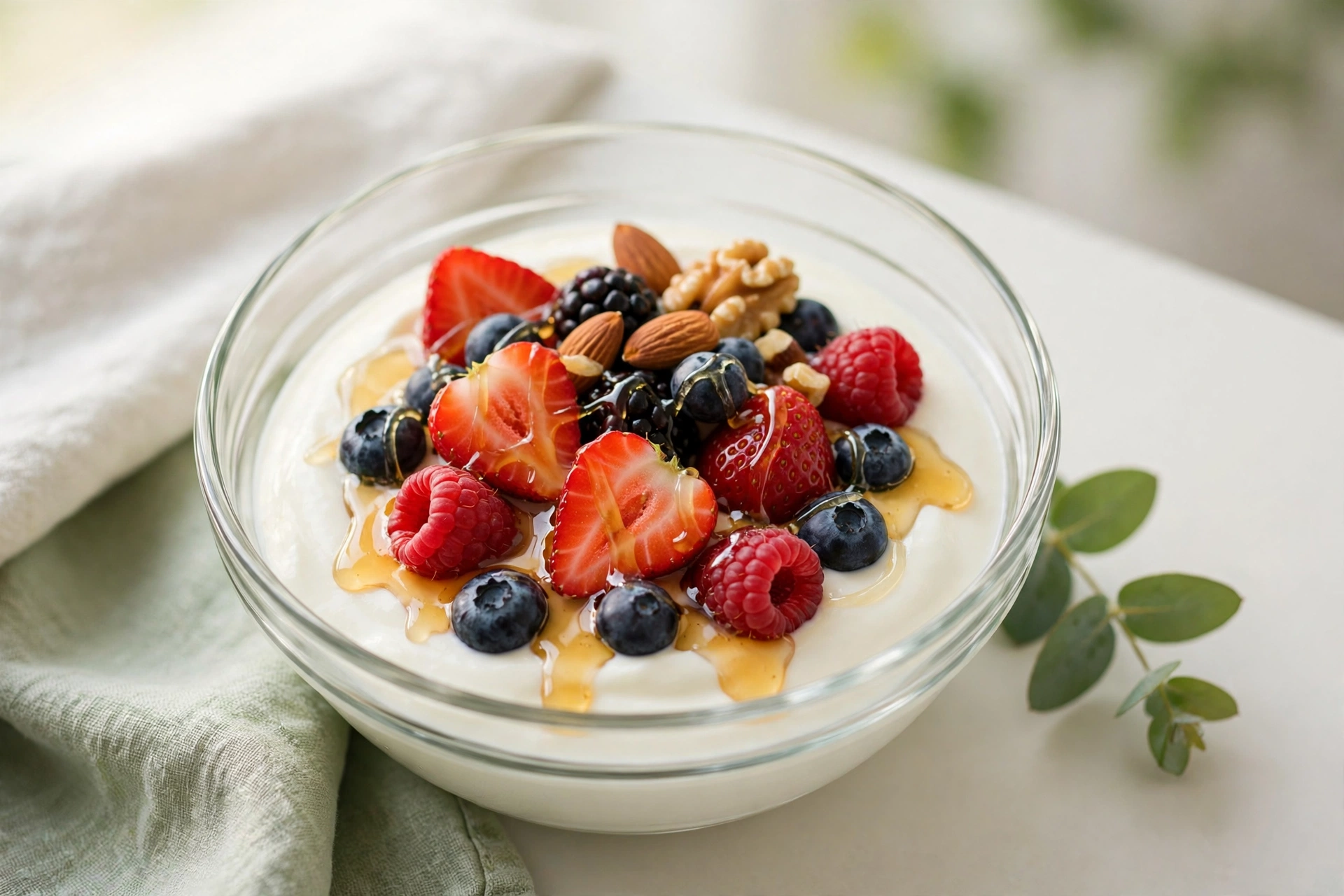
Simple swaps: buy plain yogurt and sweeten it yourself with fruit (you’ll use far less). Choose cereal with single-digit sugar grams per serving. Keep honey and jam as condiments, not foundations.
Five breakfasts you can make in under 10 minutes
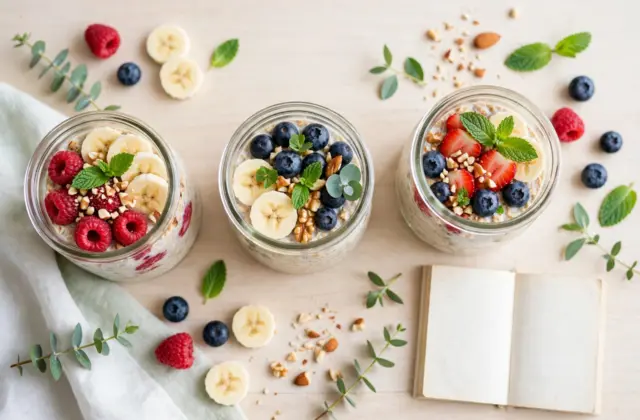
- The overnight oats: Half a cup of rolled oats, milk or soy milk to cover, a spoonful of chia seeds, and a handful of berries. Assemble the night before; eat cold.
- The egg toast: Two eggs, scrambled or fried in a teaspoon of olive oil, on whole-grain toast with sliced tomato or a handful of spinach.
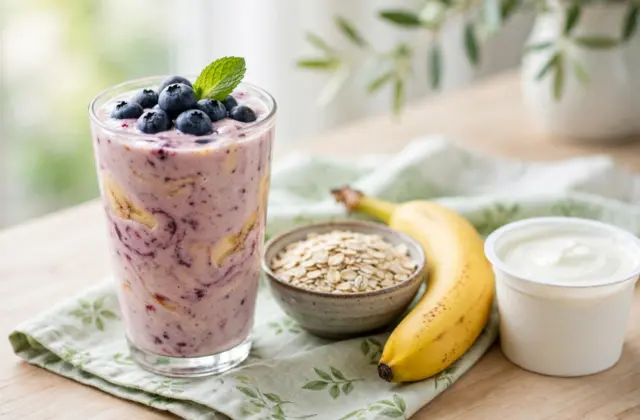
- The yogurt bowl: Plain Greek yogurt, a sliced banana or frozen berries, a tablespoon of peanut butter, a sprinkle of oats or granola.
- The savory wrap: A whole-wheat tortilla with scrambled tofu or eggs, black beans, salsa, and avocado.
- The 3-minute upgrade: Your usual toast — but with peanut butter instead of jam, and an apple on the side. Not perfect. Noticeably better.
Make it stick: habits beat intentions
A better breakfast fails most often on logistics, not knowledge. Three tricks that actually work:
- Prep one thing. Overnight oats, a batch of hard-boiled eggs, or pre-portioned smoothie bags remove the morning decision entirely.
- Keep a “minimum viable breakfast.” For chaotic mornings, define yours in advance — peanut butter on whole-grain toast, a banana, done. Anything above that is a bonus.
- Eat within a couple of hours of waking. You don’t need to eat the moment you open your eyes, but regularly pushing food until noon is where the research starts to frown.
Start with one change this week — add protein, swap the sugary yogurt, or just commit to sitting down for five minutes instead of eating over the sink. Breakfast doesn’t have to be perfect. It just has to be a little better than yesterday.
Frequently asked questions
Is skipping breakfast bad for you?
Observational research links habitual breakfast skipping with higher cardiovascular and metabolic risk — a 2025 meta-analysis of prospective studies found about 17% higher CVD risk among skippers. But these studies can’t prove cause and effect, and some people do fine eating later. If you skip breakfast, make sure your first meal is a balanced one, and pay attention to whether you overeat or feel sluggish later.
Are eggs okay to eat every day?
For generally healthy people, yes — the American Heart Association’s 2020 science advisory supports up to one whole egg per day within a heart-healthy dietary pattern. If you have high LDL cholesterol, diabetes, or elevated cardiovascular risk, check with your clinician, since the advisory advises extra caution for those groups.
What’s the healthiest quick breakfast?
A bowl of oatmeal with nuts and fruit, or eggs on whole-grain toast with a side of vegetables. Both deliver protein, fiber, and healthy fat in under 10 minutes. The “best” breakfast is the nutritious one you’ll actually eat repeatedly.
Is fruit juice a good breakfast drink?
Whole fruit beats juice every time. Juice strips away the fiber and concentrates the sugars, so it behaves more like a sweetened drink than a serving of fruit. If you love juice, keep it to a small glass and count it as your fruit, not as a free extra.
Sources
- American Heart Association — added sugars: what they are and how to reduce them (Harvard Health summary of AHA and Dietary Guidelines recommendations)
- U.S. Food and Drug Administration — Nutrition Facts label: Daily Value for dietary fiber is 28 g/day
- Carson et al., American Heart Association science advisory — dietary cholesterol and cardiovascular risk (summary; advisory published in Circulation)
- Frontiers in Cardiovascular Medicine, 2025 — meta-analysis: skipping breakfast and cardiovascular disease risk
- U.S. National Library of Medicine — meta-analysis: breakfast skipping and all-cause, CVD, and cancer mortality
Medical disclaimer: This article is for general information only and isn’t medical advice. If you have diabetes, heart disease, kidney disease, or other health conditions — or take medications affected by diet — talk with your clinician or a registered dietitian before changing your eating patterns.