How to Read Food Labels
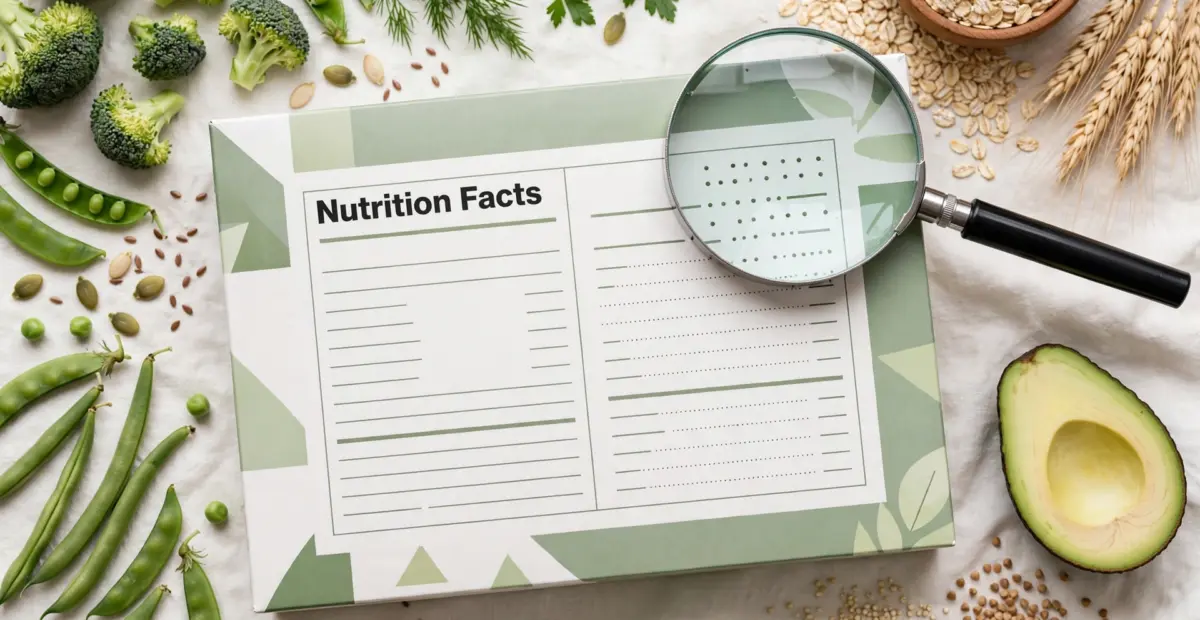
You are standing in the cereal aisle, holding two boxes that both promise to be the healthier choice. The boxes look nearly identical. The prices are close. The difference between them — real, checkable, and sitting right in your hand — is the panel on the side: the Nutrition Facts label.
Every packaged food sold in the United States carries one, and the rules behind it are written by the U.S. Food and Drug Administration. Learning to read it takes about five minutes and it quietly changes the way you shop. Here is exactly how to do it, step by step.
Step 1: Start with the serving size — it multiplies everything
The first thing on the label is the serving size, and it is the single most important number on the panel. Every calorie figure and every nutrient amount below it describes one serving, not the whole package.
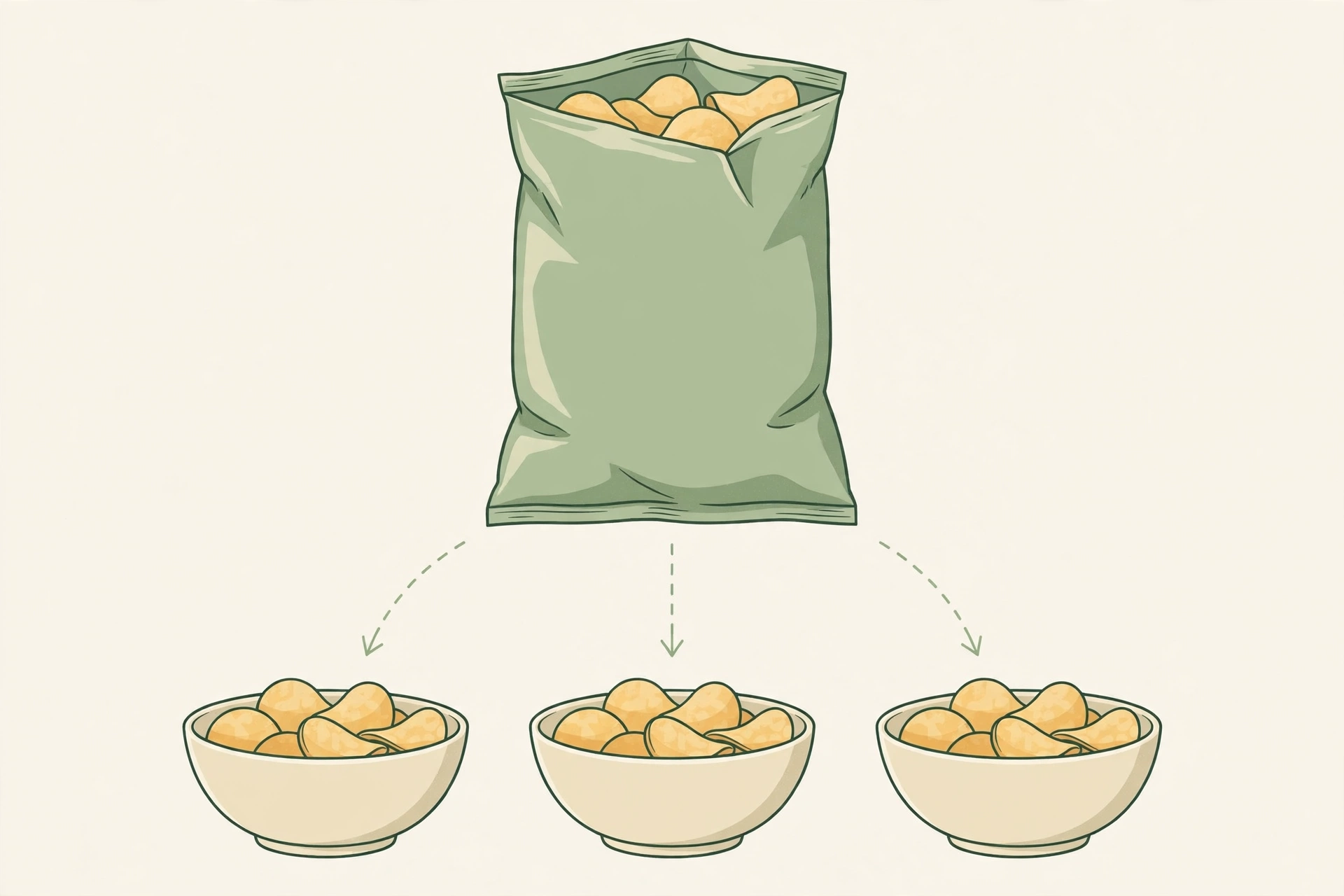
The FDA defines serving size as the amount of a food people typically eat at one time — it is not a recommendation for how much you should eat. A bag of chips might list three servings. If you finish the bag on the couch, you ate three servings, and you need to multiply every number on the label by three to know what you actually got.
That one habit — asking “how many servings am I actually eating?” — fixes the most common label mistake. Two products also can only be compared when their serving sizes match. A soup can look much lower in sodium than the next one simply because its label uses a smaller serving. Check both the household measure (cups, pieces) and the gram amount before you compare anything.
Step 2: Check the calories — and what they assume
Calories are listed in a large, bold font right below the serving information. They tell you the energy in one serving.
The note at the bottom of the label — “2,000 calories a day is used for general nutrition advice” — is exactly that: a general reference, not your personal target. Your own needs may be higher or lower depending on your age, size, activity, and health. The practical move is concrete: decide how many servings you will eat, multiply the listed calories by that number, and compare the result against the rest of your day’s food.
Step 3: Use the % Daily Value — the 5/20 shortcut
The % Daily Value (%DV) column tells you how much one serving contributes to the daily amount of each nutrient. The FDA’s general rule of thumb is simple:
- 5% DV or less per serving = low in that nutrient
- 20% DV or more per serving = high in that nutrient
That one rule turns the label from a wall of numbers into a decision tool. The FDA groups nutrients into two teams. The nutrients to get less of are saturated fat, sodium, and added sugars — so for these, a lower %DV is better. The nutrients to get more of are dietary fiber, vitamin D, calcium, iron, and potassium — so for these, a higher %DV is better.
Two cautions. First, the percentages do not add up to 100 down the column — each row is measured against its own daily reference amount, so they are independent of one another. Second, the %DV works as a target reference even if you eat more or fewer than 2,000 calories a day.
A quick example from the FDA’s own teaching materials: on a sample macaroni and cheese label, one cup has 470 mg of sodium — 20% DV, which counts as high. Eat the whole two-cup package and you have doubled that to 940 mg, or 40% DV. Knowing the rule, that decision becomes deliberate rather than accidental.
Step 4: Separate total sugars from added sugars
One of the most useful lines on the modern label sits under “Total Carbohydrate”: Added Sugars, indented just below “Total Sugars.”
The distinction matters. Total sugars include both the sugars that occur naturally in foods (like the lactose in milk or fructose in fruit) and sugars added during processing or preparation. Added sugars — the ones added to sweeten, preserve, color, or texture products — are the category the FDA flags among the nutrients to get less of.
So when you check a flavored yogurt, a granola bar, or a pasta sauce, look at both lines. A product can list 20 grams of total sugars yet only 8 grams of added sugars if much of it comes from fruit or milk. It is the added-sugar line, and its %DV, that tells you how much of your daily budget a serving is spending.
Step 5: Read the ingredient list — order is the message
Below the Nutrition Facts panel sits the ingredient list, and it follows one iron rule: ingredients are listed in descending order by weight. The first ingredient is present in the largest amount; the last in the smallest.
This is a fast way to spot-check a label’s story. If “whole grain” is the hero on the front of the bread but the first ingredient is enriched wheat flour, the front and the list disagree — and the list wins. The same test catches sugar hiding near the top of breakfast cereals and snack bars: if any form of sugar is the first or second ingredient, the product is mostly sugar no matter what the packaging suggests.
Also remember that the ingredient list is where the label is most honest about what kind of food something is. Short lists of recognizable whole ingredients are generally a better sign than long lists heavy with unfamiliar compounds — though shelf-stable staples legitimately need preservatives and fortification, so length alone is not a verdict.
Step 6: Decode the front-of-package claims
Words like “high in,” “good source of,” and “low sodium” are not marketing fluff — most of them have legal definitions under FDA labeling regulations, tied to the very %DV numbers you just learned:
Read also: How to Create a Healthy Grocery List
- “Good source of” / “contains” / “provides” — 10 to 19% of the Daily Value per serving
- “High in” / “rich in” / “excellent source of” — 20% or more of the Daily Value per serving
- “Low sodium” — 140 mg of sodium or less per serving
- “Reduced sodium” / “reduced fat” — at least 25% less of that nutrient than the standard product
That last category deserves a warning: reduced and light are relative claims, measured against the manufacturer’s own reference product. Reduced-fat cookies can still be a high-fat food overall — they are just lower-fat than the original recipe. And “light” olive oil refers to color and flavor, not calories.
One more honest word: “natural” is the least informative claim on the package. The FDA has never established a formal definition for it in food labeling, so it can appear on almost anything. Judge the food by the panel, not the buzzword.
Step 7: Compare like with like
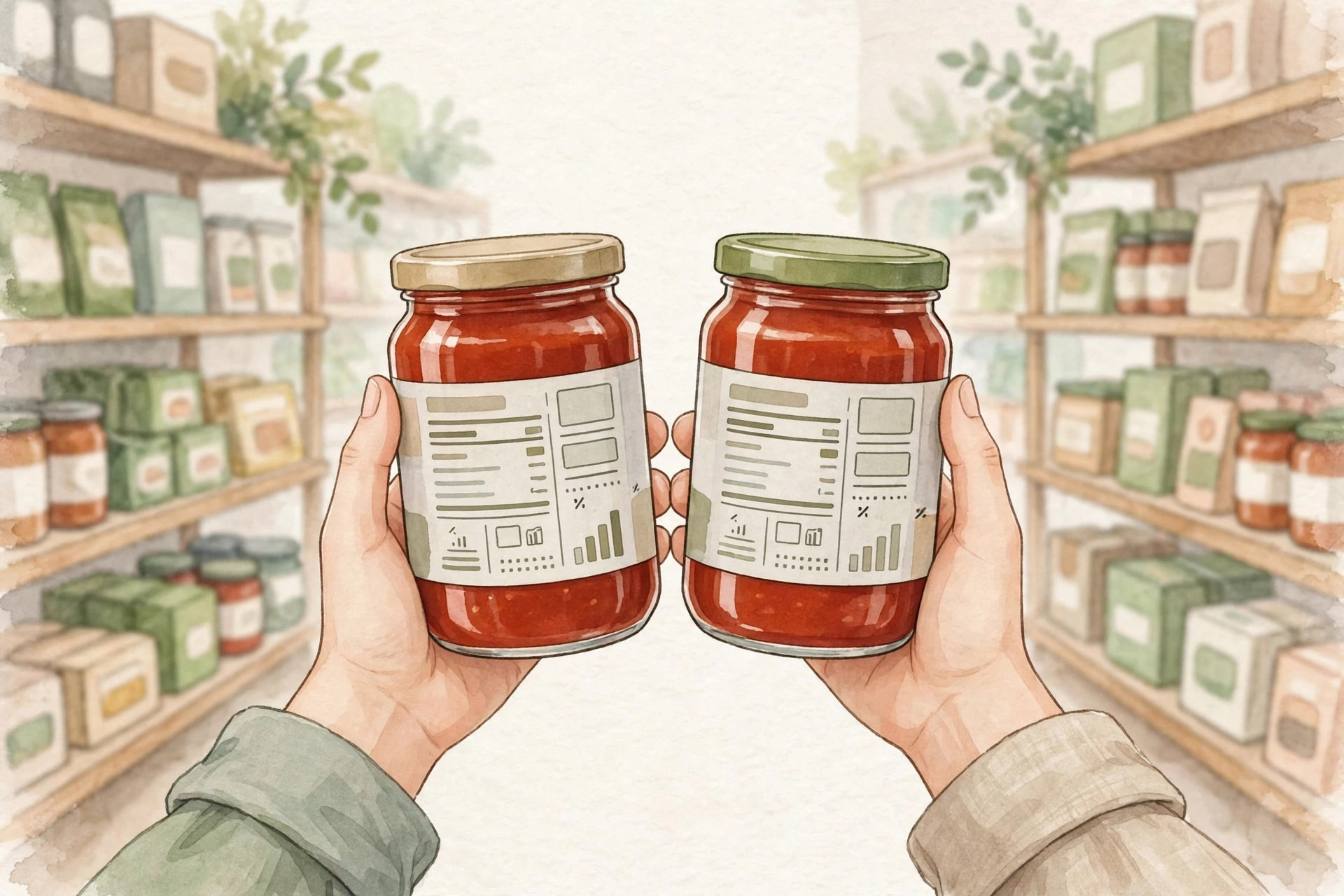
The label is most powerful as a comparison tool. The method: pick two similar products, check that their serving sizes match (or convert them in your head), and run the 5/20 rule across the rows that matter to you.
Comparing two jars of pasta sauce? Look at sodium and added sugars per serving. Two cereals? Look at fiber (higher is better) against added sugars (lower is better). Two frozen meals? Sodium is usually where the biggest differences hide.
Two products in the same category can look similar on the front and differ enormously on the panel — that gap is exactly where label reading pays off.
Three traps to watch for
The health halo. Claims like “organic,” “gluten-free,” or “no added sugar” describe one attribute, not the whole nutrition profile. An organic cookie is still a cookie. Always check the panel behind the claim.
The shrinking serving. Some products make their numbers look better with unusually small servings — a drink listed as two servings, a snack bag listed as three. Always ask what you will actually eat and multiply.
Single-number shopping. Picking a food only because it is low in fat can backfire if the manufacturer added sugar to make up for the lost flavor. Check the whole row of numbers, not one hero stat.
Frequently asked questions
Does the % Daily Value apply to me if I eat fewer than 2,000 calories a day?
Yes. The FDA notes that %DV is a general reference target you can still use for judging whether a food is high or low in a nutrient, regardless of your personal calorie needs. Just remember it is a rough guide, not a prescription.
Why does the label show both total sugars and added sugars?
Total sugars count everything — natural and added. Added sugars isolate the part added during processing or preparation, which is the part the FDA recommends limiting. Looking at both tells you how much of the sweetness comes from the food itself versus from the factory.
What does it mean when a label says “excellent source of fiber”?
Legally, it means one serving provides at least 20% of the Daily Value for fiber. “Good source of” means 10 to 19% DV. These thresholds are set by FDA labeling rules, so you can trust the math even when the wording feels like advertising.
Is the ingredient list more important than the Nutrition Facts panel?
They answer different questions. The panel tells you the quantities of key nutrients; the ingredient list tells you what is actually in the food and in what proportions. Strong shoppers check both — numbers plus ingredients beats either one alone.
Sources
- U.S. Food and Drug Administration — Interactive Nutrition Facts Label
- U.S. Food and Drug Administration — Food Labeling Guide (PDF)
- City College of San Francisco Nutrition Textbook — Reading and Understanding Nutrition Facts Labels
- Texas A&M AgriLife Extension — Reducing Added Sugar Intake
Disclaimer: This article is for general information only and is not medical advice. If you have a medical condition or take medication, check with a healthcare professional before making major dietary changes.