How to Create a Healthy Grocery List
Walk into any supermarket hungry and without a plan, and you know what happens. You leave with a basket full of good intentions and a receipt full of impulse buys — snacks you didn’t mean to get, half the produce you actually need, and nothing to make for dinner on Thursday. A grocery list sounds almost too simple to matter, but nutrition researchers keep finding that what you bring home decides what you eat. The store is where most food decisions really get made, one item at a time.
A healthy grocery list isn’t a rigid meal plan or a test of your discipline. It’s a tool that makes the easy choice the default one. When your fridge and pantry are stocked with whole ingredients and light on the ultra-processed stuff, every meal starts from a better place — even the ones you throw together in twenty minutes on a weeknight.
Why a List Beats Willpower
Decision fatigue is real, and the grocery store is designed to exploit it. Endcaps, sample stations, bright packaging — the layout nudges you toward things you came for plus a dozen you didn’t. Shoppers who use a list consistently buy more fruits and vegetables and fewer processed snacks than those who shop from memory.
The list also saves you from the “empty fridge spiral” — random odds and ends, nothing that forms a meal, and so you order takeout. When your list is built around versatile basics, you can always assemble dinner, even if it’s just eggs, frozen vegetables, and brown rice.
Step 1: Start at Home — the 10-Minute Pantry and Fridge Scan
The best grocery lists begin before you leave the house. Open your pantry, fridge, and freezer and note three things: what’s running low, what’s about to expire, and what’s been sitting untouched for weeks. This scan takes ten minutes and it does two jobs. First, it keeps you from buying your third bottle of soy sauce. Second, it shows you what meals are already half-built — that bag of lentils plus the carrots going soft means lentil soup is basically decided for you.
Jot a rough meal sketch for the week while you’re at it — “stir-fry Tuesday, soup Thursday, pasta Friday” is plenty. A list of ingredients without meals attached tends to rot in the crisper drawer.
Step 2: Anchor the List in Produce
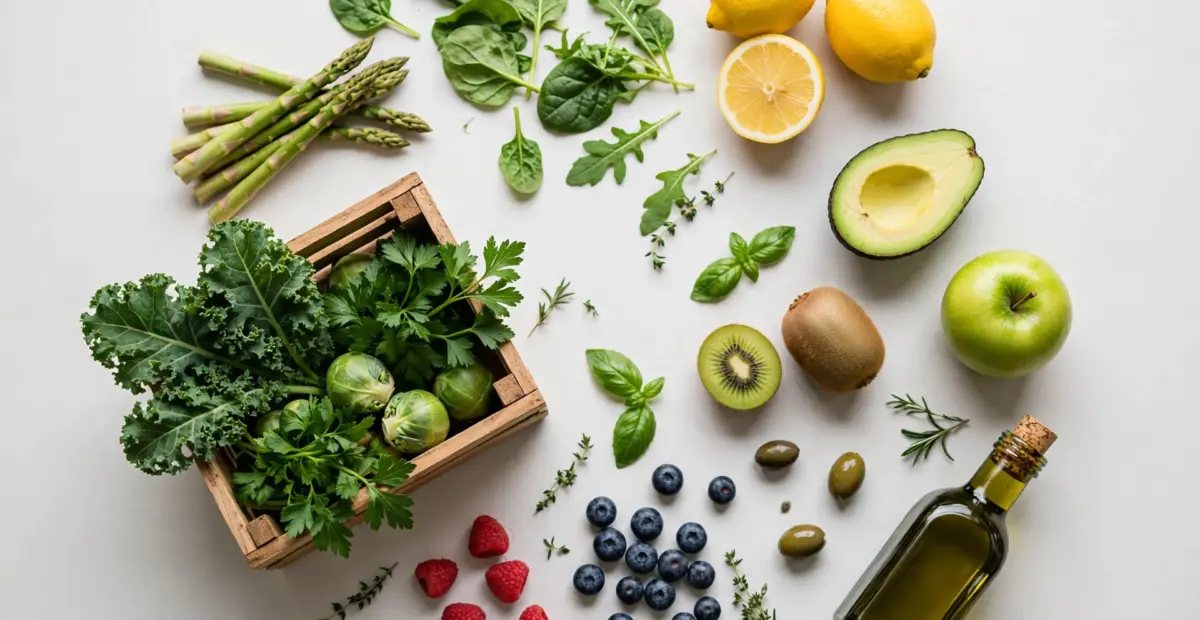
Produce should be the longest section of your list, full stop. The World Health Organization recommends at least 400 grams of fruits and vegetables a day for adults — that’s five portions, roughly — excluding starchy roots like potatoes and cassava. It also advises at least 25 grams of naturally occurring dietary fiber daily, and produce is your best lever for both numbers.
Plan for variety across colors, because different colors signal different nutrient mixes. Dark leafy greens, orange vegetables like carrots and sweet potatoes, berries and citrus, cruciferous vegetables like broccoli and cabbage. You don’t need to memorize the nutrient chart — just let the cart get colorful.
A few practical rules that make produce shopping painless:
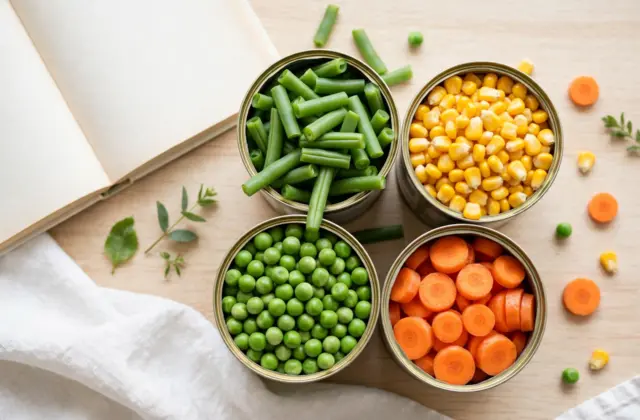
- Buy a mix of fresh, frozen, and canned. Frozen vegetables and fruit are picked and frozen at peak ripeness and keep for months — and WHO notes they’re fine choices as long as they don’t have added sugars or excess sodium. A bag of frozen spinach or mixed berries rescues weeks when fresh stock runs out.
- Shop in season when you can. Seasonal produce tends to cost less and taste better, which means you’re more likely to actually eat it.
- Match quantities to your week. Delicate greens last three to five days; apples, carrots, cabbage, and frozen options stretch two weeks. Buy heavy, long-lasting items for later in the week and delicate ones for the first few days.
Step 3: Whole Grains and Protein on Autopilot
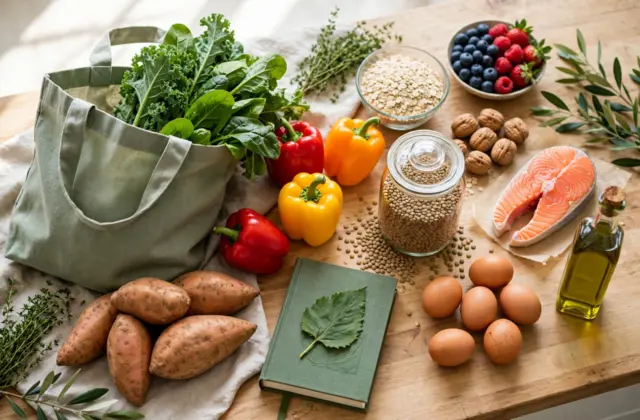
These are the quiet workhorses of your list — the items you buy on a steady rotation so you never have to think about them. For grains, the 2025–2030 Dietary Guidelines for Americans take a strong stance: “focus on whole grains,” recommending roughly 2–4 servings a day of fiber-rich whole grains for a typical 2,000-calorie diet while cutting back on refined carbs like white bread and packaged crackers. Stock brown rice, oats, quinoa, whole-wheat pasta, and whole-grain bread so the swap happens without a daily decision.
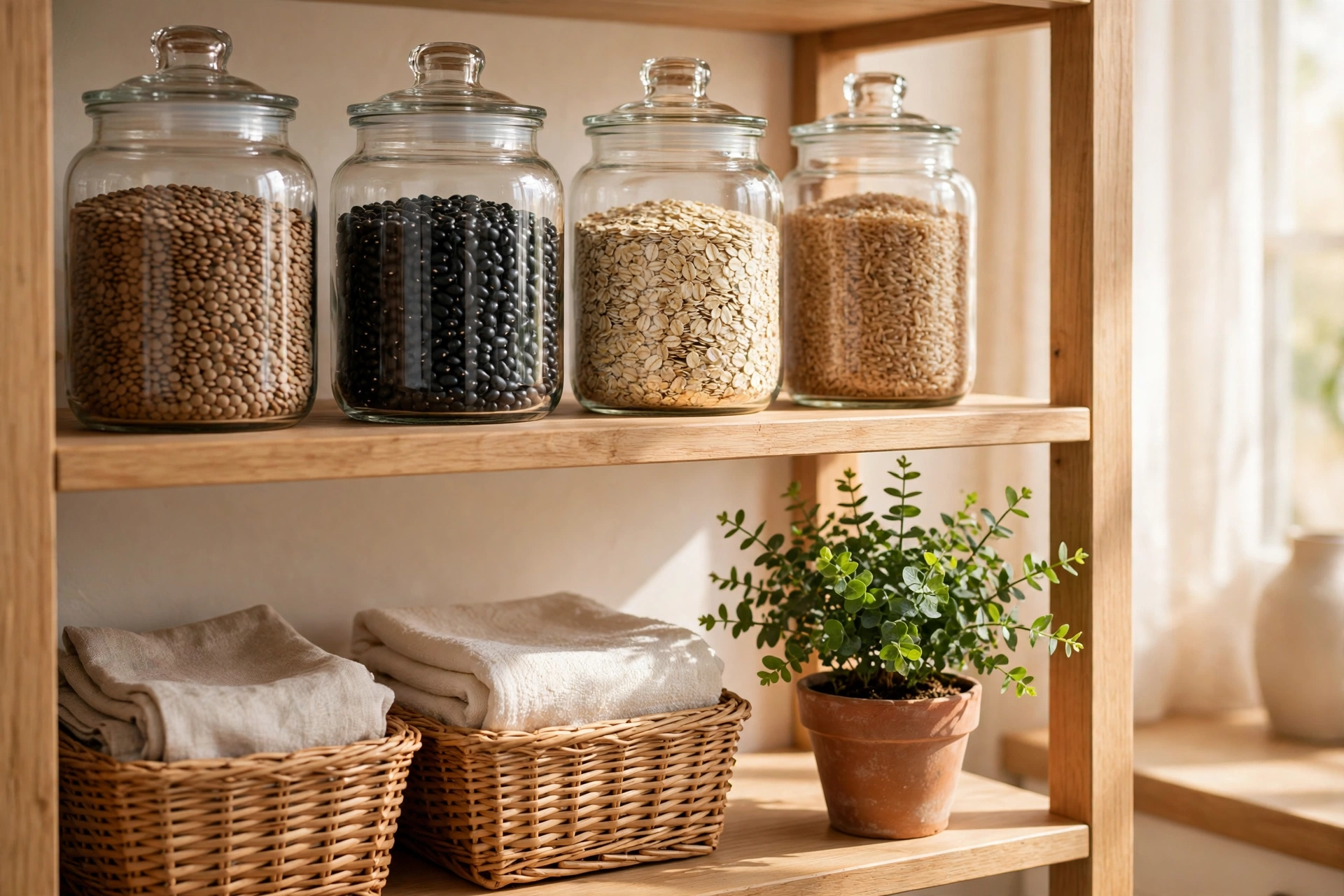
For protein, think variety across the week rather than one big buy. Eggs, dried or canned beans and lentils, fish, tofu, plain yogurt, nuts, and poultry rotate well. Beans and lentils deserve special mention: cheap, shelf-stable, rich in fiber and protein, and they turn a vegetable-heavy meal into something that actually keeps you full. If you eat meat, lean cuts and fish edge out processed options — bacon, sausages, and deli meats are among the saltiest items in most stores.
Step 4: The Center Aisles — Where Labels Do the Work
The center aisles aren’t off-limits; they’re just where you read before you buy. Two numbers are worth checking on packaged foods: sodium and added sugars.
On sodium: the American Heart Association recommends no more than 2,300 milligrams a day, moving toward an ideal limit of 1,500 mg for most adults. Most people blow past that without tasting a single salt crystal, because more than 70% of the sodium we eat comes from packaged, prepared, and restaurant foods — not the saltshaker. When comparing two similar products, the lower-sodium one is usually the better default. Canned beans, tomatoes, and vegetables labeled “no salt added” or “low sodium” are easy upgrades that change nothing about how you cook.
On sugar: the AHA recommends limiting added sugars to no more than 6% of daily calories — about 6 teaspoons (100 calories) a day for women and 9 teaspoons (150 calories) for men. Since one 12-ounce soda carries roughly 10 teaspoons, a single drink can take you past the daily ceiling. Check the “Added Sugars” line on the Nutrition Facts label, and be skeptical of anything marketed as healthy that hides sweeteners in its ingredient list — flavored yogurt, granola bars, and bottled sauces are classic offenders.
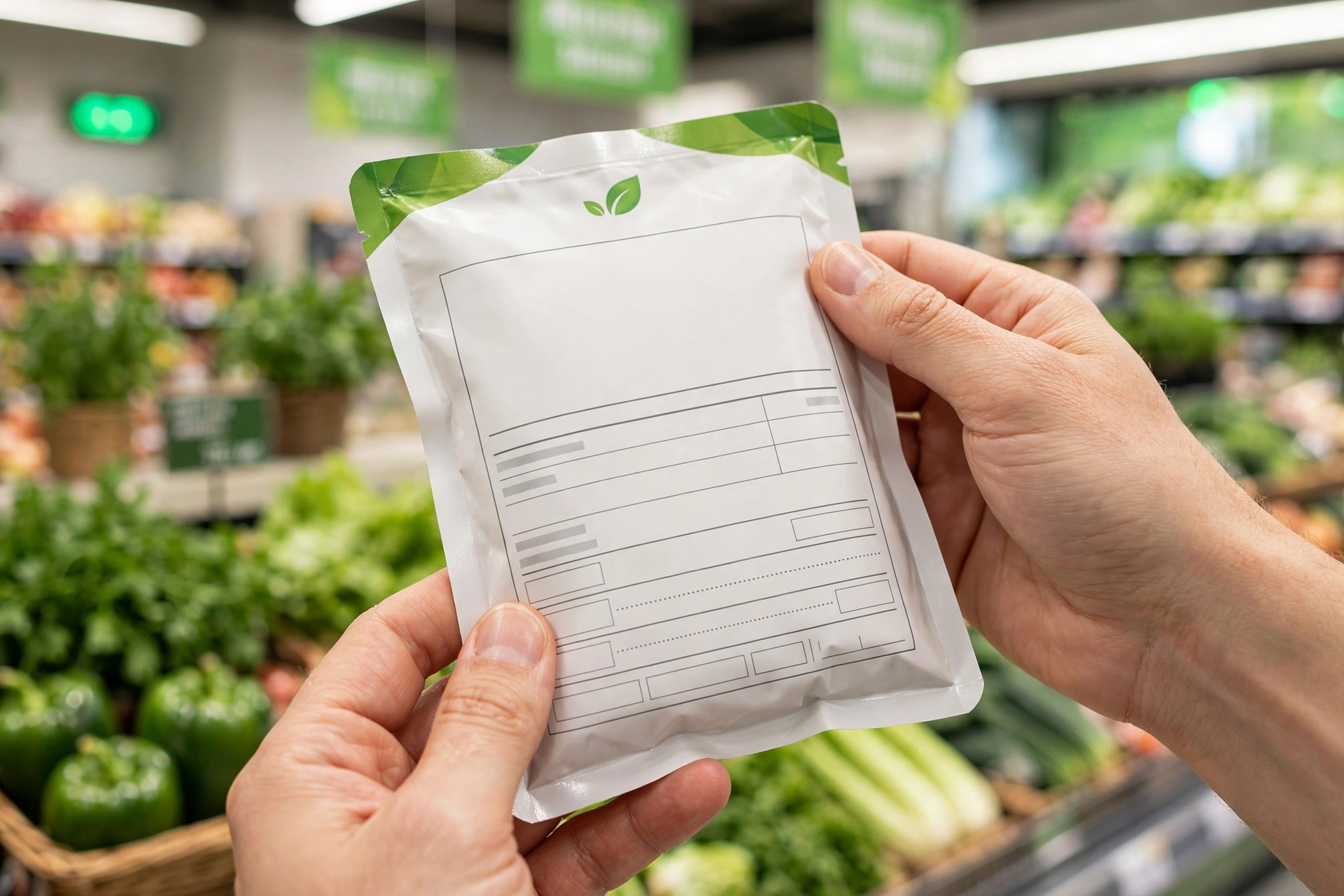
Beyond the numbers, glance at ingredient lists. Shorter is generally better, and if sugar (under any of its names — syrup, concentrate, cane juice) appears in the first three ingredients, think twice. You don’t need to become a label obsessive; you just need the 30-second scan to become a habit for the five or six packaged items you buy repeatedly.
Read also: How to Make a Nutrient-Dense Grocery List
Step 5: Build the List in Store Order
Here’s a template you can reuse every week. Organize it the way you walk the store — produce first, then the perimeter — so you’re not zigzagging back and forth:
Produce (fresh + frozen): 2–3 leafy greens, 2–3 colorful vegetables, 2 fruits for snacks, 1 bag frozen vegetables, 1 bag frozen berries, lemons or limes, fresh herbs if you cook with them.
Dairy and alternatives: plain yogurt or milk, eggs, a hard cheese if you use it, tofu or tempeh.
Meat, fish, and plant proteins: one fresh fish or poultry option, dried lentils or beans, canned beans (low sodium), nuts and nut butter.
Grains: brown rice or quinoa, rolled oats, whole-grain bread or tortillas, whole-wheat pasta.
Pantry staples (restock as needed): olive oil, canned tomatoes (no salt added), broth or stock (low sodium), garlic, onions, spices, vinegar, dried herbs, peanut butter (ingredients: peanuts, salt).
Frozen backups: an extra bag of frozen vegetables and one frozen protein (like shrimp or edamame) — the meal you assemble on the night everything else runs out.
Notice what’s not a standing item: soda, chips, candy, pastries. That’s not a ban — it’s a default. If you want them, write them on the list deliberately, so nothing lands in your cart by accident.
Three Rules for Actually Sticking to the List
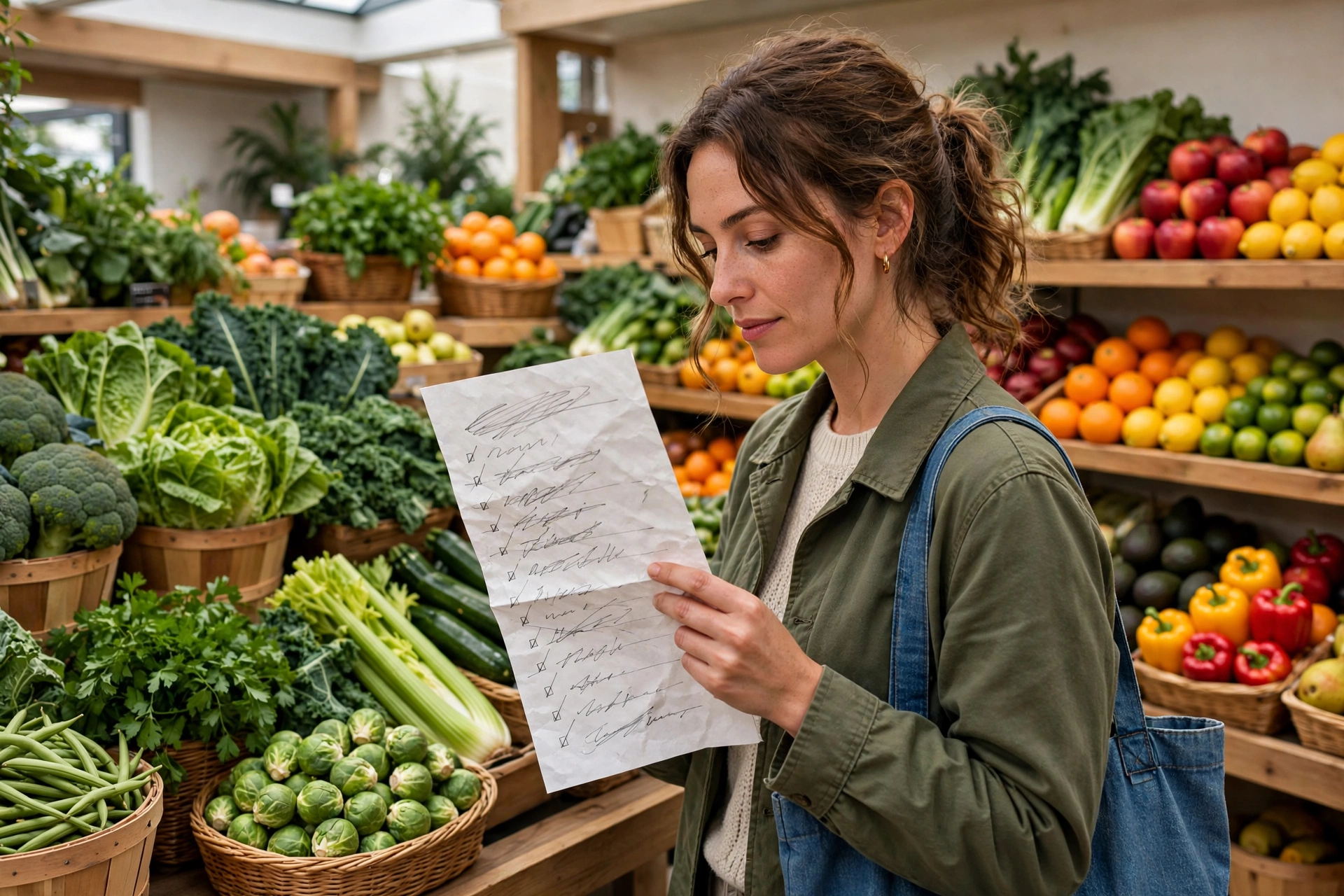
The best list in the world doesn’t work if it stays folded in your pocket. Three habits make it stick:
- Never shop starving. It’s the oldest advice because it works. Hunger inflates every impulse-buy urge in the store.
- Do one pass, then a ten-second review. Before checkout, scan your cart against the list. Anything not on it has to justify itself. Most impulse items fail that test embarrassingly fast.
- Give yourself one “free” item. Absolute strictness backfires. Allowing one unplanned treat per trip keeps the habit sustainable — and one item is a very different thing from a basket of them.
Start where you are. If your current list is a sticky note that says “milk, eggs, bread,” you’re already ahead of the no-list crowd. Add one category this week — say, frozen vegetables — and build from there. A grocery list is a skill, and like any skill, it compounds.
Frequently Asked Questions
Should I avoid the center aisles entirely?
No — the center aisles hold some of your best buys: dried beans, lentils, brown rice, oats, canned tomatoes, olive oil, and spices. The advice to “shop the perimeter” is a reminder that fresh, minimally processed foods line the store’s edges, not a rule that packaged food is automatically bad. Use labels to tell the difference.
Are frozen and canned foods as healthy as fresh?
Usually, yes. Frozen produce is picked and frozen at peak ripeness and keeps its nutrients well; canned options are fine with no added sugars and minimal sodium — look for “no salt added” and fruit packed in water or juice.
How do I make a healthy grocery list on a tight budget?
Anchor the list in low-cost staples: dried beans and lentils, oats, brown rice, eggs, frozen vegetables, seasonal fresh produce, and bananas. Plan meals around what’s on sale and buy store-brand versions of pantry staples. Cooking at home from whole ingredients is nearly always cheaper than buying ready-made “healthy” products.
How often should I go grocery shopping?
Once a week works well for most households, with a possible quick midweek top-up for delicate fresh produce. Weekly trips keep waste down because the list is tied to one week’s meals. If fresh vegetables keep spoiling before you cook them, lean harder on frozen — it’s the same nutrition without the race against the clock.
Sources
- World Health Organization, “Healthy Diet” — fruit and vegetable targets (at least 400 g/day), dietary fiber guidance, and free-sugar limits.
- American Heart Association, “How Much Sodium Should I Eat Per Day?” — 2,300 mg/day upper limit, 1,500 mg/day ideal limit, and sources of dietary sodium.
- American Heart Association, “Added Sugars” — added-sugar limits (6% of calories; 6 tsp/day for women, 9 tsp/day for men) and common sources.
- The Whole Grains Council, “U.S. Dietary Guidelines and Whole Grains” — whole-grain serving targets in the 2025–2030 Dietary Guidelines for Americans.
This article is for general information only and is not medical advice. If you have a health condition or specific dietary needs, check with a qualified health professional before making significant changes to your diet.