Simple Ways to Eat More Fruit
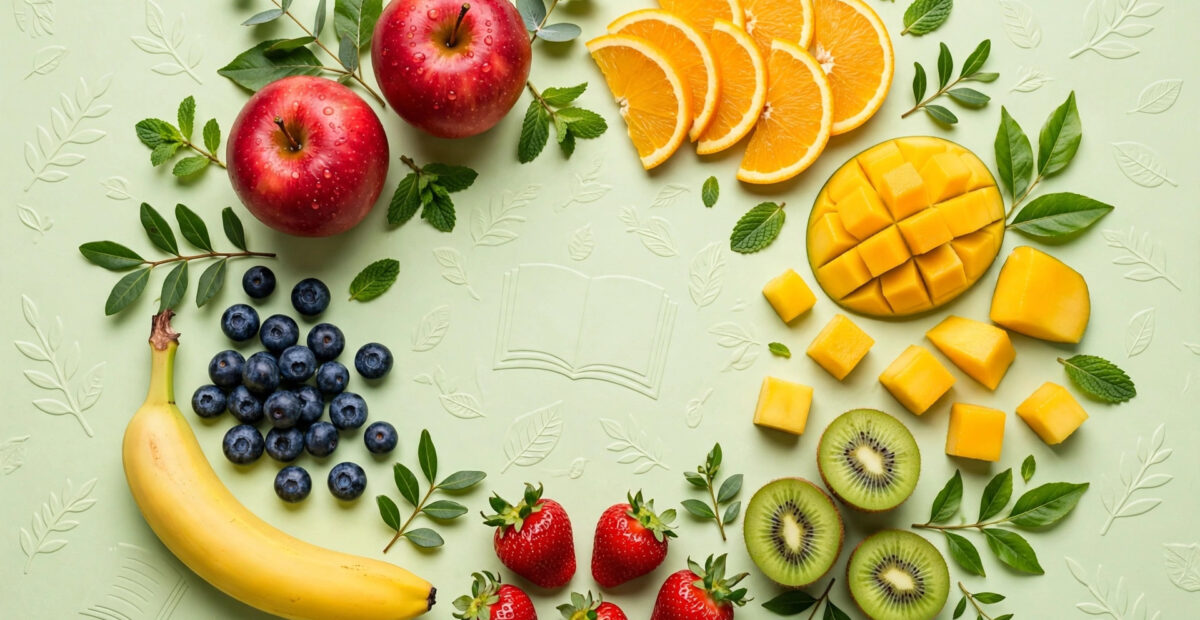
Most of us agree that fruit is good for us — and then we let the apple in the fruit bowl sit there until it goes soft. The gap between knowing and doing isn’t a willpower problem. It’s a convenience problem. Fruit competes with snacks that are louder, easier, and engineered to be irresistible. The trick is making fruit the easy choice instead of the virtuous one.
This guide doesn’t ask you to overhaul your diet. It gives you small, specific moves — breakfast add-ons, fridge setups, snack swaps — that quietly push your fruit intake up to where nutrition guidelines say it should be, without a spreadsheet or a sermon.
Why fruit matters more than you think
Whole fruit is one of the most nutrient-dense, least expensive sources of fiber, vitamins, and plant compounds in the grocery store. A medium apple (about 182 g) delivers around 95 calories, roughly 4 grams of dietary fiber, and 19 grams of natural sugars — with zero added sugar, according to USDA data. Fiber is the unsung hero: it slows how quickly sugar enters your bloodstream, feeds the beneficial bacteria in your gut, and keeps you full longer than the same calories from a snack with no fiber.
The health payoff is real. The World Health Organization links sufficient fruit and vegetable intake to lower risk of cardiovascular disease, type 2 diabetes, obesity, and certain cancers, and notes that low intake contributes to a significant share of heart disease worldwide. Researchers who study phytonutrients — the compounds behind fruit’s colors — have connected them to benefits for heart, eye, bone, immune, and brain health.
How much fruit do you actually need?
The numbers are less intimidating than they sound. The WHO recommends at least 400 grams of fruits and vegetables per day — roughly five servings combined, and starchy tubers like potatoes don’t count toward it. On the fruit side specifically, U.S. guidelines in the 2025–2030 Dietary Guidelines for Americans call for about 2 servings of fruit a day, where one serving is roughly a cup of fresh fruit or half a cup of dried.
Two cups of fruit sounds like a lot until you translate it: one banana at breakfast and a handful of berries on your yogurt, and you’re basically there. Most adults in many regions are falling well short — in some surveys, the majority of adults would need to roughly double their current intake to hit the minimum.
One rule worth remembering: at least half of your fruit should be whole fruit, not juice. Whole fruit keeps its fiber; juice — even 100% fruit juice — concentrates the sugars without it. The WHO classifies the sugars in fruit juice as free sugars and advises keeping those limited.
10 simple ways to eat more fruit
1. Put fruit on your breakfast, whatever it is
Breakfast is the easiest place to add fruit because it’s already a habit. Slice a banana into your oatmeal, scatter berries over cereal, top toast with sliced peaches instead of extra jam, or throw a handful of frozen mango into your eggs-avocado routine as a side. You haven’t changed your morning — you’ve just upgraded it.

2. Keep fruit where you can see it
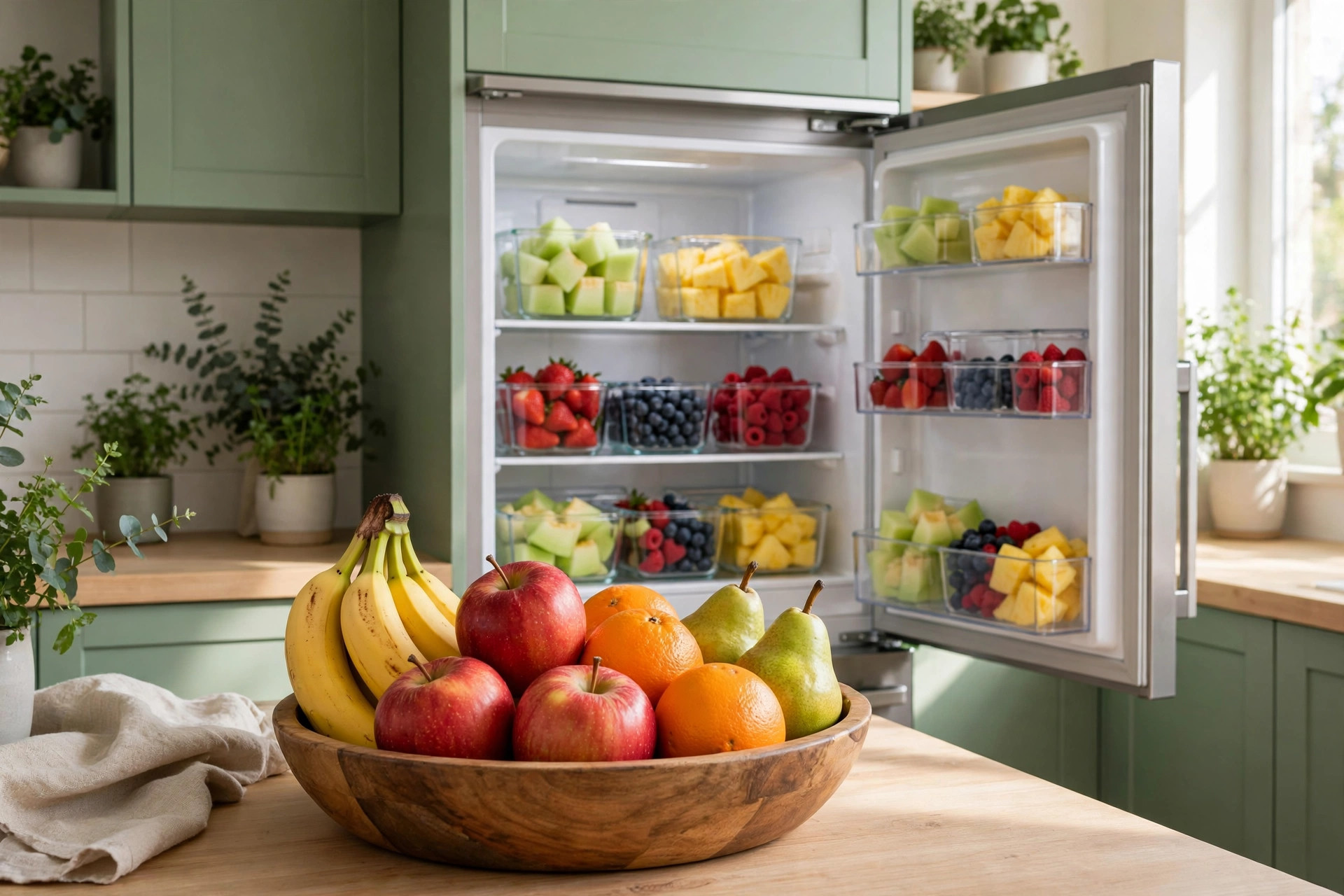
Apples, bananas, oranges, pears — they don’t need refrigeration, which means they can live on your counter at eye level, not buried in the crisper drawer. Studies on eating behavior consistently show that visibility drives choice: food you see gets eaten first. When the cookies are in the cupboard and the fruit is in a beautiful bowl on the counter, guess which one you grab at 3 p.m.
3. Make fruit the front of your fridge
For berries, grapes, and cut melon, placement matters. Put the fruit container front and center at eye level when you get home from the store, before you reach for anything else. Wash berries right away so they’re ready to eat — a step of preparation is the difference between “grape handful” and “skip it.”
4. Pair fruit with protein for a snack that actually satisfies
Fruit alone sometimes doesn’t stick. Pair it and you get a snack that holds you for hours: apple slices with peanut butter, grapes with a handful of almonds, strawberries with Greek yogurt, banana with a spoonful of almond butter. The protein and fat slow digestion, and the combination tastes like a treat rather than an obligation.
5. Embrace frozen fruit
Frozen fruit is picked ripe and frozen within hours, so it keeps its nutrients — and it’s often cheaper than fresh, with zero spoilage pressure. Keep a couple of bags (berries, mango, pineapple) in the freezer for smoothies, overnight oats, or a quick microwave-warm topping for yogurt. There’s no excuse for the “I don’t have anything fresh” problem anymore.
Read also: Benefits of Eating Many Kinds of Vegetables
6. Blend it into smoothies you actually enjoy
A smoothie is a fruit delivery vehicle. A simple formula: one cup of frozen fruit, a banana or half a mango for sweetness, a handful of spinach (you won’t taste it), and milk or yogurt for creaminess. It counts as a serving or two, takes three minutes, and works as breakfast, a post-workout snack, or an evening dessert substitute. Just keep portions sensible — it’s easy to blend three servings into one glass.

7. Add fruit to savory dishes
This one surprises people, but it works. Apple slices in a green salad, orange segments over a grain bowl, pineapple in a stir-fry, mango salsa on grilled chicken or fish, berries tossed with a handful of arugula and goat cheese. The sweetness contrasts with salt and acid in a way that makes the whole dish more interesting — and sneaks in a serving of fruit without a “healthy snack” moment.
8. Prep fruit snacks on your weekend
Spend ten minutes once a week cutting up pineapple, melon, and mango into grab-and-go containers. Prepped fruit in the fridge gets eaten at triple the rate of fruit that requires effort. It’s the same logic as meal prep: you eat what you’ve made easy.
9. Swap your evening dessert for fruit — sometimes
You don’t have to give up dessert forever. But a few nights a week, try grilled peaches with a dollop of yogurt, frozen banana “nice cream” (just blend frozen banana with a splash of milk), warm baked apples with cinnamon, or simply a bowl of whatever berries are in season. Many people find the craving for something sweet after dinner is genuinely satisfied by fruit — especially when it’s cold, ripe, and served like a proper dessert.
10. Try one new fruit a week
Boredom kills good habits. One new fruit a week — persimmons in fall, kiwis, papaya, dragon fruit, guava, pluots in summer — keeps things interesting and broadens the mix of vitamins and phytonutrients you get, since different colors deliver different beneficial compounds. Tasting something new also makes fruit feel like an adventure rather than a duty, and kids in particular respond well to the “let’s try it” framing.
A note on dried fruit
Dried fruit counts — but the portions are deceptive. Because the water is removed, half a cup of dried fruit equals a full cup of fresh. It’s easy to eat the equivalent of three apples’ worth of sugar from a bag of dried mango without noticing. Choose dried fruit without added sugar (check the label — many dried cranberries, pineapple, and mango are sweetened), and stick to small handfuls, ideally mixed with nuts.
Frequently asked questions
Does fruit juice count toward my daily fruit intake?
Technically, 100% fruit juice counts as fruit, but guidelines recommend that at least half your fruit intake comes from whole fruit. Whole fruit keeps its fiber, which slows sugar absorption and helps you feel full — juice delivers the sugar without it. If you love juice, keep portions small and think of it as an occasional drink, not a fruit serving.
Isn’t fruit full of sugar? Is it bad for me?
Whole fruit contains natural sugars, but it’s a very different package from added sugar. The fiber in fruit slows sugar absorption, and fruits like apples have a low to moderate glycemic index, meaning they have a minimal impact on blood sugar levels. What guidelines ask you to limit is added sugars and free sugars (including juice) — not the whole apple.
Can you eat too much fruit?
For most people, this isn’t a practical concern — the far more common problem is eating too little. That said, portions still matter, especially with dried fruit and juice, which concentrate sugars. Two to four servings of whole fruit a day fits comfortably within every major guideline, so use that as your anchor.
Is frozen or canned fruit as healthy as fresh?
Yes — if it’s unsweetened. The WHO notes that frozen and canned produce are perfectly good choices as long as they don’t have added sugars or excess sodium. Frozen fruit is often frozen at peak ripeness and can be nutritionally comparable to (sometimes better than) fresh fruit that’s traveled for days. Look for “no sugar added” on the label.
Start with just one
You don’t need all ten of these. Pick the one that fits your life with the least friction — a fruit bowl on the counter, berries in your breakfast, prepped fruit in the fridge — and do that for two weeks. Once fruit becomes the easy default in one part of your day, adding a second becomes obvious. Small moves, repeated, are how two servings a day quietly becomes your normal.
This article is for general information only and is not medical advice. If you manage diabetes or another condition that affects blood sugar, talk with your doctor or a registered dietitian about how fruit fits into your meal plan.
Sources
- World Health Organization — Healthy diet fact sheet (fruit and vegetable intake recommendations, free sugars guidance)
- USDA SNAP-Ed — Keep Fruits Handy (daily fruit intake guidance, ~2 cups/day at a 2,000-calorie diet)
- USDA SNAP-Ed — Apples nutrition information (medium apple: 95 calories, 4 g fiber, 19 g natural sugars, 0 g added sugars)
- Dietary Guidelines Advisory Committee — Fruit modeling protocol (at least half of fruit intake should come from whole fruit rather than juice)
- Global study on fruit and vegetable intake shortfalls (most adults worldwide need to roughly double intake to meet WHO’s 400 g/day minimum)