How to Add More Vegetables to Your Meals
Most of us know we should eat more vegetables. Fewer of us actually do it. Surveys in country after country find the same gap: people understand the advice, then walk straight past the produce section on the way to buy the same things they always buy.
It doesn’t have to be that way. Eating more vegetables isn’t about forcing down kale you hate or rebuilding your entire diet overnight. It’s about small, deliberate additions — a handful of spinach here, some roasted carrots there — that quietly add up over weeks and months. Here’s how to make it happen without turning your kitchen into a project.
Know What You’re Aiming For
A target makes the whole thing easier. The World Health Organization recommends that everyone over the age of 10 eat at least 400 grams of fruit and vegetables per day — roughly five 80-gram portions — not counting starchy roots like potatoes and sweet potatoes. For younger children, the target is smaller: about 250 grams for ages 2–5 and 350 grams for ages 6–9.
If you’re in the United States, the Dietary Guidelines for Americans translate to roughly 2½ cups of vegetables a day for an average adult on a 2,000-calorie eating pattern (about 1 cup of raw or cooked vegetables counts as one serving; leafy greens count double volume-wise, so two cups of raw spinach equals one serving). The two guidelines look different, but they point the same direction: most adults are eating far less than this. Closing even half of that gap is a real win.
Why does it matter so much? A WHO analysis found that diets low in fruits and low in vegetables were responsible for an estimated 1.8 and 3.4 million deaths worldwide in 2013, respectively, largely through heart disease, stroke, and certain cancers. Vegetables are also one of the most practical sources of dietary fiber — the WHO suggests at least 25 grams of naturally occurring fiber per day for anyone over 10. You don’t need to hit the full target on day one. Every extra portion moves the needle.
Start at Breakfast
Dinner tends to get all the vegetable credit, but breakfast is where most people are leaving portions on the table. And it’s the easiest meal to fix because the additions are almost thoughtless.
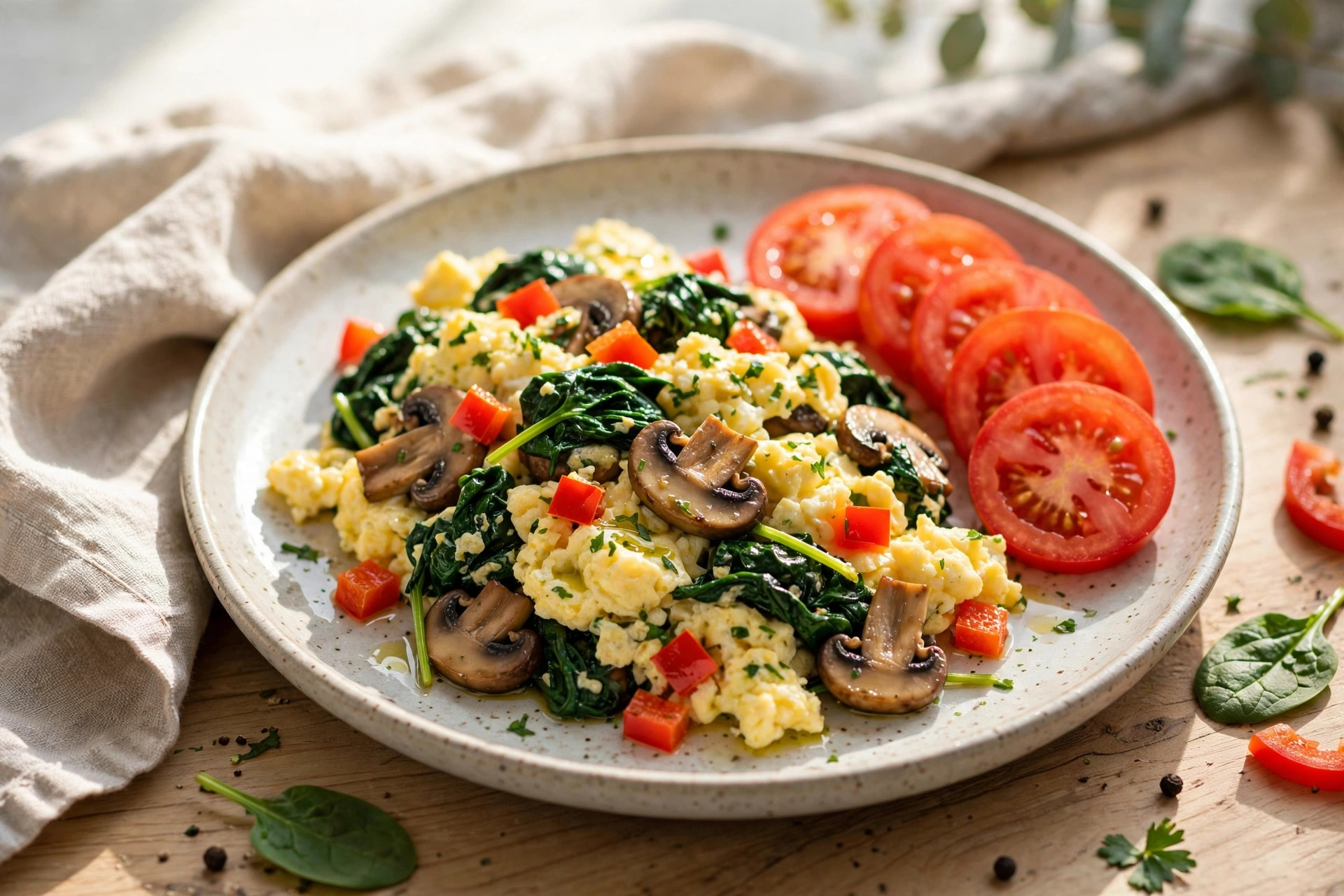
Scrambled eggs take anything: a fistful of baby spinach that wilts down to nothing, diced peppers, mushrooms, or leftover roasted vegetables from last night’s dinner. Toast gets better with sliced tomato and avocado. Oatmeal might sound like a strange candidate, but grated zucchini stirred in during the last minute of cooking disappears completely into the texture — it just makes the bowl creamier.
If you eat yogurt or smoothies in the morning, add a handful of frozen spinach or half a frozen banana’s worth of mild greens. You won’t taste them, but your fiber and vitamin intake climbs. The point of the breakfast strategy: bank one or two portions before your day has even started, and the rest of the day feels easy.
Bulk Up Your Lunch and Dinner
The classic plate method — filling about half your plate with vegetables at main meals — remains one of the most useful rules in nutrition. (It was popularized by the USDA’s MyPlate graphic; the USDA has since retired that graphic in favor of a newer one, but the half-plate principle itself is still sound, practical advice.)
At dinner, think in terms of upgrades rather than overhauls:
- Double the vegetables in recipes you already cook. Pasta sauce, stir-fries, soups, curries, and casseroles all absorb extra vegetables without complaint. Add a second bag of frozen peas to the soup. Throw extra peppers and onions into the fajita filling.
- Roast a big tray at the start of the week. Broccoli, carrots, cauliflower, Brussels sprouts, zucchini — toss with oil and salt, roast at high heat until the edges char, and keep them in the fridge. They reheat well, top salads and grain bowls, and work as a ready side on tired evenings.
- Build a “vegetable first” habit. Eat the salad or the roasted vegetables before touching the rest of the meal. You’ll naturally eat more of them when you’re hungriest, and you’ll likely eat a bit less of everything else without noticing.
- Add a side salad to meals that don’t usually have one. Pizza night, taco night, even takeout night — a quick bowl of greens with a squeeze of lemon takes two minutes and adds a full portion.
Lunch is often the weakest meal for vegetables, especially on workdays. Keep it simple: a salad built on pre-washed greens plus whatever’s in the fridge, a sandwich loaded with tomato, cucumber, and lettuce instead of just cheese, or a soup with visible vegetables in it. If you buy lunch out, pick the place where vegetables are built in — the salad bar, the burrito bowl, the stir-fry stall — rather than the one where you have to hunt for them.

Make Snacks Work Harder
Between meals, the average kitchen offers a choice: the biscuit tin or the fruit bowl. Shifting snacks toward vegetables is one of the fastest ways to raise your daily count, because snacking is habitual and mindless — which means you can redirect it with almost no willpower once the setup is right.
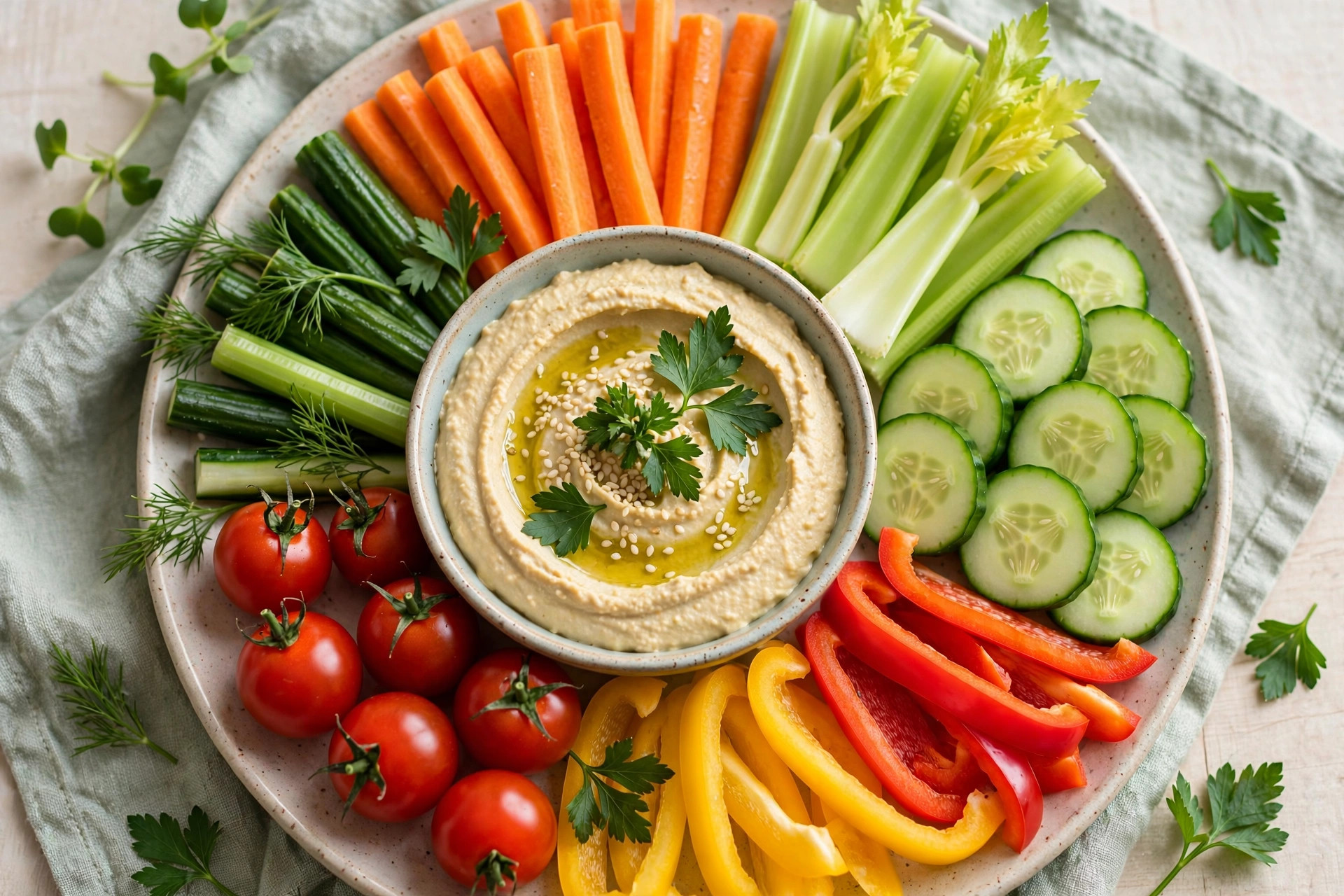
Cut vegetables keep better than you’d expect. Carrots, celery, cucumber, and bell peppers stay crisp in water in the fridge for days. Pair them with hummus, peanut butter, or yogurt dip and you have a snack that actually keeps you full, thanks to the fiber. Cherry tomatoes, snap peas, and baby carrots need no prep at all.
Read also: How to Eat More Fruit Every Day
The real trick is visibility. People eat what’s in front of them. Keep washed, ready-to-eat vegetables at eye level in the fridge — not buried in the crisper drawer where produce goes to be forgotten — and put the snacks you want less of somewhere less convenient. This sounds trivial. It works anyway.
Eat the Rainbow
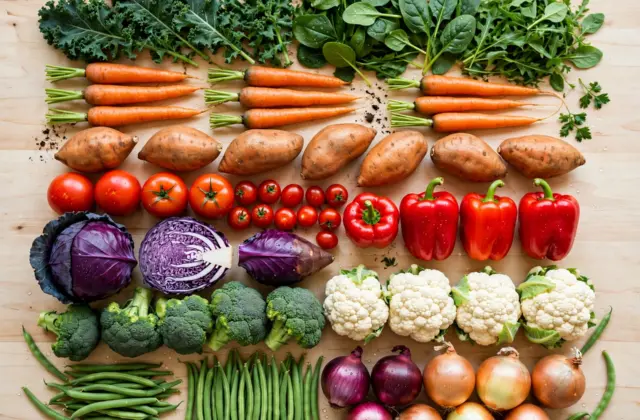
Variety matters as much as quantity. Different-colored vegetables carry different nutrients: dark greens like spinach and broccoli are rich in folate and vitamin K; red and orange vegetables like tomatoes, carrots, and sweet potatoes deliver vitamin A precursors and lycopene; purple vegetables like eggplant and red cabbage carry anthocyanins; white vegetables like cauliflower and mushrooms bring their own set of compounds.
The USDA organizes vegetables into five subgroups — dark green, red and orange, beans and peas, starchy, and other — and recommends eating from each of them regularly. A practical version: aim for at least three different colors on your plate over the course of a day. If everything you ate today was beige and white, tomorrow is a chance to fix that.
Rotating vegetables also keeps meals interesting, which is how the habit survives past week two. Buy one vegetable you’ve never cooked each week. Some will be forgettable. A few will become staples.
Stop Worrying About Fresh Versus Frozen
One of the biggest obstacles to eating more vegetables is the belief that they have to be fresh. Fresh vegetables rot, they’re seasonal, and they cost more. Frozen and canned vegetables solve all three problems — and nutritionally, frozen vegetables are often just as good, sometimes better, because they’re frozen at peak ripeness within hours of harvest.
Keep frozen peas, spinach, mixed vegetables, and edamame in the freezer. Keep canned tomatoes, corn, and beans in the pantry. Frozen vegetables need no washing, no chopping, and they never go slimy in the crisper. Add them directly to soups, sauces, pasta, rice, and stir-fries. Rinse canned vegetables briefly to reduce sodium, or buy no-added-salt versions.
The best vegetable is the one you actually eat. A bag of frozen broccoli you use three times a week beats a perfect bunch of fresh broccoli that wilts in the fridge.
Tricks That Make Vegetables Stick
Once you’ve added the portions, these small strategies keep them in your routine:
- Cook vegetables the way you like them. If you hate steamed vegetables, stop steaming them. Roast them until caramelized, sauté them with garlic, grill them with a little char. Seasoning isn’t cheating — it’s the reason you’ll eat them again.
- Hide them in plain sight. Blend cauliflower into mashed potatoes, grate carrots into bolognese, mix riced cauliflower into regular rice, stir puréed squash into mac and cheese. This isn’t deception; it’s engineering.
- Plan for the tired evenings. Have a fallback that requires zero decisions: frozen vegetable stir-fry, soup from the freezer, eggs plus leftover roasted vegetables. Most vegetable shortfalls happen on the nights you had no plan.
- Track for two weeks. Jot down your vegetable portions each day — a tick mark per portion is enough. Most people are surprised how few they’re eating, and the simple act of counting tends to raise the number without any other effort.
Frequently Asked Questions
How many vegetables should I eat each day?
The WHO recommends at least 400 grams of fruit and vegetables combined per day for everyone over 10 (about five 80-gram portions), excluding starchy roots. In the US, the dietary guidelines suggest roughly 2½ cups of vegetables daily for an average adult. Most people eat far less — even moving from one portion to three makes a meaningful difference.
Do frozen vegetables count?
Yes. Frozen vegetables count fully toward your daily intake, and they’re often as nutritious as fresh — sometimes more so, since they’re frozen at peak ripeness. Canned vegetables count too, especially no-added-salt versions.
Can I get too many vegetables?
For most people, no. Vegetables are high in fiber and water and low in calories, so they’re difficult to overeat. If you increase fiber quickly, do it gradually and drink enough water, as a sudden jump can cause bloating and digestive discomfort.
Do I need to eat organic vegetables?
Not for health. Conventionally grown vegetables provide the same vitamins, minerals, and fiber as organic ones. The most important thing is eating enough vegetables, not which label they carry — buy what’s affordable and available.
Sources
- World Health Organization. Healthy diet (fact sheet) — the 400 g/day recommendation, fiber guidance, and free-sugar limits.
- World Health Organization. Increasing fruit and vegetable consumption to reduce the risk of noncommunicable diseases — evidence on low fruit/vegetable intake and NCD burden.
- U.S. Department of Agriculture, SNAP-Ed. Choose Your Veggies — US serving guidance, the five vegetable subgroups, and what counts as a serving.
- U.S. Dietary Guidelines Advisory Committee. Food Pattern Modeling Report: Vegetables — cup-equivalent definitions and recommended amounts.
This article is for general information only and isn’t medical advice. If you have a health condition or take medication, talk to your doctor or a registered dietitian before making major dietary changes.