How to Shop for Plant-Based Protein Foods
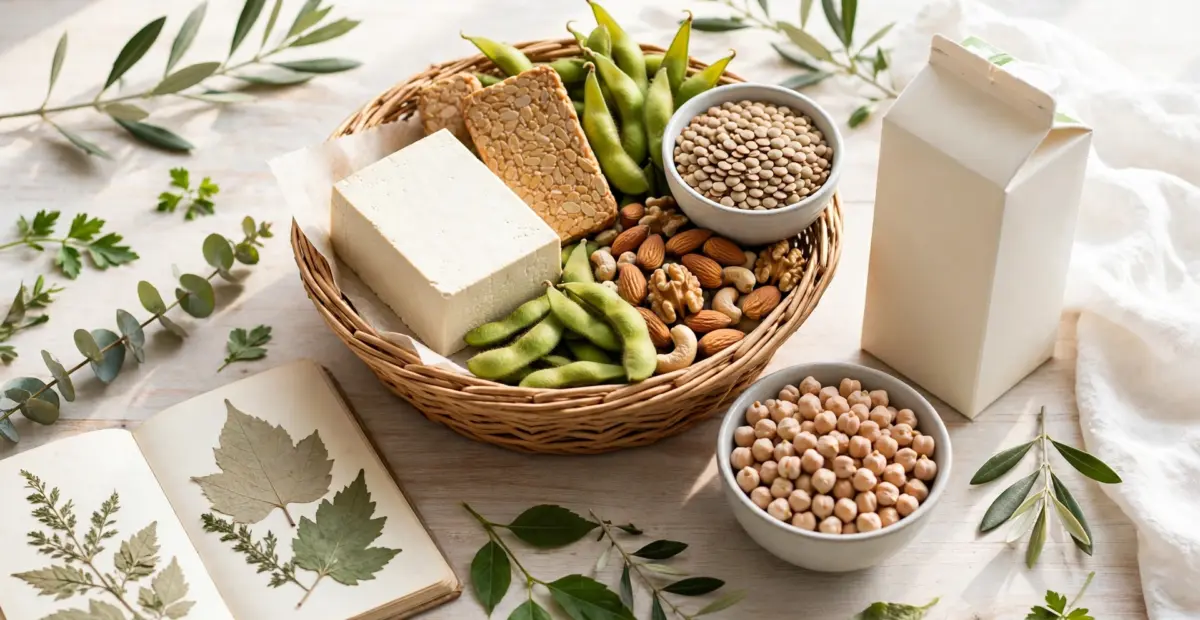
Walk into any supermarket today and the plant-based protein section is hard to miss: blocks of tofu next to tempeh, pouches of lentils beside cans of chickpeas, and a freezer full of burgers that promise to bleed like beef. Some of these foods are cheap, filling, and genuinely nutritious. Others are mostly salt and marketing with a protein claim on the front.
Shopping well for plant-based protein is less about memorizing amino acids and more about knowing which foods deliver the most protein for your money, how to read the label in ten seconds, and where the traps are. The numbers below come from the USDA’s FoodData Central, so you can compare foods on equal footing.
Start With Your Target, Not the Shelf
Before you buy anything, it helps to know roughly how much protein you are aiming for. The Recommended Dietary Allowance for most healthy adults is 0.8 grams of protein per kilogram of body weight per day — about 56 grams for a 70-kilogram (154-pound) person. The Dietary Guidelines for Americans 2025–2030 set a higher goal of 1.2 to 1.6 grams per kilogram, or roughly 84 to 112 grams a day for that same person. Older adults and people who train hard often land toward the upper end of that range.
Those numbers sound high until you add up a normal day of plant foods. A cup of cooked lentils gives you about 18 grams. A cup of edamame adds another 18. Half a block of firm tofu contributes roughly 17 to 22 grams, depending on the brand. A cup of soy milk adds 7 to 8. Suddenly you are most of the way there before dinner. You do not need one heroic protein food — you need several ordinary ones, spread across the day.
The Five Aisles of Plant Protein
Plant protein lives in five places in the store, and each one plays a different role.
1. Soy foods: the heavy lifters
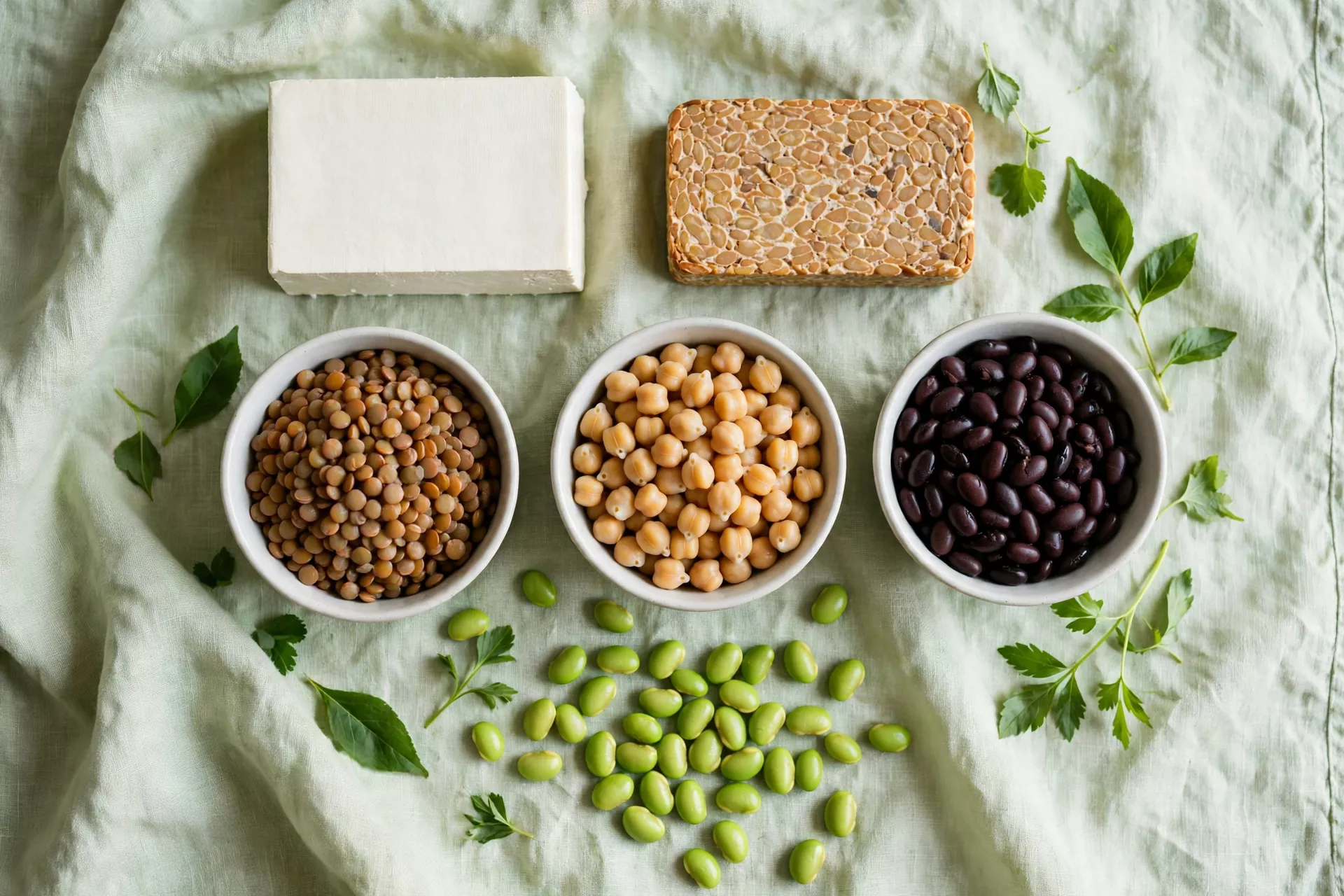
Soy is the only plant protein that matches animal protein on amino acid quality. Tempeh leads the pack at about 20 grams of protein per 100 grams (roughly 17 grams in a 3-ounce serving), because it is made from whole fermented soybeans. Firm tofu prepared with calcium sulfate lands around 17 grams per 100 grams — and that calcium-set tofu also carries about 683 milligrams of calcium per 100 grams. Extra-firm tofu made with nigari is closer to 10 grams per 100 grams, so firmness matters more than the brand name. Edamame gives about 12 grams per 100 grams, or 18 grams in a cup of shelled beans.
At the shelf, pick tempeh when you want something hearty that holds its shape in a stir-fry or sandwich. Pick firm or extra-firm tofu for scrambling, baking, or cubing into soup — silken tofu is better for smoothies and sauces, but it holds far less protein per bite.
2. Legumes: the budget champions
Lentils, chickpeas, and black beans are the cheapest protein in the store, and they bring fiber and iron along for the ride. Cooked lentils deliver about 9 grams of protein per 100 grams — 18 grams in a cup — plus nearly 8 grams of fiber. Cooked chickpeas and black beans each give about 9 grams per 100 grams, or 15 grams per cup.
One number that trips people up: dry lentils list about 25 grams of protein per 100 grams on the package, but that is the dry weight. Once cooked, they absorb water and drop to about 9 grams per 100 grams. The cooked number is the one that counts at the table. Dried legumes are the cheapest option of all; canned are nearly as cheap and far faster. If you buy canned, choose “no salt added” when you can, and rinse regular canned beans under water — that alone washes away a good share of the sodium.
Read also: Beginner-Friendly Plant-Based Meal Plan
3. Whole grains: the quiet contributors
Grains are not protein powerhouses on their own, but they add up because you eat a lot of them. Cooked quinoa gives about 4.4 grams of protein per 100 grams — roughly 8 grams per cup — and it is one of the few grains that supplies all nine essential amino acids. Oats, brown rice, and whole-wheat bread each contribute a few grams per serving.
Grains also round out legumes. Beans tend to be lower in the amino acid methionine, while grains are lower in lysine. Eaten together across the day — rice and beans, hummus and pita, lentil soup with bread — they cover each other’s gaps. You do not need to eat them in the same meal; your body pools amino acids from everything you eat over the course of the day.
4. Nuts and seeds: small portions, real protein
Peanuts, pumpkin seeds, hemp seeds, and almonds carry a respectable amount of protein for their size — hemp seeds reach about 31 grams per 100 grams — but they are also energy-dense, so a small handful is the realistic serving. Think of them as a protein top-up: a spoonful of peanut butter on toast, a sprinkle of seeds on a salad, a handful of almonds in a snack mix.
5. Plant-based meat alternatives: convenient, not essential
Burgers, nuggets, and sausages made from pea or soy protein isolate are the newest aisle, and they are genuinely convenient. A 4-ounce plant-based burger patty typically delivers 19 to 20 grams of protein, close to a beef patty. But they are heavily processed and salty, and usually the most expensive protein per gram in the store. Treat them as a sometimes food, not the foundation of your protein intake.
Reading the Label in Ten Seconds
Front-of-pack claims are advertising — the Nutrition Facts panel is the truth. Here is the ten-second routine that separates the good buys from the traps.
Check protein per serving, not per 100 grams. A food can look impressive per 100 grams and still deliver little in the portion you actually eat — and the reverse is true for lentils, where a large serving makes a modest figure add up.
Check the serving size itself. Some plant-based burgers list a serving as one patty, others as half a patty. If the serving is unrealistically small, the protein number is flattered and the sodium understated.
Check sodium. This is where plant-based meat alternatives stumble. A 4-ounce Impossible-style patty lists about 370 milligrams of sodium, and a Beyond-style patty about 390 milligrams — roughly five times the 75 to 80 milligrams in an unseasoned beef patty of the same size. A single patty can carry 16 percent of your daily sodium budget.
Read the ingredient list. A short list you recognize — soybeans, water, nigari; lentils, water, salt — is a good sign. A long list of isolates, methylcellulose, and flavorings tells you the product is engineered rather than whole. If sugar appears in the first few ingredients of a savory product, put it back.
Look for fortification where it counts. If you buy plant milks, choose fortified soy milk — it is the only plant milk with protein amounts and quality similar to cow’s milk, about 7 to 8 grams per cup, and fortified versions add calcium, vitamin D, and often B12. Almond and oat milks usually carry only about 1 gram of protein per cup.
Complete Protein: What You Really Need to Know
The most persistent myth in plant-based eating is that you must carefully combine proteins at every meal. The Academy of Nutrition and Dietetics addressed this directly in its 2016 position paper on vegetarian diets, concluding that the terms “complete” and “incomplete” are misleading for plant protein, and that protein from a variety of plant foods eaten over the course of a day supplies enough of all essential amino acids when calorie needs are met.
In practice that means variety beats precision. If you eat legumes, soy foods, grains, nuts, and seeds across the day — and you eat enough food overall — the amino acids sort themselves out. The people who run into trouble are the ones who eat too little overall, or who rely on a single food, like white rice, for most of their calories.
Read also: A Beginner’s Guide to Eating More Plants
Protein per Dollar: The Budget Ranking
If you are shopping on a budget, protein per dollar matters as much as protein per gram. The ranking is remarkably stable across stores:
Cheapest: dried lentils, dried beans, and dried chickpeas. A bag that costs a dollar or two cooks into many meals, each delivering 15 to 18 grams of protein per cup.
Very affordable: canned beans and lentils, eggs if you eat them, and peanut butter. Canned beans cost a little more than dried but save an hour of cooking, which is a fair trade on a busy night.
Mid-range: tofu and frozen edamame. A block of tofu typically costs less than a pound of chicken and delivers comparable protein per serving.
Priciest: tempeh, nuts and seeds, and plant-based meat alternatives. Tempeh earns its price with the highest protein density of any whole plant food, and nuts and seeds earn theirs with healthy fats and minerals. Plant-based burgers are the hardest to justify on protein per dollar — you are paying for convenience and flavor, not protein.
Build your week around the cheap tier, use the mid-range tier for variety, and treat the pricey tier as seasoning rather than its backbone.
A One-Trip Shopping List
Here is a starter list for a week of plant-based protein, organized the way a store is organized.
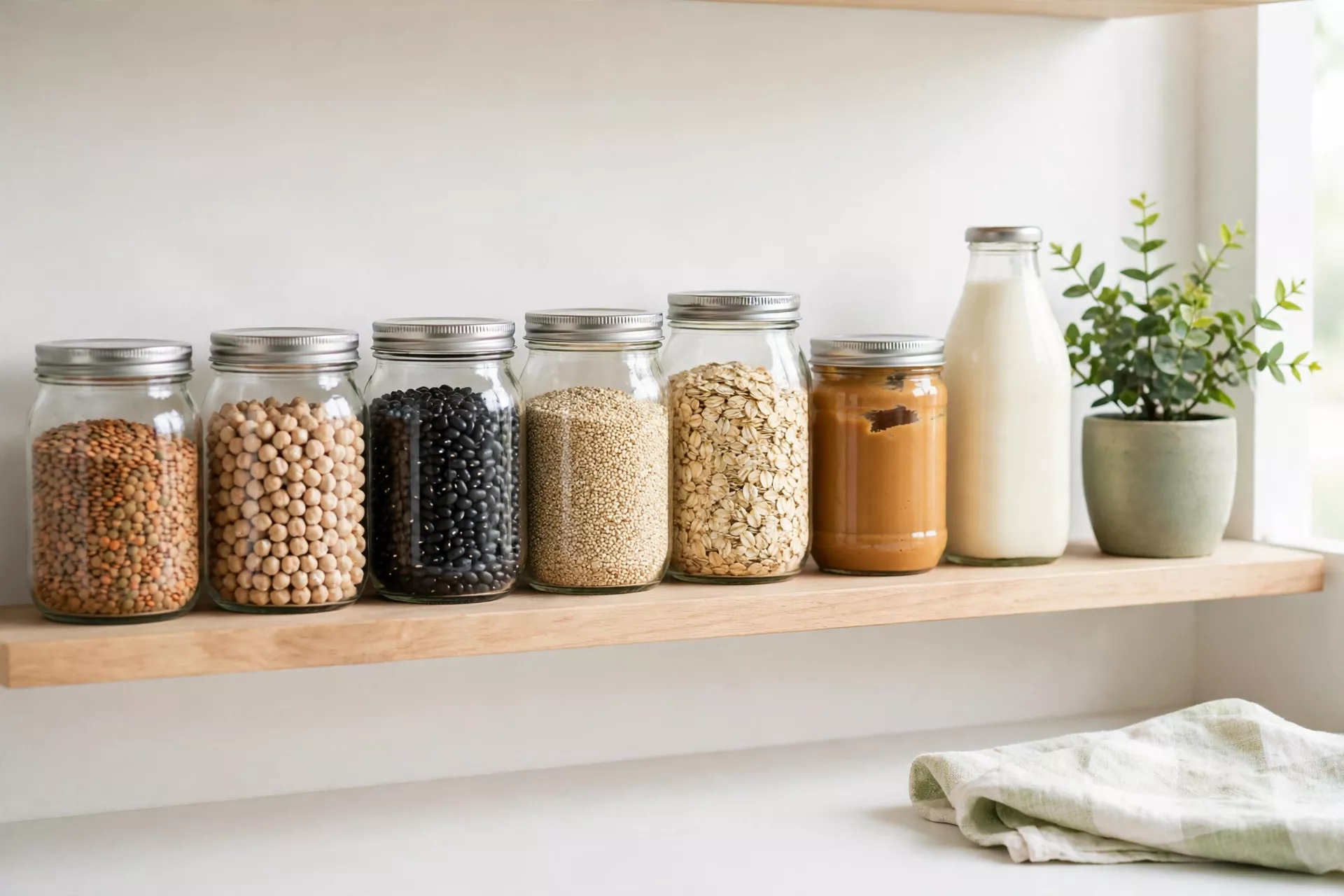
Pantry: dried red lentils, dried brown lentils, canned chickpeas (no salt added), canned black beans, peanut butter with no added sugar, a bag of quinoa, rolled oats, pumpkin seeds, and a jar of tahini.
Fridge: one block of firm tofu, one block of tempeh, a carton of fortified soy milk, and hummus if you do not make your own. Fresh tofu keeps about a week once opened if stored in water that you change daily.
Freezer: a bag of shelled edamame and a bag of frozen peas. Frozen vegetables keep their nutrients well, cost less than fresh out of season, and turn into a side dish in five minutes. Frozen edamame is also the easiest protein snack in this guide: microwave, salt lightly, eat.
Storage and Prep: Small Habits That Protect Your Money
Protein foods go to waste when they are bought without a plan.
Cook legumes in a batch. A pot of lentils or beans cooked on Sunday becomes lunches for three days, and cooked legumes freeze well in single portions. Soak dried chickpeas overnight and they cook in about forty minutes; lentils need no soaking at all and are done in twenty.
Press tofu before cooking it. Fifteen minutes under a plate with a can on top squeezes out water, which lets marinade in and gives you a firmer, chewier result. Tofu that goes straight from the packet into the pan stays bland and spongy, and that is how people conclude they do not like tofu.
Freeze what you will not use. Tempeh freezes well for months, and frozen tofu actually improves in texture — thawed, it turns chewy and soaks up sauces better than fresh. If a block of tofu is near its date, cube it, freeze it, and use it in a curry later.
Read also: Healthy Fats in Plant-Based Eating
Frequently Asked Questions
Can I get enough protein without meat or dairy?
Yes. A varied plant-based diet built on legumes, soy foods, whole grains, nuts, and seeds supplies all the essential amino acids across the day, according to the Academy of Nutrition and Dietetics. The key is eating enough food overall and rotating your protein sources rather than relying on one.
Which plant food has the most protein?
Per 100 grams, tempeh leads the whole foods at about 20 grams, followed by firm calcium-set tofu at about 17 grams. Seitan is higher still at about 25 grams per 100 grams, but it is not suitable for people who avoid gluten. A cup of cooked lentils or edamame delivers about 18 grams.
Are plant-based burgers healthy?
They are a reasonable occasional choice, not a health food. A patty gives 19 to 20 grams of protein, similar to beef, but also about 370 to 390 milligrams of sodium — roughly five times an unseasoned beef patty. Whole plant proteins like lentils, tofu, and beans give you similar protein with more fiber and far less sodium, at a lower price.
Do I need a protein powder?
Most people do not. If you eat a varied plant-based diet and meet your calorie needs, food alone usually covers your protein target. Powders can help athletes or people who struggle to eat enough, but check the label for added sugar and treat them as a supplement to meals, not a replacement.
Disclaimer: This article is for general information only and is not medical advice. Protein needs vary with age, activity, pregnancy, and health conditions. If you have kidney disease, a soy allergy, or another condition that affects what you can eat, talk with your clinician or a registered dietitian.
Sources
- USDA FoodData Central — protein and nutrient values for tempeh (FDC 174272), firm tofu (FDC 172475), edamame (FDC 168411), lentils (FDC 172421), chickpeas (FDC 173757), black beans (FDC 173735). fdc.nal.usda.gov
- Melina V, Craig W, Levin S. Position of the Academy of Nutrition and Dietetics: Vegetarian Diets. Journal of the Academy of Nutrition and Dietetics, 2016;116(12):1970–1980. pubmed.ncbi.nlm.nih.gov/27886704
- Tufts University Friedman School of Nutrition Science and Policy — Getting Enough Protein on a Vegan Diet. nutritionletter.tufts.edu
- Harvard Health Publishing — Impossible and Beyond: How healthy are these meatless burgers? health.harvard.edu
- Healthline — Is Plant-Based Meat Healthy? Nutrients, Benefits, Downsides. healthline.com
- U.S. Department of Agriculture and U.S. Department of Health and Human Services — Dietary Guidelines for Americans, 2025–2030. dietaryguidelines.gov
- National Institutes of Health, Office of Dietary Supplements — Vitamin B12 Fact Sheet for Consumers. ods.od.nih.gov