Serving Sizes: How to Understand Them
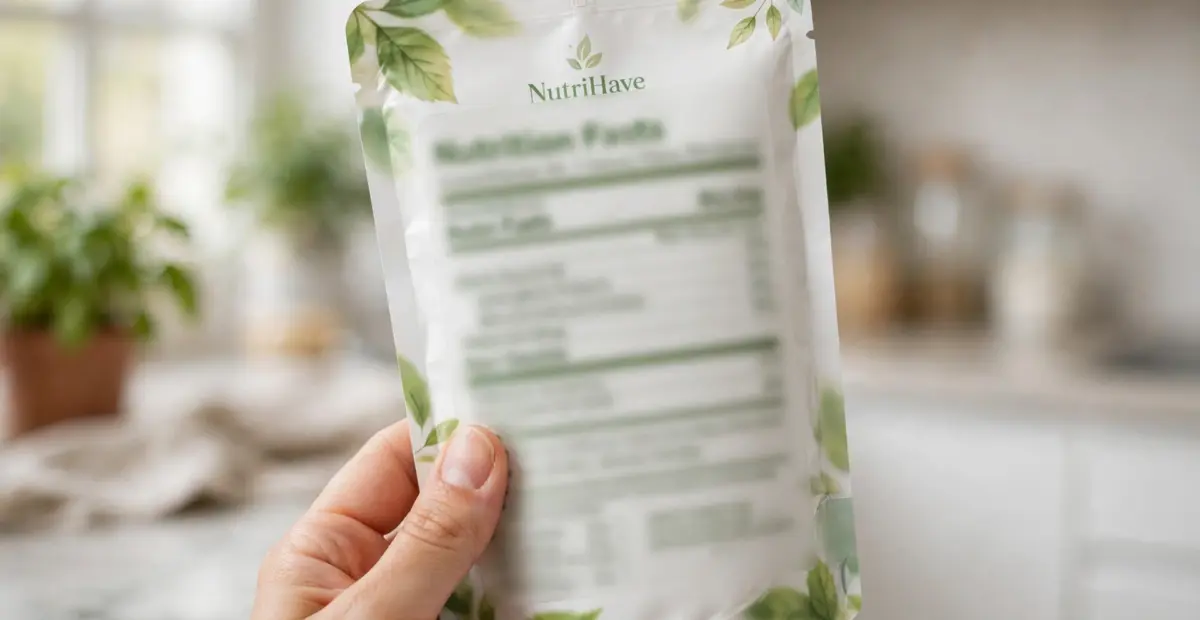
You’ve probably had this moment. You’re mid-afternoon, staring at a snack pack that says 110 calories, and you feel pretty good about it — until you notice the fine print above the numbers: “about 2.5 servings per container.” Suddenly that little bag holds closer to 275 calories, and nobody told you until now.
That fine print is the serving size, and it is the single most misunderstood line on the Nutrition Facts label. Every number below it — calories, fat, sodium, sugar — is built on top of it. Get the serving size wrong and your whole reading of the label goes wrong with it. Once you understand how serving sizes work, though, food labels stop feeling like puzzles and start feeling like honest information. Let’s get you there.
What a Serving Size Actually Is
Here’s the definition that changes everything: a serving size is the amount of a food that people customarily eat at one time. That wording comes from the U.S. Food and Drug Administration, which sets the rules for the Nutrition Facts label. Notice what’s not in that definition: it is not a recommendation. It doesn’t tell you how much you should eat. It simply reflects what people actually eat.
Behind the scenes, the FDA keeps a list called the Reference Amounts Customarily Consumed — RACCs for short. These are standardized amounts for about 160 food categories, based on national eating surveys. Every brand in the same category uses the same reference amount as its starting point. So a serving of yogurt is 170 grams (about 6 ounces) no matter whose logo is on the cup. That’s deliberate: it lets you compare two yogurts side by side without doing conversion math in the grocery aisle.
The label then shows that serving in everyday terms — cups, tablespoons, pieces, slices — followed by the weight in grams. “Serving size: 3/4 cup (40 g)” tells you exactly which spoonful all the numbers below it belong to.
Why the Serving Size Sometimes Looks “Too Small”
This is the complaint everyone has: “Who eats only 2/3 of a cup of ice cream?” Fair question. The answer is that serving sizes are averages across the whole population, captured by surveys — not prescriptions handed down to you personally. And manufacturers can’t shrink serving sizes to make their products look healthier; the reference amounts are set by regulation and applied the same way to every brand.
It also helps to separate two ideas that sound alike but aren’t: serving size and portion size. The serving size belongs to the label — it’s the unit the numbers are counted in. The portion size belongs to you — it’s how much you actually put in your bowl or drink from the bottle. Your portion might be half a serving or two servings. The label isn’t judging either way; it’s just giving you the measuring stick.
The practical move: when your portion doesn’t match the serving, do the multiplication. Two bowls of that cereal? Double the calories and every nutrient. Half a can of soup you split with someone? Halve them. This one habit is worth more than memorizing any nutrient guideline.
How Serving Sizes Got More Honest in 2016
The Nutrition Facts label got its first major redesign in over 20 years in 2016, and serving sizes were at the center of it. The old reference amounts dated back to 1993 and were based on eating surveys from the 1970s and 80s — when, for instance, a bottle of soda was 8 ounces. By 2016, people were routinely finishing 20-ounce bottles in one sitting while the label pretended they drank two servings.
So the FDA updated the reference amounts using newer national eating data and tightened the rules around package sizes:
- Ice cream went from a half-cup serving to 2/3 of a cup — closer to what people actually scoop.
- Yogurt’s reference amount moved from 8 ounces to 6 ounces, reflecting how yogurts are actually sold and eaten.
- Packages that most people finish in one sitting — like a 20-ounce soda — are now labeled as one serving, full stop. No more “2 servings” on a bottle that nobody splits.
The principle stayed the same: by law, serving sizes must reflect how much people really eat, not how much they should eat. The update just made the law catch up with reality.
The Dual-Column Label: Per Serving vs. Per Container
Some packages live in a gray zone: bigger than one serving, but commonly eaten in one sitting — a pint of ice cream, a large snack bag. For these, the updated label added something genuinely useful: dual columns.
Read also: How to Read Food Labels
When a package contains between roughly 200% and 300% of the reference amount, the label shows two columns side by side — “per serving” and “per container” (or “per package”). The first column is the standardized serving for comparison shopping; the second column tells you the totals if you eat the whole thing, which, let’s be honest, is the information you’re most likely to use.
Watch for this layout whenever you see a package that’s clearly meant for one person but technically holds more than one serving. Read the right column for your decision, and use the left one when you’re comparing brands.
How to Use Serving Sizes to Compare Two Products
Label-to-label comparison is where understanding serving sizes pays off most. Here’s the routine that works every time:
- Check “servings per container” first. It’s the line right above the serving size. This one number tells you whether the calories listed are for the whole package or just a fraction of it.
- Compare products at equal serving sizes. Two boxes of cereal might both say “about 9 servings per container,” but one serving could be 3/4 cup and the other 1 cup. Different serving sizes mean you’re comparing apples to oranges. Look for the one with numbers per 100 grams or scale them yourself — whichever is easier.
- Multiply to your real portion. If you eat double the serving, double everything. This applies to calories and also to sodium, added sugars, and fiber — the nutrients most worth tracking.
- Let % Daily Value do the judging. The % Daily Value (%DV) shows how much of a nutrient one serving contributes to a day’s total diet, based on 2,000 calories a day. As a quick rule of thumb from the FDA: 5% DV or less is low, 20% DV or more is high for any given nutrient. Just remember the %DV is tied to the serving size — if you eat two servings, double the percentages too.
Putting It Into Practice: A Grocery-Aisle Walkthrough
Picture two jars of pasta sauce. Sauce A says “Serving size 1/2 cup (130 g), about 5 servings per container, 60 calories, 380 mg sodium per serving.” Sauce B says “Serving size 1/2 cup (130 g), about 4 servings per container, 90 calories, 590 mg sodium per serving.” Same serving size — beautiful, that’s the standardized system doing its job. You can compare directly: B has 50% more calories and notably more sodium per equal spoonful. That’s a label-driven decision in ten seconds, and it only works because both serving sizes match.
Now picture a bottle of iced tea that says “Serving size 1 bottle.” That’s the single-serving rule at work — the package holds less than twice the reference amount, so the whole bottle counts as one serving, and every number on the label is the bottle’s total. No math required. This is the label at its most honest: what you see is what you drink.
Over a week of grocery runs, these micro-readings add up. You start noticing which “light” snacks contain two servings, which cereals give you honest cup-for-cup comparisons, and which single-serve drinks actually deliver their whole label. It becomes less about willpower and more about having accurate information — which is the entire point of the label.
Frequently Asked Questions
Who decides what a serving size is — the food company?
No. Serving sizes are built on FDA reference amounts (RACCs) that are the same for every brand in a food category, so companies can’t quietly shrink them to make numbers look better. The company only decides the package size.
Is the serving size how much I’m supposed to eat?
No — that’s the most common misunderstanding. The serving size reflects how much people customarily eat, and it’s the unit the nutrition numbers are measured in. Your ideal amount depends on your own calorie and nutrition needs, your appetite, and the rest of your day’s eating.
Why do some labels show two columns of numbers?
Those are dual-column labels, required for packages that hold roughly two to three servings but are often eaten at once — like a pint of ice cream. One column is per serving (for comparing products); the other is per container (for when you eat the whole thing).
If I eat twice the serving size, do I double the % Daily Value too?
Yes. Everything on the label — calories, grams of every nutrient, and each % Daily Value — scales with the serving. Two servings means double the numbers across the board.
Sources
- U.S. Food and Drug Administration — Interactive Nutrition Facts Label: Serving Size
- U.S. Food and Drug Administration — Food Serving Sizes Have a Reality Check
- U.S. Food and Drug Administration — Social Media Toolkit on the Nutrition Facts Label
- U.S. Food and Drug Administration — The Nutrition Facts Label
Reviewed for general informational purposes. This article explains food label regulations and is not medical advice — for personalized nutrition guidance, talk to a registered dietitian or your healthcare provider.