Easy Breakfast Meal Prep Ideas
Mornings are the easiest meals to skip — and the hardest to fix later. You wake up, you rush, and suddenly a pastry from the office counter is lunch’s opening act. Breakfast meal prep flips that script. Spend 30 to 60 minutes once or twice a week, and the next five mornings start with food you already chose, already portioned, and already waiting in the fridge.
The trick is not cooking five different breakfasts. It is building a small rotation of bases you can vary with toppings, so you never get bored and never start from zero. This guide gives you ten practical ideas, a simple Sunday system, and the food-safety rules that keep prepped breakfasts safe to eat.
What makes a good breakfast for meal prep
A prepped breakfast should tick three boxes: it holds up in the fridge for a few days (or freezes well), it reheats or eats cold without turning sad, and it covers more than one food group. A jar of plain oats with milk checks the grain box. Add Greek yogurt, berries, and a spoonful of seeds, and you have protein, fruit, and healthy fats in the same jar.
That balance matters more than any single “superfood.” The World Health Organization recommends at least 400 grams — about five portions — of fruit and vegetables a day, and keeping free sugars below 10% of daily energy, ideally below 5%. A breakfast built around whole grains, fruit, and a protein food gets you a long way toward both before 9 a.m.
1. Overnight oats, five ways
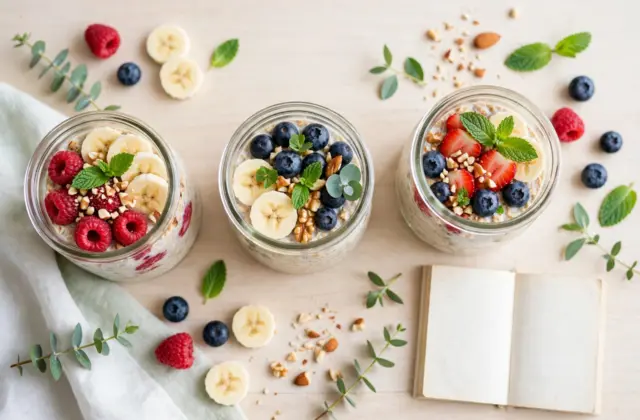
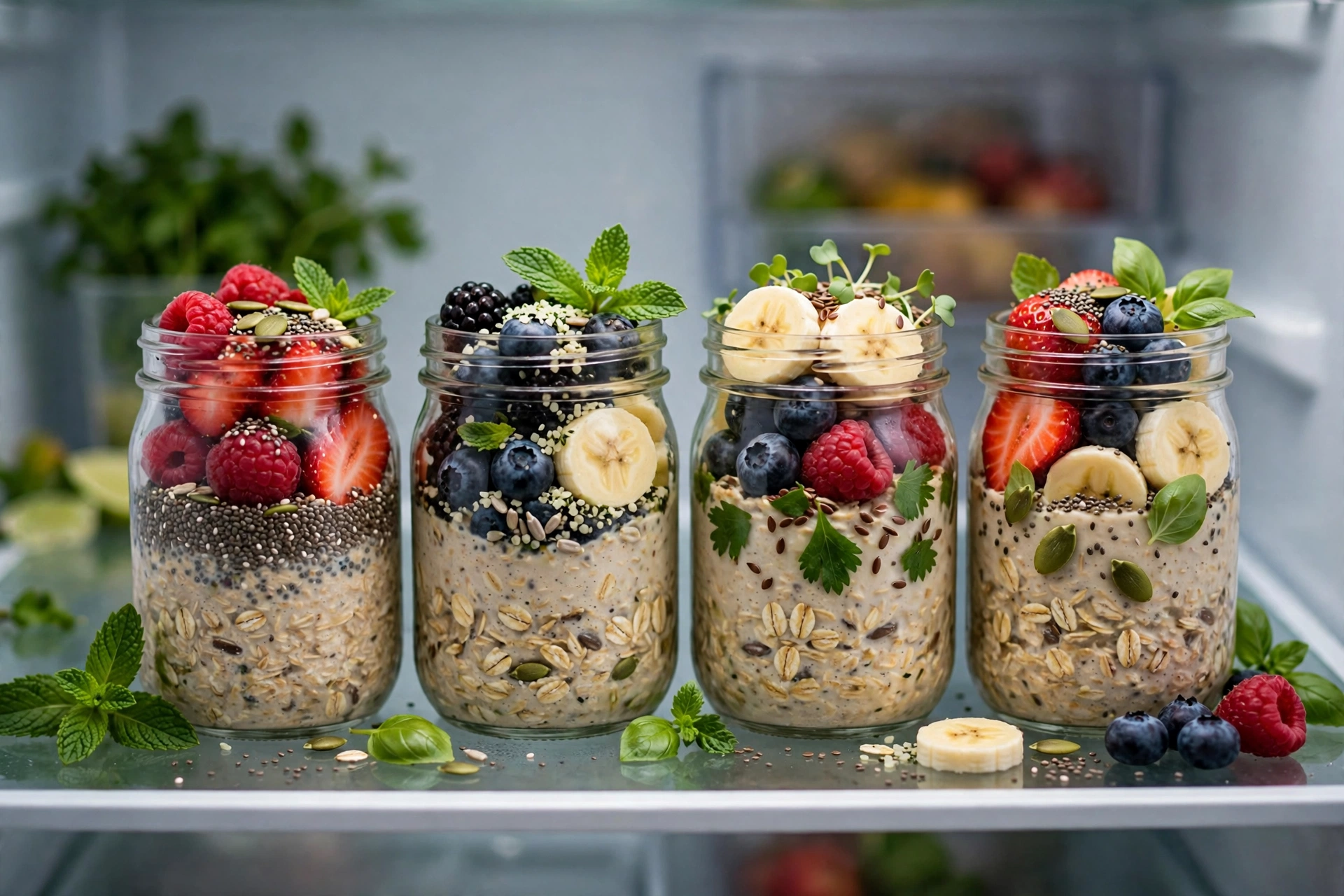
Overnight oats are the entry point for a reason: no cooking, one jar, endless variation. The base is simple — rolled oats plus milk or a milk alternative, left in the fridge overnight so the oats soften. A 40-gram serving of dry rolled oats (about half a cup) provides roughly 5 grams of protein and 4 grams of fiber, according to USDA FoodData Central values.
Make five jars on Sunday and vary the topping each morning: berries and vanilla, sliced banana and peanut butter, grated apple and cinnamon, frozen mango and coconut, or cocoa and raspberries. Stir in Greek yogurt for extra protein — plain nonfat Greek yogurt adds about 10 grams of protein per 100 grams — and a tablespoon of chia or ground flaxseed for fiber and healthy fats. Sweeten with fruit first; if you still want sweetness, a teaspoon of honey goes further than a sugary granola topping.
Read also: How to Build a Better Breakfast
2. Baked egg muffins
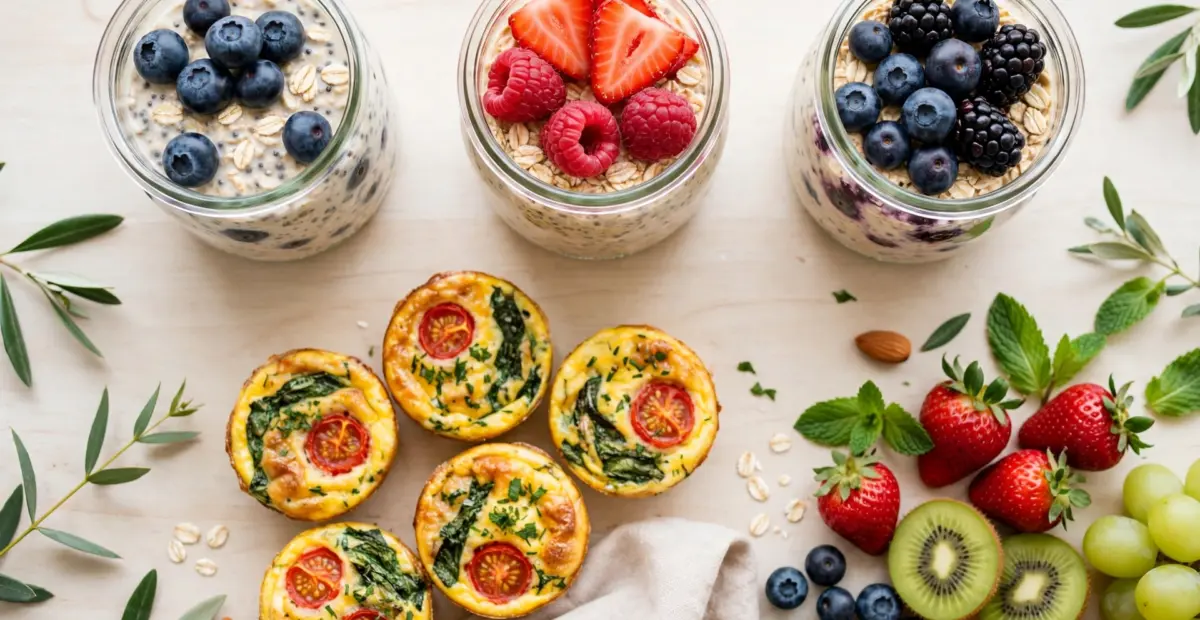
Whisk a dozen eggs with a splash of milk, chopped spinach, diced peppers, and a handful of grated cheese, then bake in a muffin tin. Two eggs give you about 12 grams of protein, and the muffins reheat in about a minute. They are also a neat way to use up vegetables that are on their last day — mushrooms, tomatoes, spring onions, and leftover roasted vegetables all work.
Store them in an airtight container and eat within three to four days, or freeze them for up to a few months and reheat straight from frozen. If you are packing them for work, add a piece of fruit and a slice of whole-grain toast on the side and you have a complete breakfast, not just a snack.

3. Freezer-friendly breakfast burritos
Scrambled eggs, black beans, peppers, and a little cheese, rolled in whole-wheat tortillas and wrapped individually in foil, are the closest thing to a drive-through breakfast — except you control the salt and the filling. Beans add fiber and staying power; a cup of cooked black beans provides about 15 grams of fiber, which helps the burrito keep you full well past mid-morning.
Freeze a batch of eight to ten, then microwave one from frozen in two to three minutes, turning it halfway so it heats evenly. Skip salsa inside the wrap (it makes the tortilla soggy) and add it fresh instead.
4. Yogurt parfaits, assembled the night before
Layer Greek yogurt, berries, and a small handful of oats or a crushed whole-grain biscuit in a jar, but keep any crunchy topping in a separate small container until morning. That one detail is the difference between a parfait and a soggy mess. A 150-gram pot of plain Greek yogurt with berries and a tablespoon of seeds makes a breakfast with protein, fruit, and fiber in under two minutes of assembly.
If dairy is not for you, soy yogurt or a fortified plant-based alternative works the same way — just check the label, since added sugars vary a lot between brands, and choose an unsweetened one when you can.
5. Sheet-pan sweet potato and egg hash
Toss diced sweet potato, onion, and peppers with a little olive oil and roast on a sheet pan while you prep the rest of the week. Portion the hash into containers, top each with a fried or baked egg when you serve it, and you have a savory breakfast that reheats well for three to four days. Sweet potatoes bring fiber and color to the plate; the egg brings the protein.
Make a double batch and the same hash doubles as a lunch side later in the week — one cook, two meals, no extra washing up.
6. Chia pudding jars
Chia seeds absorb liquid and thicken into a pudding overnight — roughly three tablespoons of chia seeds to one cup of milk, stirred well so no clumps form. The result is creamy, filling, and easy to flavor with cocoa, vanilla, cinnamon, or mashed berries. Chia pudding keeps for up to four days in the fridge, so a Sunday batch covers Monday through Thursday.
Top with sliced fruit in the morning rather than mixing it in, so the fruit stays fresh and the texture stays right.
7. Make-ahead smoothie packs
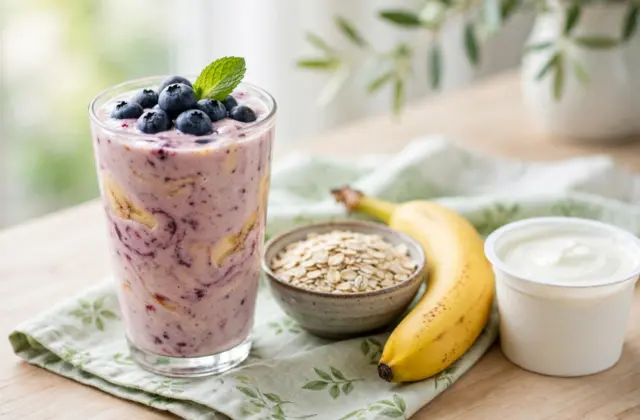
Freezing smoothie ingredients in individual bags is the fastest breakfast prep of all. Fill each bag with a banana, a handful of berries or mango, a handful of spinach, and a tablespoon of oats or seeds. In the morning, tip one bag into the blender, add milk or water and a scoop of yogurt, and blend. The frozen fruit chills the smoothie without ice, and the spinach blends in without changing the taste much.
Keep the bags to about a week’s worth and label them, so the one you grab on Friday is as good as the one you grabbed on Monday.
8. Whole-grain muffins and banana bread slices
Baking once a week gives you a grab-and-go option for mornings when even a jar feels like effort. Whole-grain muffins made with oats, mashed banana, and nuts freeze beautifully — bake a dozen, freeze them in pairs, and toast one straight from the freezer. Banana bread made with whole-wheat flour and less added sugar works the same way, sliced and frozen.
Pair a muffin with yogurt or a boiled egg so the breakfast has protein as well as carbohydrate; on its own, a muffin is more of a snack than a meal.
9. Savory cottage cheese bowls
Cottage cheese is an underrated prep food: it needs no cooking, keeps for days once opened within its use-by date, and pairs with both sweet and savory toppings. For a savory bowl, top it with sliced cucumber, tomatoes, seeds, and a drizzle of olive oil. For a sweet version, use berries and a spoonful of oats. Prep the toppings in small containers on Sunday and assemble in two minutes each morning.
10. The Sunday breakfast box
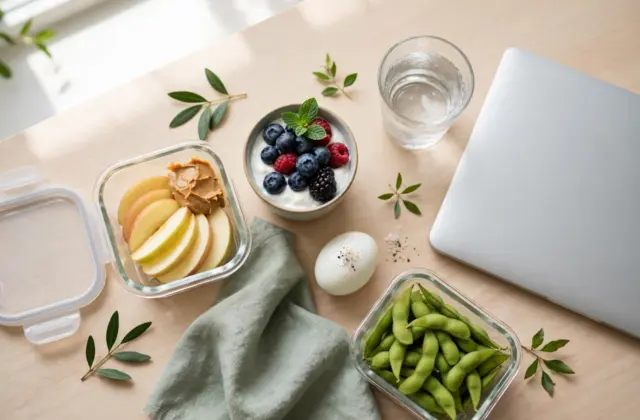
If you prefer not to commit to one breakfast for the whole week, build boxes instead: a boiled egg, a small pot of yogurt, a piece of fruit, and a handful of nuts or a small whole-grain roll. Two or three boxes in the fridge mean you can mix and match all week, and nothing goes stale because you are not locked into five identical jars.
This approach works especially well if your household has different tastes — everyone grabs the box they like, and the prep is the same for all of them.
The Sunday system: 45 minutes, five breakfasts
You do not need a whole afternoon. A realistic Sunday session looks like this: start the egg muffins in the oven, make five overnight oat jars while they bake, boil six eggs, wash and portion fruit, and pack two smoothie bags. By the time the muffins cool, you have most of the week covered.
Two habits make the system stick. First, label everything with the day you made it — masking tape and a pen beat guessing. Second, put tomorrow’s breakfast at the front of the fridge, so the morning decision is already made. Prep fails most often not because the food is bad, but because it is buried behind last night’s leftovers.
Read also: How to Prep Produce for the Week
Keeping prepped breakfasts safe
Most cooked breakfasts — egg muffins, hash, burritos — keep for three to four days in a refrigerator at or below 40°F, according to the USDA Food Safety and Inspection Service. Refrigerate perishable food within two hours of cooking (one hour if the temperature is above 90°F), and reheat leftovers to 165°F, measured with a food thermometer rather than guessed. Soups, sauces, and gravies should be brought to a rolling boil when reheated.
Overnight oats, yogurt parfaits, and chia pudding follow the same three-to-four-day window, and they should stay refrigerated the whole time — they are not foods to leave on the counter while you get ready. Frozen items stay safe indefinitely at 0°F, but are best quality within three to four months, so date your freezer bags too. When in doubt, throw it out: you cannot see, smell, or taste most of the bacteria that cause foodborne illness.
Frequently asked questions
How many days ahead can I prep breakfast?
Most fridge breakfasts are best within three to four days. For a full five-day week, prep Sunday for Monday to Wednesday and make a quick second batch — or freeze half — for Thursday and Friday.
Do overnight oats need to be heated?
No. They are designed to be eaten cold, straight from the fridge. If you prefer them warm, heat gently for a minute or two and stir well.
Can I prep breakfast without eggs or dairy?
Yes. Overnight oats, chia pudding, smoothie packs, and whole-grain muffins all work with plant-based milk and yogurt, and beans, tofu, seeds, and nut butter can supply the protein instead of eggs or dairy.
How do I stop prepped breakfasts from getting boring?
Keep the base the same and change one thing: the fruit, the spice, the topping, or the sauce. A different topping each day makes the same oats feel like a different breakfast.
Sources
- World Health Organization — Nutrition for a healthy life
- USDA Food Safety and Inspection Service — Leftovers and Food Safety
- USDA Agricultural Research Service — FoodData Central
This article is for general information only and is not medical advice. If you have a health condition, food allergy, or specific dietary needs, talk to a qualified health professional before changing your diet.