Healthy Eating Myths and Facts
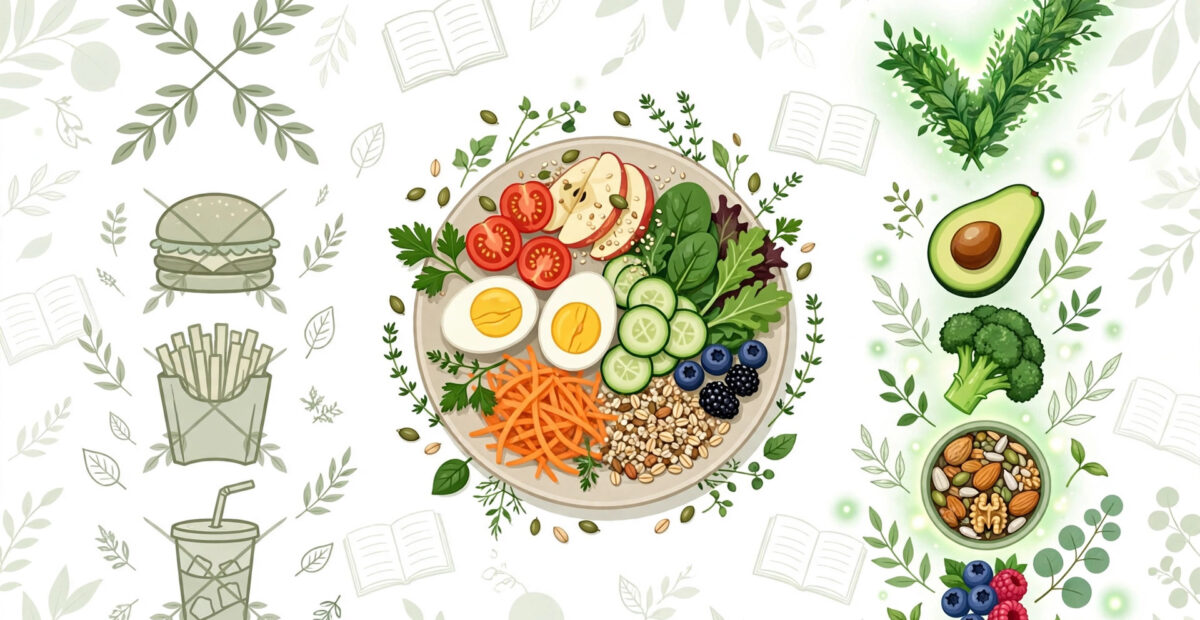
Nutrition advice seems to change its mind every week. One year eggs are forbidden, the next they’re a superfood. Everyone has a cousin who lost weight by cutting all carbs after 6 p.m., and someone else swears a juice cleanse “reset” their liver. No wonder healthy eating feels so confusing.
Here’s the good news: a lot of the confusion comes from claims that sound true but fall apart under scrutiny. We’ve dug into what the major health authorities and peer-reviewed research actually say, so you can stop worrying about the myths and focus on the habits that genuinely matter.
Myth 1: “Eating eggs raises your cholesterol”
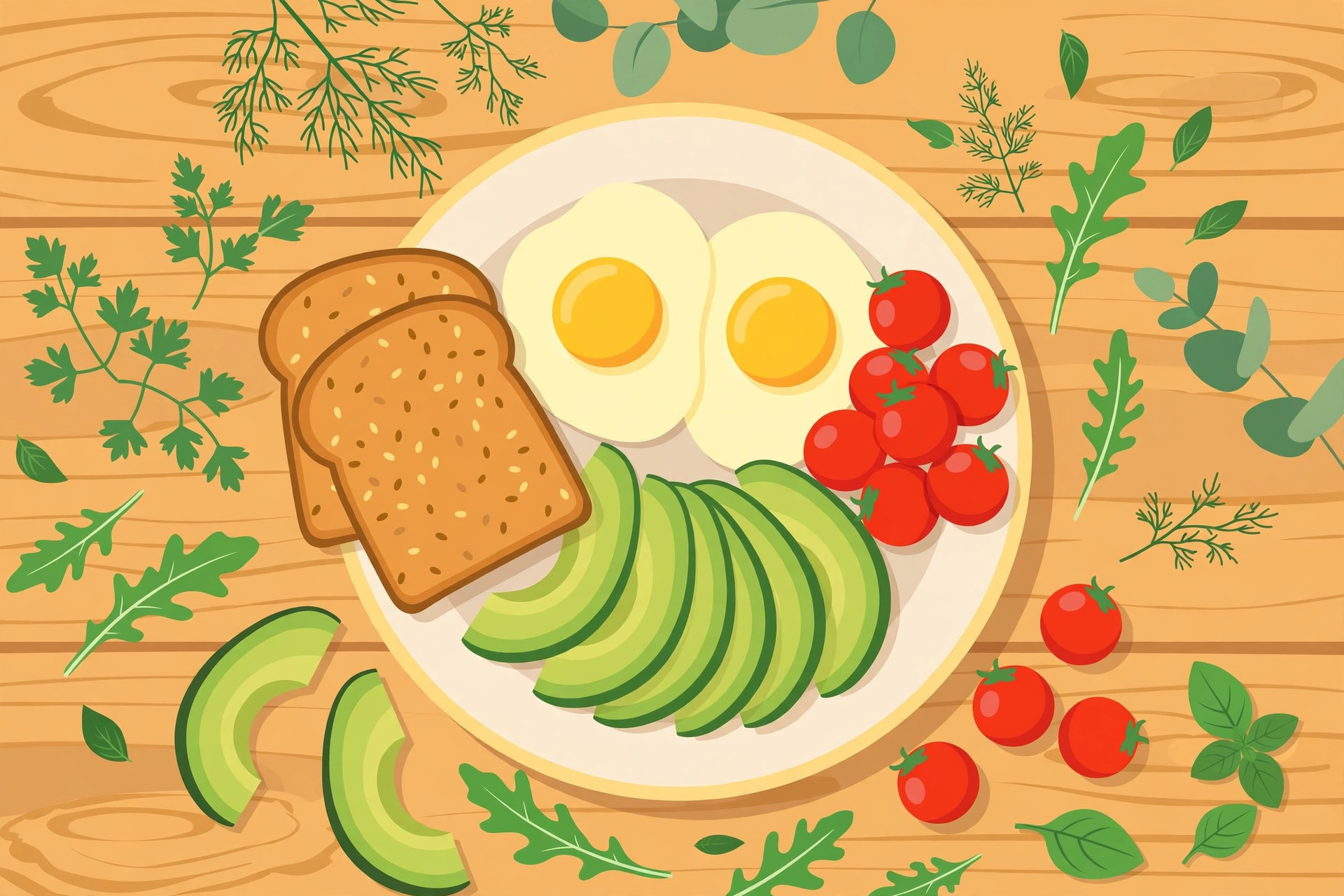
For decades, eggs were treated as dietary villains — one yolk carries around 185 mg of cholesterol, and the old advice capped daily dietary cholesterol at 300 mg. But that cap is gone. The 2015–2020 Dietary Guidelines for Americans removed the 300 mg/day limit entirely, concluding that cholesterol was no longer a nutrient of concern for overconsumption in the same way.
The American Heart Association’s 2019 science advisory on dietary cholesterol went further: healthy individuals with normal cholesterol levels can include up to one whole egg per day as part of a heart-healthy dietary pattern. The advisory does note caveats — people with dyslipidemia or diabetes should be more cautious — and it emphasizes that overall dietary patterns matter more than any single food.
What actually drives blood cholesterol up more strongly? Saturated fat. Swapping butter for olive oil, or choosing lean proteins and plant-based meals more often, moves the needle far more than skipping the yolk. So yes — that two-egg breakfast is back on the menu for most of us.
Myth 2: “You must drink 8 glasses of water a day”
The 8-glasses rule is one of nutrition’s most quoted claims — and one of the least scientific. It doesn’t account for your size, your activity level, your climate, or the fact that food counts toward hydration too.
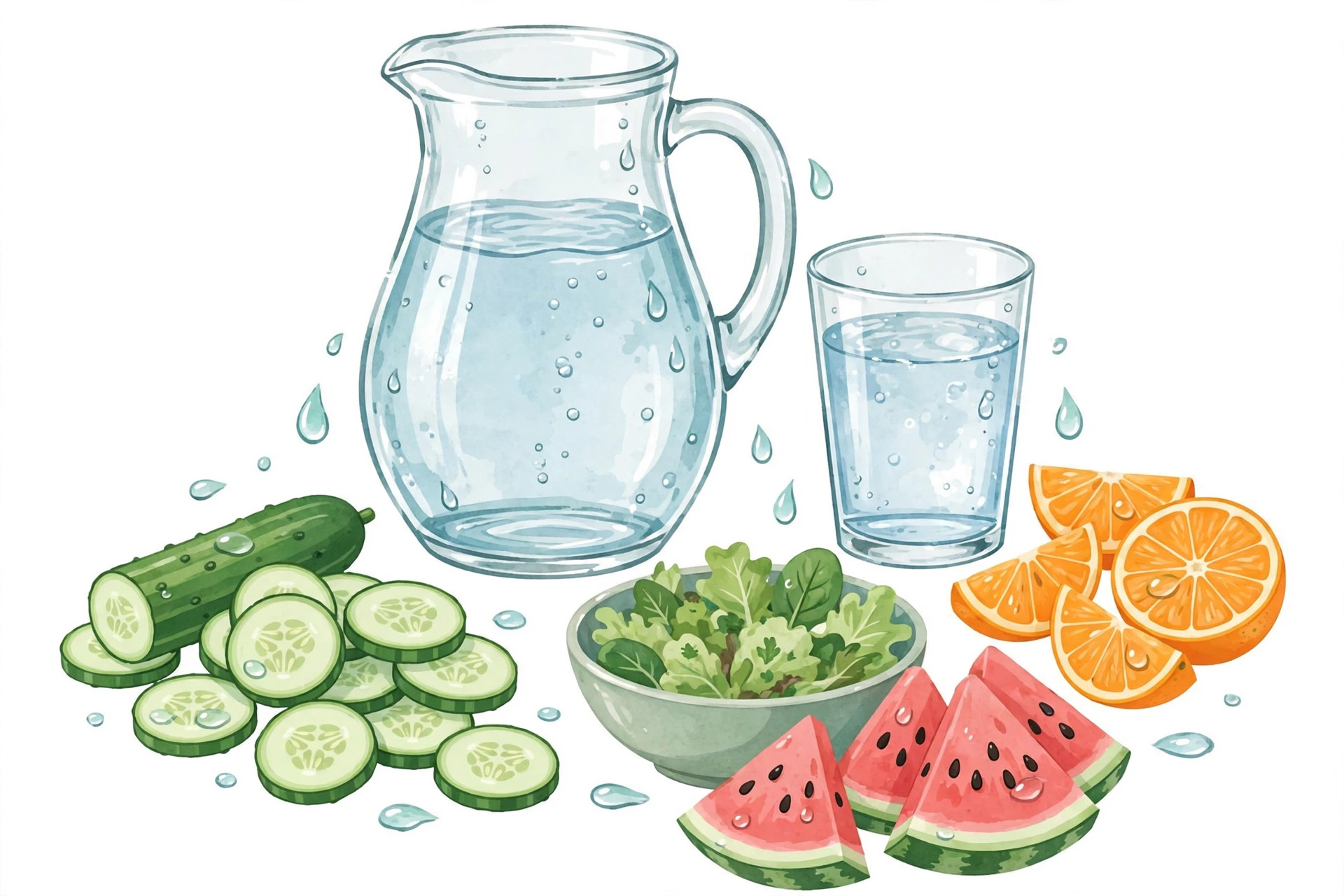
The Institute of Medicine’s 2004 Dietary Reference Intakes — still the official U.S. reference — set adequate total water intake (from all foods and beverages combined) at about 3.7 liters (125 ounces) per day for men and 2.7 liters (91 ounces) for women. Roughly 20% of that typically comes from food — watermelon, soup, oranges, and cucumbers all count. The panel explicitly rejected the idea of a glasses-per-day rule, noting that normal drinking behavior and letting thirst be your guide is enough for most healthy people.
Exercise in the heat, fever, and illness do raise your needs. But for a typical office day in an air-conditioned room, there’s no magic number to chase. Drink when you’re thirsty, keep water within reach, and treat dark yellow urine — not the clock — as your reminder.
Myth 3: “Detox diets cleanse your body of toxins”
Juice cleanses, “master” fasts, and detox teas promise to flush the poisons out of your system. The problem? They rarely name which toxins, and there’s little evidence they do anything your body isn’t already doing.
A 2014 critical review in the Journal of Human Nutrition and Dietetics (Klein & Kiat) examined the evidence and found no scientific support for detox diets improving toxin elimination or weight management. The review also flagged real risks: severe energy restriction can cause protein and vitamin deficiencies, electrolyte imbalance, and, in extreme cases, serious harm.
Your liver, kidneys, lungs, and digestive system are detoxing you right now, around the clock, without any help from a $12 juice. The best way to keep those systems running well isn’t a three-day cleanse — it’s the boring basics: balanced meals, adequate sleep, regular movement, and limiting alcohol.
Myth 4: “Frozen produce is less healthy than fresh”
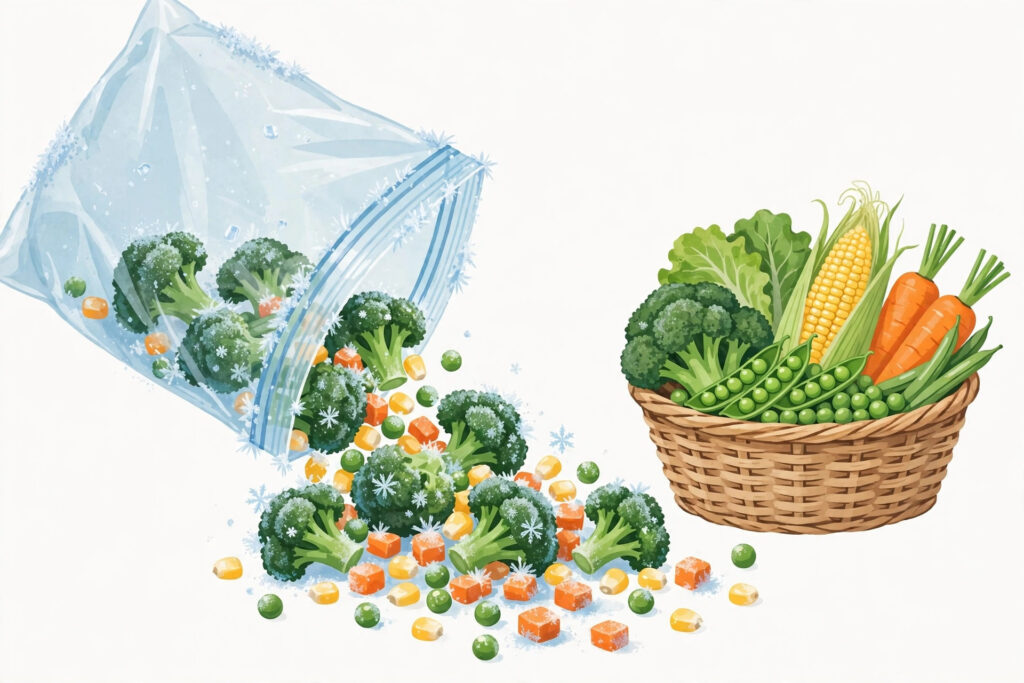
This one has snobbery baked in — fresh just sounds better. But frozen fruits and vegetables are typically picked at peak ripeness and flash-frozen within hours, which locks in nutrients. Most vegetables are blanched first — a quick hot-water step that deactivates the enzymes that would otherwise degrade vitamins during storage.
A two-year study by researchers at the University of Georgia, published in the Journal of Food Composition and Analysis, compared vitamin C, provitamin A, and folate in fresh versus frozen produce and found them generally equal — with some frozen items testing higher than their fresh-stored counterparts. Fresh produce, after all, loses nutrients every day it spends in transit and on shelves; researchers at the University of Reading note that freezing preserves polyphenols — compounds linked to heart health — for longer than standard refrigeration.
The practical upshot: the best produce is the produce you’ll actually eat. A bag of frozen broccoli that makes dinner effortless beats fresh broccoli that wilts in the drawer every time.
Read also: How to Keep Healthy Eating Simple
Myth 5: “All fat is bad for you”
The low-fat era of the 1990s taught a generation to fear fat — and food companies responded with fat-free cookies and chips that replaced fat with added sugar. Unsurprisingly, obesity kept climbing.
The evidence points in a different direction: the type of fat matters far more than the total. The Dietary Guidelines for Americans recommend keeping saturated fat below 10% of daily calories, while emphasizing unsaturated fats. Replacing saturated fats (butter, fatty cuts of meat, palm oil) with unsaturated fats (olive oil, nuts, seeds, fatty fish) is one of the most reliably supported moves in all of nutrition — consistently linked to better blood lipid profiles.
A drizzle of olive oil on your salad, a handful of almonds at 4 p.m., salmon twice a week — these are fats that protect rather than harm. Fat also makes food satisfying, which helps you eat enough without overeating. The enemy was never fat itself; it was the wrong fats in excess, especially paired with refined carbs.
Myth 6: “Fruit has too much sugar — cut it out”
This myth grew out of the low-carb boom, and it misunderstands what “too much sugar” means. Health guidelines target added sugars, not the naturally occurring sugars in whole fruit. The American Heart Association recommends no more than 36 grams (9 teaspoons) of added sugar per day for men and 25 grams (6 teaspoons) for women.
A medium apple has about 19 grams of sugar — but it arrives packaged with fiber, water, vitamins, and polyphenols, which slow absorption and blunt blood-sugar spikes. A can of soda delivers 32–36 grams of added sugar with none of that. They are not the same thing, and your body doesn’t treat them the same way.
The WHO’s guideline on “free sugars” draws a similar line: it caps free sugars (added sugars plus the sugar in honey, syrups, and fruit juice) at less than 10% of daily calories — but whole fruit isn’t in that category. Don’t skip the fruit; skip the fruit juice that replaced it.
Myth 7: “Eating late at night makes you gain weight”
Your body doesn’t own a clock that converts food into fat after 8 p.m. Weight change comes down to total energy balance — calories in versus calories out — not the time on the clock.
Where this myth gets its staying power: people who eat late often eat more — extra snacks in front of the TV, desserts, alcohol — and sleep-deprived people tend to make less careful food choices. The calories, not the hour, do the damage. That said, eating a heavy meal right before bed can disrupt sleep quality, and poor sleep is itself linked to weight gain — so there’s a real grain of truth wrapped in a false conclusion.
If you’re hungry at 9 p.m., eat something sensible — yogurt, fruit, a small handful of nuts. Just don’t turn it into a second dinner, and try to leave an hour or two before sleep for comfort’s sake.
The bottom line
Every myth above survives because it contains a sliver of truth: eggs do contain cholesterol, water does matter, fresh produce is great, saturated fat is worth limiting, sugar deserves attention, and late-night snacking often goes hand in hand with overeating. The problem is the oversimplification — and the anxiety it manufactures.
Healthy eating doesn’t require a cleanse, a spreadsheet, or fear of entire food groups. It needs the same unglamorous habits that research keeps confirming: plenty of vegetables and fruit, whole grains, healthy fats, enough water, and portion awareness. Everything else is noise.
Frequently asked questions
How many eggs can I safely eat per day?
For healthy individuals with normal cholesterol levels, the American Heart Association says up to one whole egg per day fits a heart-healthy dietary pattern. If you have high cholesterol, diabetes, or heart disease, talk to your clinician about your personal limit.
Is fruit juice as healthy as whole fruit?
No. Juice strips out most of the fiber while concentrating the sugar — a glass of orange juice counts toward “free sugars” under WHO guidance, while a whole orange doesn’t. Eat the fruit instead.
Do I really not need a detox after the holidays?
Correct. Your liver and kidneys handle detoxification continuously. After a period of indulgence, simply return to balanced meals, hydrate well, move your body, and get enough sleep — that’s a more effective “reset” than any cleanse.
Does frozen spinach work as well as fresh in recipes?
Nutritionally, yes — and sometimes better. Frozen spinach is blanched and frozen at peak freshness, and studies have found its vitamin content comparable to fresh. Thaw and squeeze out excess water before adding it to dishes.
Disclaimer: This article is for general information only and is not medical advice. If you have a health condition or take medication, consult a qualified healthcare professional before making dietary changes.
Sources
- American Heart Association — Dietary Cholesterol and Cardiovascular Risk (Science Advisory, 2019)
- CDC — NCHS Data Brief No. 242: Water Intake in U.S. Adults (NHANES 2009–2012)
- Macquarie University — Literature review finds no evidence to support detox diets (Klein & Kiat, 2014)
- Kaiser Permanente — Added Sugars and Daily Limits (per AHA guidance)
- University of Reading — Frozen and tinned foods can be just as nutritious as fresh produce