How to Choose Healthier Snacks
Snacking gets a bad rap, but the problem was never the snack — it was what we put in the bowl. A good snack can steady your energy between meals, stop the 4 p.m. vending-machine spiral, and fill nutrition gaps your meals missed. A bad one just borrows satisfaction from your future self.
The difference usually comes down to a handful of label-reading habits. Once you know what to look for, choosing healthier snacks stops feeling like a guessing game.
What actually makes a snack “healthy”?
Forget the marketing. “All natural,” “baked not fried,” and “made with real fruit” are all unregulated phrases that can sit on a bar with 20 grams of added sugar. A genuinely healthier snack does three things:
- Keeps you full for at least a couple of hours. That usually means it contains some protein, some fiber, or both — the two nutrients most strongly tied to satiety.
- Doesn’t blow your daily sugar and sodium budgets on one handful. Most of the damage from snacking is cumulative, and snack foods are where hidden sodium and added sugars pile up fastest.
- Adds something your meals didn’t. A snack built from fruit, vegetables, nuts, or yogurt quietly nudges up your fiber, potassium, calcium, or vitamin intake without much planning.
None of this requires perfection. You’re not auditing every bite — you’re just tilting the odds so most snacks land in the good column.
The three numbers that matter on the label
Snack labels can feel like homework, so here’s the shortcut: for most packaged snacks, three lines tell you nearly everything.
1. Added sugars
The American Heart Association recommends limiting added sugars to no more than 36 grams a day for men (about 9 teaspoons) and 25 grams a day for women (about 6 teaspoons). The World Health Organization recommends keeping free sugars below 10% of total daily energy intake — roughly 50 grams on a 2,000-calorie diet — with further benefit below 5%, or about 25 grams.
Now look at what snacks actually contain. A 12-ounce can of regular soda carries 32 to 36 grams of added sugar — the entire day’s budget in one drink. Some snack bars pack around 8 teaspoons (32 grams) of added sugar in a single bar. And the current U.S. Dietary Guidelines (2025–2030) go further: no more than 10 grams of added sugars per meal, with snacks judged against the FDA “Healthy” limits — for example, grain snacks should not exceed 5 grams of added sugar per whole-grain equivalent, and dairy snacks like yogurt should stay at or under 2.5 grams of added sugar per serving equivalent.
Practical rule: scan the “Added Sugars” line first. For an everyday snack, single digits are where you want to be — and the closer to zero, the better.
2. Sodium
More than 70% of the sodium Americans eat comes from packaged, prepared, and restaurant foods — not the salt shaker — and snack foods are some of the saltiest offenders. The American Heart Association recommends no more than 2,300 mg of sodium a day, with an optimal goal of 1,500 mg for most adults.
On the label, 5% of the Daily Value or less per serving is low; 20% or more is high. Chips, pretzels, and flavored crackers routinely land in the high zone. This is one of the simplest label wins available: choosing a 140-mg snack over a 300-mg one saves real milligrams every single day.
3. Fiber and protein
These are the “what you get” half of the equation. A snack with 3 or more grams of fiber and a few grams of protein will keep you full far longer than a sugary 200-calorie bar. Fiber also feeds gut bacteria and is one of the nutrients Americans consistently underconsume, according to federal dietary guidance.
Snack math: the combo that actually keeps you full
The simplest formula for a satisfying snack: protein + fiber + something fresh. Pair any two and you usually get all three:
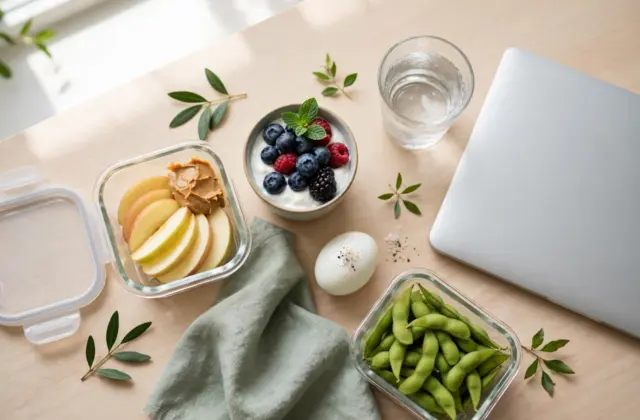
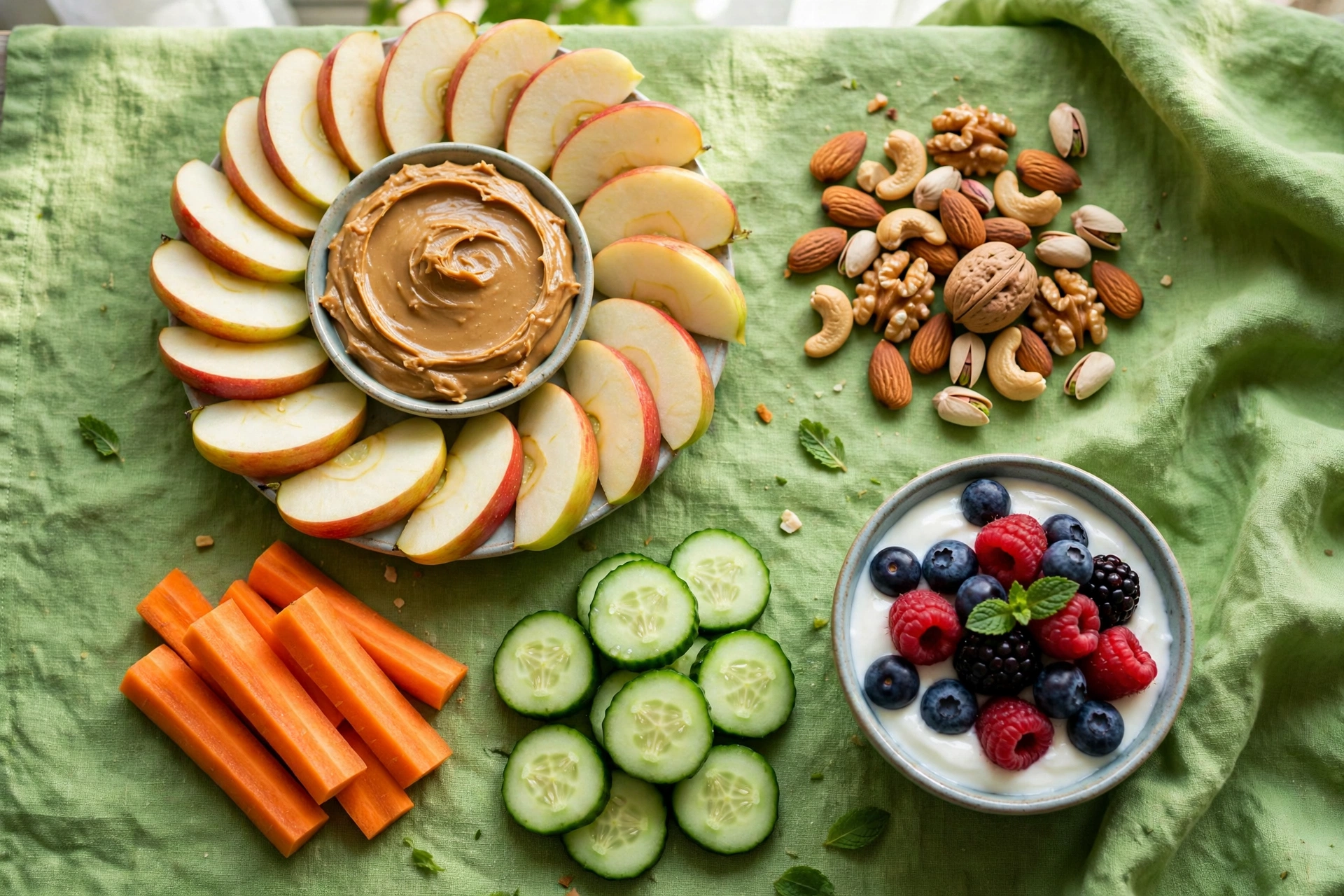
- Apple slices + a spoonful of peanut butter (fruit + healthy fat + protein)
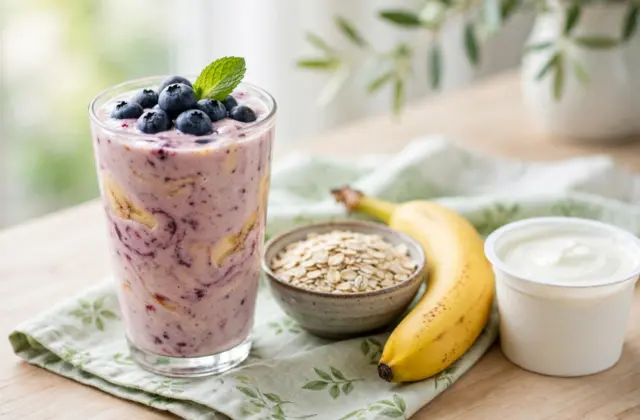
- Greek yogurt + a handful of berries (protein + fiber)
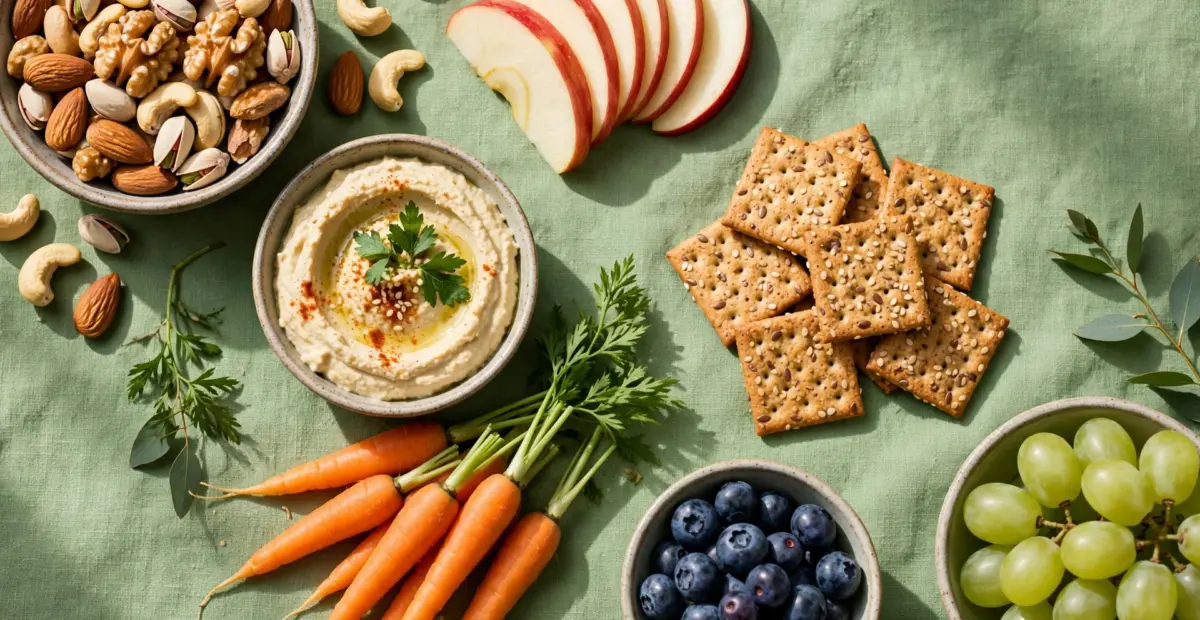
- Whole-grain crackers + hummus (fiber + protein)
- A small handful of almonds + an orange (protein + fiber + vitamin C)
- Carrot and cucumber sticks + cottage cheese dip (produce + protein)
- Popcorn (air-popped) + a sprinkle of parmesan (whole grain + a little protein)
Notice the pattern: each combo slows digestion. Protein and fat take longer to break down, fiber adds bulk, and whole fruit’s water content adds volume. That mechanical fullness is the whole trick — it’s why 200 calories of trail mix quiets hunger for hours while 200 calories of gummy candy barely registers.
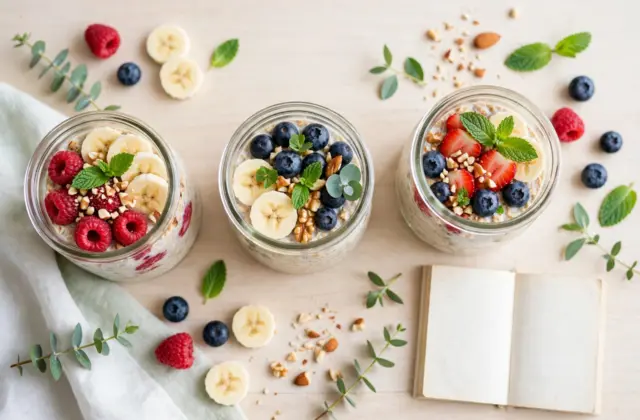
Read also: Make-Ahead Breakfast Ideas for Busy Mornings
20 healthier snack ideas worth stealing
If you want a grab-and-go list, here are twenty that fit the protein-plus-fiber rule and keep added sugars low:
Zero-prep produce: banana, apple, orange, grapes, baby carrots, cherry tomatoes, celery sticks, cucumber rounds.
Protein anchors: a small handful of almonds or walnuts (about a quarter cup), a hard-boiled egg, a small can of tuna or salmon, unsweetened Greek yogurt, cottage cheese.
Whole-grain vehicles: air-popped popcorn, whole-grain crackers, oatmeal made with milk, roasted chickpeas, edamame.
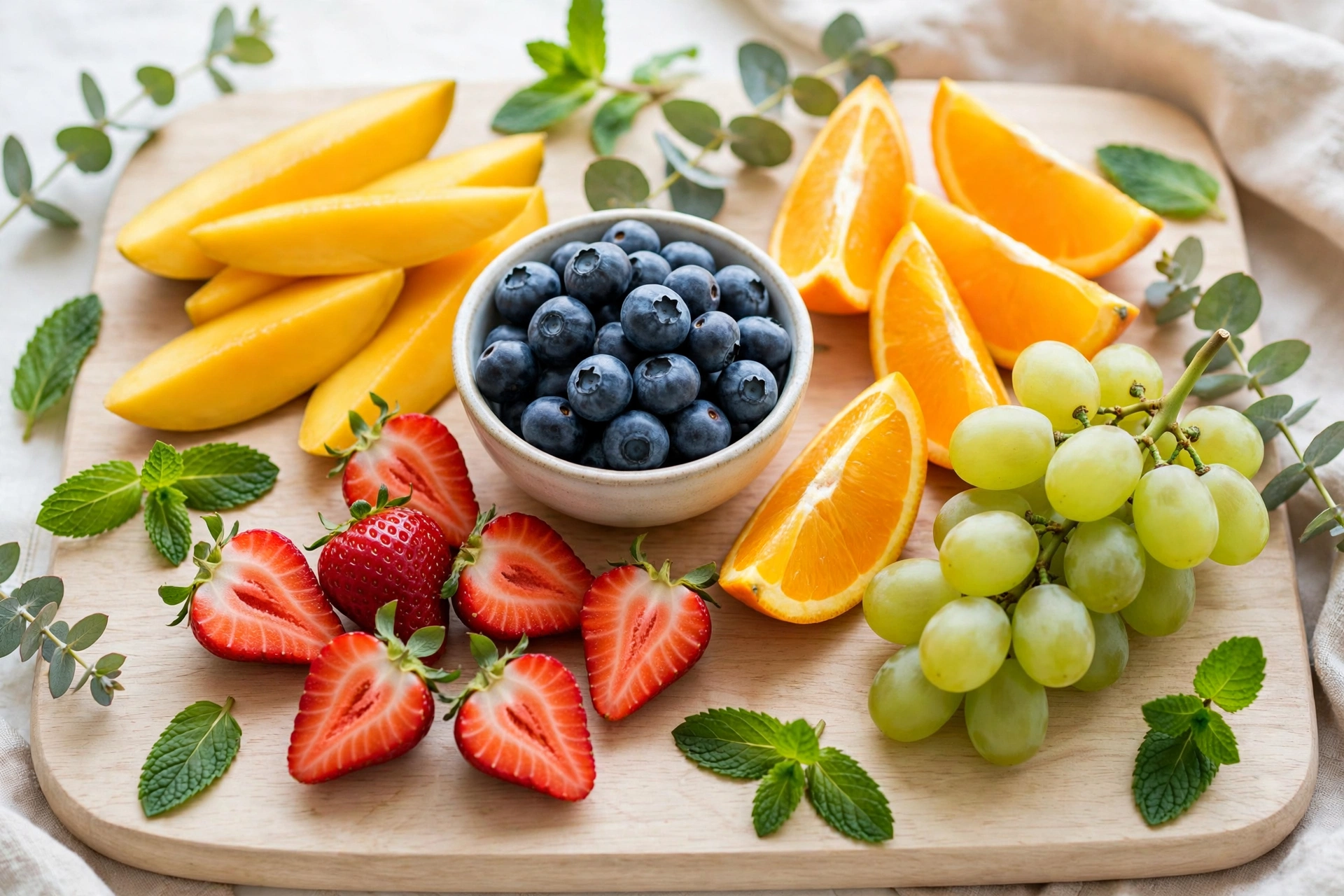
The sweet tooth answer: when you want dessert, fruit is still the best move — but if only a bar will do, pick one with under 5 grams of added sugar and at least 3 grams of fiber. Dark chocolate squares (70% cocoa or higher) in a one-ounce portion also work; they deliver less sugar per bite than milk chocolate and feel richer, so you stop sooner.
Smarter packaged snacks: how to read the middle aisle
Fresh food is the easy win, but real life includes packages. Here’s how to choose them without a 10-minute label study:
- Read the serving size first. Everything on the label — calories, sugar, sodium — is per serving, and packages often contain two or three “servings.” A bag that looks reasonable at 150 calories per serving is 300+ if you eat the whole thing.
- Flip to the ingredient list. Shorter is usually better. Ingredients are listed by weight, so if sugar (or syrup, or anything ending in “-ose,” or fruit juice concentrate) appears in the first three, it’s a dessert wearing a snack costume.
- Watch for “health halo” words. “Gluten-free” doesn’t mean low-sugar. “Keto” doesn’t mean low-sodium. “Organic” describes farming, not nutrition. Judge the numbers, not the adjectives.
- Compare within a category. You don’t need the perfect cracker — you need the better cracker. Hold two boxes side by side and pick the one with less added sugar and sodium and more fiber. That’s a real improvement, repeated hundreds of times a year.
- Beware the tiny bag trap. Snack packs and mini portions can help with portion control, but some are more expensive per ounce and no healthier than the regular size. Check the label, not just the package size.
When and how much to snack
There’s no magic snacking schedule, but a few patterns work well for most people:
- Snack to bridge, not to fill. A snack is roughly 150–250 calories for most adults — enough to carry you 2–3 hours until your next meal. If you’re “snacking” 600 calories, that’s a meal wearing a disguise.
- Anchor snacks to hunger, not the clock. Mid-morning and mid-afternoon slumps are the classic windows. Eating because it’s 3 p.m. when you’re not hungry is just extra calories.
- Portion it out. Eating from the bag or tub makes it nearly impossible to gauge portions. Put your serving in a bowl or baggie first — your eyes are part of your appetite regulation.
- Don’t rescue a bad day with a sad desk drawer. If your snacks are all candy and chips, you’ll eat candy and chips. Stock the good stuff and the decision makes itself.
Frequently asked questions
Are granola bars healthy snacks?
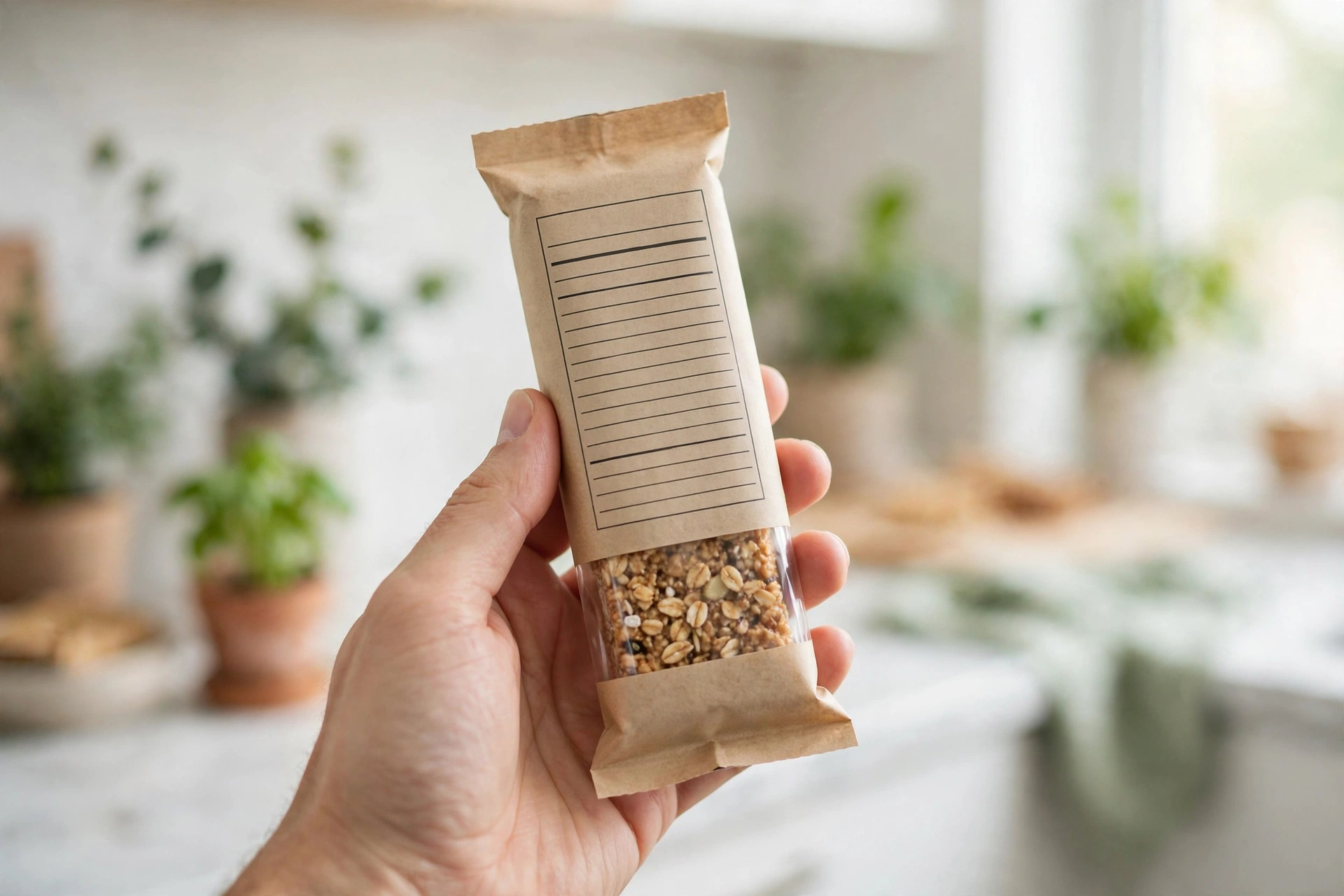
Some are, many aren’t. Check the added-sugar line: many bars carry 10–15+ grams of added sugar, which is more like candy. A good bar has under 5 grams of added sugar, at least 3 grams of fiber, and a recognizable ingredient list. When in doubt, whole food wins.
Is fruit too sugary to count as a healthy snack?
No. The sugar in whole fruit comes packaged with fiber, water, vitamins, and phytochemicals — and both the WHO and American Heart Association guidelines explicitly exclude whole fruit from their sugar limits. A 100% juice box is not the same thing; keep juice portions small or choose the whole fruit.
How many snacks a day is okay?
Most people do well with one or two planned snacks a day, bridging the gaps between meals. If you’re hungry every 90 minutes, the issue is usually that your meals are too light — especially on protein and fiber — rather than that you need more snacks.
Are “low-fat” snacks healthier?
Not necessarily. When fat is removed, manufacturers often add sugar or refined starch to keep the taste — and healthy fats from nuts, avocados, and yogurt actually help you feel full. Judge the full nutrition picture: added sugars, sodium, fiber, and protein together.
Disclaimer: This article is for general information only and isn’t medical advice. If you manage diabetes, kidney disease, or another condition that affects what you can snack on, check with your doctor or a registered dietitian first.
Sources